TOOLS
Health and Safety Champions — June 2022 Focus
Format:
PDF
Size:
One page, 8.5" x 11"
Intended audience:
UBT health and safety champions
Best used:
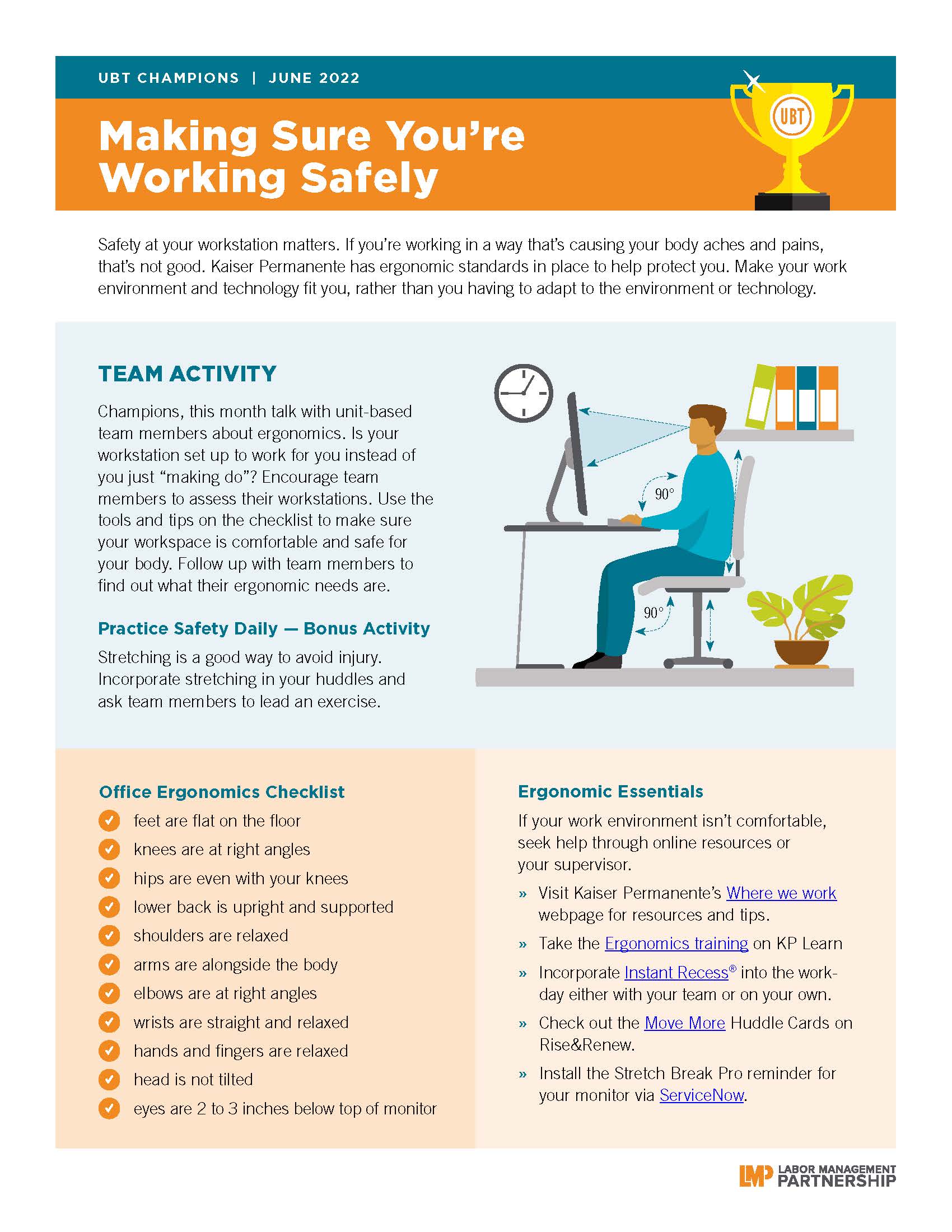
Safety at your workstation matters. Use the ergonomic checklist to find out how.
This short animated video explains how to find and use our powerful how-to guides
Does your team want to improve service? Or clinical quality? If you don't know where to start, check out the team-tested practices on the LMP website. This short video shows you how.
Having trouble using the search function? Check out this short video to help you search like a pro!
Need to find a checklist, template or puzzle? Don't know where to start? Check out this short video to find the tools you need on the LMP website with just a few clicks.
Format:
PDF
Size:
One page, 8.5" x 11"
Intended audience:
UBT health and safety champions
Best used:
Safety at your workstation matters. Use the ergonomic checklist to find out how.
Format:
PDF
Size:
One page, 8.5" x 11"
Intended audience:
UBT health and safety champions
Best used:
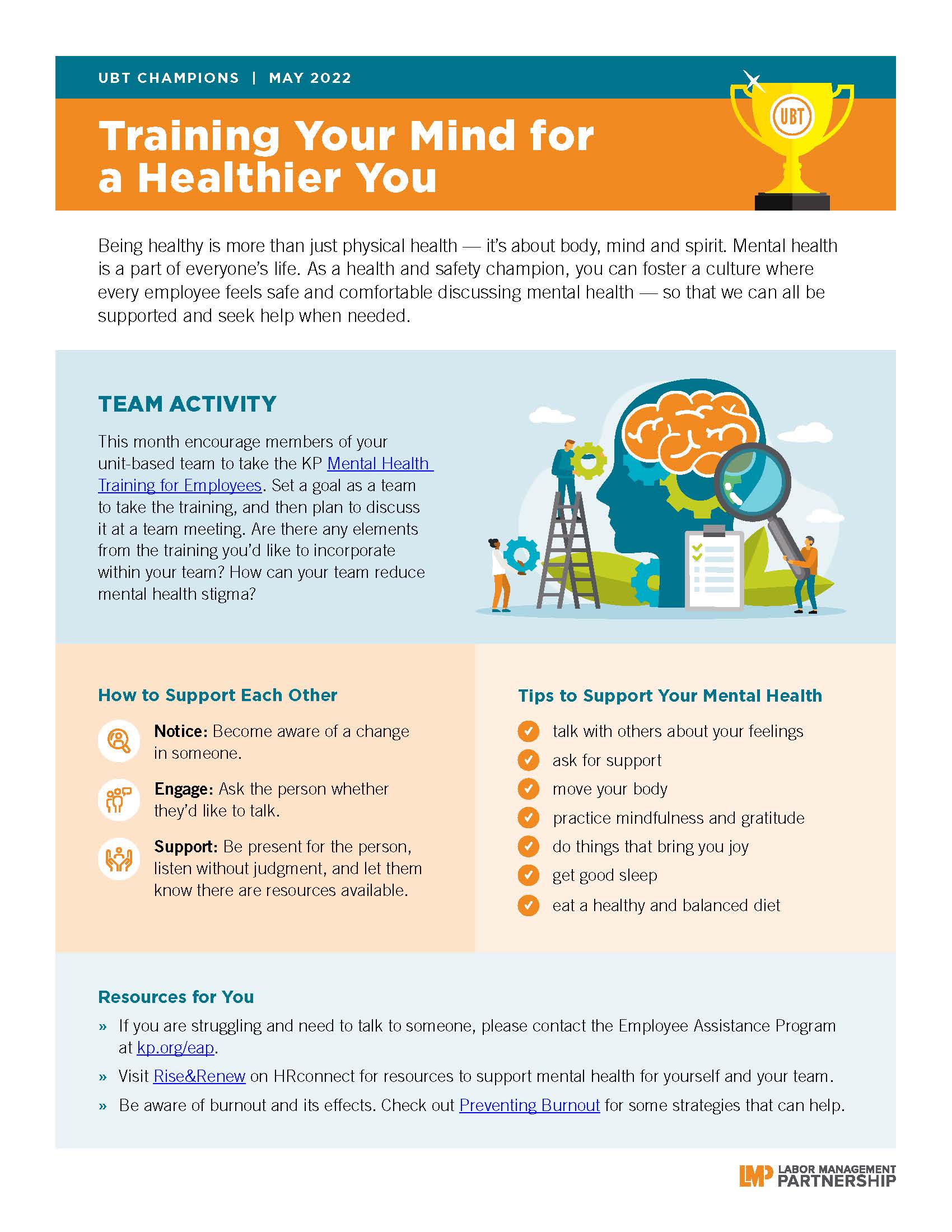
Stop the stigma of mental health and start a conversation with your team to support each other in a safe and inclusive way. Get your brain in shape by taking KP's Mental Health Training for Employees.
Format:
PDF
Size:
One page, 8.5" x 11"
Intended audience:
UBT health and safety champions
Best used:
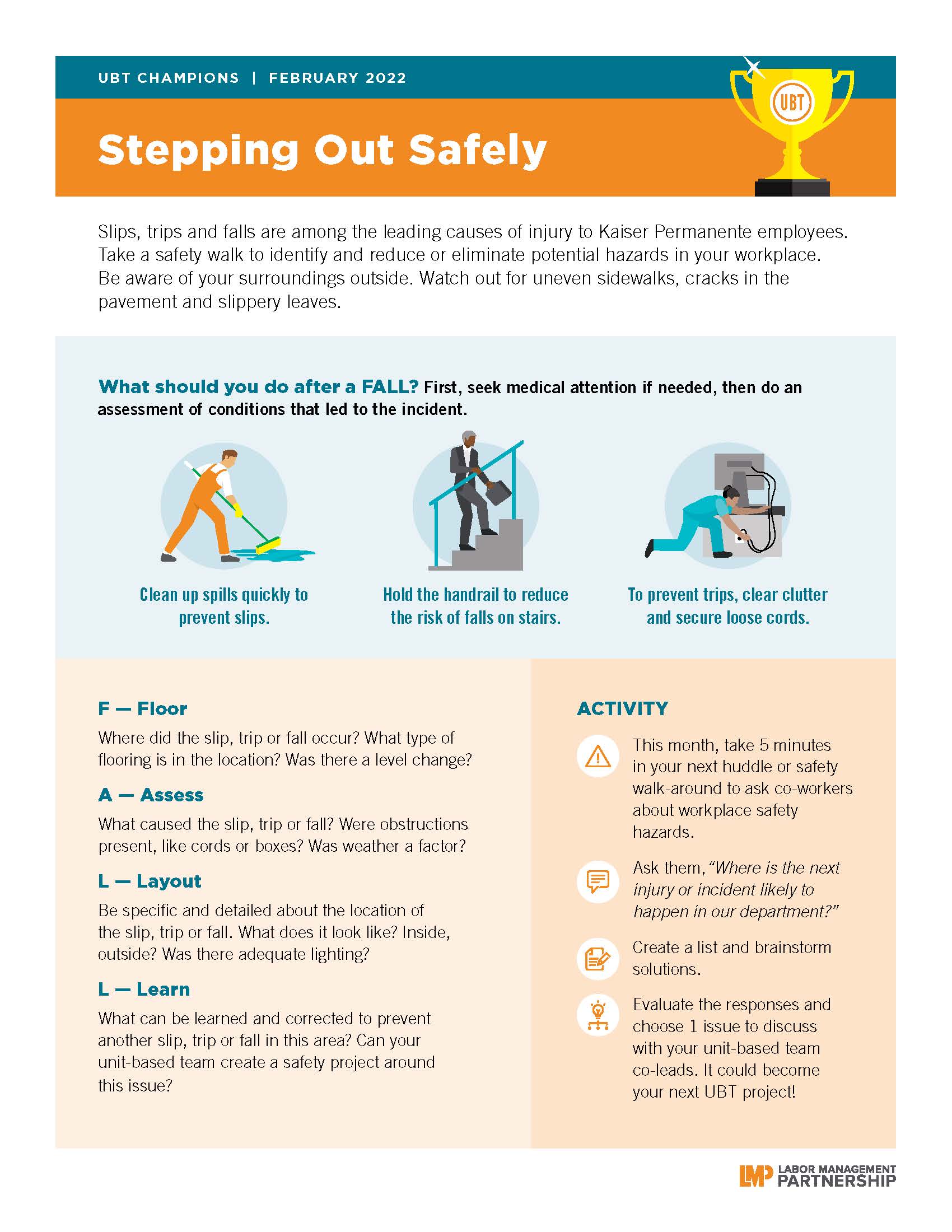
Safety is everyone's responsibility. Be aware of what's around you and keep these tips top of mind.
Format:
PDF
Size:
One page, 8.5" x 11"
Intended audience:
UBT health and safety champions
Best used:
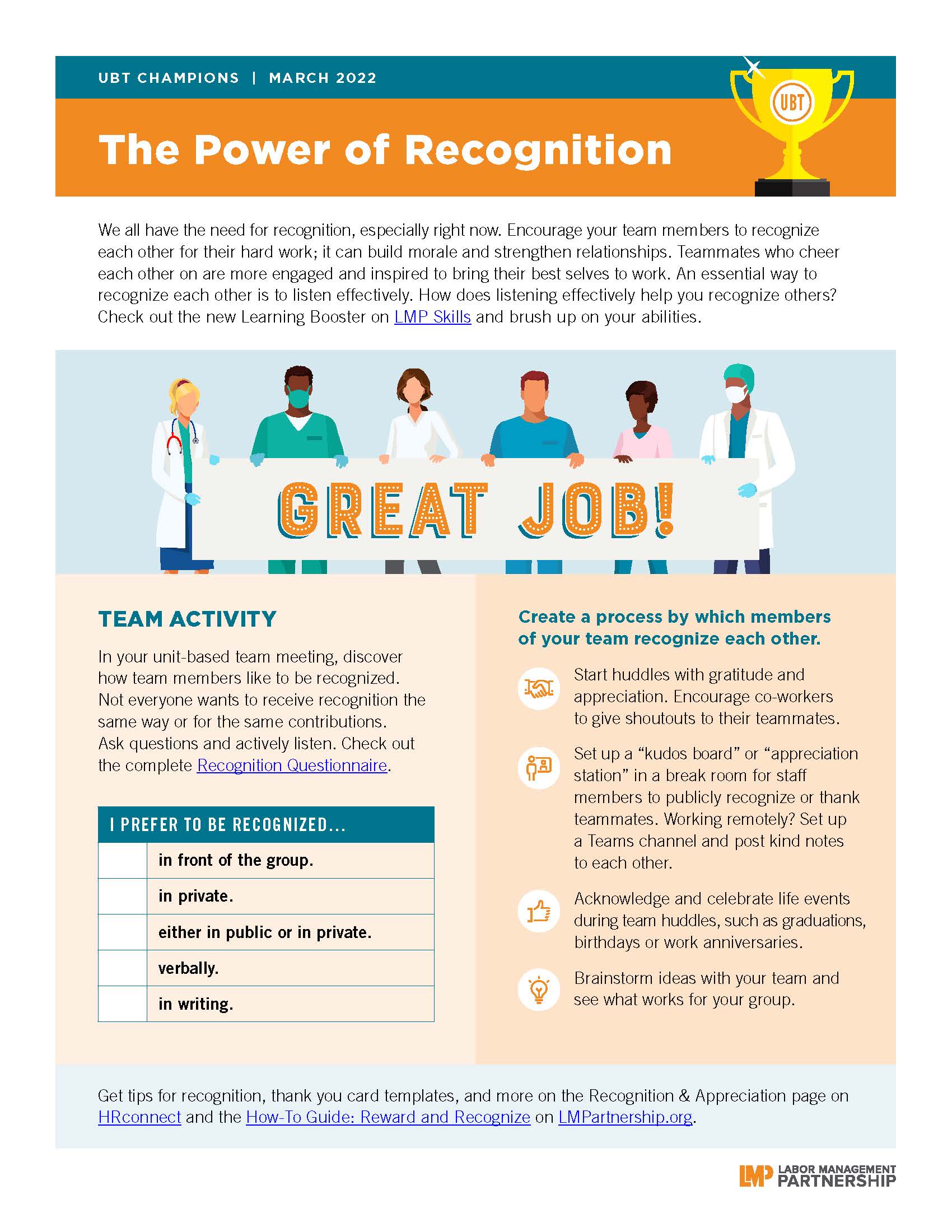
Want to feel more engaged, valued and inspired at work? Embrace the power of recognition!
Format:
PDF
Size:
One page, 8.5" x 11"
Intended audience:
UBT health and safety champions
Best used:
Safety can be a team sport! Encourage your teammates to hold safety conversations and identify hazards in your workplace. Working safely is a great reward.
Format:
PDF
Size:
One page, 8.5" x 11"
Intended audience:
UBT health and safety champions
Best used:
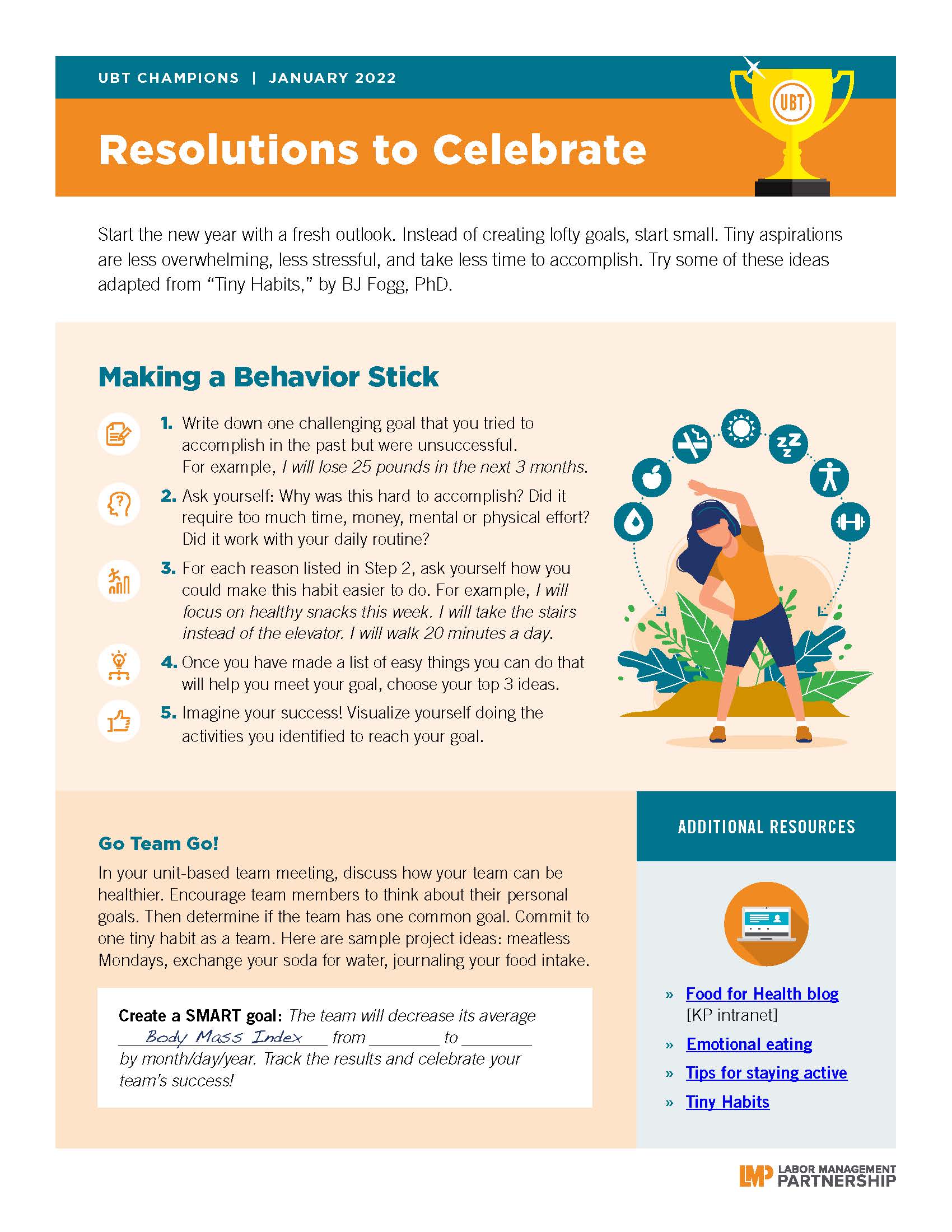
Banish the lofty goals of the past and focus on the achievable.
Caretia Silva, a licensed clinical social worker, is a labor improvement adviser with the Alliance of Health Care Unions in Portland, Oregon, and a member of OFNHP. As many nonclinical employees prepare to return to the office, she offered advice about ways to reduce stress related to the latest challenges of COVID-19.
Many employees will soon return to the office. What feelings might they experience?
For some folks, working from home has been wonderful; for others, it’s been very stressful. Many people were managing a lot of competing priorities with children at home, online schooling, sharing “office” space with partners at home and extended family concerns.
Some people may experience anxiety, grief, excitement, anticipation — and many other feelings as they encounter unknowns — with returning to the office. For folks who have already returned to the clinics, they’ve had a gradual reintroduction and the process has been slightly more paced, although it hasn’t been without stress.
What tips do you have for staff preparing to return to the office and send their children back into the classroom?
There are bound to be challenges as we work out new routines. Anything you can do the night before to prepare for the next day is a good idea — set out clothes, load backpacks, make lunches. It can also be beneficial to have a consistent and routine bedtime, not just for your children, but also for yourself. If you have trouble settling down at night, try the Calm app.
In the morning, set yourself up for success for the day by building in “transition time” — this is time to get people from the house to the car, including all the needed gear for the day. Building in transition time allows for any last-minute items and reduces the stress of being late. If you arrive early at school with the kids, take advantage of the one-on-one time with encouraging words to pump them up for their day. It only takes a few minutes to make a meaningful connection with your kids.
How can team members set each other up for success in the workplace?
Coming back to the office or clinic is a major change compared to working from home.
And some folks never left the clinic. Everyone had their own unique experience over the last year and a half. This transition will take some adjusting. Fatigue among workers may be common due to the increased social interaction. In the beginning, people may feel some nervous energy bouncing off each other as they acclimate to the new environment. It’s important to give people the time and space they may need to reacclimate to an in-person work environment.
How can unit-based team co-leads support their teams?
People will acclimate to the office environment at different times. When people seem fatigued, be aware that they might need some space.
Sometimes people need to take a break and disengage from the group. It’s a process that allows them to realign and center themselves. Have empathy for staff adjusting to this change.
How can unit-based teams use LMP tools to help them through this time?
The Partnership behaviors are a solid foundation for teams to ground themselves, and the Free to Speak tools are also good to foster a culture of trust and engagement. This might be a good time for a UBT to take another look at its ground rules and see if the rules need updating. Interest-based problem solving can also be useful for teams struggling with processes that have been adapted or need to change.
What advice do you have for managers during this transition?
The success I’ve seen with managers is when they are authentic with their staff and allow themselves to be seen. They don’t have to reveal personal secrets, but when anyone is sincere and approachable, there is more trust and engagement.
What else is important to consider?
The world has changed in ways we never saw coming. The pandemic was catastrophic and, on top of that, we also dealt with social justice issues and political unrest. It’s important to acknowledge how these and other challenges — such as financial insecurity and housing insecurity — have contributed to stress and anxiety for many people. Self-care is crucial now more than ever.
How do I recognize signs of stress?
If close friends, family or loved ones have mentioned that you seem different, consider what they are saying. Are you more emotional — quick to cry, jump to anger or experiencing mood swings? Have your eating or sleeping habits changed? Changes and impacts to your daily living habits are signs that stress may be affecting you. Reach out to the Employee Assistance Program, find exercise you enjoy, or check out emotional wellness apps like Calm or myStrength.
Format:
PDF, 10 pages
Size:
8.5 "x 11"
Intended audience:
Labor and management leaders who support UBT health and safety champions
Best used:
Use this 10-page guide to provide champions with support and updates, listen to their successes and challenges, and reconnect them with the purpose of their role.
Format: DOC
Size: 8.5" x 11"
Intended audience: Supporters of the UBT Health and Safety Champions Program
Best used: Use this template to inspire a culture of health and safety. No special design skills or software needed! Just pop in your own text and headline.