Southern California

Help Video

How to Find UBT Basics on the LMP Website

Learn how to use the LMP website:

LMP Website Overview

Learn how to use the LMP website:

How to Find How-To Guides

This short animated video explains how to find and use our powerful how-to guides

Learn how to use the LMP website:

How to Find and Use Team-Tested Practices

Does your team want to improve service? Or clinical quality? If you don't know where to start, check out the team-tested practices on the LMP website. This short video shows you how. 

Learn how to use the LMP website:

How to Use the Search Function on the LMP Website

Having trouble using the search function? Check out this short video to help you search like a pro!

Learn how to use the LMP website:

How to Find the Tools on the LMP Website

Need to find a checklist, template or puzzle? Don't know where to start? Check out this short video to find the tools you need on the LMP website with just a few clicks. 

Learn how to use the LMP website:

TOOLS

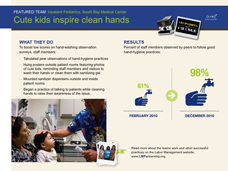
Powerpoint: Cute Kids Inspire Clean Hands

Format:
PPT

Size:
1 slide

Intended audience:
LMP staff, UBT consultants and performance improvement advisers

Best used:
This Powerpoint slide highlights a team that boosted its scores on hand-washing observation surveys. Use in presentations to show some of the methods used and the measurable results being achieved by unit-based teams across Kaiser Permanente.

Related tools:

TOOLS

Powerpoint: Neonatal Unit's "3 C's" for Outstanding Service

Format:
PPT

Size:
1 Slide

Intended audience:
LMP staff, UBT consultants, improvement advisers

Best used:
This Powerpoint slide spotlights a Neonatal Intesive Care Unit that improved families' understanding and perception of their infant's pain management. Use in presentations to show some of the methods used and the measurable results being achieved by unit-based teams across Kaiser Permanente.

Related tools:

TOOLS

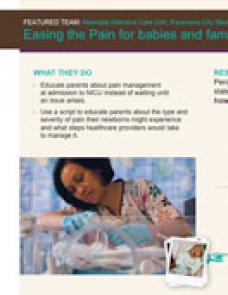
Powerpoint: Easing the Pain for Babies and Families

Format:
PPT

Size:
1 slide

Intended audience:
LMP staff, UBT consultants, improvement advisers

Best used:
This Powerpoint slide spotlights a Neonatal Intesive Care Unit that improved families' understanding and perception of their infant's pain management. Use in presentations to show some of the methods used and the measurable results being achieved by unit-based teams across Kaiser Permanente.

Related tools:

TOOLS

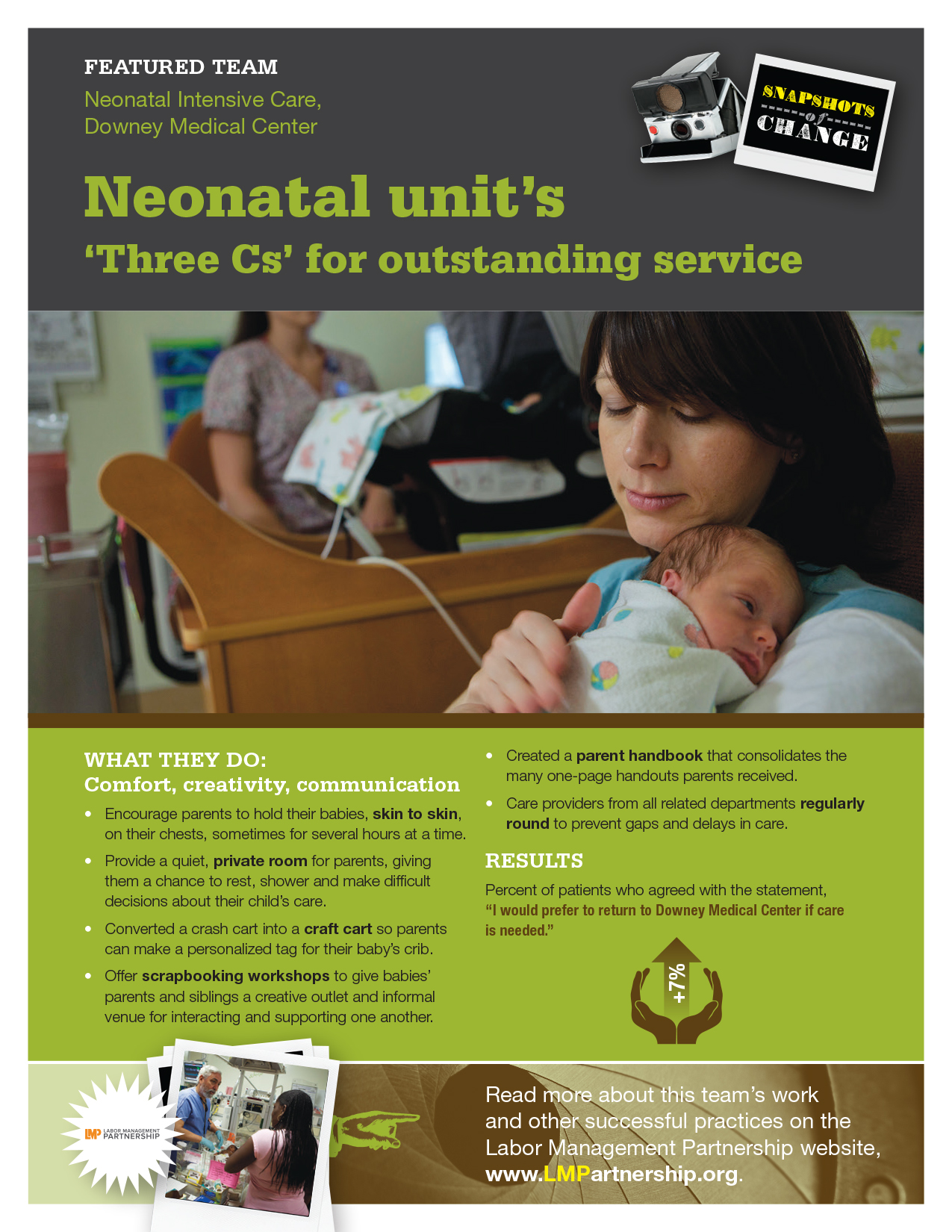
Poster: Neonatal Unit's Three C's for Outstanding Service

Format:
PDF

Size:
8.5" x 11"

Intended audience:
Frontline employees, managers and physicians

Best used:
This poster highlights a team that increased the percentage of patients who want to return to that facility to deliver their child. Use on bulletin boards, in break rooms and other staff areas.

Related tools:

TOOLS

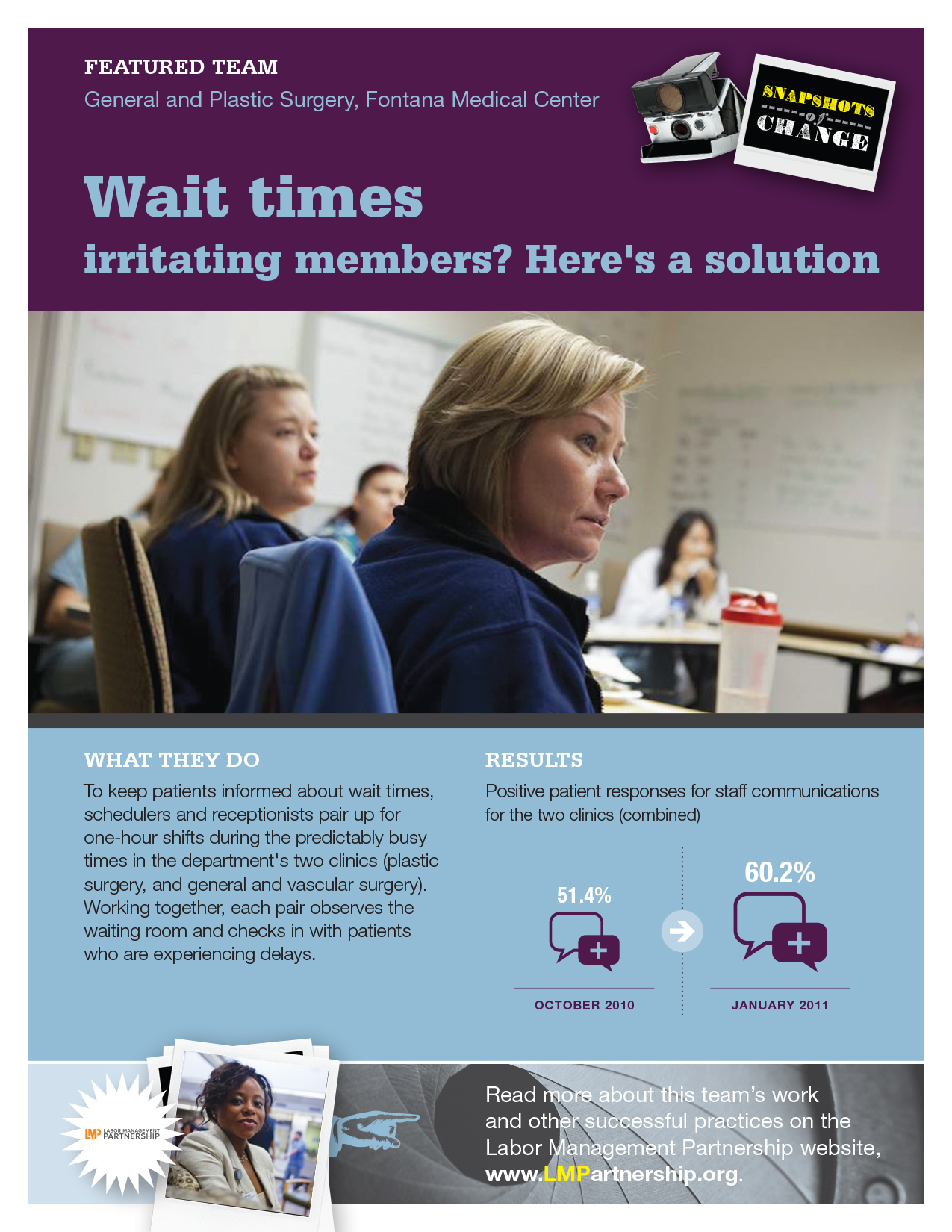
Poster: Wait Times Irritating Members?

Format:
PDF (color and black and white)

Size:
8.5" x 11"

Intended audience:
Frontline employees, managers and staff

Best used:
This poster, for use on bulletin boards in break rooms and other staff areas, features a surgery team that found a way to make waiting less painful.

Related tools:

Competition Can Create a Safer Workplace

Deck: 
Contest helps members alert their colleagues about unsafe practices

An industrial kitchen can be a dangerous place, with its sharp knives, wet floors, plentiful grease and hot temperatures.

Vanessa Bethea, a lead hospitality associate and member of SEIU UHW, still remembers when she witnessed a colleague being injured by a huge meat slicer.

The kitchen at the Panorama City Medical Center, where Bethea works, is a 54-member department, covering two shifts with staggered start times. It was also among the most injury-prone groups at the medical center, so hospital leadership asked the department to come up with a plan to improve its safety record.

The nine-member representative group for the UBT came up with the idea of dividing the department into two teams (simply named Team A and Team B) and sponsoring a friendly competition between them for a pair of movie tickets.

This motivated—and liberated—the staff to approach their colleagues who might be performing a task unsafely and suggest an alternative approach.

“We were ‘big brothering’ each other, which helped us catch things that could have led to an accident,” Bethea says. “It kept a friendly flow throughout the day and created more awareness of safety hazards.”

The team went nearly a year without any accepted claims for workplace injuries, down from about one injury a month.

Bethea says naysayers wanted to infect others in the department with negative attitudes, but the team overcame the hurdle by emphasizing how improving safety will help the whole department.

They also encouraged those naysayers to join the UBT’s representative group.

For more about this team's work to share with your team and spark performance improvement ideas, download a powerpoint.

Helping NICU Parents Understand About Pain

Deck: 
Team helps explain what is going on with their infant

The NICU at Panorama Medical Center wasn’t happy with their pain management rating.

But they also knew that managing pain for babies was completely unlike managing pain for adults.

So they felt it was incumbent upon them to explain to concerned parents how they were treating their infant.

“Our patients can’t tell us what they feel,” says Casey Koenig, one of the unit’s RNs. “And we know there are times we might cause pain.”

Those painful procedures might include when a nurse pricks a baby’s heel to draw blood or needs to starts an IV.

The caregivers’ challenge was not only to manage the baby’s pain but also to alleviate parents’ anxieties and manage their expectations. Less-than-stellar scores further motivated team members.

To improve their communication, they created a script to help explain what was going on. This included the type and severity of pain their newborns might experience. and what steps providers would take to manage it.

After the changes, scores jumped to 100 percent.

The scripts also helped nurses to deliver better service as they realized they needed to start coaching parents as soon as babies are admitted to the NICU.

After all, moms have just given birth and concerned parents may be distracted.

“It may not sink in the first time,” Koenig says.

For more about this team's work to share with your team and spark performance improvement ideas, download a powerpoint.

Patient Safety: Why Aren't More Teams Taking It On?

Deck: 
Unit-based teams have huge potential for improving patient safety. So why are so few taking it on?

Story body part 1: 

The patient in the operating room was moaning and suffering sudden seizures. A half-dozen caregivers crowded around him, attempting to stabilize him as they watched his vital signs on a monitor.

This might have been a normal June afternoon in the OR at Sunnyside Medical Center in the Northwest region—except the patient was a mannequin. The staff members were being videotaped as part of a simulation to help operating room personnel learn and practice effective techniques for keeping patients safe during and after surgeries. Afterward, they did a debrief, discussing what worked and what didn’t with their unusual patient.

It’s all part of how this regional surgical services team, composed of the co-leads of several unit-based teams at different ambulatory care centers and at Sunnyside, operates. From 2009 to 2010, for example, it reduced the rate of surgical site infections by an impressive 32 percent. These results came from implementing proven practices for reducing infections, such as safety simulations, hand hygiene and clipping (rather than shaving) patients’ hair at the surgical site.

They also came from an explicit effort to change the culture standing in the way of patient safety. A 2010 safety summit involved everyone in the associated departments—from surgeons to techs to EVS workers, inpatient and ambulatory. Team members shared best practices and discussed ways to have an open dialogue so that when something isn’t right, each person has the accountability and the freedom to speak up.

 “In the past,” says surgeon Waleed Lutfiyya, “everyone had a single role and couldn’t break out of that role. There were defined borders about what someone could say. That can create obstacles.”

Now, he says, “The idea is that by working together as a team, everyone has an equal role with the patient. Everyone is equally important.”

The summit included a presentation on the importance of developing a culture of safety.

 “Team behaviors do matter,” says Lutfiyya. “Team behaviors affect clinical outcomes.”

Research backs him up. A 2009 study published in The American Journal of Surgery tracked nearly 300 observations by RNs of operations at four Kaiser Permanente sites. The conclusion: Patients whose surgical teams exhibited fewer teamwork behaviors were at a higher risk for death or complications. These observable behaviors revolved around information sharing during various phases of surgery.

In short: Patient safety depends on good communication. From there, it’s easy to see that, since unit-based teams provide a structure and the tools for improving team communication, they are a path to improving patient safety.

Perfectly logical, right? Yet only a tiny fraction of UBT projects aim to improve patient safety, according to data in UBT Tracker, the programwide system for reporting on unit-based teams.

What’s going on? Patient safety projects seem like ideal candidates for unit-based teams, touching all four points of the Value Compass. Keeping patients safe from harm delivers on best quality and best service. Such projects address affordability: In the Northwest, the decrease in infections for the specific procedures being monitored has resulted in an estimated cost avoidance of $220,000. Patient injuries can be devastating to individual and team morale, so intentional efforts to minimize them help create the best place to work.

And who benefits or suffers most if teams do or don’t take on this work?

 “We all owe it to the patient,” says Doug Bonacum, Kaiser Permanente’s vice president of Safety Management. “We need to find ways to help people reach deep down and say, ‘I am not comfortable, I have a safety concern.’ It is top down and bottom up. It has to be both.”

When top-down transforms into teamwork

The fact is, there is plenty of work going on throughout Kaiser Permanente on patient safety. Much of it, however, has a top-down, mandatory quality to it—with little or no emphasis on involving frontline staff on how to go about meeting the goals and improving performance.

In the Northwest, for example, switching to a new dress code based on Association of periOperative Registered Nurses (AORN) recommendations was a top-down mandate. One of the changes included replacing the skull cap, which did not always cover all of a person’s hair, with a bouffant cap.

 “We assumed, ‘Well, this is the right thing to do for the patient,’ and staff would just do it,” says Claire Spanbock, the regional ambulatory surgery director, acknowledging the limits of the approach. But, “We had people we had to tell again and again. We realized we were making a big change and not involving them….We got there, but it was tough.”

In contrast, when it came to hand hygiene, members of the regional OR UBT sat down together and revised the audit tool several times before settling on the best version.

 “You are never going to do this until you have the hearts and minds of the staff,” says Spanbock.

When the right eye is the wrong eye

One reason relatively few teams are working on patient safety may be that until a team has strong communication skills in place—developed in the course of working on simpler improvement projects—its members may shy away from high-stakes efforts.

The Northeast Ohio ophthalmology team already was one of the highest-performing UBTs in the Ohio region when it decided to not take the team’s clean safety record for granted. Its co-leads—the ophthalmologist, ophthalmic technicians and manager—worked together to implement a patient safety briefing immediately prior to all eye procedures.

The idea is an enhanced version of a timeout, when a surgery team pauses before a procedure to engage in a structured communication with the patient to verify key information. It came from the ambulatory surgery center at the Parma Medical Center, where several ophthalmology staff members work.

 “We just felt that it would be wise to be proactive,” says Ralph Stewart, MD, the team’s physician co-lead. “There’s no danger of cutting off a leg in our department, but you do need to think about right eye or left eye.”

The team already had worked together to improve wait times and courtesy and helpfulness of staff, so had built the trust and free-flowing communication culture that is at the heart of patient safety efforts. It embraced the idea and, after resolving concerns about the time the safety briefing would take, began brainstorming about what the ophthalmology timeout would be like.

 “We split into two different groups that included physicians and technicians, and we discussed which part was going to be the responsibility of the ophthalmologist and which was going to be the responsibility of the technician,” says Renee Paris, a lead ophthalmic technician and an OPEIU Local 17 member.

 “It took us a couple of months to get it together,” says Bonna Gochenour, an RN and the team’s management co-lead. “We had to create some ‘smart phrases’ to help us with documentation. When the technician goes into the room with the patient, they’re going to confirm with the patient which eye it is, and the tech puts a little smiley face over the correct eye.” The doctor then does a second verification before beginning the procedure.

In late January, in a textbook small test of change, the team piloted the safety briefing for one month with one physician and one tech.

After a few adjustments—like making sure each procedure room has its own supply of the stickers—the UBT implemented the procedure throughout the department, which encompasses teams at four different facilities in three counties.

Sandy Cireddu, a certified ophthalmic technician and the team’s labor co-lead, is proud of the accomplishments. She thinks the open channel of communication developed through the UBT has been critical to its success.

 “Everybody needs to be heard,” says Cireddu, a member of OPEIU Local 17, “and everyone needs to feel you’re on equal ground when you’re discussing these things, so that you can get buy-in.”

Surgical site infections down

At the Woodland Hills Medical Center in Southern California, a campaign to reduce surgical site infections in the labor and delivery department is working.

The department dropped from a rate of five surgical site infections per 100 caesarean sections performed in the second quarter of 2009 to none in the second quarter of 2010.

After a brief rise, the rate headed down again; at the end of the first quarter of 2011, it was less than one per 100. Moreover, the only infections since the third quarter of 2009 have been superficial; there have been no deep or organ-space infections.

The campaign includes a focus on pre-op skin prep, educating new moms on post-op wound care, prophylactic antibiotics, hand hygiene, and trying to reduce traffic flow of staff and families near the operating rooms.

And, as in the Northwest, the effort included enforcement of the AORN guidelines for surgical attire. Out went the skull caps sewn by Min Tan, an obstetrics tech and SEIU UHW member, who helped her colleagues spice up their scrubs by making them custom caps with their favorite patterns—anything ranging from the L.A. Lakers basketball team to spicy-colored chili peppers.

She took the new dress code in stride. “The Labor Management Partnership is about fixing things,” says Tan. “It helps us in not finger-pointing and blaming. It’s not as intimidating as ‘the old days.’ ”

The department’s labor co-lead, Robin Roby, an RN and UNAC/UHCP member, agrees.

 “We are becoming part of the solution,” she says. “You feel like you are more involved with what goes on in the unit.”

That involvement is what makes UBTs a foundation for improving patient safety; engagement is the key to effective implementation.

Louise Matheus, the department administrator at Woodland Hills’ labor and delivery unit, acknowledges that focusing on reducing infections was a management decision. But, she says, the department’s progress in controlling infections “is a UBT effort because we involved the whole staff” in implementing the changes.

And Matheus makes it clear she’s looking forward to the day when frontline physicians, managers, nurses and techs use the leverage created by unit-based teams to accelerate improvements in patient safety.

When that day comes, she says, “It won’t be small test of change—it will be large test of change.”


TOOLS

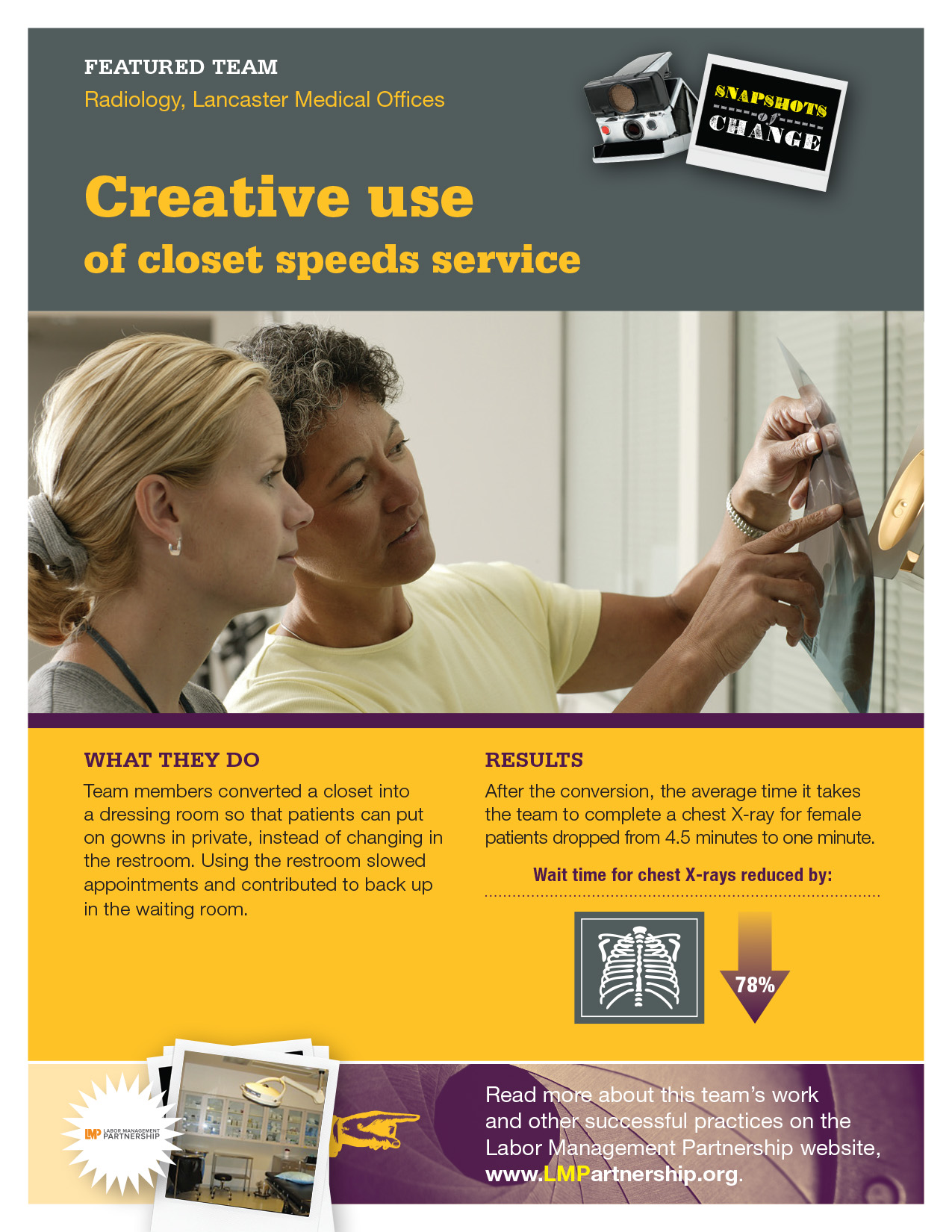
Poster: Creative Use of Closet Space Speeds Service

Format:
PDF

Size:
8.5" x 11"

Intended audience:
Frontline employees, managers and physicians

Best used:
This poster, suitable for bulletin boards in break rooms and other staff areas, spotlights a Radiology team that sped up service by converting a closet into a dressing room.

Related tools:

Like Night and Day

Deck: 
At KP, health care is 24/7, and unit-based teams are finding ways to fix a longstanding weak link--the disconnect between shifts

Story body part 1: 

In health care, there is no such thing as “normal business hours.” Babies insist on being born at 3 a.m. A car crash or bursting appendix can land a patient in the Emergency Room at noon or midnight or 5 a.m. To prevent infections, the cleanliness of hospital rooms is just as important at 4 a.m. as at 4 p.m.

So what’s a unit-based team to do? Full participation in a team’s performance improvement work from all members on all shifts can send service and quality scores soaring—while shifts left out in the cold can drag down a whole department. It’s hard enough ensuring all members of a single shift are on board.

But getting everyone onboard around the clock is a daunting challenge. Shifts that pass in the night may be oblivious to the other’s particular challenges and culture. They might not fully understand how their own work affects the other shift’s workflow. Rivalries and finger-pointing can ensue.

NIGHT OWLS IN THE LAB

As the double doors swing open, cold night air blasts into the receiving bay at the Regional Reference Laboratory in North Hollywood, California. Employees are ready, bundled up in knit scarves and hoodies. It’s 11:30 p.m. on a mid-February night, and couriers are delivering gray cooler bags filled with vials and tubes of specimens from all over Southern California. Clinics from Kern County in the north to San Diego, nearly 180 miles south, have closed for the evening. Now all of those blood tests and urine samples have to be processed and analyzed so providers can detect disease or spot the warning signs of a developing chronic condition.

At the specimen processing department, the graveyard shift is the busiest. “We’re like the mailroom,” says Leland Chan, supervisor and management co-lead. More than 10,000 specimens go to the automated chemistry department during the graveyard shift, compared with about 4,300 in the morning and nearly 9,000 at night.

Michael Aragones, the labor co-lead, likens the three shifts to gears all rotating together and powering each other forward. But not so long ago, the gears were getting jammed up.

Building resentments

Something was going on: Staff members on each shift thought the workload wasn’t being distributed equally—and they were getting the short end of the stick. Employees with different duties on the same shift felt the same way about their peers.

“There was a lot of ‘back talk’ between the shifts,” says Aragones, a lab assistant II and member of SEIU UHW. “People would say, ‘How come they are doing this or that?’ and ‘How come I have so much work?’ ”

The unit-based team was the vehicle for improving the workflow. Team members from all shifts got involved collecting, collating and analyzing data about the specimen count, hour by hour.


Riverside EVS attendant Virginia Gonzalez, a United Steelworkers Local 7600 member.

The results revealed why employees were feeling overworked: Between 2008 and 2010, the number of specimens going to bacteriology, for instance, increased from fewer than 4,000 to more than 5,000. Moreover, the time of night that most specimens arrived had changed. The lab used to see a big spike around 9:30 p.m.; now the rush came about 11 p.m. So the team adjusted the start and end time of the graveyard shift to match the flow of work coming in.

“At first, there was a lot of resistance,” Chan says, with employees worried about child care arrangements and traffic. The data, however, “gave us a better understanding of the workflow,” which let staff members see why they were being asked to make changes. “It was the UBT that helped solve that.”

 “It wasn’t managers saying, ‘Well, you just have to,’ ” Aragones says. “We have to look at workflow for the whole department, not just one shift. It’s like a spider web. You pull one strand, and it affects the whole thing.”

Now that the work is flowing better, the UBT is working on new initiatives.

“The UBT makes my life easier,” says Chan. “It allows me to work more closely with the crew because we are on equal terms. Sometimes, as a manager, you don’t have all the answers. They do the work, they are the experts.”

COOKING UP CAMARADERIE

It is 7:15 p.m. in the kitchen of the Downey Medical Center. “Huddddlllle!” shouts Francisco Vargas, a gentle giant of a man. The sound of his booming voice echoes off the tile floors and stainless steel work surfaces. One of about 20 SEIU UHW members working the night shift in the Food and Nutrition department, Vargas gathers the troops before they begin to wash dinner trays and deliver late meals to patients.

Assistant Department Administrator Patricia Villareal and her union partner Amelia Cervantes review new data on the team’s improvement projects, such as cooking less soup on weekends so less is wasted, and give a reminder about clocking in accurately.

The huddle ends with a team cheer—“Work hard, stay positive!”—and with that, food service kitchen worker Nancy Rudeas, an SEIU UHW member, and a colleague scurry off to prepare two late dinner trays. They double-check to see that a patient’s special request for green tea is being filled (it is).

“I love doing this,” Rudeas says, heading up on the elevator.

A few late tray deliveries have become a fact of life for the department, a consequence of abandoning set meal times in favor of a “room service” model: Patients simply make a phone call when they are ready for a meal, just like a hotel guest might.

This patient-centered innovation meant the workflow changed. Foreseeable peaks and valleys in cooking and cleaning became a less predictable, variable demand. Tasks that once had been the domain of one shift or the other “leaked” into the next shift. Tensions rose among employees as the distribution of work was thrown into flux.

“Because we have a UBT, we could sit down together and ask, ‘How can we get this resolved?’ ” says Villareal.

Together, the team experimented with adjusting start times for different jobs in the department until it settled on a mix that’s working. “The morning picks up for the night shift, and the night shift picks up for the morning,” she says.

From OK to great

The department set out to improve its customer service scores in September 2008. Though a respectable 86.7 percent of patients surveyed agreed with the statement “the people serving my meals were polite and professional,” that was nonetheless among the lowest scores in the Southern California region.

Together, the UBT members came up with a script that encourages food service workers to introduce themselves by name, ask if they can open any containers, and—most crucially—ask if there is anything else they can get for the patients. By consistently using the script, by October 2010, the score shot up to 99 percent.

Night-shift workers like Rudeas have contributed to that success. The shifts share information in huddles and bulletin boards.

“What goes on during the day, we know at night,” she says. “And what goes on at night, they know during the day.”

A SWEEPING SUCCESS

The Environmental Services department at Riverside Medical Center is continuing its winning streak: In 2010, it went 260 days without a workplace injury. The UBT received a huge banner congratulating it on the achievement, and the co-leads thought it would be nice if each team member signed it before hanging it up.

The banner remained out for a few days to make sure all staffers had a chance to sign—including the workers who come in at 11 p.m. for the graveyard shift. Only then was the banner hung up on the unit wall.

“This made a huge difference,” says Angel Pacheco, who will become the new management co-lead in May and who himself works the night shift. “This actually shows that everyone is involved and can take pride and ownership.” After all, performance metrics are measured by department, not shift, and night shift workers contributed to creating a safer workplace as much as their day shift counterparts.

The EVS team posts a flipchart sheet after every monthly UBT meeting with three to four important items of information to pass on to the rest of the staff. Each shift reviews the sheet at a daily huddle held at the beginning of each shift. The quick review of UBT business, including key performance metrics, follows the team’s stretching exercises that have helped reduce workplace injuries and won it recognition throughout KP.

The sheet hangs on the door of the supply closet, where each staff member comes when starting work to get carts, trash bags and keys to the offices they have to clean. This strategic placement ensures workers from all shifts have access to the daily UBT updates.

Face time matters

Face-to-face communication augments written communication and helps build the camaraderie that helps teams improve performance. For instance, Pacheco makes a point of visiting the night workers in the outlying medical office buildings—he drives an hour to Temecula to see one employee.

“It’s worth it,” he says. “I just take the time to reflect on things.”

Paula Cunningham, an EVS attendant and member of Steelworkers Local 7600, is one of four union members on the 6 p.m. to 2 a.m. shift responsible for passing information from the UBT’s representative group meeting to her shift colleagues.

“They trust us to deliver the information to them,” says Cunningham, whose work schedule is adjusted so she can attend representative group meetings in the early afternoon. “We talk frequently and rely heavily on huddles.” Other night shift workers also rotate into the group’s meetings.

Because he’s an on-call employee, Robert Casillas works all the shifts, so he has insights into what makes each shift unique.

The morning shift is more hectic, he says. The evening work is much calmer. More people are cleaning sections solo, but they pass one another in the hallways and share information with each other then.

“We have our communications plan, which we share with the other staff,” Casillas says. “We don’t want anyone to think we’re hiding stuff. And when the information comes from us, it’s less like a demand from management. It’s more about figuring out ideas to help us do our work.”

Sometimes, seeing the hospital at the end of the day as they do, it is night shift employees who spur the entire department into action.

The night workers noticed the hospital was running low on privacy curtains. When the ones soiled during the day were taken down, there were not enough from the laundry to replace them. Cunningham brought the information to the representative group, and the co-leads secured more curtains.

“What affects the night shift,” she says, “usually affects all of us.”

 

Pages

Subscribe to RSS - Southern California