Frontline Physicians

Help Video

How to Find UBT Basics on the LMP Website

Learn how to use the LMP website:

LMP Website Overview

Learn how to use the LMP website:

How to Find How-To Guides

This short animated video explains how to find and use our powerful how-to guides

Learn how to use the LMP website:

How to Find and Use Team-Tested Practices

Does your team want to improve service? Or clinical quality? If you don't know where to start, check out the team-tested practices on the LMP website. This short video shows you how. 

Learn how to use the LMP website:

How to Use the Search Function on the LMP Website

Having trouble using the search function? Check out this short video to help you search like a pro!

Learn how to use the LMP website:

How to Find the Tools on the LMP Website

Need to find a checklist, template or puzzle? Don't know where to start? Check out this short video to find the tools you need on the LMP website with just a few clicks. 

Learn how to use the LMP website:

Admissions: Let Patients Know Your Role

Deck: 
Being helpful is a start, and a gift doesn't hurt

During the normal stress of being admitted to the hospital, it's not always clear to patients and their families who does what.

And if a nurse or clerk can’t answer a question on admissions, the patient can get frustrated.

So it was in the admitting department at Fremont Medical Center in Northern California, where patients gave low satisfaction scores regarding the process.

“Many different staff use the word ‘admitting,’ so we needed to make sure we stood out, and that patients knew when their admission officially began and ended,” says labor co-lead and admitting representative Joanna Nelson.

Team members thought one of their biggest challenges was making sure patients knew when they were dealing with admitting staff versus other employees.

They first tried using scripted language, the “Right Words at Right Time” (RWRT) approach to let patients know when the actual admission process had started and the representative’s role.

When that failed, the UBT added another level of patient service and rounding, which included a small gift and card.

The gifts were mostly Kaiser Permanente brand items including cups, tablets, aprons, vases or plants. Admitting representatives also gave personal cards to each patient.

“We came up with an extra-special plan for our new admissions. Once the patient was admitted, the Admitting rep went back up to the room—either later that same day or the next day—and gave our patients a welcome gift,” shop steward and OPEIU Local 29 member Nelson says, describing the gesture as a “thank you for choosing our hospital.”

And it worked.

In four quarters, polite and professional customer service scores improved 21 points, and efficient and easy customer service scores picked up three points.

The team also helped by letting patients know how all the pieces fit together.

“Personalize your admitting process,” says Fonda Faye Carlisle, manager, Admitting and Patient Financial Services. “Since the admitting department is not the only voice that says, ‘I will be admitting you,’ admitting needs to personalize so the patient can differentiate between them and others, such as nursing.”

There were team benefits, as well, beyond the scores. Department morale and attendance also increased.

“Our satisfaction is seeing our patients happy and watching our scores improve,” Nelson says.

TOOLS

Team Presentations on Patient Safety

Format:
Powerpoint

Size:
41 pages

Intended audience:
Frontline employees and managers

Best used:
These slides were presented by three teams that shared their outstanding work on patient safety in a virtual UBT Fair in March, 2013. Use to spread best practices on patient safety.

The teams featured are:

  • Cumberland (GA) infectious diseases/oncology team on medication reconciliation
  • Rock Creek (Colorado) gastroenterology team on equipment cleanliness
  • South San Francisco (NCAL) radiology team on a stop-the-line process to prevent wrong-site X-rays


Related tools:

TOOLS

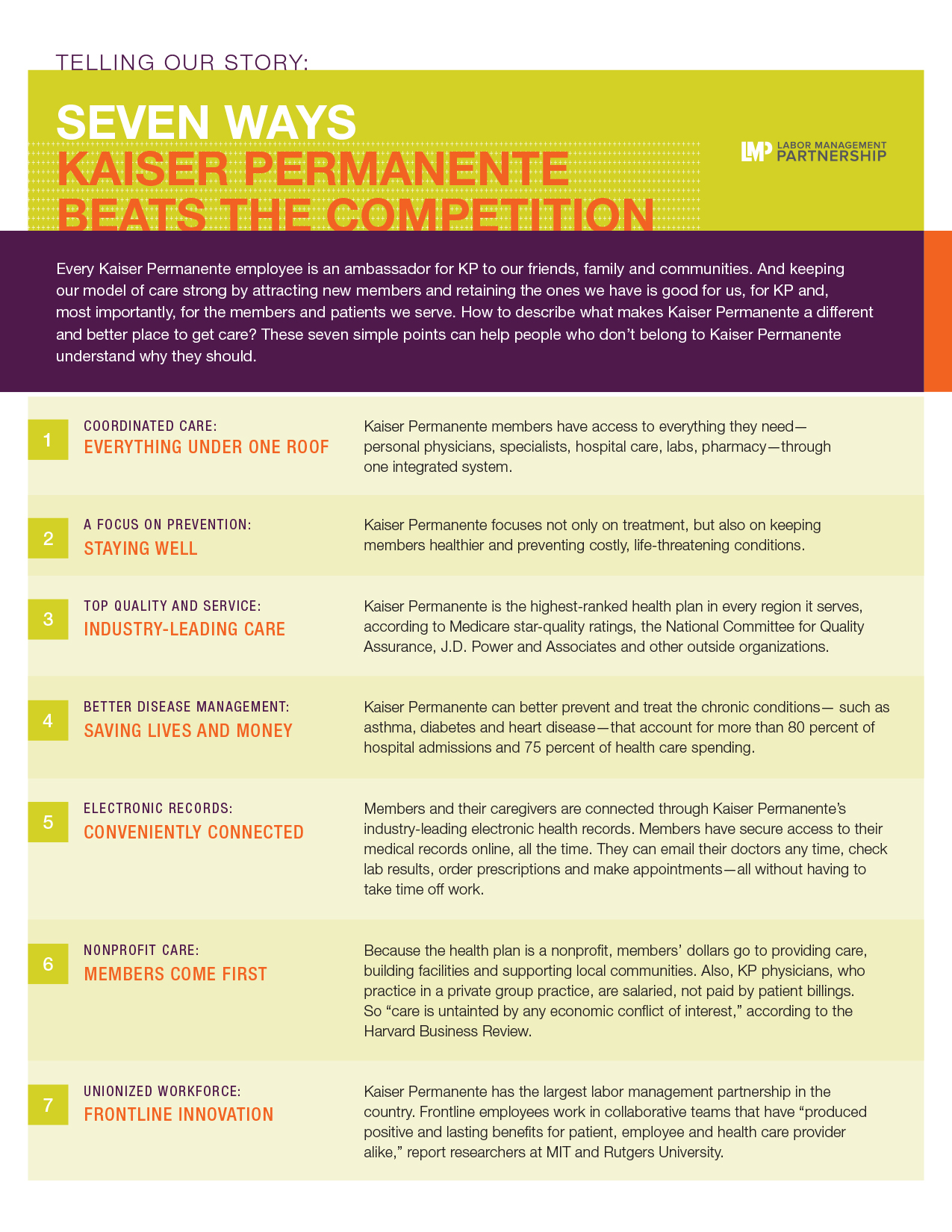
Telling Our Story

Format:
PDF

Size:
8.5" x 11"

Intended audience:
Frontline employees and teams

Best used:
This one-page tipsheet with seven short talking points describes KP's advantages as a health plan. Use to understand how Kaiser Permanente is different and better than other health plans, and to encourge non-members to consider joining KP.

Related tools:

TOOLS

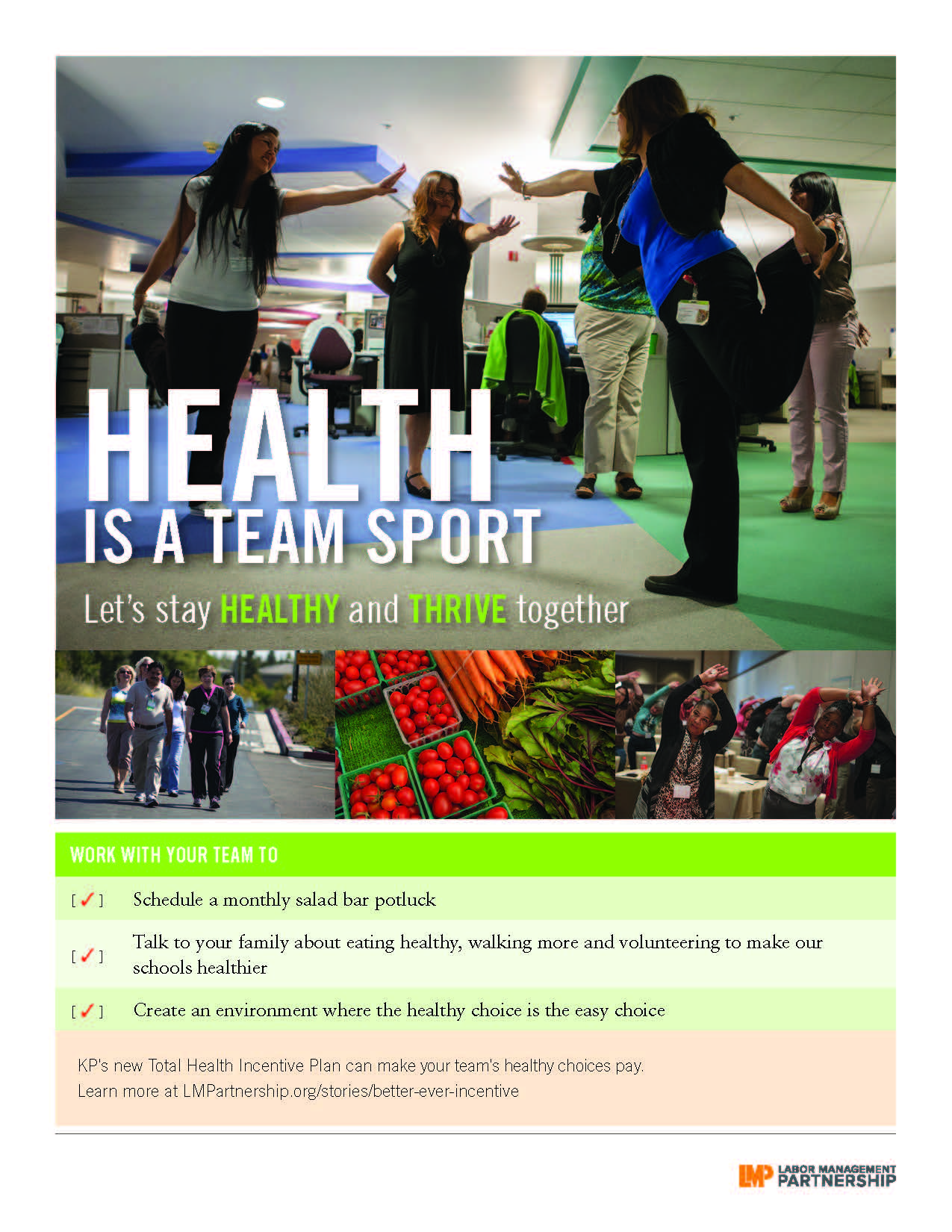
Poster: Health Is a Team Sport

Format:
PDF

Size:
8.5" x 11"

Intended audience:
Frontline employees, managers and physicians

Best used:
Spread the word throughout your staff that the healthy choice is the easy choice. Get involved in workplace wellness.

Related tools:

TOOLS

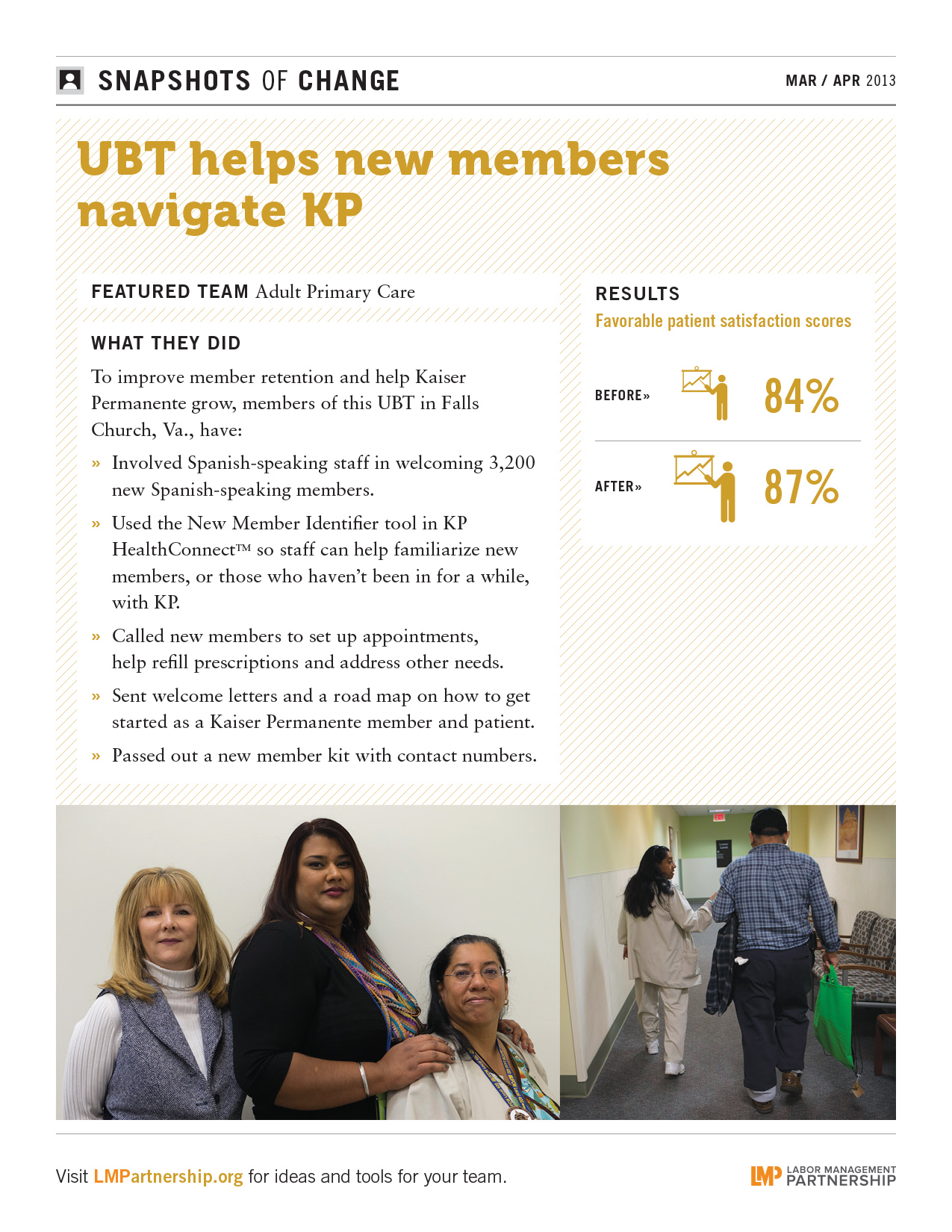
Poster: UBT Helps New Members Navigate KP

Format:
PDF

Size:
8.5" x 11"

Intended audience:
Frontline employees, managers and physicians

Best used:
This poster features a Mid-Atlantic States team that has found a way to help new members transition smoothly to KP. Post on bulletin boards in break rooms and other staff areas.

Related tools:

TOOLS

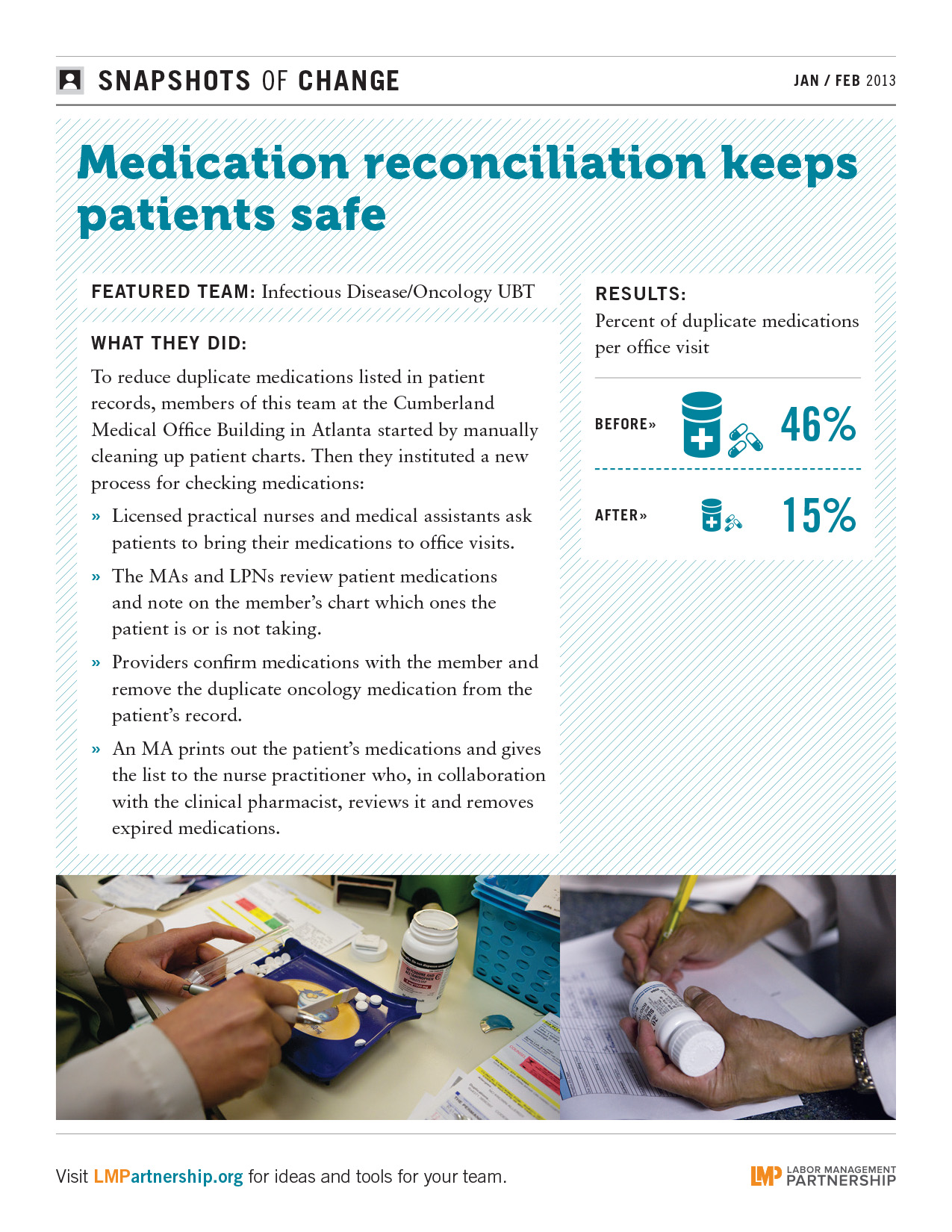
Poster: Medication Reconciliation Keeps Patients Safe

Format:
PDF

Size:
8.5” x 11”

Intended audience:
Frontline employees, managers and physicians

Best used:
This poster highlights a Georgia team that reduced duplicate medications listed in patient records. Post on bulletin boards, in break rooms and other staff areas.

Related tools:

Reducing Duplicate Meds Is Good Patient Care

Deck: 
Team looks to avoid errors and costly hospital stays

An accurate list of a patient’s prescriptions is critical to maintaining continuity of care.

It also helps to decrease medication errors, and one of the Joint Commission’s national patient safety goals requires medication reconciliation at hospitals and clinics.

So, in order to protect patient safety, it's crucial caregivers compare the medications a patient is taking (and should be taking) with newly ordered medications.

The Infectious Disease/Oncology team at Cumberland Medical Office Building in Atlanta had a high percentage of patient records in KP HealthConnect that listed duplicate medications.

To improve medication reconciliation, the team did a manual cleanup of patient charts over a period of several weeks. Then it instituted a new process for checking medication. They had the licensed practical nurses (LPNs) and medical assistants (MAs) call patients and ask them to bring their bottles of medication to their office visit.

During the initial workup, the MAs and LPNs reviewed patient medications, and checked off in the members’ charts which medications the patients were and were not taking.

The providers then confirmed medications once again with the member and removed all possible duplicate oncology meds from the patient’s record.

In collaboration with the clinical pharmacist, the MAs printed out a snapshot of the patient’s medications and gave it to the nurse practitioner for review and removal of any expired medication.

As they found success, the team included more medications in the process.

For instance, the team members reviewed patient records for infusion medications and one-time-only meds a patient might need to take before a procedure. Infectious disease pharmacists also began removing duplicate medications for their overlapping oncology patients.

Team members reviewed statistics for duplicate medications from KP’s National Reporting Portal, analyzed the data at huddles and posted it in the department.

They also monitored whether providers increased the number of times they had to reorder medications (which would indicate they were too aggressive in deleting prescriptions). As it turned out, the reorder rate was unaffected by the project.

The percentage of duplicate medications fell to 15 percent, far exceeding the team’s goal. And by avoiding hospital admissions due to inadequate medication reconciliation, the team saved $90,000 in three months.

It also created better communication with patients.

“Knowledge is power,” says Gwendolyn Brown, the team’s management co-lead. “It helped patients and their families ask more questions.”

And a full team effort helped the project succeed, as they moved from Level 2 to 4 in Path to Performance.

“It is tiring and frustrating when you are the only person doing the work,” says Brown. “Here, everyone is involved.”

For more about this team's work to share with your team and spark performance improvement ideas, download a poster or powerpoint.


How UBTs Help Doctors Improve the Care They Give

Deck: 
Show its value by taking the mystery out of the UBT

Story body part 1: 

David Jones, MD, works in the Georgia region with the Southeast Permanente Medical Group. He has been with the medical group for more than 11 years, and currently works in the Panola Medical Office. He spoke with LMP senior communications consultant Julie Light.

Q. What is your partnership role?

A. My role with the Labor Management Partnership in Georgia is assistant to the medical director for unit-based teams. I serve as the physician regional co-lead for all the UBTs for the region. I’m excited about this role and how it can help engage our physicians.In this role, I work closely with all of the teams, with a particular focus around supporting the physicians and helping them understand the value of UBTs and how UBTs really can improve what we do day to day in the offices and how they can improve the care for patients. It also means removing any potential barriers that the physicians may face, or anticipate, to allow them to be more engaged with the UBT process.  Another part of my role is working with our unit-based team’s resource team. In that capacity, I bring more of a clinical perspective to UBTs.

Q. How do teams improve care?

A. A project I had personal involvement with was the pediatric team at our Panola office, which addressed ADHD (Attention Deficit Hyperactivity Disorder) medication management. Before our UBT project, we were meeting the goal of having a follow-up visit within 30 days approximately 25 percent of the time. Through our UBT work, we increased those results to reaching and sustaining a rate above 90 percent after three months.

Q. Why haven’t more physicians embraced partnership?

A. The first thing I tell physicians about the UBTs is that it is about improving the work that we’re already doing. It’s not about adding more work, it’s about looking at the work that you're doing and figuring out how to do it better.

I think one of the barriers physicians face has been just lack of understanding. It wasn’t clear to physicians the value that UBTs can bring to the team. So it’s taking the UBT process and putting that into terms that are meaningful to physicians. Time is always a barrier for most people, and particularly for physicians. That’s why it’s important to have them understand that it’s not about doing more or working harder, it’s about working better. This is a very new way of thinking about teamwork. It’s about the physician being engaged and involved and still having a leadership role, but also embracing the value and the input, perspectives, talents and skills of the whole team, and understanding how everybody can share the same goal and work together and improve the accountability across the board.

What it really takes is physicians and teams going through the process. I can talk with them all I want, and tell them how it is in theory, but once they start to go through the process and see the results, and see how morale and efficiency improves—that’s when they become believers.

Physician Sponsor Profile: Tom Harburg, MD

Story body part 1: 

Tom Harburg, MD, is the physician in charge at Division Medical Office in the Northwest. He co-sponsors two primary care teams in the medical office along with the medical office manager and their labor partners. “Doctors can’t be cowboys anymore,” says Dr. Harburg, referring to physician Atul Gawande’s New Yorker article “Cowboys and Pit Crews.” Harburg agrees with Gawande that doctors need to work in a team environment and that, as Gawande wrote, “places that function most like a system are most successful…(where) diverse people actually work together to direct their specialized capabilities toward a common goal for patients.” Dr. Harburg talked with LMP communications consultant Jennifer Gladwell about being a sponsor and the value of having the physician involved in the team.

Q. What is your role as a sponsor?

A. As the medical director of the clinic, I work with the medical office manager and labor partners to help sponsor the teams. We help facilitate leadership. I think the strength of the unit-based teams lies with the grassroots approach. The ideas come from the front line. My role is to help build awareness and alignment to the goals of the organization and ensure that our approach is member-centric.

Q. What’s the biggest barrier you see?

A. The measurement is the biggest barrier. We have to be able to measure our performance to see if what we’re doing has any effect on our patients.

Q. How do huddles improve the work of the team?

The true benefit of the huddles is communication. There’s a social aspect to in-person huddles that allows you to address issues that pop up. It also facilitates learning and disseminating information—like the first day of a new protocol, you can remind folks at the huddles. I also think it’s a morale builder. Huddles foster good camaraderie. We only have two huddles per week at the clinic, but we have been doing huddles for three years. We’ve changed the time of the huddles based on the clinic hours, and now we’re going back to mornings.

TOOLS

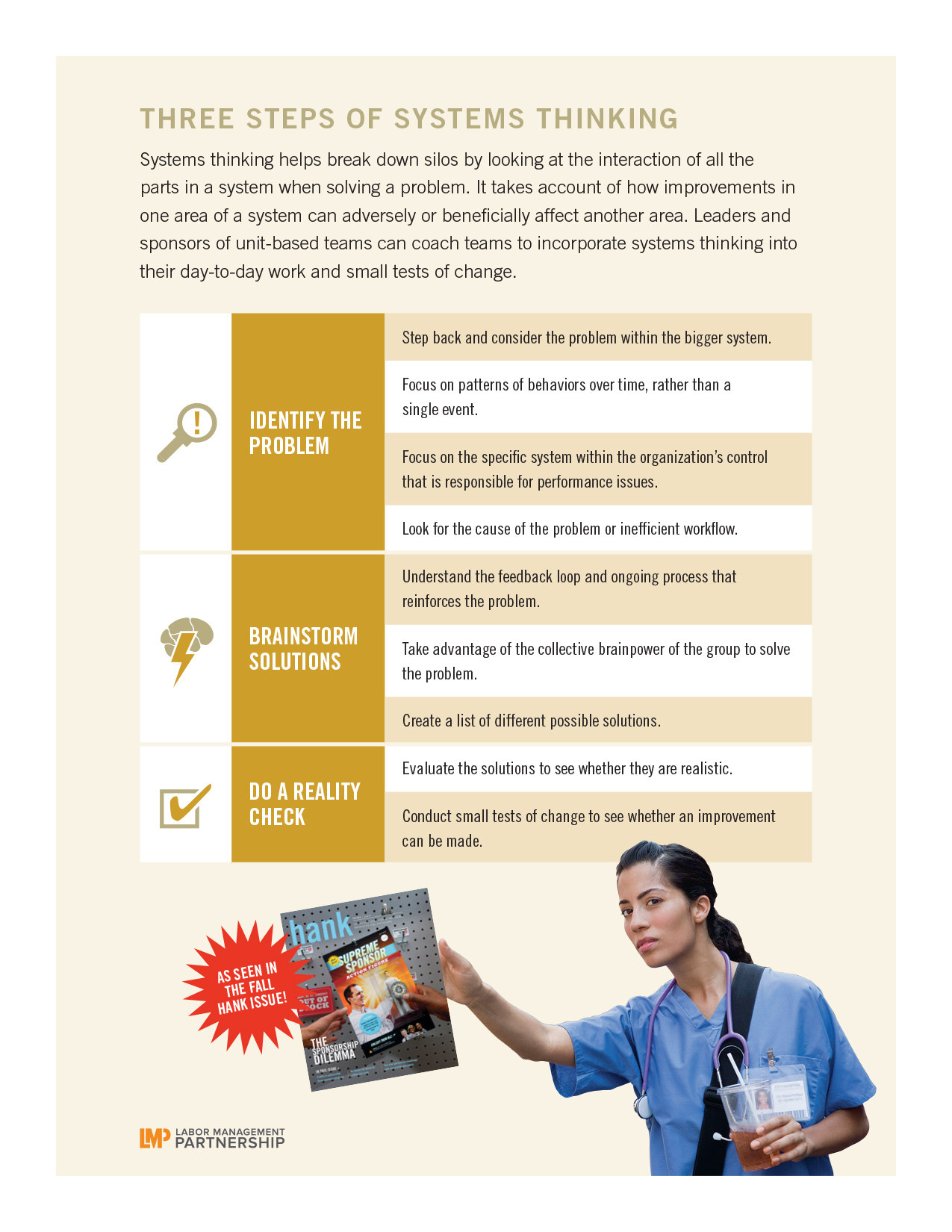
Poster: Three Steps of Systems Thinking

Format:
PDF

Size:
8.5" x 11"

Intended audience:
Frontline employees, managers and physicians

Best used:
This poster, for use on bulletin boards in break rooms and other staff areas, explains how the three steps of systems thinking can be used when solving a problem.

Related tools:

Pages

Subscribe to RSS - Frontline Physicians