Frontline Physicians

Help Video

How to Find UBT Basics on the LMP Website

Learn how to use the LMP website:

LMP Website Overview

Learn how to use the LMP website:

How to Find How-To Guides

This short animated video explains how to find and use our powerful how-to guides

Learn how to use the LMP website:

How to Find and Use Team-Tested Practices

Does your team want to improve service? Or clinical quality? If you don't know where to start, check out the team-tested practices on the LMP website. This short video shows you how. 

Learn how to use the LMP website:

How to Use the Search Function on the LMP Website

Having trouble using the search function? Check out this short video to help you search like a pro!

Learn how to use the LMP website:

How to Find the Tools on the LMP Website

Need to find a checklist, template or puzzle? Don't know where to start? Check out this short video to find the tools you need on the LMP website with just a few clicks. 

Learn how to use the LMP website:

TOOLS

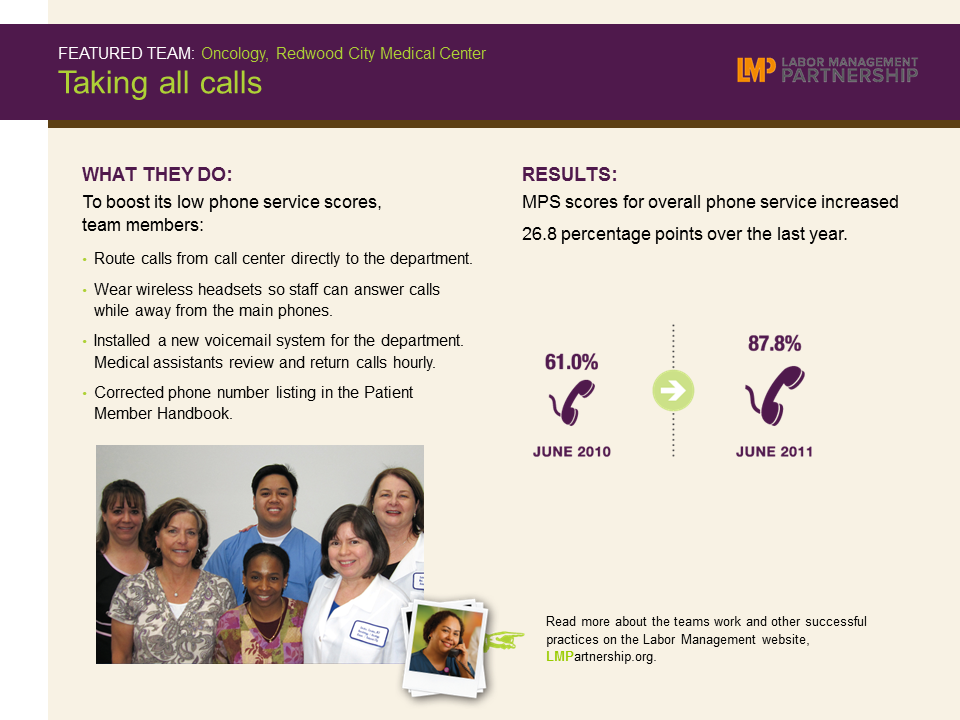
Redwood City UBT Improves Phone Service

Format:
PowerPoint slide

Size:
8.5" x 11"

Intended audience:
Frontline teams, managers, sponsors, physicians

Best used:

This one-page slide shows how the Oncology unit-based team in Redwood City boosted its low phone scores. Save on to your computer to include in meetings or presentations as an example of UBT performance around telephone service.

Related tools:

TOOLS

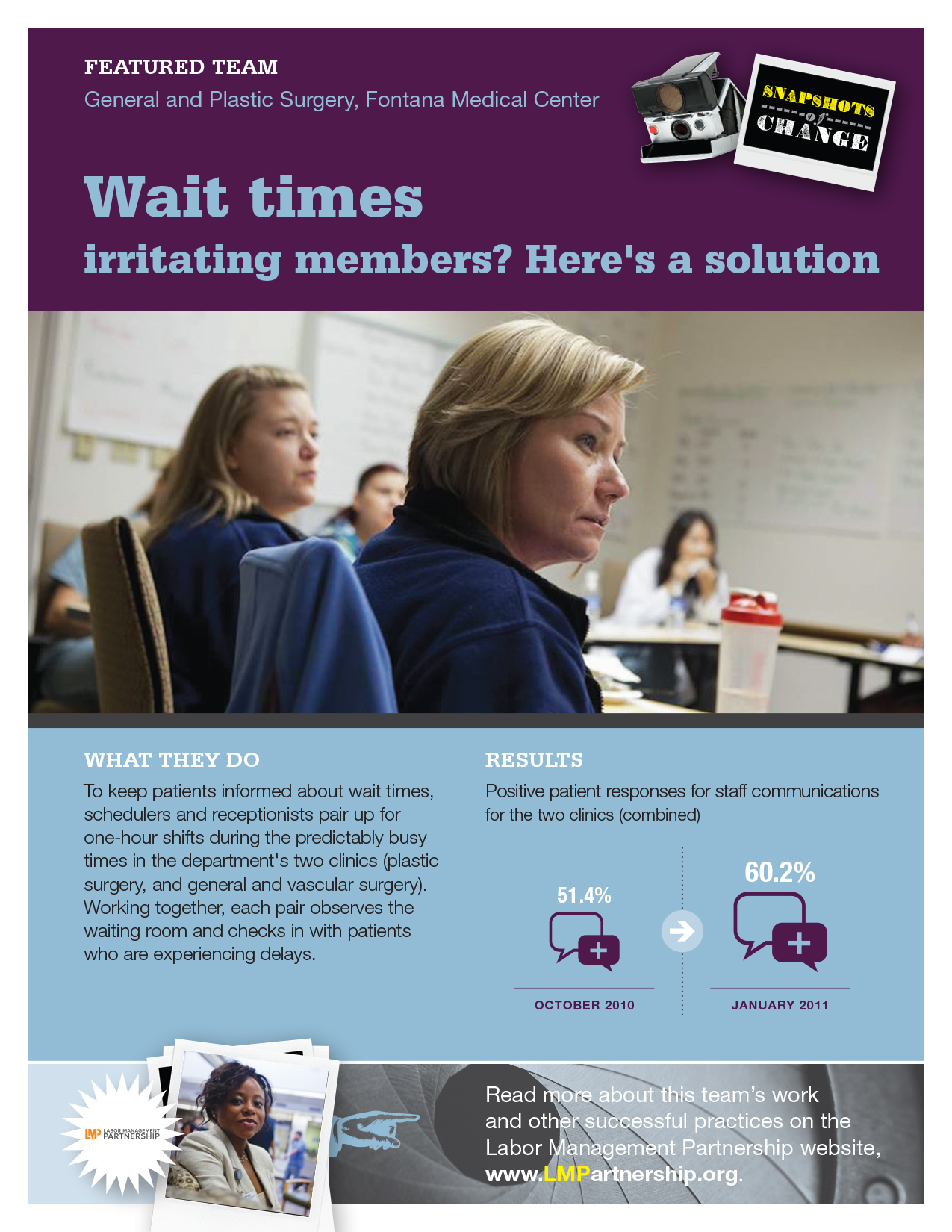
Poster: Wait Times Irritating Members?

Format:
PDF (color and black and white)

Size:
8.5" x 11"

Intended audience:
Frontline employees, managers and staff

Best used:
This poster, for use on bulletin boards in break rooms and other staff areas, features a surgery team that found a way to make waiting less painful.

Related tools:

TOOLS

UBT Fair Poster Template

Format:
Word document

Size:
8.5" x 11" 

Intended audience:
Frontline employees and stakeholders

Best used:
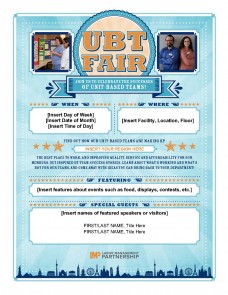
Use this fill-in-the blanks template to promote your UBT fair. Fill out template and download customized poster or flier to hand out at meetings or post on bulletin boards. Add details such as day, time and location and any special guests and activities planned for the fair. Post fliers in breakrooms, union halls and other places where frontline employees gather.

For more tools, please visit the How-To Guide: UBT Fair in a Box.

Related tools:

TOOLS

UBT Fair PPT Template for Team Presentations

Format:
PPT, 11 slides

Intended audience:
Frontline staff, managers, and physicians; regional and facility leadership.

Best used:
Unit-based teams can use this PowerPoint template to share their successful practices at a UBT fair or virtual gathering. This is an alternative to creating a storyboard. The template guides teams to insert key information (such as SMART goals, small tests of change, metrics, and learnings) onto each of the 11 slides for a quick and easy way to create a presentation for a UBT fair or similar event. 

For more tools, please visit the How-To Guide: UBT Fair in a Box.

Related tools:

TOOLS

UBT Fair Passports

Format:
Word documents, 1 page each

Size:
8.5" x 11"  

Intended audience:
Frontline teams, managers, sponsors, physicians and guests to use at UBT fairs to ensure they learn about the successful practices of several teams

Best used:
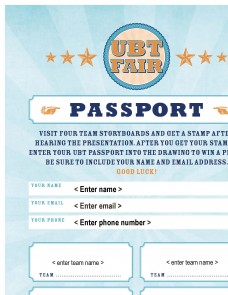
Download and hand out these passports at your UBT fair to ensure participants visit several teams (passports come in a six-team and a four-team version). Teams presenting at the fair can mark off participants’ passports with a pen or colorful sticker. Participants can redeem the passports for snacks or giveaways. Also use the passports as tickets for raffle drawings at your event.

For more tools, please visit the How-To Guide: UBT Fair in a Box.

Related tools:

TOOLS

Hawaii UBT Cuts Costs, Clutter

Format:
PowerPoint slide

Size:
8.5" x 11"

Intended audience:
Frontline teams, managers, sponsors, physicians

Best used:
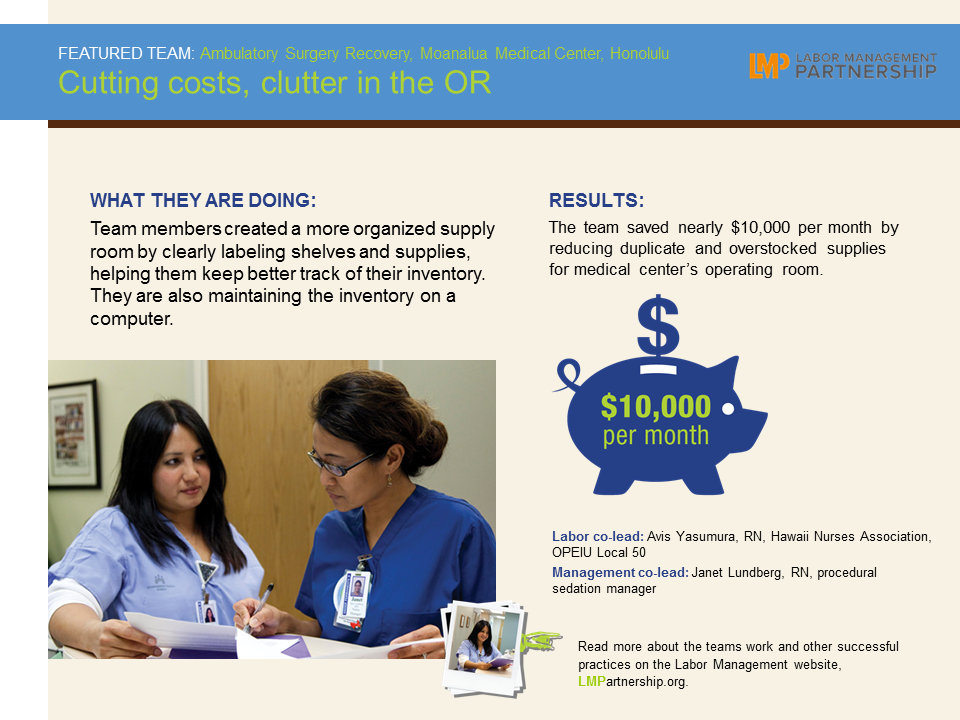
This one-page slide shows how an Ambulatory surgery recovery team in Hawaii saved nearly $10,000 per month by reducing duplicate and overstocked supplies in the Moanalua Medical Center operating room. Include in meetings or presentations as an example of UBT performance improvement.

Related tools:

The Best Approach Is a Team Approach

Deck: 
What UBTs offer docs

Story body part 1: 

I am a big proponent of the team approach to medicine. That’s why I am an active participant of my department’s unit-based team.

As the physician co-lead for the Pediatrics unit-based team, I participate in the UBT meetings both to give and to receive ideas. Ideally, a physician brings to a UBT the vision on how to work together to provide the best possible patient care, support for the management co-lead, and the willingness and openness to listen to what other people have to say. 

According to Dr. Atul Gawande, noted author and surgeon, it used to be that doctors were trained to be cowboys. They worked alone and saved the day. In today’s world, what people really need are pit crews, teams of people where everyone’s function is vital to the overall success of the enterprise. Medicine is no longer an individual endeavor—it has grown so complex and multifaceted that no physician can know everything. So we need to foster the team approach to give our patients the best possible care. 

When I first came to Kaiser nearly 10 years ago, the thing I heard that really stuck with me was the KP Service Quality credo: “Our cause is health. Our passion is service. We’re here to make lives better.” I immediately connected with it and have used it to filter everything I do. 

In other words, I always ask myself: Does what we are doing support our cause, passion and goal? If it does, then it’s usually worth doing. 

Advice to other physicians  

  • Say "thank you" and say "please." Really go out of your way to appreciate someone who comes up with an idea that has made your life easier. And do it publicly.
  • Make time for daily huddles with your staff.
  • Create an environment in which people feel free to share their ideas. One of the worst forms of waste is unused creativity.
  • Give people the benefit of the doubt; pause and reflect when you feel yourself getting upset.
  • Think outside the box. Go to staff members who aren’t at the nursing station to help out when needed. This gives the whole team a sense of ownership over patient care. 

Bottom line? Being a leader isn’t just about being in charge. Just because you’re a physician doesn’t mean you have to spearhead all of the work. If you really want to make a difference or a change, you have to include the entire staff. The work will get done better, faster and easier if we work together. And if you believe in the work that you are doing, then teamwork is a natural expression of patient care.

Tips on huddles

Huddles are a key part of my day. At the start of each day I review the day’s schedule with the medical assistant. I look for patient names that are familiar so that we are prepared for the day’s visits. For example, if I know that a patient has concerns that are likely to take up more than the usual 15-minute office visit, I will tell that to the medical assistants so they are prepared, and together, we give our patients the best care possible. 

These huddles are very informal, but they go a long way toward being prepared and letting the patients know they are well cared for.

TOOLS

Physician Co-Lead Role as a UBT Member

Format: Doc

Size: 8.5" x 11"

Intended audience: Physician co-leads

Best used: When starting a new UBT or when adding a new physician co-lead.

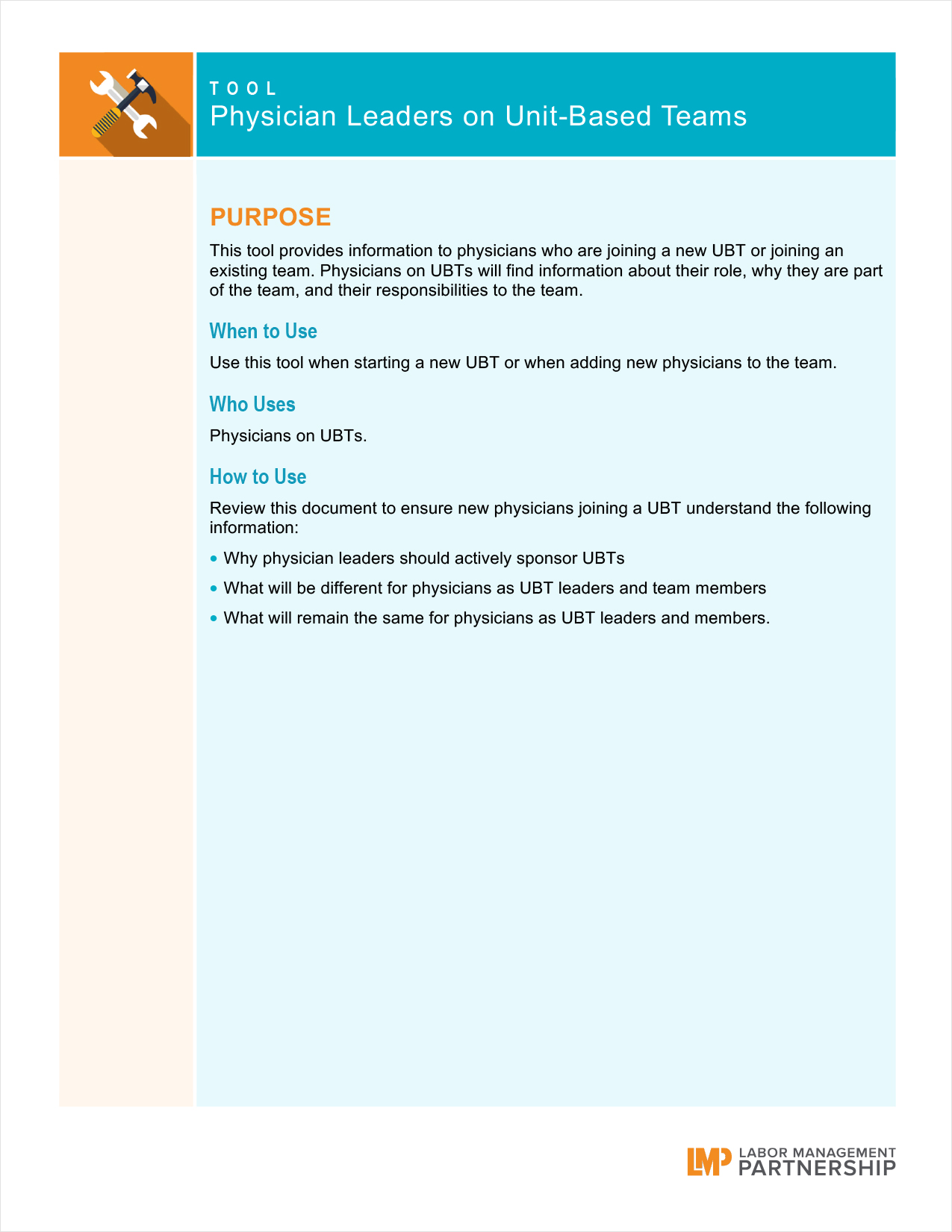
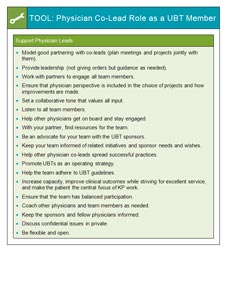
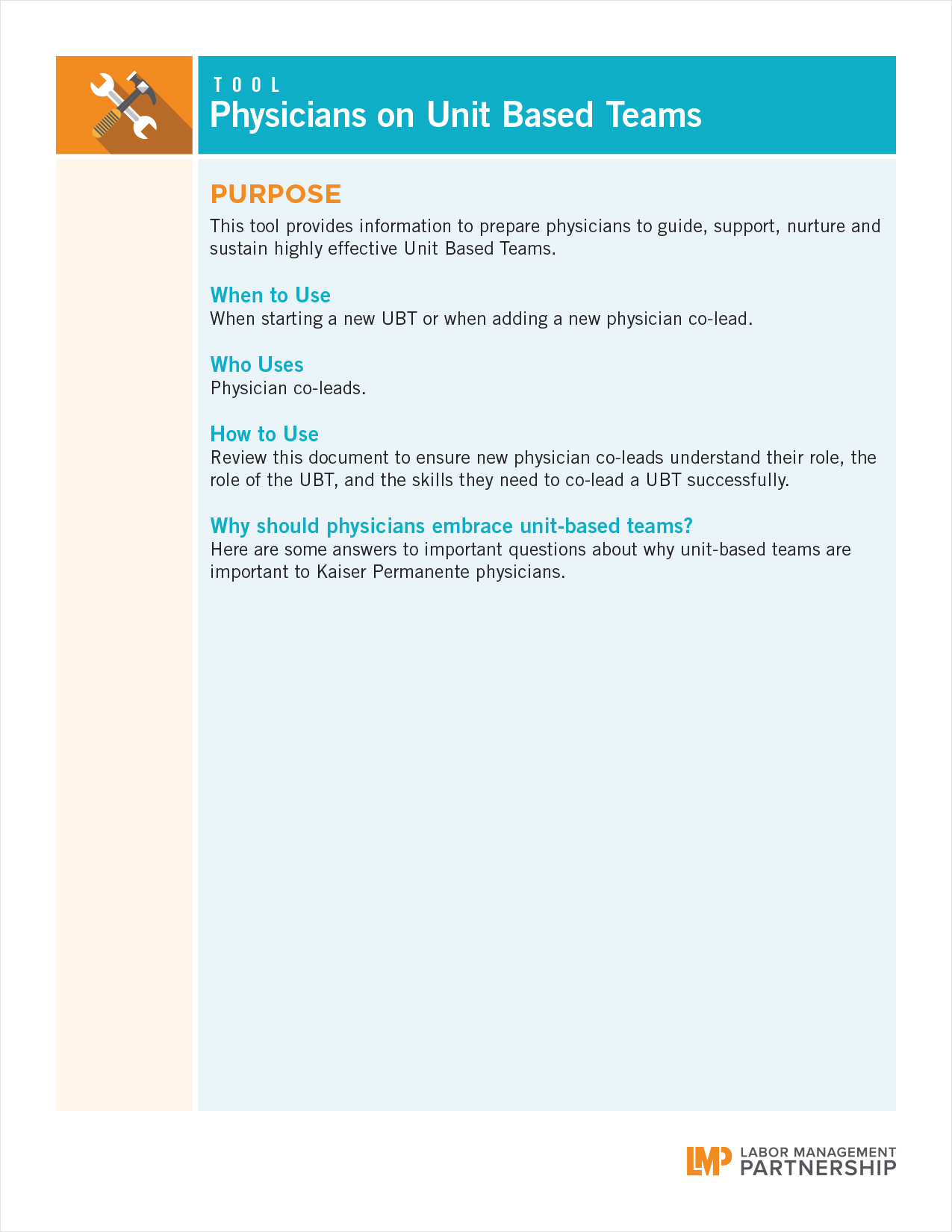
Description: This tool provides information to physicians named as UBT co-leads, helping doctors be better prepared to guide, support, nurture and sustain highly effective unit-based teams.

Related tools:

Pages

Subscribe to RSS - Frontline Physicians