Frontline Workers

Help Video

How to Find UBT Basics on the LMP Website

Learn how to use the LMP website:

LMP Website Overview

Learn how to use the LMP website:

How to Find How-To Guides

This short animated video explains how to find and use our powerful how-to guides

Learn how to use the LMP website:

How to Find and Use Team-Tested Practices

Does your team want to improve service? Or clinical quality? If you don't know where to start, check out the team-tested practices on the LMP website. This short video shows you how. 

Learn how to use the LMP website:

How to Use the Search Function on the LMP Website

Having trouble using the search function? Check out this short video to help you search like a pro!

Learn how to use the LMP website:

How to Find the Tools on the LMP Website

Need to find a checklist, template or puzzle? Don't know where to start? Check out this short video to find the tools you need on the LMP website with just a few clicks. 

Learn how to use the LMP website:

TOOLS

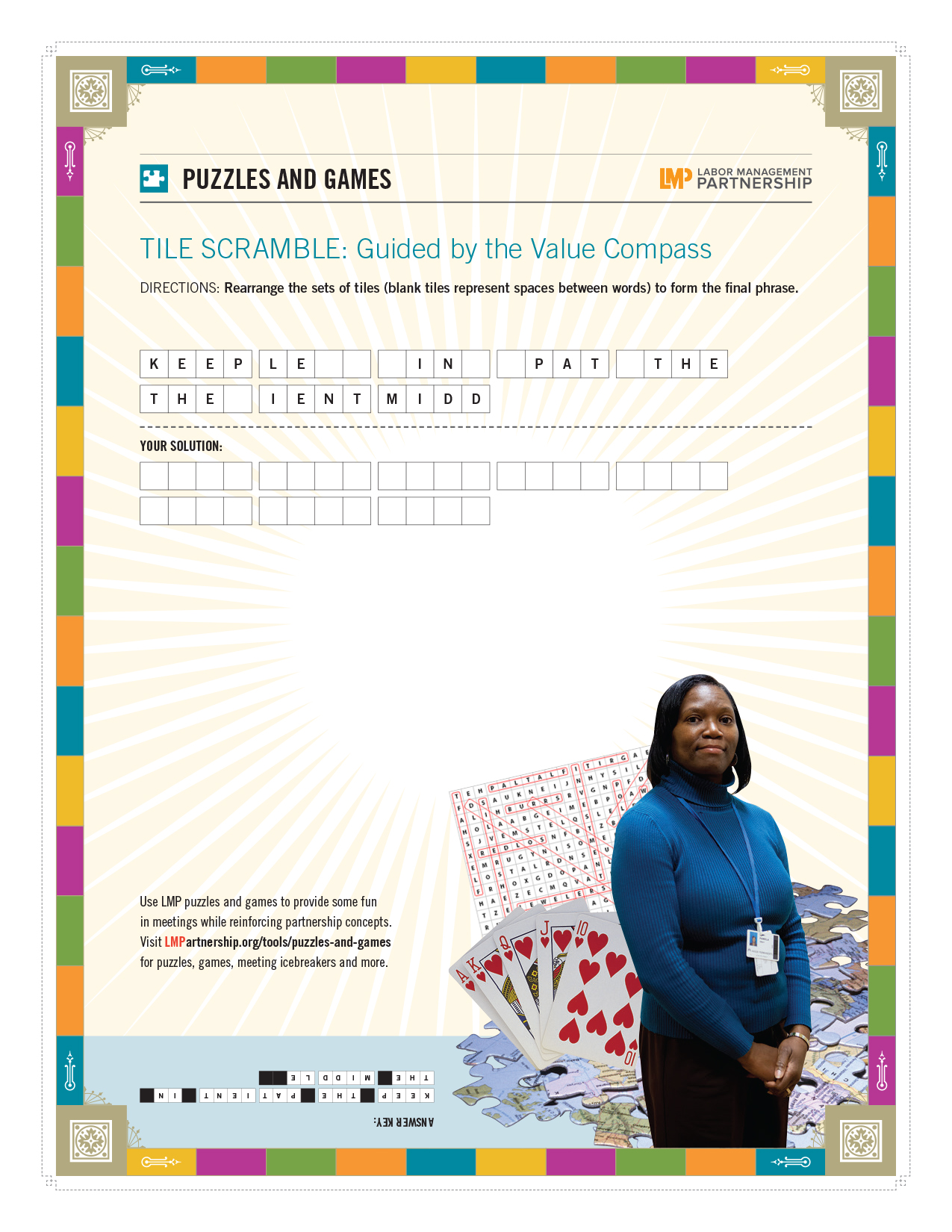
Tile Scramble: Guided by the Value Compass

Format:
PDF

Size:
8.5" x 11"

Intended audience:
Frontline workers, managers and physicans

Best used:
This tile scramble underscores concepts about the Value Compass. Use to provide some variety and fun at a team meeting.


Related tools:

TOOLS

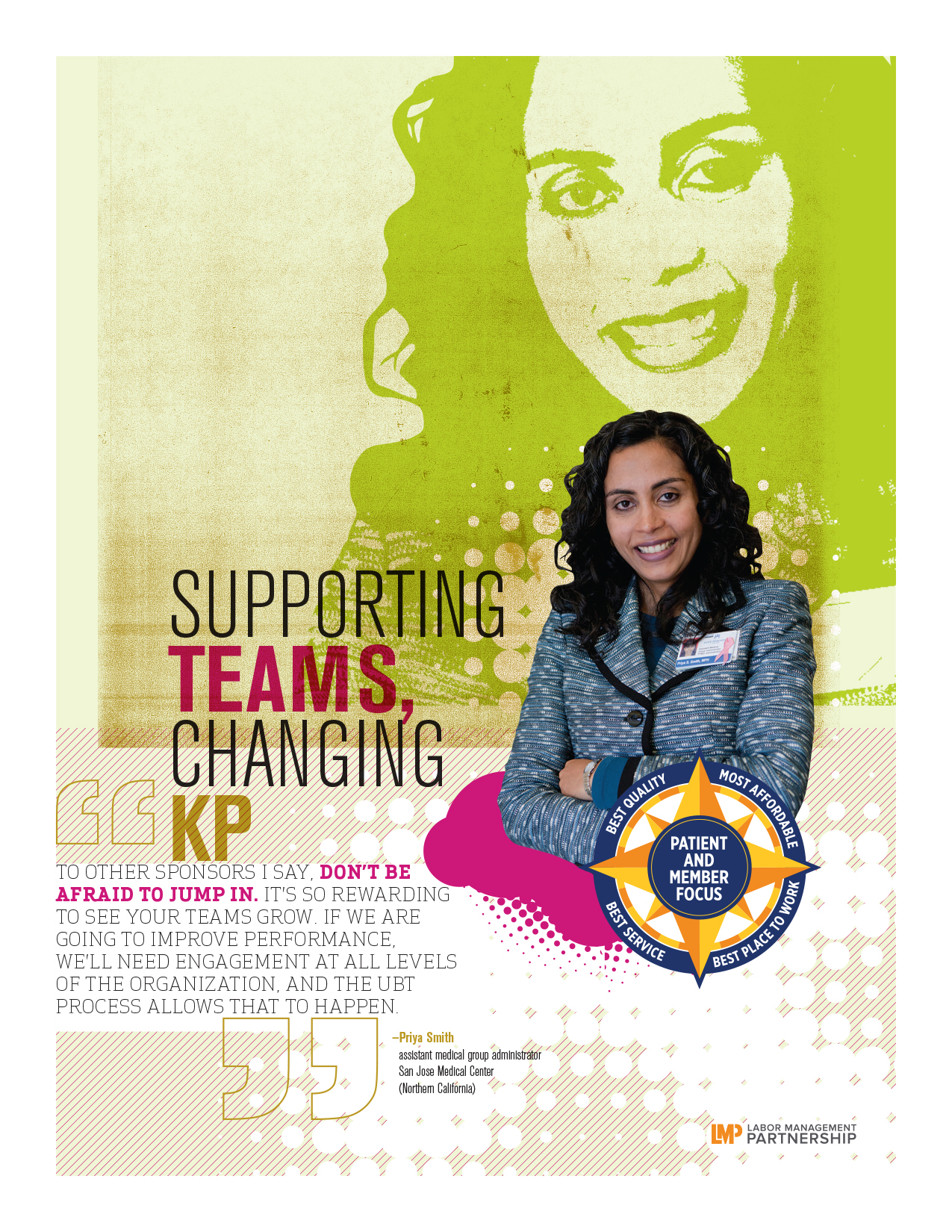
Poster: Supporting Teams, Changing KP

Format:
PDF (color and black and white)

Size:
8.5” x 11”

Intended audience:
Unit-based teams and UBT sponsors

Best used:
This poster features UBT sponsorship advice from Priya Smith, a sponsor in Kaiser Permanente's Northern California region. Post on bulletin boards, in break rooms and other staff areas.

Related tools:

TOOLS

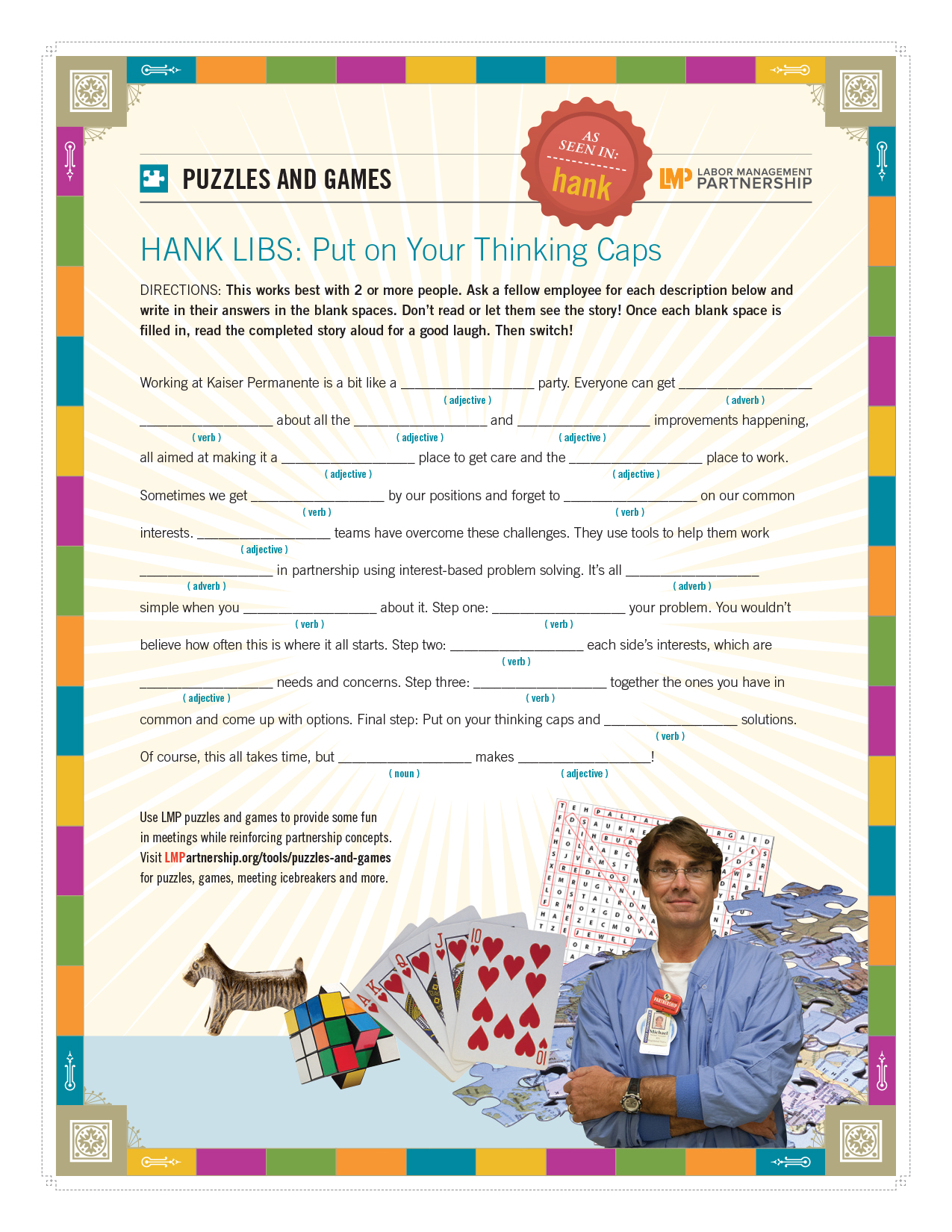
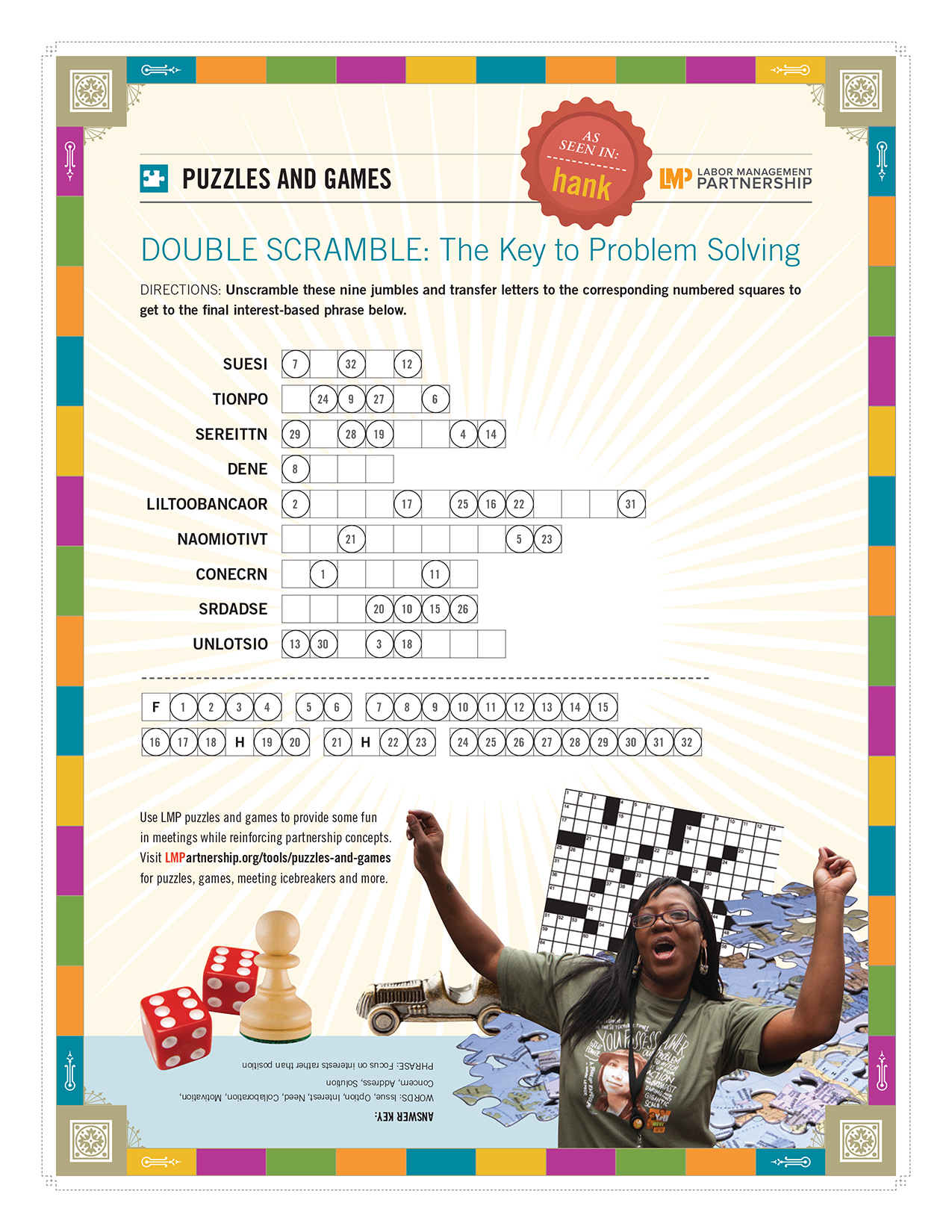
Double Scramble: The Key to Problem Solving

Format:
PDF

Size:
8.5" x 11"

Intended audience:
Frontline workers, managers and physicians

Best used:
Use this lighthearted approach to provide some variety and fun at a team meeting while highlighting interest-based problem solving concepts.


Related tools:

TOOLS

PPT: Optical Team Makes Fewer Fixes to Glasses

Format:
PPT

Size:
1 Slide

Intended audience:
LMP employees, UBT consultants, improvement advisers

Best used:
This PowerPoint slide features an optical team that lowered glasses redo rates. Use in presentations to show some of the methods used and the measurable results being achieved by unit-based teams across Kaiser Permanente. 

Related tools:

Six Tips for Successful Interest-Based Problem Solving

Story body part 1: 

Michael Hurley was the education director for the Coalition of Kaiser Permanente Unions for several years, and he and his team designed many of the LMP programs used to support unit-based team education. 

1. Know why we use interest-based problem solving

Interest-based problem solving (IBPS) is a collaborative approach to solving problems, a process for negotiating differences amicably without giving in. When you’re in an ongoing partnership—whether it’s a labor-management partnership or, say, a marriage—you likely have multiple objectives you want to satisfy when resolving differences. Those include not only the desire to solve the problem in a way that meets your needs, but also to solve it in a way that doesn’t cost too much (in time, money or emotional wear and tear), and that leaves the relationship intact or even improves it. Because down the road, you know you’re going to be working together again to solve the next problem that crops up.

2. Understand key terms

Four words are at the heart of the interest-based process. The issue is the problem or subject area to be addressed. A position is a proposed solution. The interest is the underlying need, motivation or concern that may have to be addressed in order to reach a solution; you can tell an interest in part because there is usually more than one way to satisfy it. An option is a potential way to address the issue, in whole or in part.

Your position tells us what you want but not necessarily why you want it.

  • A spouse wants to put 5 percent of income into a retirement savings account.
  • A parent wants a child in bed by 9:30 on a weeknight.
  • A union wants a 3 percent across-the-board wage increase in collective bargaining.

Your interests tell us what is important to you.

  • A spouse wants enough saved to have a comfortable retirement.
  • A parent wants a child to be well rested for school the next day.
  • A union rep wants a compensation package for members that aids recruitment and retention.

3. Ask: Is that ‘interest’ really a position?

What do you do when you’ve got a position masquerading as an interest? Usually, you can get to the interests that underlie a position if you listen carefully and ask the right questions. Find out the needs and concerns behind the position. Here’s an example:

Statement by wife: “I hate living in Los Angeles. We should move to Oregon.”

Reaction to self: “Great, here we go again.”

Question to wife: “Why should we move to Oregon?”

Answer: “We’re in a rut. We’ve lived our whole lives here. I’m tired of it.”

Question: “What else appeals to you about Oregon?”

Answers: “The weather is too hot here, and we spend so much time stuck in traffic. We have to do all our exercising here at the gym. Oregon is cooler and there are prettier roads for biking. We can get to the woods and good hiking faster. People are more relaxed there. “

Interests: Change in weather, less traffic, easier access to uncrowded outdoors, less stress.

By starting with a discussion of interests, the parties can talk about what is important to them without staking out what they want the outcome to be. It opens the door to collaborative problem solving, as opposed to competition or compromise. 

4. Agree on the information

Find agreement on what data to collect and how to collect it, vet it and report it—or you’ll just argue about the data. 

5. Make an action plan

Create an action plan for turning solutions into reality. Be clear on who’s accountable for what. Establish a timeline. 

6. Set ground rules

Remember, interest-based processes don’t always work. In my experience, they have the best chance for success if the parties agree to:

  • Focus on the issue, not personalities.
  • Share information fully and early.
  • Listen actively.
  • Work hard to meet interests, not sell positions.
  • Be open to options.
  • Look for ways to build trust.

TOOLS

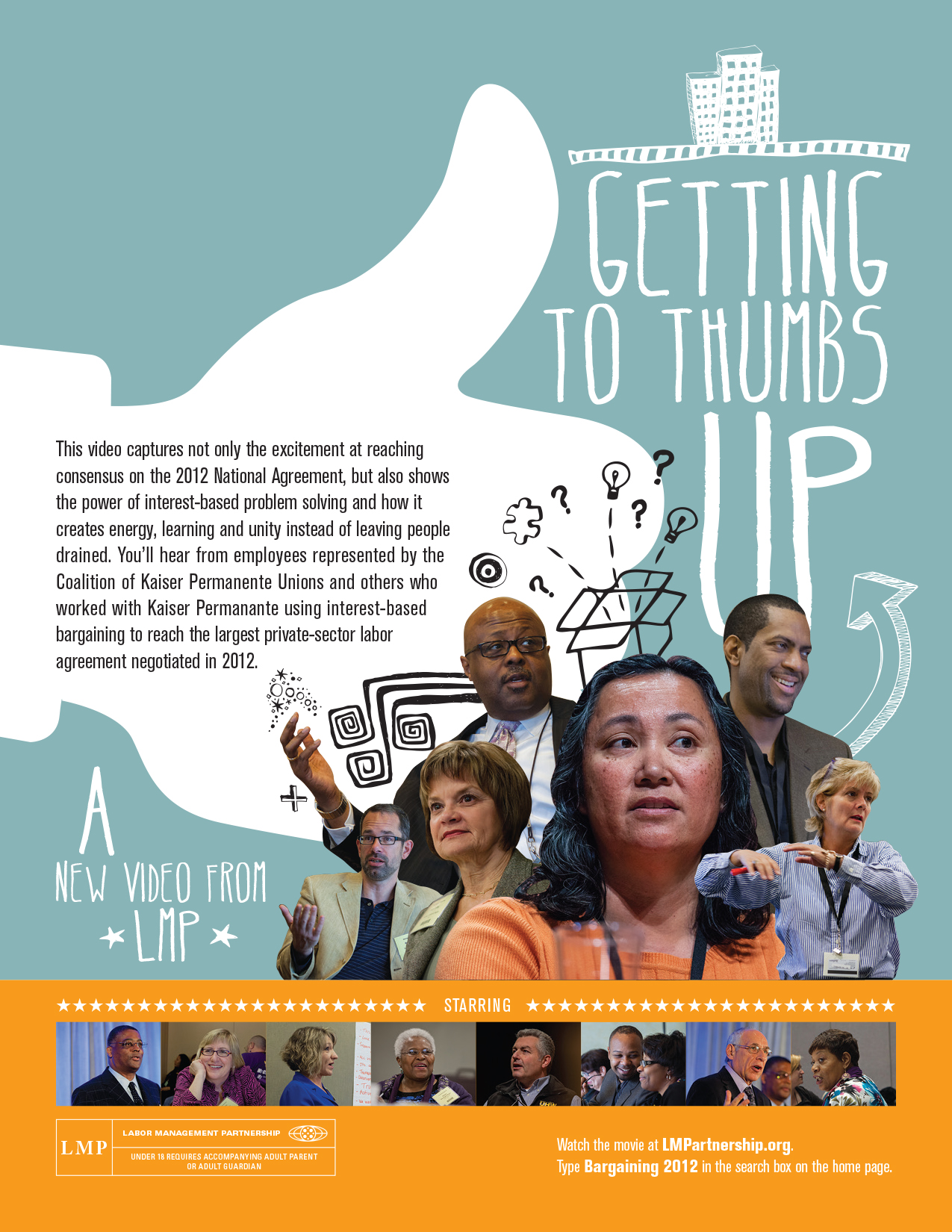
Poster: Getting to Thumbs Up

Format:
PDF (color and black and white)

Size:
8.5" x 11"

Intended audience:
Frontline employees, managers and physicians, and UBT consultants

Best used:
This poster promotes a powerful video that shows how interest-based problem solving creates energy, unity and consensus.

See the video:

Getting to Thumbs Up (video)

Related tools:

Want a Healthy Workforce? Try an Instant Recess

Deck: 
Exercise breaks reduce injuries, stress and sick days

Story body part 1: 

At 10:30 a.m. sharp, South Bay Medical Center appointment clerk Carolina Meza removes her telephone headset. She fires up what looks like the world’s tiniest iPod, attached to a portable speaker that’s not much bigger. She gathers four of her co-workers in a patch of open space near the coffee room. They do some neck rolls, march in place and then do a move Meza calls “the incredible hulk”—a shoulder stretch that brings welcome relief to those facing a computer screen for most of their day.

“When we go back to our stations, we feel refreshed,” says Meza, a member of SEIU UHW.

It’s called Instant Recess, and it’s the brainchild of Toni Yancey, MD, co-director of the UCLA Kaiser Permanente Center for Health Equity. It involves a quick, daily group exercise and is aimed at incorporating physical activity into a normal workday. It comes at a time when research is showing that workplace fitness initiatives targeting individual behavior (such as counseling and gym memberships) aren’t working. An organization’s whole infrastructure needs to be addressed, says Yancey. 

That’s what makes Instant Recess so appealing. It demonstrates KP’s commitment to Total Health—including for a healthy and safe work life for KP employees as well as the members and communities we serve. It’s consistent with KP’s Healthy Workforce push, and also seems to help reduce workplace injuries and improve attendance.

At the South Bay call center, for instance, annualized sick days fell almost one full day per full-time equivalent between 2010 and 2011, when the department began Instant Recess. The number of ergonomic injuries went from three to zero.  

Overcoming obstacles

While they are seeing results now, team members were wary when senior leaders at their medical center approached them about trying Instant Recess. “I was very skeptical,” says Darlene Zelaya, operations manager. “We can’t prevent the calls from coming in.” In fact, hold times for patients did go up when the team first implemented Instant Recess.

The unit-based team worked together with project manager Tiffany Creighton to adapt Instant Recess to their members’ needs. For instance, before calling a recess, team members check the reader board to assess how many agents can be off the phones at one time. They hold many small exercise bursts throughout the day instead of one or two longer ones. And they keep the music turned down low to avoid disturbing agents on the phone with patients.

Making it work locally

In the South Bay lab, Instant Recess looks and sounds totally different—but is getting similarly promising results. That department blasts a boom box for 10 full minutes during the Instant Recesses it incorporates into its huddles at shift change twice a day. Clinical lab scientist Nora Soriano steps away from her microscope to join in. She’s lost 43 pounds recently, and she partly credits Instant Recess. Soriano, a member of UFCW Local 770, says the initiative inspired her to exercise more at home. “My son got me an Xbox,” she says. “I don’t stop for half an hour, sometimes 45 minutes.”

Not all of Soriano’s co-workers were so enthused when they first heard about Instant Recess. “I was kind of negative,” admits Julia Ann Scrivens, a lab assistant and UHW member. “I thought, ‘I am so busy. You want me to do what?’ ” Area lab manager Dennis Edora says, “It was a shock. No one knew what to expect.” But the lab’s staff had just been through some stressful changes—including getting new equipment and moving to a new floor—and team members were hungry for something that would help rebuild morale.

“We collaborated with all the different job codes,” says Edora. “Everyone added their different flavor,” she says, noting that employees rotate as a leader, some choosing Hawaiian dance moves, others yoga-inspired stretches. “Instant Recess really got us together. It wasn’t just exercise.” Moreover, it was helping reduce injuries: the lab reported only one repetitive motion injury in 2011, after beginning Instant Recess in April. There were five such injuries in 2010.   

And Scrivens is sold as well. “It is fun,” she says. “It makes me happy.”

TOOLS

PPT: Team's Success Brings in $10 Million

Format:
PPT

Size:
1 slide

Intended audience:
LMP Staff, UBT consultants, improvement advisers

Best used:
This PowerPoint slide highlights a business services team that discovered a glitch, corrected it, and brought in $10 million in Medicare reimbursements. Use in presentations to show some of the methods used and the measurable results being achieved by unit-based teams across Kaiser Permanente.

Related tools:

Pages

Subscribe to RSS - Frontline Workers