Frontline Workers

Help Video

How to Find UBT Basics on the LMP Website

Learn how to use the LMP website:

LMP Website Overview

Learn how to use the LMP website:

How to Find How-To Guides

This short animated video explains how to find and use our powerful how-to guides

Learn how to use the LMP website:

How to Find and Use Team-Tested Practices

Does your team want to improve service? Or clinical quality? If you don't know where to start, check out the team-tested practices on the LMP website. This short video shows you how. 

Learn how to use the LMP website:

How to Use the Search Function on the LMP Website

Having trouble using the search function? Check out this short video to help you search like a pro!

Learn how to use the LMP website:

How to Find the Tools on the LMP Website

Need to find a checklist, template or puzzle? Don't know where to start? Check out this short video to find the tools you need on the LMP website with just a few clicks. 

Learn how to use the LMP website:

TOOLS

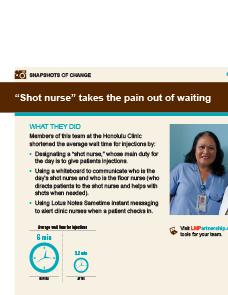
PPT: Hawaii Team Cuts Wait Times in Half

Format:
PPT

Size:
1 slide

Intended audience:
LMP staff, UBT consultants and improvement advisers

Best used:
This PowerPoint slide features a team at the Honolulu Clinic that reduced patient wait times by making one nurse responsible for giving injections each day. Use in presentations to show some of the methods used and the measurable results being achieved by unit-based teams across Kaiser Permanente.

Related tools:

Beyond Retail: Optician Saves Member’s Sight

Story body part 1: 

When Webster Parker brought his prescription glasses back to the clinic in Redlands (Southern California), he thought he just needed to replace a lens that had fallen out. But when Parker reported his eye was watering excessively, optician Alicia Rendon spotted a red flag in Parker’s Kaiser Permanente HealthConnect™ record and, within the hour, set up an eye-saving appointment with an ophthalmologist.

“The prescription was fine,” says Rendon, a Teamsters Local 166 member whose unit-based team recently embraced a new workflow, including use of KP’s electronic health record system, to troubleshoot their redos—instances where patients return eyewear purchases. “Once I looked into HealthConnect, there was this big stop sign.”

Her review of the record suggested that Parker, 85, might need a common surgical procedure to lower the intraocular pressure in his right eye, a condition often associated with glaucoma. An old eye injury exacerbated the problem, and Parker’s ophthalmologist had set up a flag in the system to watch for changes to the eye.

“I had surgery that week,” says Parker, a retired pharmacist who once ran a drugstore with his pharmacist wife. “The eye feels better. It feels normal. They did a wonderful job.”

Looking at the whole system

Focusing on redos not only saves KP in terms of the cost of materials and labor but also helps improve service scores. By bringing in ophthalmologists and optometrists, who examine eyes to treat disease as well as prescribe the lenses that opticians dispense, the team could better identify redos linked to eye-health problems rather than product defects—as in Parker’s case.

But opticians, used to handling paper charts and focusing on frame styles, were reluctant to try one of the team’s first tests of change: using KP HealthConnect to rule out medical reasons for unsatisfactory eyeglasses.

“We got buy-in” to overcome the initial resistance, says management co-lead Darren Smith, site supervisor for optical dispensing and a former optician. “It takes just two or three to really commit and spread the practice. Now, it’s not just a retail store where you come and buy something. Here, we are talking about your health.”

Educating patients and staff

To protect patient privacy, opticians' access in HealthConnect was mostly limited to conditions related to eyeglasses' prescriptions rather than a broader range of eye issues. Now the optometrists and ophthalmologists help the optical UBT members spot problems and counsel patients on practices that will protect their eyesight and enhance their eye care.

“Not everyone is going to be able to see 20/20,” says Trissy Bastin, business line manager for Vision Essentials. She directs the service area’s five optical clinics and serves as sponsor for the UBT. “The patients have to be reminded of that. You have to be able to see what kind of eye conditions they have.”

Parker has been a KP member for just seven years. But three decades in the health care industry fostered his appreciation for the electronic patient record—and cooperation and coordination among caregivers.

“What makes Kaiser special is that any doctor can have your complete record at his fingertips,” Parker says. “They can track problems and make recommendations.”

TOOLS

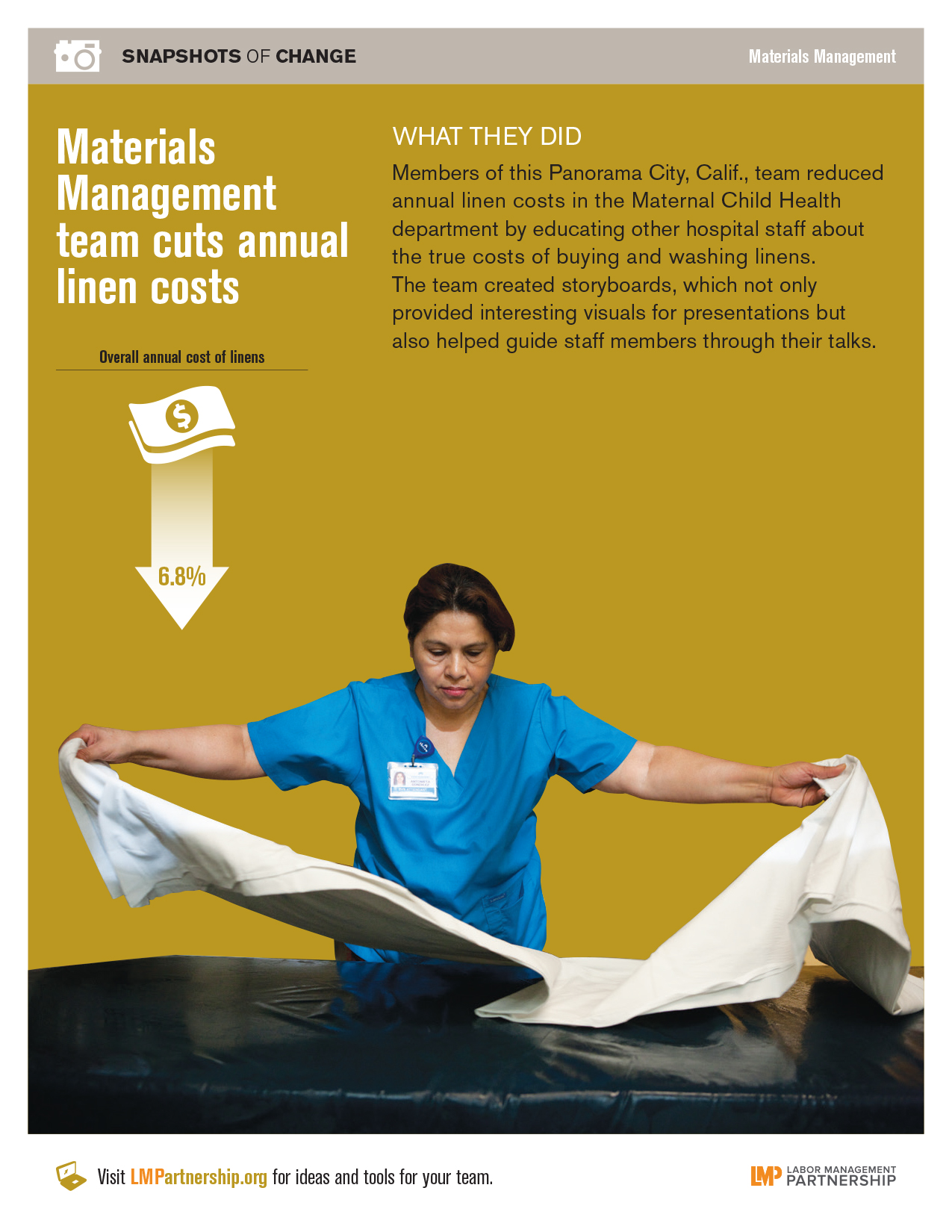
Poster: Materials Management Cuts Linen Costs

Format:
PDF (color and black and white)

Size:
8.5" x 11"

Intended audience:
Frontline employees, managers and physicians

Best used:
This poster, for use on bulletin boards in break rooms and other staff areas, features a Materials Management team that found a way to save in linen costs.

Related tools:

TOOLS

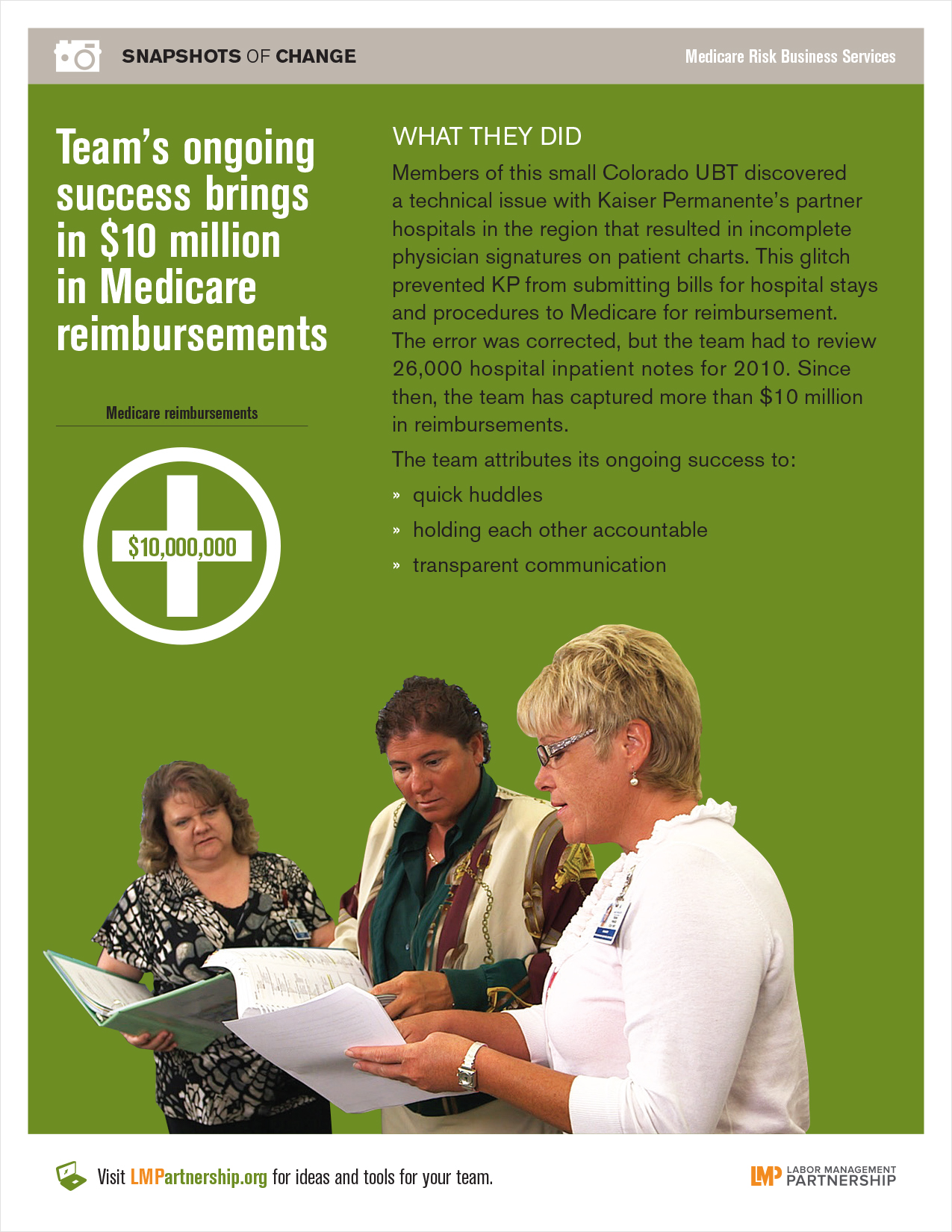
Poster: Team's Success Brings in $10 Million

Format:
PDF

Size:
8.5" x 11"

Intended audience:
Frontline employees, managers and physicians

Best used:
This poster highlights a business services team that discovered a glitch, corrected it, and brought in $10 million in Medicare reimbursements. Post on bulletin boards, in break rooms and other staff areas.

Related tools:

Team’s Ongoing Success Brings in $10 Million in Medicare Revenue

Deck: 
Fixing one error leads to continued improvement

Story body part 1: 

Colorado’s “small team with the big impact” has surpassed even its own expectations, reporting an additional $7 million in Medicare reimbursements last year. That brings the total capture to $10.3 million for Medicare Advantage visits in 2010.

The Medicare Risk Business Services unit—made up of five auditors, a data analyst and a manager—is in charge of auditing all inpatient Medicare Advantage charts to make sure the agency is billed correctly.

Two years ago, a technical issue with Kaiser Permanente’s partner hospitals in the region resulted in incomplete physician signatures on patient charts—which prevented KP from submitting the bills for hospital stays and procedures to Medicare for reimbursement. The error was corrected, but the team had to review 26,000 hospital inpatient notes for that year.

When it first began correcting the error, the unit-based team predicted collecting an additional $2 million to $3 million for 2010 and team members are pleased that their efforts netted KP an additional $7 million.

“It amazes me what the UBT is able to harness and have such great outcomes,” says management co-lead Treska Francis.

The department has worked through the backlog and is now able to submit bills to Medicare within 10 days of a patient’s discharge.

The small team attributes its ongoing success to:

  • quick huddles
  • holding each other accountable
  • transparent communication

“On a daily basis, we know what needs to be completed for the day, (we) set a goal and we go for it,” says labor co-lead Stephanie White, a Medicare risk auditor and SEIU Local 105 member.

Wasted Linens Are an Unnecessary Expense

Deck: 
Team cuts annual costs by almost 7 percent

For a nurse on a hospital ward, it might seem quick and easy to grab the nearest sheet to mop up a spill or grab a huge stack of blankets to put in a patient’s room.

But for the Materials Management department at Panorama City Medical Center, that can be really wasteful.

And they should know. They’re the team responsible for purchasing and cleaning linens, and keeping patients comfortable.

With savings in mind, the materials UBT looked to educate other hospital staff about the true costs of buying and washing linens.

Managers and union members worked together to create a storyboard featuring photos of bed sheets used as a tablecloth at a barbeque, and price lists of supplies and laundering charges. And because the team piloted its effort in Maternal Child Health departments, it also included pictures of babies.

As the materials staff worked with the other teams, the storyboard was a big confidence booster to those who were not public speakers.

“At first I was really nervous,” says Sandra Hernandez, the team’s labor co-lead. “But then I saw people I knew in the room and that put me at ease.”

The team also reviewed linen usage and stocking levels with departments.

And their efforts paid off as they reduced the overall annual cost of linen in the Maternal Child Health department by 6.8 percent, more than three times the original goal.

They also were able to increase customer satisfaction scores in a year from 48 to 65 percent from internal clients such as inpatient units at the hospital,.

“It is important to be prepared with the data,” says management co-lead Steve Spickler. “But, you need to tell a story in addition to the charts. That’s how the UBTs make the connection between their contribution and the financial success of the organization.”

For more about this team's work to share with your team and spark performance improvement ideas, download a poster or powerpoint.

TOOLS

Powerpoint: X Marks the Spot

Format:
PPT

Size:
1 Slide

Intended audience:
LMP staff, UBT consultants, improvement advisers

Best used:
This PowerPoint slide highlights a pharmacy that reduced waste and improved service. Use in presentations to show some of the methods used and the measurable results being achieved by unit-based teams across Kaiser Permanente.

Related tools:

TOOLS

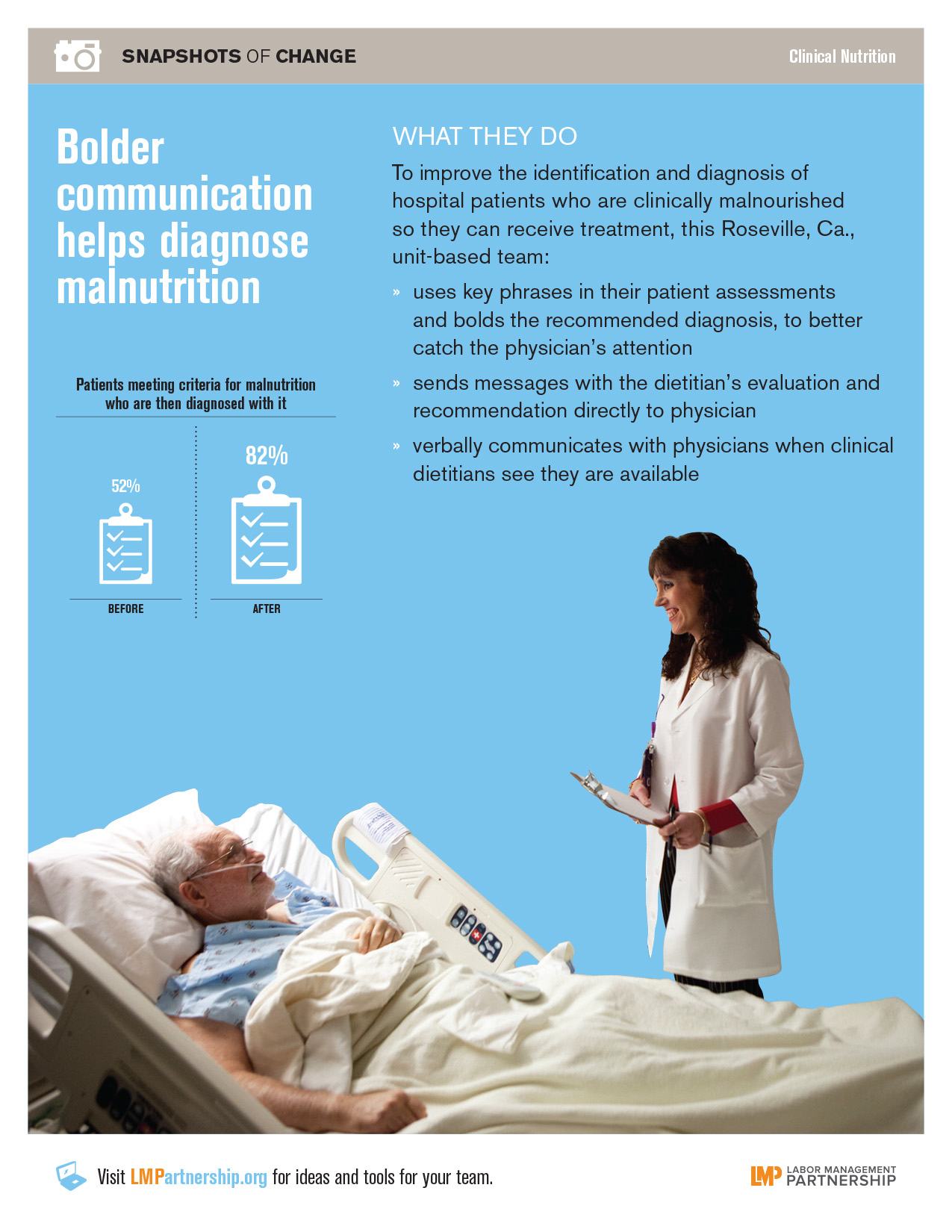
PPT: Bolder Communication Helps Diagnose Malnutrition

Format:
PPT

Size:
1 Slide

Intended audience:
Frontline employees, managers and physicians; LMP staff, UBT consultants, and improvement advisers

Best used:
This poster features a Northern California team that improved communication and its ability to diagnose malnutrition. Use in presentations to show some of the methods used and the measurable results being achieved by unit-based teams across Kaiser Permanente. 

Related tools:

TOOLS

Poster: Bolder Communication Helps Diagnose Malnutrition

Format:
PDF

Size:
8.5" x 11"

Intended audience:
Frontline employees, managers and physicians

Best used:
Gain inspiration from this Northern California team that improved communication and its ability to diagnose malnutrition.

Related tools:

TOOLS

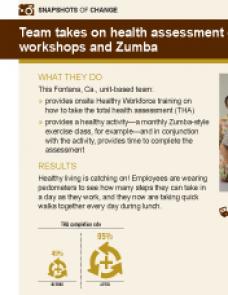
PPT: Zumba Helps Team Meet Health Assessment Goal

Format:
PPT

Size:
1 Slide

Intended audience:
LMP staff, UBT consultants, improvement advisers

Best used:
This poster features a Fontana UBT in which 95 percent of members have taken KP's health assessment. Use in presentations to show some of the methods used and the measurable results being achieved by unit-based teams across Kaiser Permanente. 

Related tools:

Pages

Subscribe to RSS - Frontline Workers