Team Discovers Key Savings Through Prescription Transfers
- Identifying high-cost medications filled outside of KP pharmacies
- Developing scripting
- Reaching out to Kaiser Permanente members
This short animated video explains how to find and use our powerful how-to guides
Does your team want to improve service? Or clinical quality? If you don't know where to start, check out the team-tested practices on the LMP website. This short video shows you how.
Having trouble using the search function? Check out this short video to help you search like a pro!
Need to find a checklist, template or puzzle? Don't know where to start? Check out this short video to find the tools you need on the LMP website with just a few clicks.
Format:
PDF
Size:
8.5" x 11"
Intended audience:
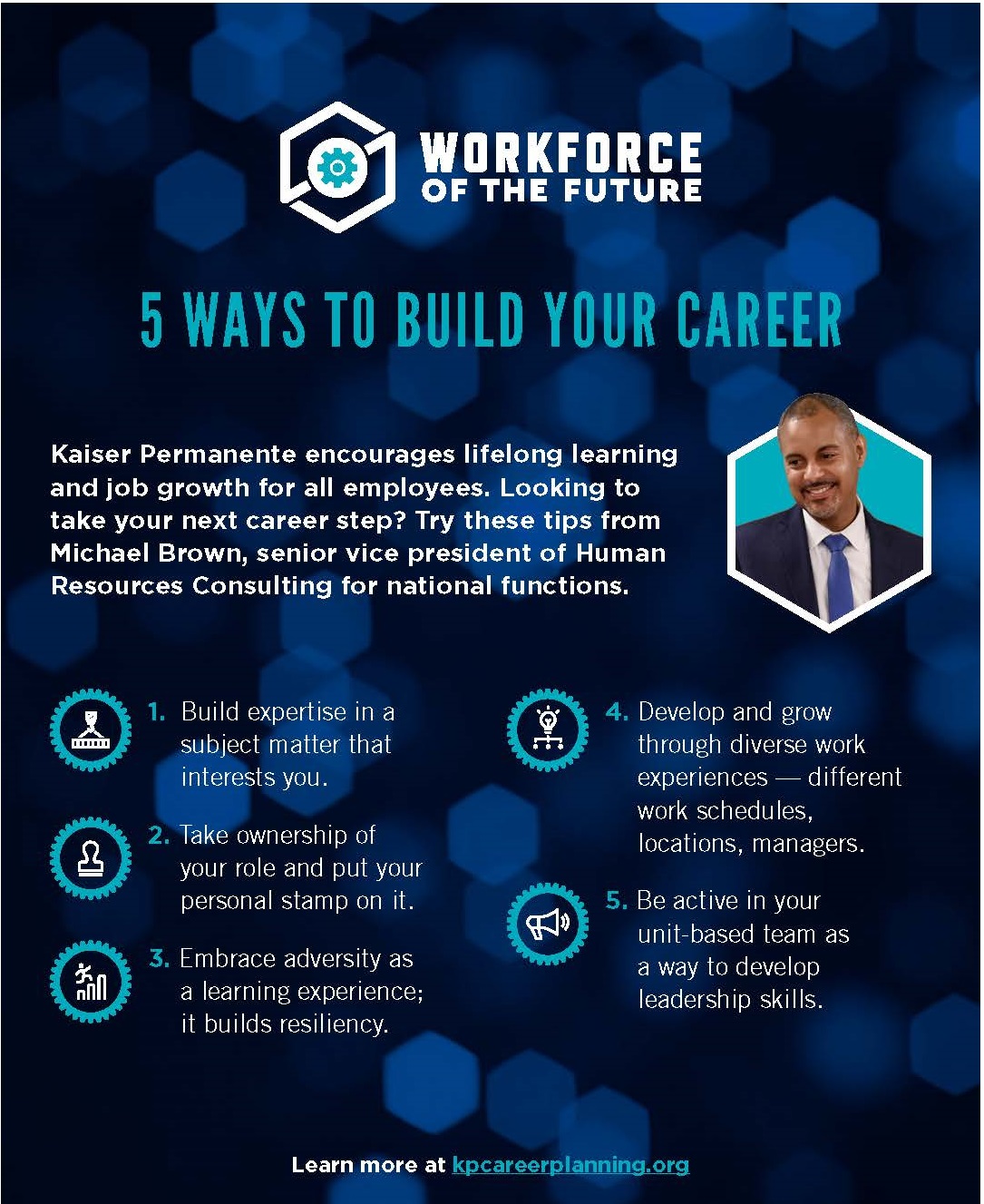
Frontline employees and managers interested in advancing their careers at Kaiser Permanente and those coaching them.
These 5 tips are from Michael Brown, KP's senior vice president of Human Resources Consulting for national functions, distilled from his presentation during Workforce Development Week.
Best used:
Post on bulletin boards and hand out at meetings
This course has been designed to help mid-level leaders be successful as they partner and support effective partnering for the benefit of our patients and members.
N/A
4 hours
Target attendees are mid-level leaders (in pairs). Each region’s management and local unions will define these leaders. Examples include: KP mid-level management - director level and above at the medical center or hospital level, union mid-level leadership: stewards, chief stewards, contract specialists and labor liaisons; and UBT sponsors.
Labor Management Partnership Orientation (LMPO)
Format:
PDF
Size:
8.5" x 11"
Intended audience:
UBT co-leads, members, consultants
Best used:
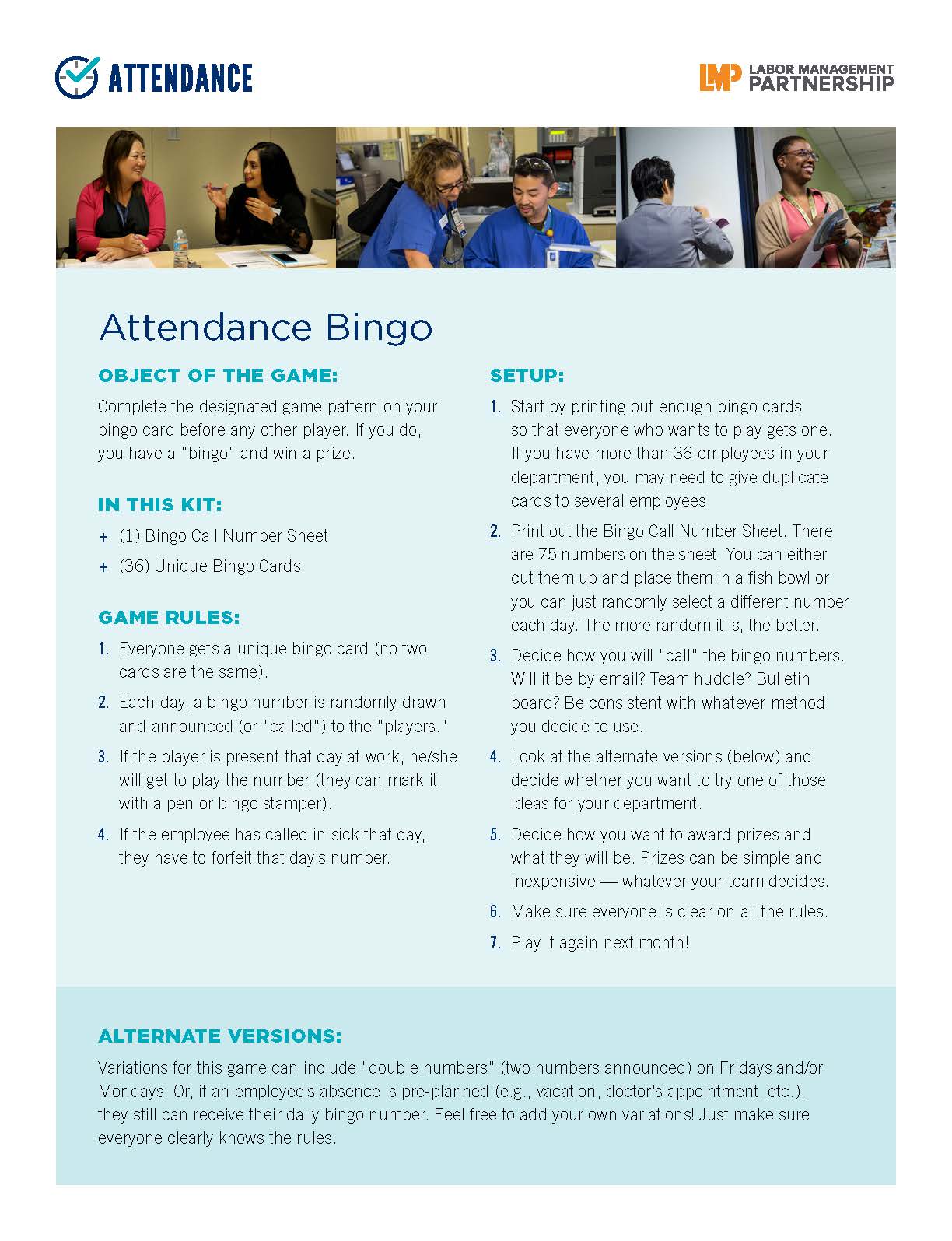
This fun game will help your team track attendance and boost engagement.
Format:
PDF
Size:
8.5" x 11"
Intended audience:
UBT co-leads, team members and frontline managers.
Best used:
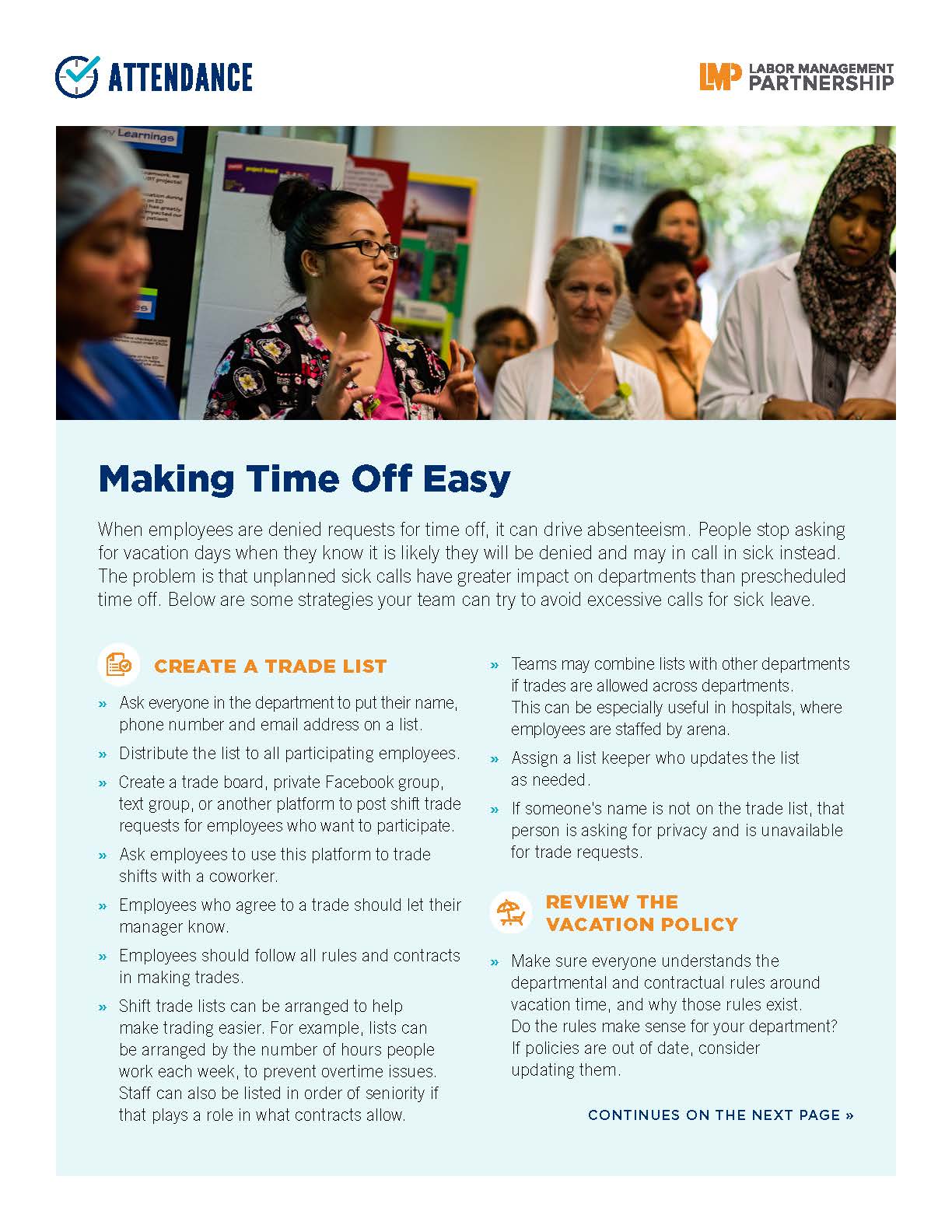
Use this tool for creative and practical tips to help teams manage time-off requests.
Format:
PDF
Size:
8.5" x 11"
Intended audience:
Frontline workers, managers and physicians
Best used:
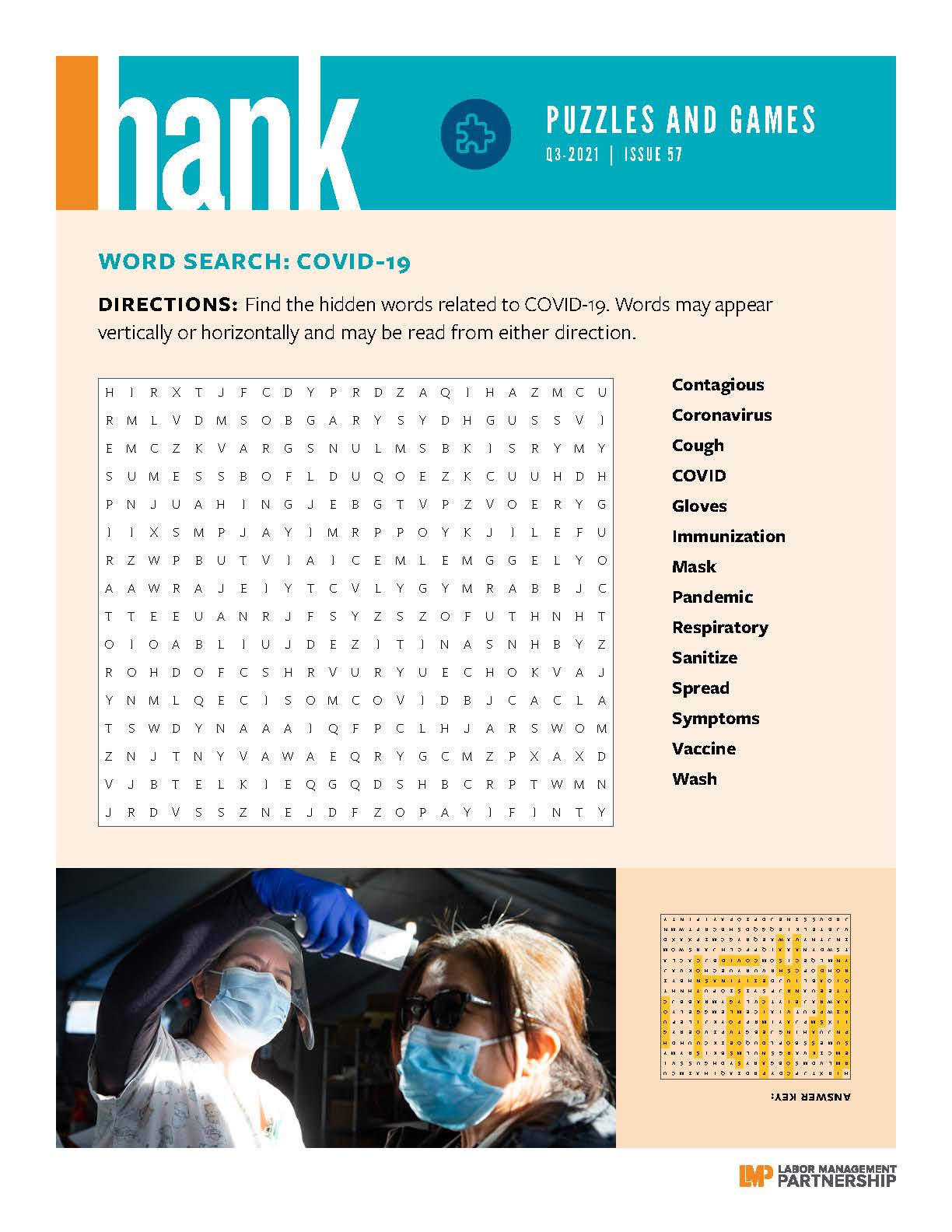
Print out and share copies of this word search at the start of your next meeting. Team members will look for the words related to COVID-19.
“Dexter” Janet Borrowman is an operational excellence coach for performance improvement in the Southern California Region. She recently spoke with LMP Communications manager Sherry Crosby about the importance of rounding conversations for managers and frontline workers. Building a workplace culture where everyone’s voice matters is key to our Labor Management Partnership.
What is rounding?
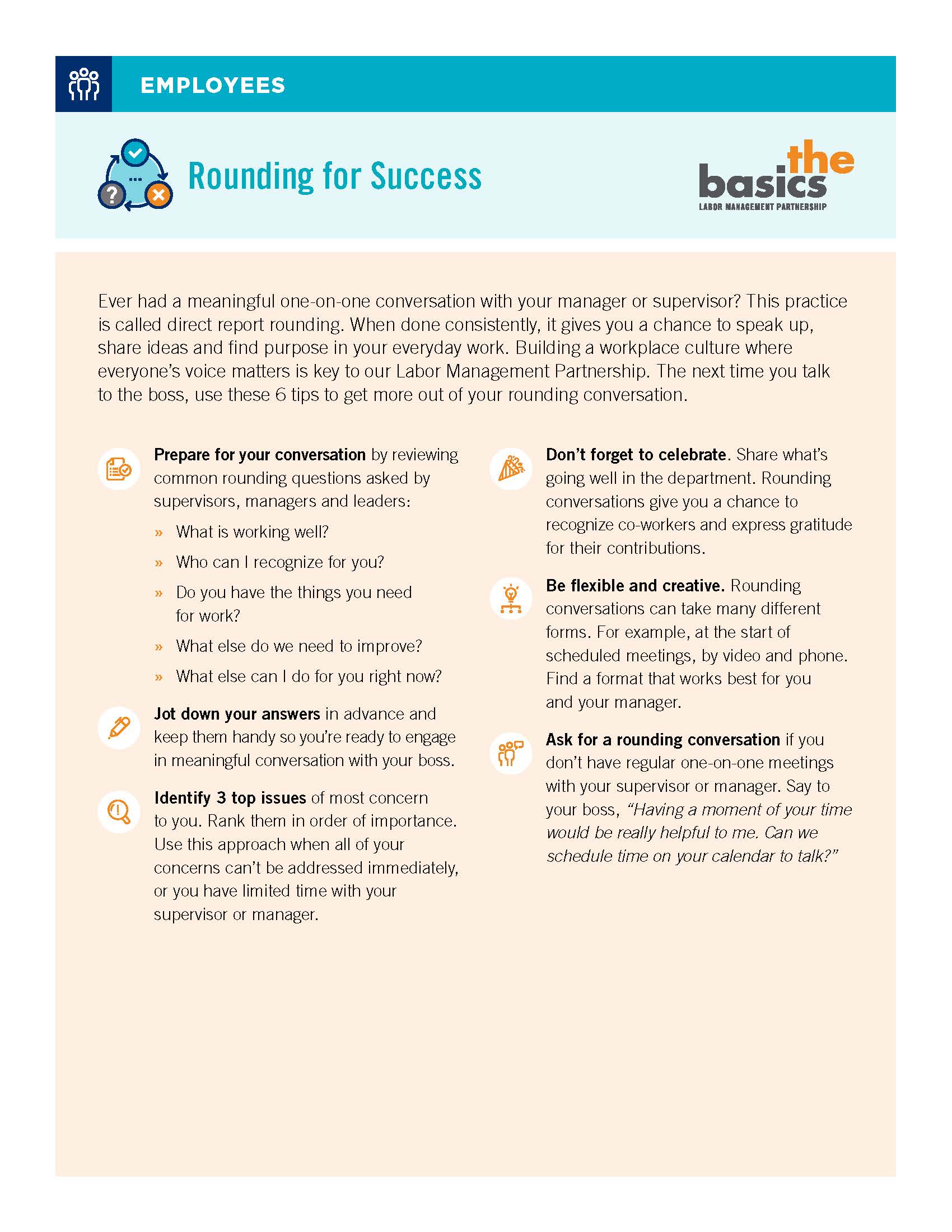
Rounding is an evidence-based practice that relies on purposeful conversation and observation to drive workplace engagement and insights. Direct report rounding involves conversations between a team member and that person’s supervisor, manager or leader.
How does rounding benefit managers and frontline workers?
When done well, rounding helps managers build trust with staff, gain insights into workplace challenges and recognize employees, which fosters joy in work. Frontline workers benefit by having a chance to connect individually with their managers, share ideas, express concerns and find deeper purpose in their everyday work.
What evidence shows rounding is an effective practice?
Rounding is one of the most effective ways for managers to spend their time. And the more they consistently round, the greater the impact. According to People Pulse, departments where rounding is routinely practiced achieve more meaningful levels of engagement, better patient care outcomes, fewer workplace injuries and improved attendance.
How can frontline workers get the most out of rounding conversations?
Sometimes employees don’t see the benefit of direct report rounding; they just see it as helping the boss complete their checklist. It’s totally missing the point! Rounding is your chance to discuss what you need to be successful and the support you need. This is all about you!
How can managers get the most out of rounding conversations?
Rounding is one of the best tools that managers have for proactively surfacing and addressing issues which can create safer, more efficient and productive teams and environments. Use rounding to connect with your team members. People need to feel that their life and work has meaning, and that they are personally supported and cared for as a complete person. People need a personal touch, especially during difficult times, and rounding can help with that.
How can managers use rounding to build trusting relationships?
Your direct reports need to feel that what they’re saying is important and that you’re following up with action. Circle back to that person who brought up the issue with you. Go to the huddle and follow up with the whole team. We build trust by following up after a rounding conversation. We break trust by not following up.
What advice do you have for those who want to enhance their rounding practice?
If we are doing rounding the right way, if we’re doing it consistently, if we’re doing it authentically, then we will discover what matters most to our people and we’ll be able to better support them and the work they do.
Format:
PDF
Size:
8.5" x 11"
Intended audience:
Managers and employees
Best used: Use these tip sheets to encourage conversation and foster a workplace where everyone's voice matters.