UBT Co-Leads

Help Video

How to Find UBT Basics on the LMP Website

Learn how to use the LMP website:

LMP Website Overview

Learn how to use the LMP website:

How to Find How-To Guides

This short animated video explains how to find and use our powerful how-to guides

Learn how to use the LMP website:

How to Find and Use Team-Tested Practices

Does your team want to improve service? Or clinical quality? If you don't know where to start, check out the team-tested practices on the LMP website. This short video shows you how. 

Learn how to use the LMP website:

How to Use the Search Function on the LMP Website

Having trouble using the search function? Check out this short video to help you search like a pro!

Learn how to use the LMP website:

How to Find the Tools on the LMP Website

Need to find a checklist, template or puzzle? Don't know where to start? Check out this short video to find the tools you need on the LMP website with just a few clicks. 

Learn how to use the LMP website:

How UBTs Help Doctors Improve the Care They Give

Deck: 
Show its value by taking the mystery out of the UBT

Story body part 1: 

David Jones, MD, works in the Georgia region with the Southeast Permanente Medical Group. He has been with the medical group for more than 11 years, and currently works in the Panola Medical Office. He spoke with LMP senior communications consultant Julie Light.

Q. What is your partnership role?

A. My role with the Labor Management Partnership in Georgia is assistant to the medical director for unit-based teams. I serve as the physician regional co-lead for all the UBTs for the region. I’m excited about this role and how it can help engage our physicians.In this role, I work closely with all of the teams, with a particular focus around supporting the physicians and helping them understand the value of UBTs and how UBTs really can improve what we do day to day in the offices and how they can improve the care for patients. It also means removing any potential barriers that the physicians may face, or anticipate, to allow them to be more engaged with the UBT process.  Another part of my role is working with our unit-based team’s resource team. In that capacity, I bring more of a clinical perspective to UBTs.

Q. How do teams improve care?

A. A project I had personal involvement with was the pediatric team at our Panola office, which addressed ADHD (Attention Deficit Hyperactivity Disorder) medication management. Before our UBT project, we were meeting the goal of having a follow-up visit within 30 days approximately 25 percent of the time. Through our UBT work, we increased those results to reaching and sustaining a rate above 90 percent after three months.

Q. Why haven’t more physicians embraced partnership?

A. The first thing I tell physicians about the UBTs is that it is about improving the work that we’re already doing. It’s not about adding more work, it’s about looking at the work that you're doing and figuring out how to do it better.

I think one of the barriers physicians face has been just lack of understanding. It wasn’t clear to physicians the value that UBTs can bring to the team. So it’s taking the UBT process and putting that into terms that are meaningful to physicians. Time is always a barrier for most people, and particularly for physicians. That’s why it’s important to have them understand that it’s not about doing more or working harder, it’s about working better. This is a very new way of thinking about teamwork. It’s about the physician being engaged and involved and still having a leadership role, but also embracing the value and the input, perspectives, talents and skills of the whole team, and understanding how everybody can share the same goal and work together and improve the accountability across the board.

What it really takes is physicians and teams going through the process. I can talk with them all I want, and tell them how it is in theory, but once they start to go through the process and see the results, and see how morale and efficiency improves—that’s when they become believers.
TOOLS

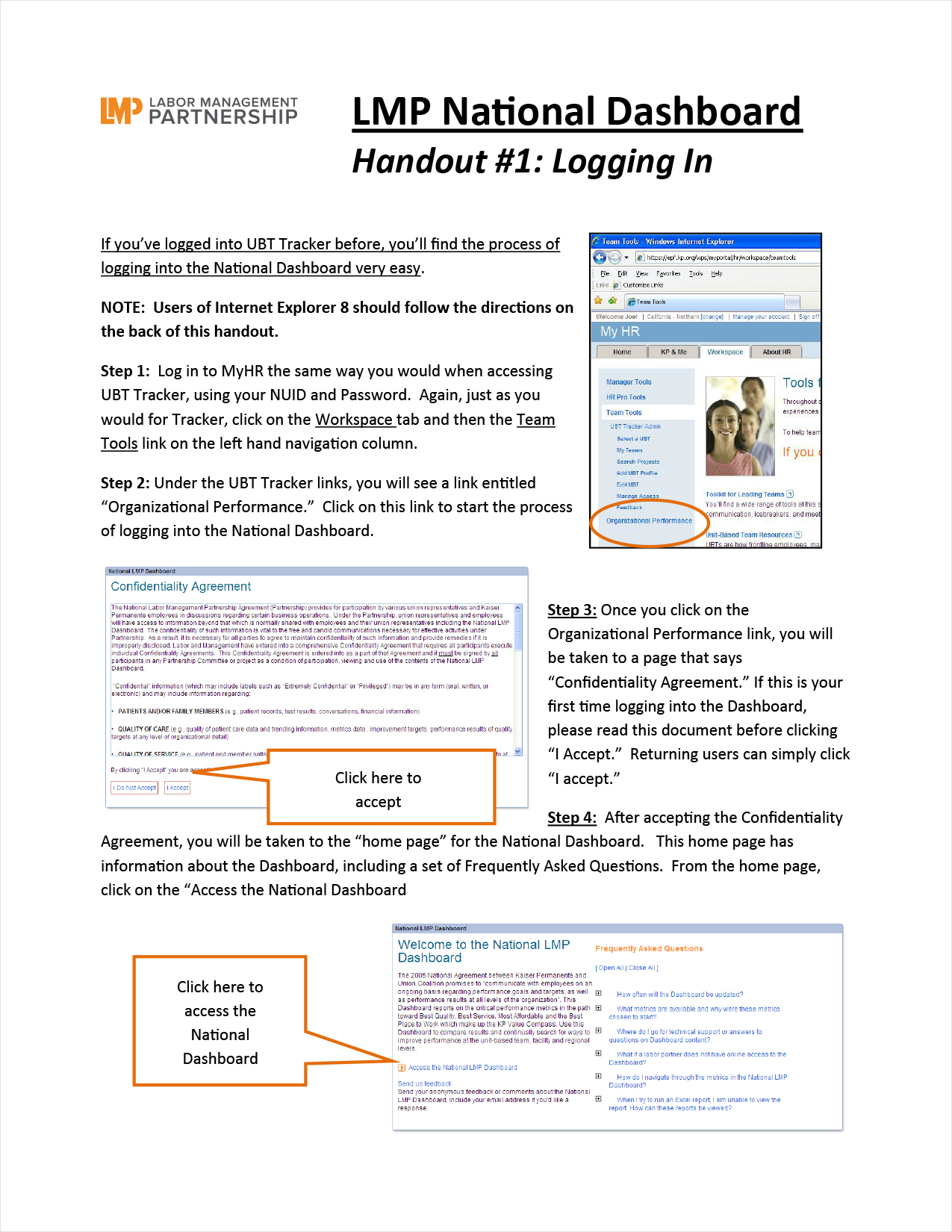
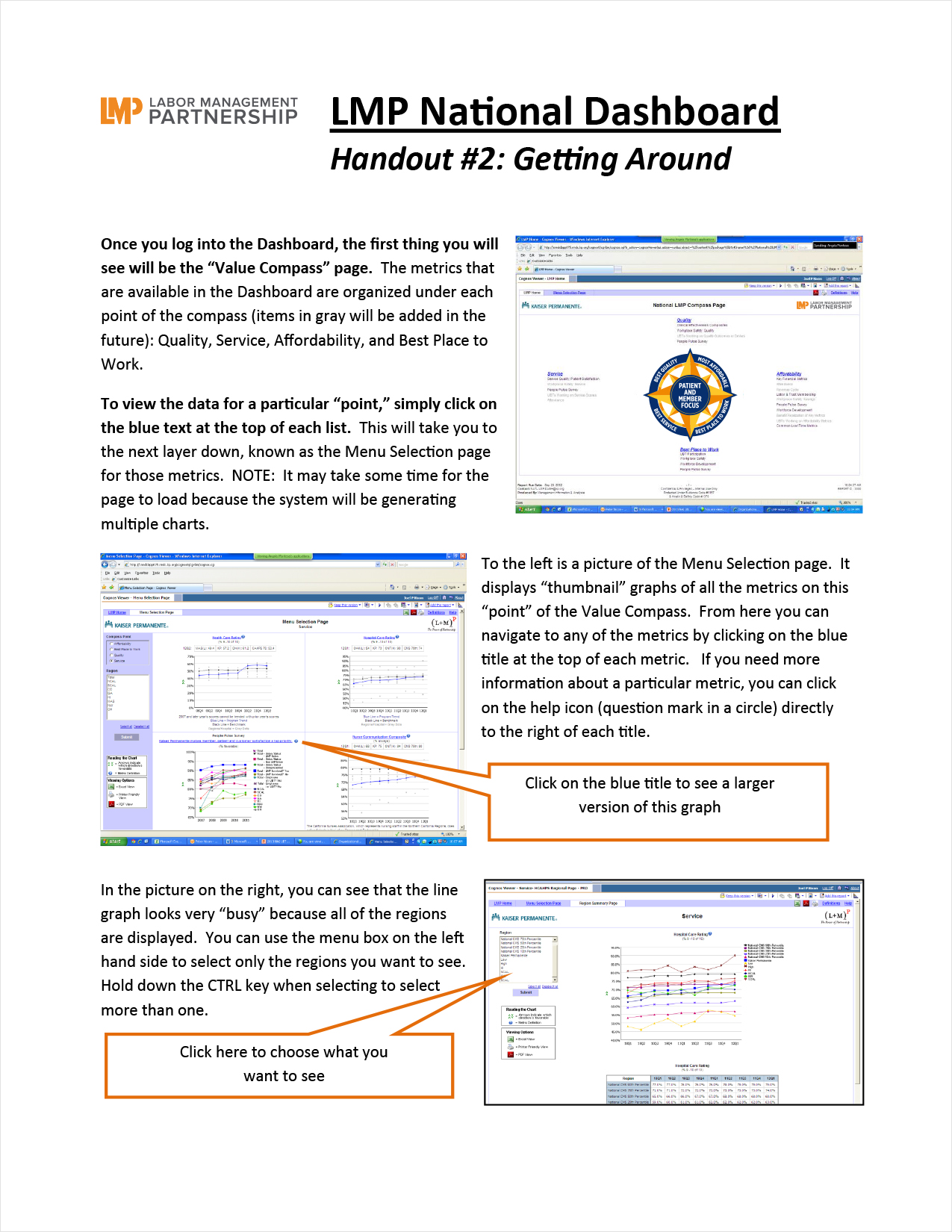
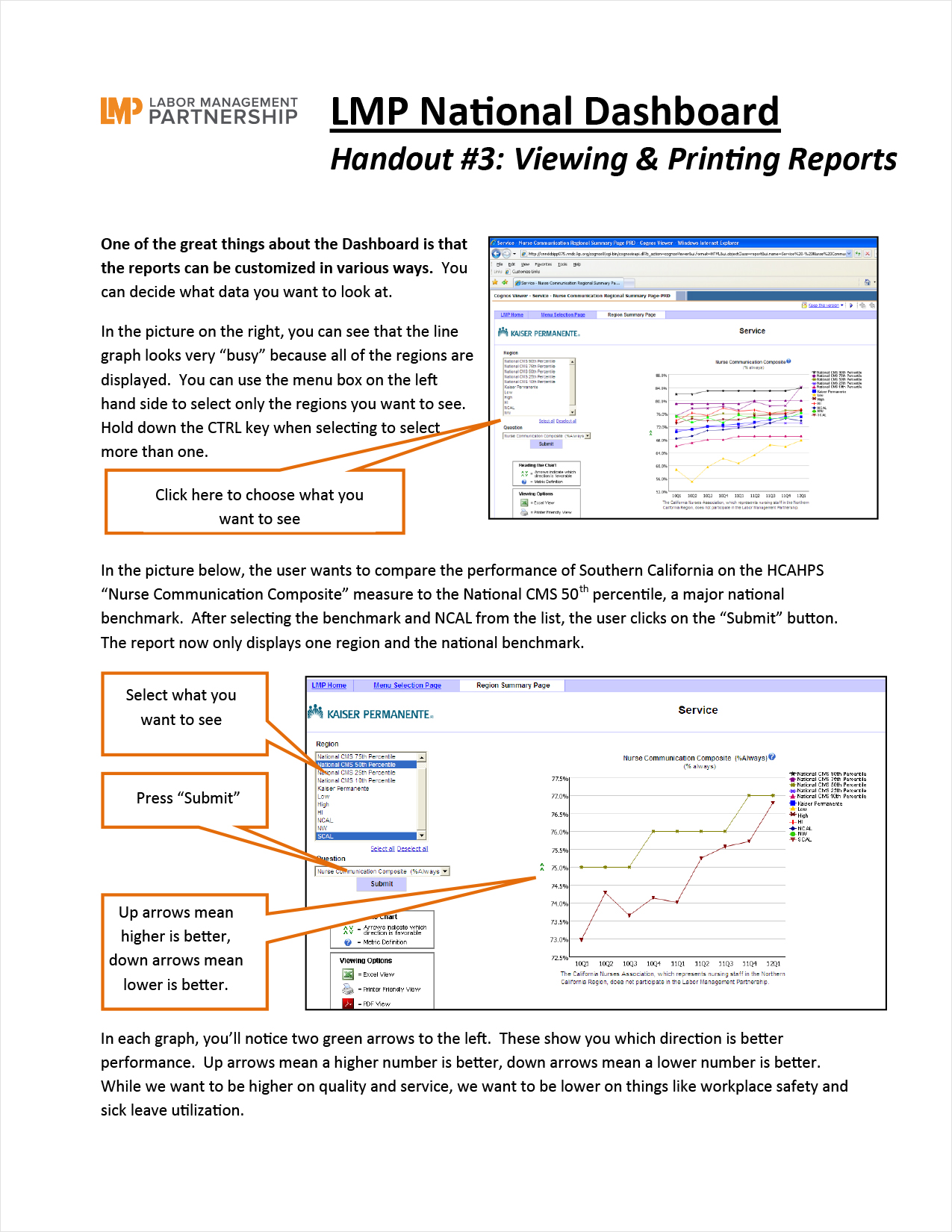
LMP National Dashboard Guide #2: Getting Around

Format:
PDF

Size:
8.5" x 11"

Intended audience:
UBT co-leads, sponsors and consultants

Best used:
Follow these simple instructions to access information regarding KP and team performance in each point of the Value Compass--quality, service, affordability and the workplace.


Related tools:

TOOLS

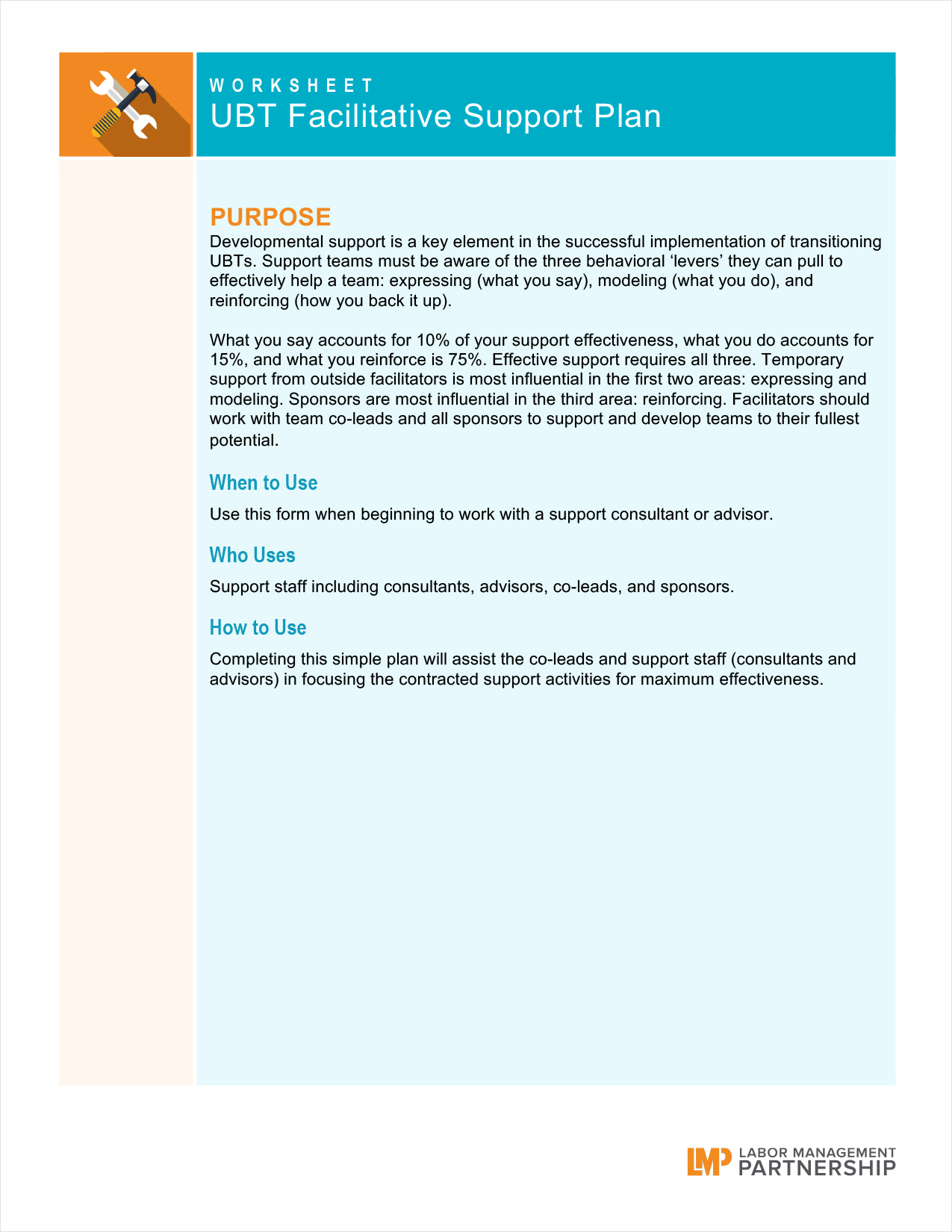
UBT Facilitative Support Plan

Format:
Word document

Size:
8.5" x 11"

Intended audience:
Support staff including consultants, advisors, co-leads, and sponsors

Best used:
Developmental support is a key element in the successful implementation of transitioning UBTs. Support teams must be aware of the three behavioral "levers" they can pull to effectively help a team: expressing (what you say), modeling (what you do), and reinforcing (how you back it up). Use this form when beginning to work with a support consultant or advisor.

Related tools:

Want a Healthy Workforce? Try an Instant Recess

Deck: 
Exercise breaks reduce injuries, stress and sick days

Story body part 1: 

At 10:30 a.m. sharp, South Bay Medical Center appointment clerk Carolina Meza removes her telephone headset. She fires up what looks like the world’s tiniest iPod, attached to a portable speaker that’s not much bigger. She gathers four of her co-workers in a patch of open space near the coffee room. They do some neck rolls, march in place and then do a move Meza calls “the incredible hulk”—a shoulder stretch that brings welcome relief to those facing a computer screen for most of their day.

“When we go back to our stations, we feel refreshed,” says Meza, a member of SEIU UHW.

It’s called Instant Recess, and it’s the brainchild of Toni Yancey, MD, co-director of the UCLA Kaiser Permanente Center for Health Equity. It involves a quick, daily group exercise and is aimed at incorporating physical activity into a normal workday. It comes at a time when research is showing that workplace fitness initiatives targeting individual behavior (such as counseling and gym memberships) aren’t working. An organization’s whole infrastructure needs to be addressed, says Yancey. 

That’s what makes Instant Recess so appealing. It demonstrates KP’s commitment to Total Health—including for a healthy and safe work life for KP employees as well as the members and communities we serve. It’s consistent with KP’s Healthy Workforce push, and also seems to help reduce workplace injuries and improve attendance.

At the South Bay call center, for instance, annualized sick days fell almost one full day per full-time equivalent between 2010 and 2011, when the department began Instant Recess. The number of ergonomic injuries went from three to zero.  

Overcoming obstacles

While they are seeing results now, team members were wary when senior leaders at their medical center approached them about trying Instant Recess. “I was very skeptical,” says Darlene Zelaya, operations manager. “We can’t prevent the calls from coming in.” In fact, hold times for patients did go up when the team first implemented Instant Recess.

The unit-based team worked together with project manager Tiffany Creighton to adapt Instant Recess to their members’ needs. For instance, before calling a recess, team members check the reader board to assess how many agents can be off the phones at one time. They hold many small exercise bursts throughout the day instead of one or two longer ones. And they keep the music turned down low to avoid disturbing agents on the phone with patients.

Making it work locally

In the South Bay lab, Instant Recess looks and sounds totally different—but is getting similarly promising results. That department blasts a boom box for 10 full minutes during the Instant Recesses it incorporates into its huddles at shift change twice a day. Clinical lab scientist Nora Soriano steps away from her microscope to join in. She’s lost 43 pounds recently, and she partly credits Instant Recess. Soriano, a member of UFCW Local 770, says the initiative inspired her to exercise more at home. “My son got me an Xbox,” she says. “I don’t stop for half an hour, sometimes 45 minutes.”

Not all of Soriano’s co-workers were so enthused when they first heard about Instant Recess. “I was kind of negative,” admits Julia Ann Scrivens, a lab assistant and UHW member. “I thought, ‘I am so busy. You want me to do what?’ ” Area lab manager Dennis Edora says, “It was a shock. No one knew what to expect.” But the lab’s staff had just been through some stressful changes—including getting new equipment and moving to a new floor—and team members were hungry for something that would help rebuild morale.

“We collaborated with all the different job codes,” says Edora. “Everyone added their different flavor,” she says, noting that employees rotate as a leader, some choosing Hawaiian dance moves, others yoga-inspired stretches. “Instant Recess really got us together. It wasn’t just exercise.” Moreover, it was helping reduce injuries: the lab reported only one repetitive motion injury in 2011, after beginning Instant Recess in April. There were five such injuries in 2010.   

And Scrivens is sold as well. “It is fun,” she says. “It makes me happy.”

TOOLS

Research on How UBTs Deliver on Service

Format:
PowerPoint slide

Size:
8.5" x 11"

Intended audience:
Unit-based team sponsors and co-leads, and KP managers

Best used:
This summary of KP research shows that high-performing teams are improving HCAHPS scores while reducing workplace injuries and sick days. Use in meetings or discussions to benchmark team results against high-performing UBTs across Kaiser Permanente.

Related tools:

You Gotta Learn

Deck: 
A psychologically safe environment is essential to teamwork and innovation

Story body part 1: 

The theme of the 2012 Union Delegates Conference was “You Gotta Move”—and Amy Edmondson’s advice for the delegates was “you gotta learn.”

The Harvard Business School professor studies what she calls “learning environments.” To support innovation and teamwork, it’s essential the Labor Management Partnership and unit-based teams foster learning environments throughout Kaiser Permanente.

Imagine the ideal learning environment: People feel free to take risks. They feel psychologically safe. They believe they won’t be punished or humiliated for speaking up with ideas, questions, concerns or mistakes. “Without that kind of psychological safety, it’s very hard for an organization to learn,” says Edmondson.

Now imagine the opposite of a learning environment, one where no one speaks up. “Nobody ever got fired for being silent,” says Edmondson. “And yet many bad things happen as a result of silence. Silence is a strategy for individuals to stay safe, but not necessarily for patients to stay safe or for organizations to stay vibrant.”

Creating a learning environment is up to leaders—to those people with influence, whether or not they have a formal leadership role.

“Leaders have to go first,” Edmondson says. They “have to be willing to ask questions themselves, invite participation, acknowledge their own fallibility, and to explicitly state we don’t know everything yet.” These behaviors help an environment where others can take the risks of learning.

But, she cautions, “The learning environment doesn’t live at the ‘organization’ level. For the most part, there are pockets of learning environments.…In a large, complex system, answers don’t come from central headquarters or the CEO. The answers come from the people at the front line doing the work.”

A labor management partnership like the one at Kaiser Permanente “is an important foundation” for building a learning environment, says Edmondson. “A true partnership is completely consistent with the context for mutual learning.”

Both management and union UBT co-leads can help create a learning environment by articulating the unit’s or department’s purpose and goals “in a meaningful way that touches hearts and minds, that motivates and encourages,” she says.

They can—and must—also reduce the fear people experience that makes them reluctant to speak up. The LMP helps develop and support people, helping them be their best and most courageous, Edmondson says.

TOOLS

PowerPoint: The Power of Teaming

Format:
PPT

Size:
11-slide deck

Intended audience:
Sponsors, UBT co-leads, trainers, facilitators, stewards

Best used:
Harvard Business School Professor Amy Edmondson delivered this presentation, "The Power of Teaming," at the March 2012 Union Delegates Conference to explain her research on how nimble, successful organizations and projects increasingly rely on teaming rather than stable, unchanging teams. She demonstrates how leaders can create a culture of teaming by fostering psychologically safe learning environments where innovation can flourish. Use to help build a culture of teaming, or "teamwork on the fly," and foster productive collaboration among UBTs and across departments.

Related tools:

Pages

Subscribe to RSS - UBT Co-Leads