
Mid-Atlantic States

Help Video

How to Find UBT Basics on the LMP Website

Learn how to use the LMP website:

LMP Website Overview

Learn how to use the LMP website:

How to Find How-To Guides

This short animated video explains how to find and use our powerful how-to guides

Learn how to use the LMP website:

How to Find and Use Team-Tested Practices

Does your team want to improve service? Or clinical quality? If you don't know where to start, check out the team-tested practices on the LMP website. This short video shows you how. 

Learn how to use the LMP website:

How to Use the Search Function on the LMP Website

Having trouble using the search function? Check out this short video to help you search like a pro!

Learn how to use the LMP website:

How to Find the Tools on the LMP Website

Need to find a checklist, template or puzzle? Don't know where to start? Check out this short video to find the tools you need on the LMP website with just a few clicks. 

Learn how to use the LMP website:

Teams Tackle Technology One Byte at a Time

Deck: 
Survey shows how unit-based teams can boost tech’s effectiveness

Story body part 1: 

When you think of technology in health care, what comes to mind?

Virtual care? Medical devices? Electronic health care records?

In Washington, a radiology team increased its health and impact with an app to track a step challenge.

In Virginia, advice nurses bonded through Microsoft Teams and a buddy system.

Across the Labor Management Partnership, unit-based teams are embracing technology step by step. By doing so, they're strengthening teamwork, improving service, and becoming more efficient.

That reflects findings of a survey by Kaiser Permanente and the Alliance of Health Care Unions. The survey asked workers how they perceive technology, LMP, and UBTs. A Brandeis University analysis of the survey linked UBT interest and involvement with views of the importance of technology.

UBTs are natural work groups that collaborate to improve patient care. The Partnership has 3,700 UBTs. Each team is co-led by a manager and a worker and a physician — if it includes doctors.

Stepping up team activities

The Olympia Radiology UBT formed in 2022.

The step challenge was an early project. To track steps, team members downloaded an app to phones and smart watches. This led the team to walk more and raised interest in the UBT.

"People get excited," says management co-lead Lydon Fitzgerald, a radiology manager. "They want to be a part of it."

The team has 50 members, including techs for CT, MRI, and X-ray. It plans to add sonographers and mammography techs.

"They want a voice," says labor co-lead Jesse Toth, a radiologic tech and UFCW Local 3000 steward. "It's about inclusion."

Know the code

The radiology team took more tech steps. It began to use Microsoft Teams to share files and host some meetings.

Then the team focused on patient satisfaction scores. It added QR codes, so patients could give real-time feedback.

But many older patients weren't familiar with QR codes. The team then added signs and created scripts to show patients how to use QR codes with their phone.

"We're trying to keep patients happy and on time," Toth says.

Make time to train

When the unit got 2 new machines, the co-leads made sure workers got trained. The team learned how to use the equipment and found ways to work smarter.

"Tech is integral to workflows. How can we make it better?" Fitzgerald says. "We embody the principles of LMP, working together at the lowest level to find solutions."
Looking to the (Google) Stars for Exceptional Patient Care

Deck: 
Project focuses on patient feedback at Colorado clinic

Story body part 1: 

Great patient care shouldn't be a secret.

That’s why staff members at Ridgeline Behavioral Health in Colorado encourage patients to post Google star reviews about their care experiences.

“We want our patients to know we care about their experience and are listening to what they have to say,” says Annje Ciarrocchi, lead outpatient behavioral health associate and SEIU Local 105 member. She serves as the team’s labor co-lead.

The level 4 unit-based team led a successful project to raise the facility’s average Google star rating to 4 or higher out of 5. They sought feedback from patients and asked them to post reviews about clinic staff and operations.

Great ratings can drive patient confidence and membership growth. They can also raise visibility.

Promoting KP’s reputation

Every time you use Google to find a Kaiser Permanente facility, a business profile appears that includes its address and hours of operation. It also displays a 1- to 5-star consumer rating by the facility’s name.

Kaiser Permanente aims for an average 4.3 Google rating at its more than 650 medical care facilities. Here's why: search for a “hospital (or clinic) near me" on Google and those facilities scoring at or above 4.3 are likely to appear at the top of the query results. Seeing high Google star ratings can help members feel good about choosing — and keeping — KP as their health plan.


TOOLS

Affordability UBT Project Idea

Format:
PDF

Size:
8.5" x 11"

Intended audience:
Pharmacy unit-based team members

Best used:
Use this project idea from Southern California to improve over-the-counter pharmacy sales and help meet the 2025 Alliance PSP affordability goal. For more tools, please visit the How-To Guide: Alliance PSP in a Box.

Related tools:

TOOLS

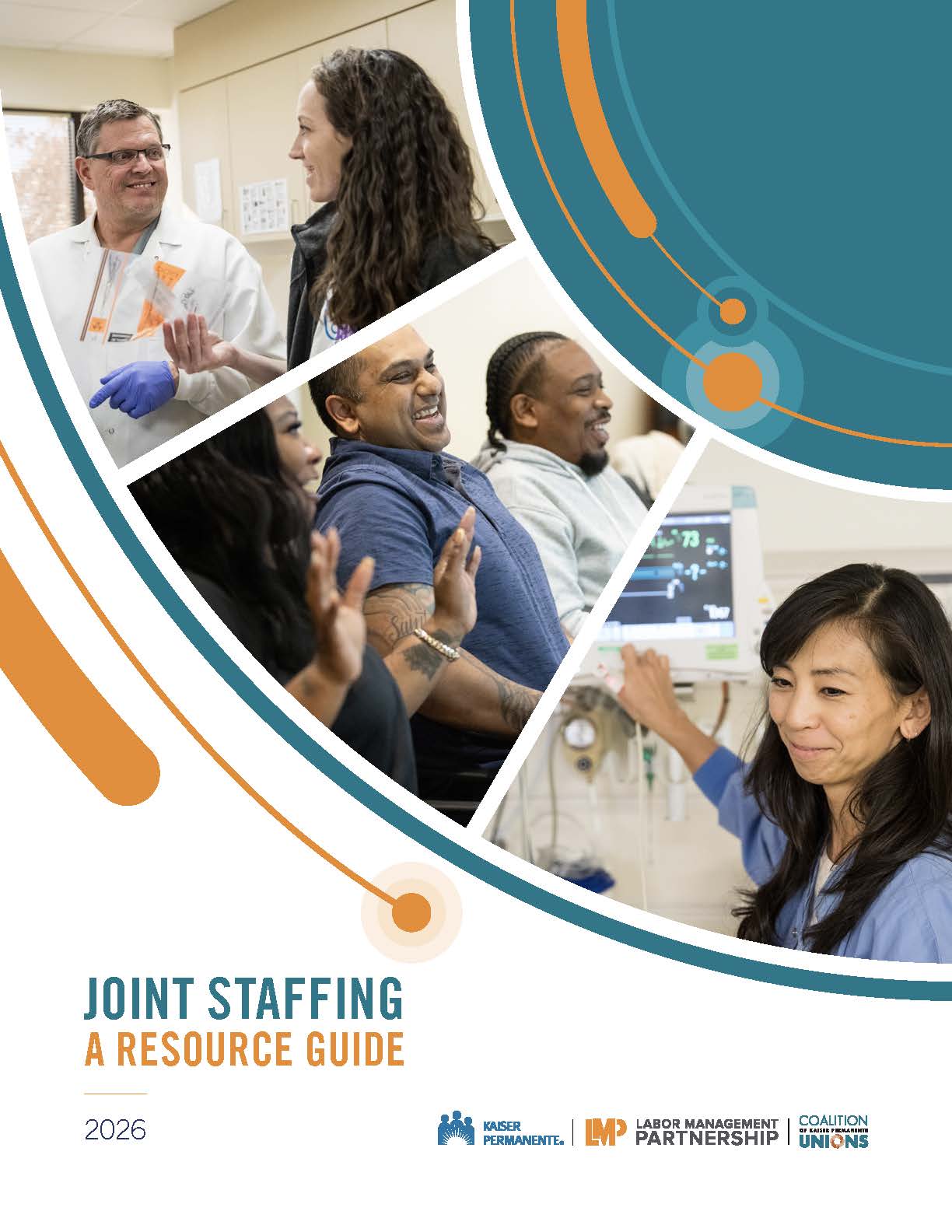
Coalition Joint Staffing: A Resource Guide

Format:
PDF

Size:
37 pages

Intended audience:
Unit-based teams with Coalition-represented workers 

Best used:
Use this resource guide to understand joint staffing and what is expected at each stage of the process.

Related tools:

Getting Personal to Improve Patient Care

Deck: 
Teams collect patient demographic information

Story body part 1: 

Jenna Li and Autum Tomlin serve in different specialties at opposite ends of the country. Yet each plays a central part in efforts to harness patient data to improve care and eliminate health disparities at Kaiser Permanente.

Li is a chemical dependency counselor with the Mid-Valley Addiction Medicine team in Salem, Oregon. Members of her unit-based team, represented by Alliance-affiliated unions, make standard practice of asking patients about their sexual orientation, gender identity and preferred pronouns.

Tomlin is an urgent care technician at Reston Medical Center in Virginia. She and her team – represented by Alliance- and Coalition-affiliated unions – collect information about patients’ race, ethnicity, and preferred language. She has seen, first-hand, the power of speaking to patients in words they can understand.

“Usually, you can see the patient is at ease and feels a sense of relief that they are able to communicate in their preferred language,” says Tomlin, the team’s labor co-lead and a member of OPEIU Local 2, part of the Coalition of Kaiser Permanente Unions.

Like others across the organization, the Level 5 unit-based teams are seeking to address disparities in health and access to quality care that persist across a range of dimensions – including race, language, gender, and sexual orientation. By asking patients about their backgrounds in a safe, respectful, and compassionate way, the teams are changing how they deliver care and service to members – and relate to one another.

“The effort is minimal, and the effectiveness can be really high when we help a patient feel seen and understood,” says Li, labor co-lead for the Mid-Valley team and a member of OFNHP Local 5017, part of the Alliance of Health Care Unions.

Making members feel welcome

To better understand patients’ health risks and needs, the Mid-Valley team began asking members about their sexual orientation and gender information. They asked the questions during the intake assessment and entered patients’ responses into their electronic health records, making important background information available to all KP providers.

The practice is already changing how the Northwest team delivers care to LGBTQ+ patients.

For instance, Mid-Valley is referring more members to a weekly group therapy session for LGBTQ+ patients to discuss their unique challenges. Misunderstandings about sexual orientation or gender identity are among the obstacles such patients face in accessing effective care. They also are at elevated risk from health threats including alcohol and substance abuse.

Recently, the team hustled to track down a teen-ager in crisis who had fled their clinic’s waiting room. Knowing the teen identified as nonbinary, staff members convinced them to return after expressing sensitivity to their fears and addressing them with their preferred pronouns.

Gestures to support these patients are especially important because they come to treatment reeling from the “double whammy” of stigmatization for their addiction struggles and LGTBQ+ identity.

“We can do a lot to make a member feel welcome by using language they are open to hearing,” says Carri McCrary, Mid-Valley clinical services manager and the team’s management co-lead.

Speaking the Same Language Improves Care and Understanding

  • Asking members about their race, ethnicity, and preferred language helps caregivers identify and address health risks and provide culturally competent care
  • Using a prompt card at the start to remind team members to ask patients for their demographic information
  • Holding friendly competitions to keep team members engaged

What can your team do to standardize collection of demographic information and make it part of the workflow?

Humans of Partnership:

It was important for me to get vaccinated because I couldn’t bear the thought that if I contracted COVID-19, I could possibly give it to anyone! I have grandchildren and the thought of them getting it from me, because of my work, just wrecked me; I couldn’t imagine the guilt. When I received both vaccine doses, I didn’t feel either shot. Everyone talked about the negative things that might happen: tiredness, feeling yucky for a day or so, sore arm, et cetera, but I refused to claim any of those. I ended up working in a vaccination clinic and I told almost every person that they’d be fine. When I saw those same people return for the second vaccine dose, they all said, ‘You were right, I was fine.’ Don’t claim the negative.

, , ()

Pages

Subscribe to RSS - Mid-Atlantic States