Performance Improvement

Help Video

How to Find UBT Basics on the LMP Website

Learn how to use the LMP website:

LMP Website Overview

Learn how to use the LMP website:

How to Find How-To Guides

This short animated video explains how to find and use our powerful how-to guides

Learn how to use the LMP website:

How to Find and Use Team-Tested Practices

Does your team want to improve service? Or clinical quality? If you don't know where to start, check out the team-tested practices on the LMP website. This short video shows you how. 

Learn how to use the LMP website:

How to Use the Search Function on the LMP Website

Having trouble using the search function? Check out this short video to help you search like a pro!

Learn how to use the LMP website:

How to Find the Tools on the LMP Website

Need to find a checklist, template or puzzle? Don't know where to start? Check out this short video to find the tools you need on the LMP website with just a few clicks. 

Learn how to use the LMP website:

TOOLS

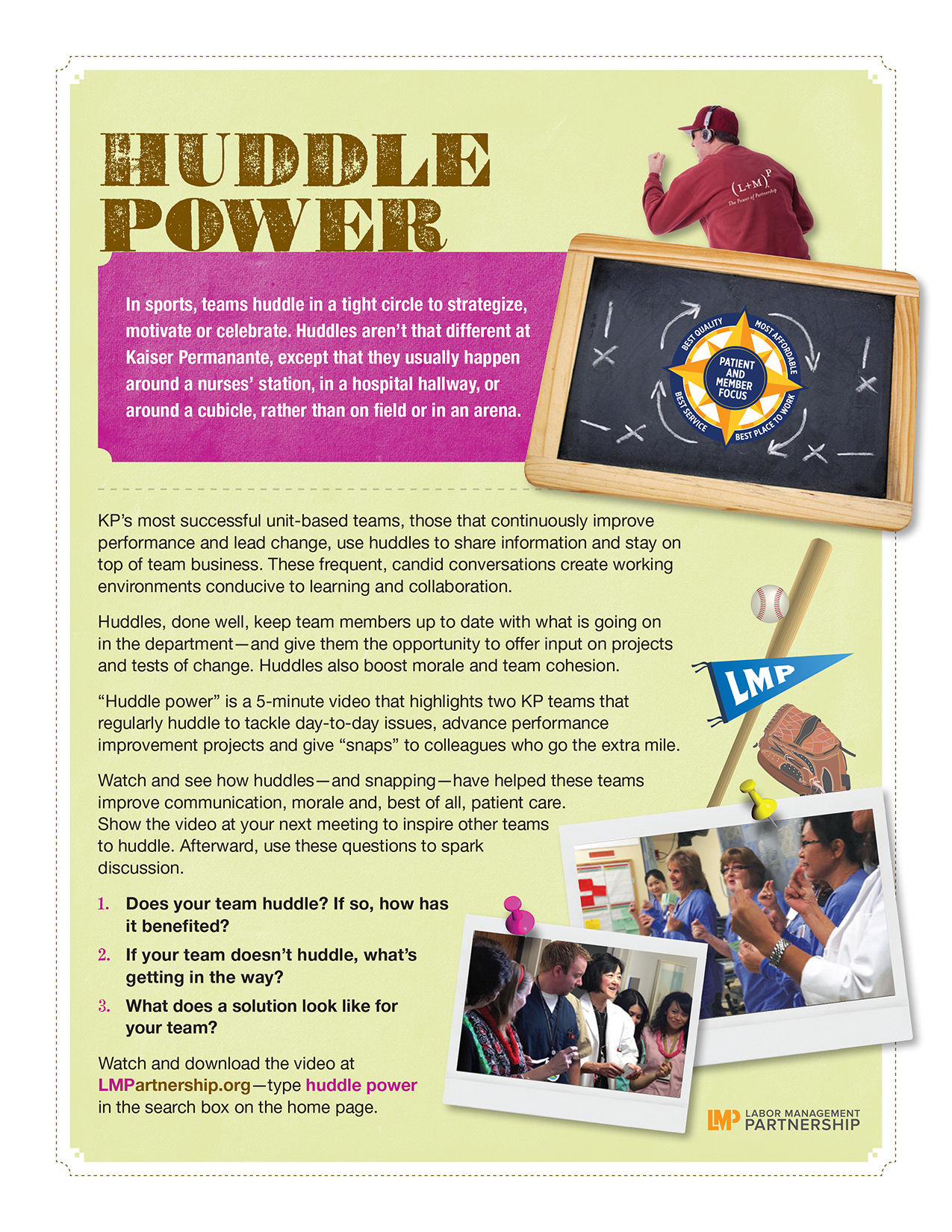
'Huddle Power': Video User's Guide

Format: 
PDF

Size: 
8.5" x 11"

Intended audience: 
Frontline employees, managers and physicians, and UBT consultants

Best used: 
Show the "Huddle Power" video and pass out this guide at UBT meetings and trainings to inspire your team to use daily huddles as one way to improve performance. 

Click here to watch the "Huddle Power" video.

Related tools:

TOOLS

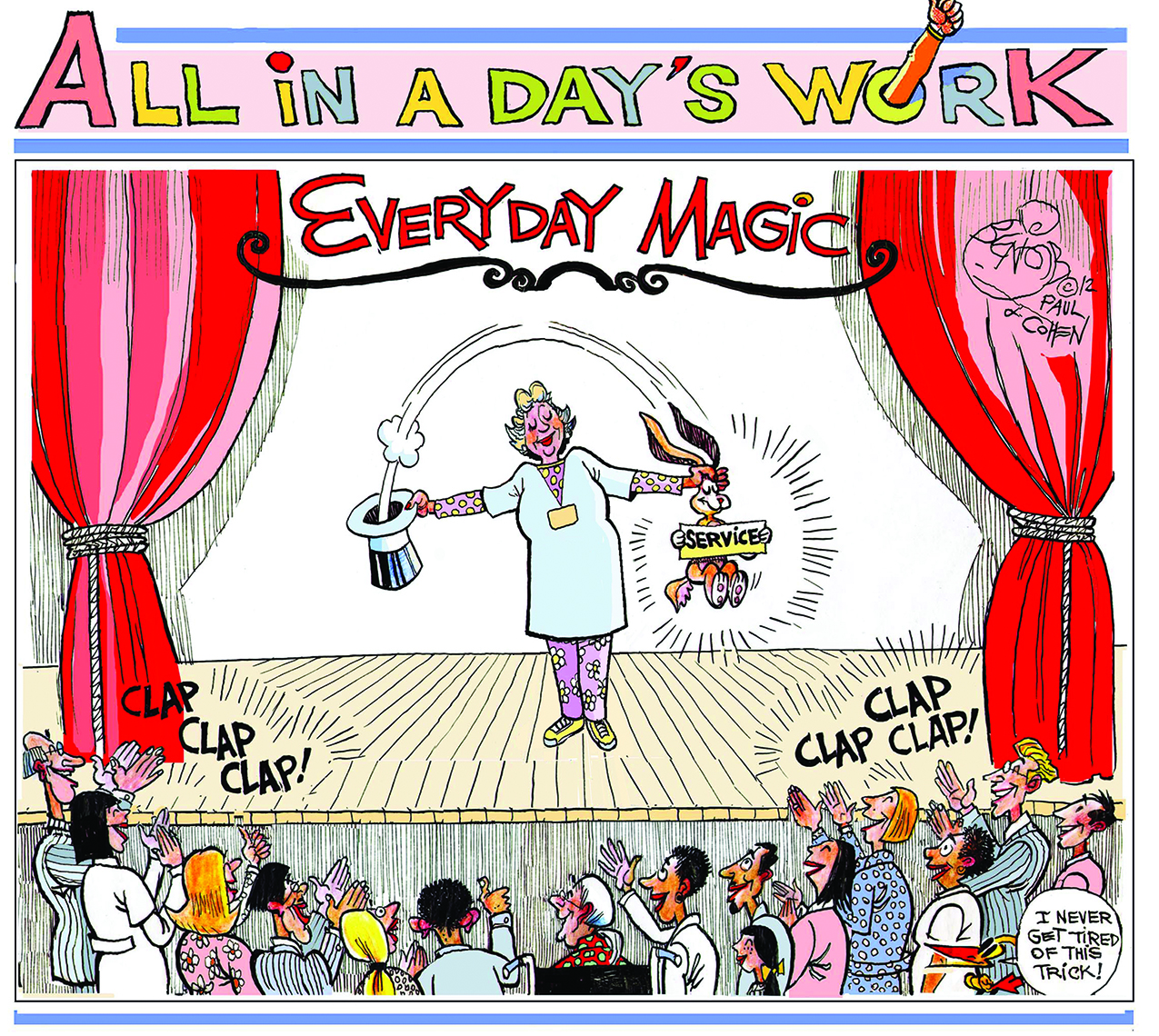
All in a Day's Work: Everyday Magic

Format:
PDF (color or black and white)

Size:
7.25" x 7.25" (prints out on 8.5" x 11") 

Intended audience:
Anyone with a sense of humor

Best used:
Download and post this humorous look at providing superior service on bulletin boards and in your cubicle, and attach it to emails. Have fun!


Related tools:

TOOLS

Powerpoint: Modern Venue for Old-Fashioned Storytelling

Format:
PPT

Size:
1 Slide

Intended audience:
LMP staff, UBT consultants, improvement advisers

Best used:
This PowerPoint slide highlights an EVS team that uses webinars to spread successful practices. Use in presentations to show some of the methods used and the measurable results being achieved by unit-based teams across Kaiser Permanente. 

Related tools:

TOOLS

PowerPoint: The Power of Teaming

Format:
PPT

Size:
11-slide deck

Intended audience:
Sponsors, UBT co-leads, trainers, facilitators, stewards

Best used:
Harvard Business School Professor Amy Edmondson delivered this presentation, "The Power of Teaming," at the March 2012 Union Delegates Conference to explain her research on how nimble, successful organizations and projects increasingly rely on teaming rather than stable, unchanging teams. She demonstrates how leaders can create a culture of teaming by fostering psychologically safe learning environments where innovation can flourish. Use to help build a culture of teaming, or "teamwork on the fly," and foster productive collaboration among UBTs and across departments.

Related tools:

TOOLS

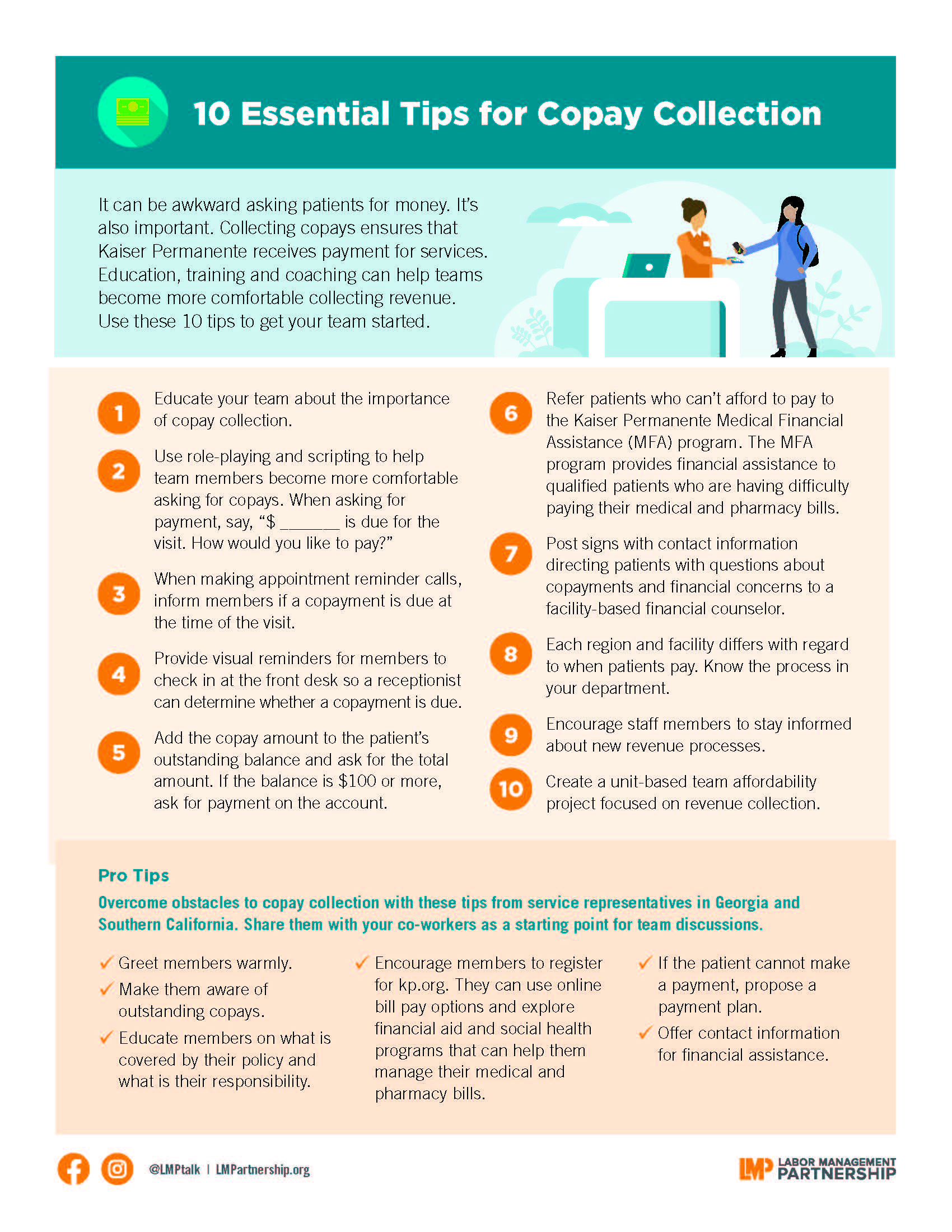
10 Essential Tips for Copay Collection

Format:
PDF

Size:
8.5" x 11"

Intended audience:
Unit-based team co-leads and members

Best used:
Share tips to increase copayment collection, generate revenue and increase affordability.

Related story: How Anaheim Admitting Team Increased Copay Collection


Related tools:

TOOLS

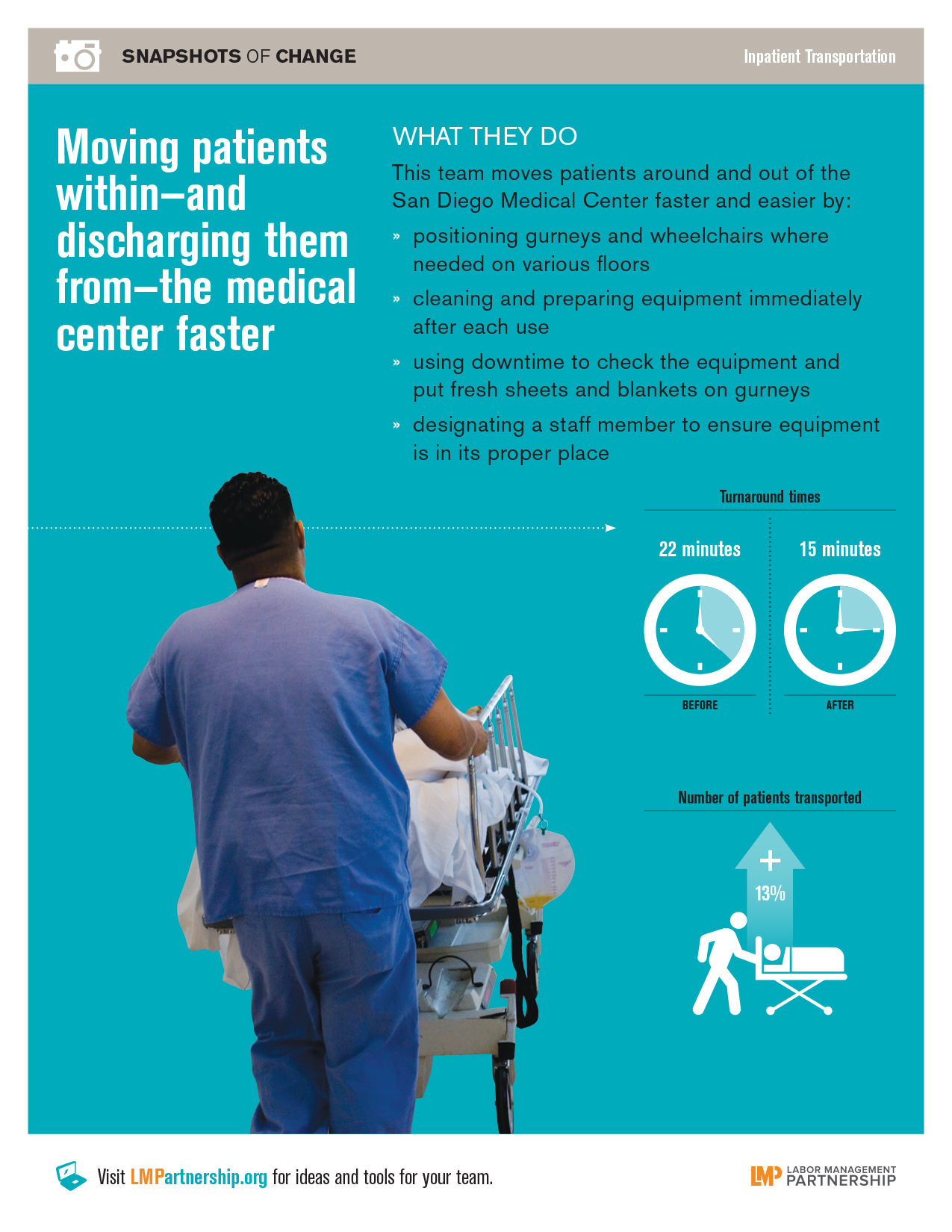
Poster: Transporting Patients on the Fast Track

Format:
PDF (color and black and white)

Size:
8.5” x 11”

Intended audience:
UBT members, co-leads and consultants

Best used:
Posted on bulletin boards, in break rooms and other staff areas, t
his poster highlights a transport team that improved turnaround times.


Related tools:

TOOLS

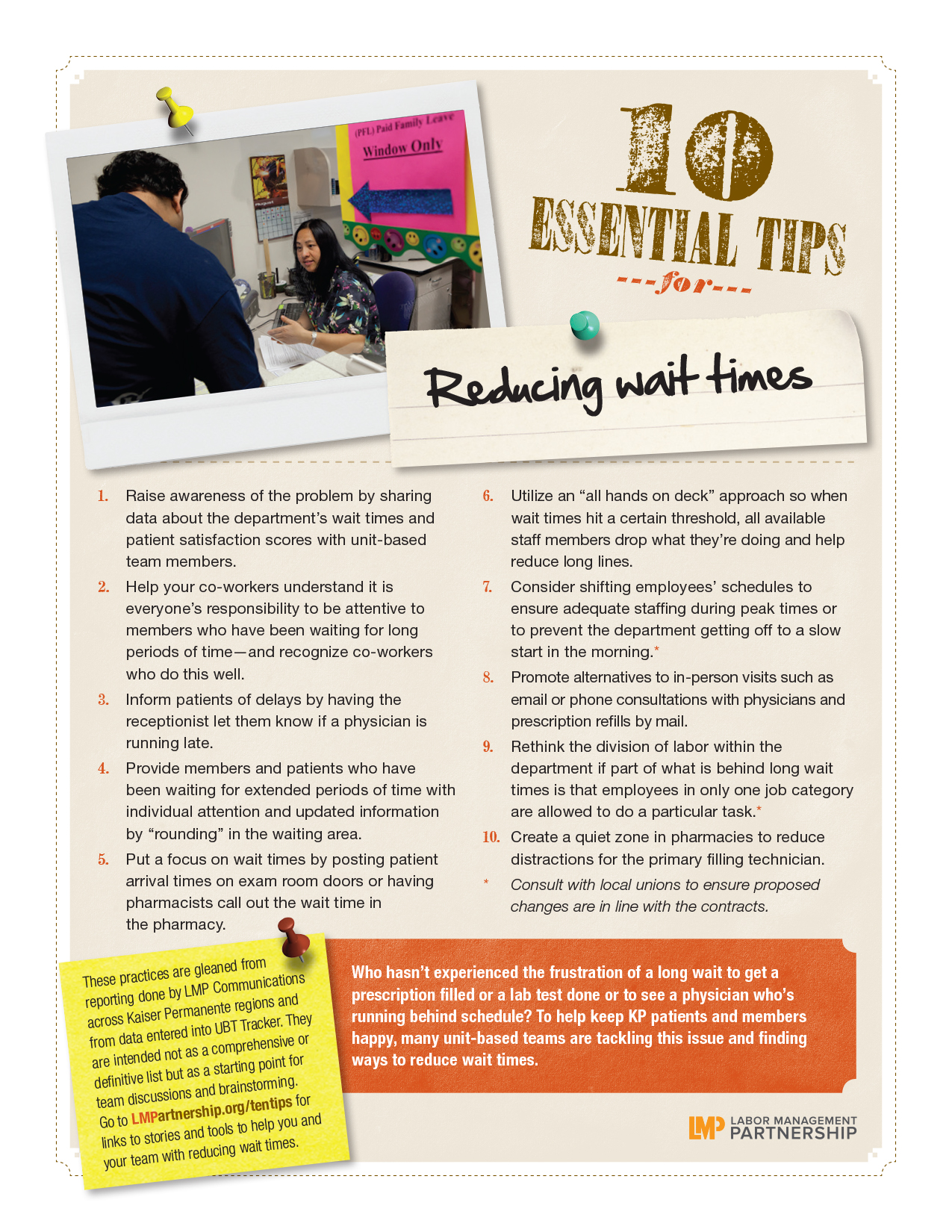
10 Essential Tips for Reducing Wait Times

Format:
PDF

Size:
8.5" x 11"

Intended audience:
Unit-based team co-leads and members

Best used:
Use this tipsheet as a starting point for team discussions and brainstorming ways to cut wait times and increase patient satisfaction. Post on bulletin boards and discuss in team meetings.


Related tools:

TOOLS

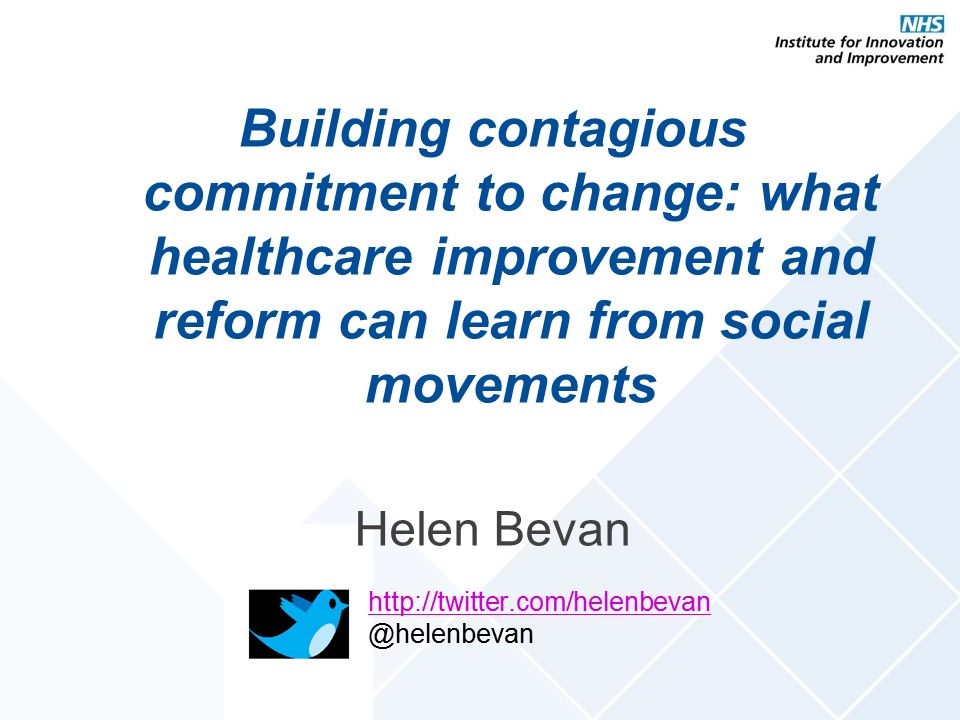
PowerPoint: Contagious Commitment to Change

Format:
PowerPoint

Size:
42-slide deck

Intended audience:
Those interested in learning what a top health care innovator has learned from her work in Great Britain's National Health Services (NHS) system.

Best used:
The slide deck was presented by Helen Bevan, chief of service transformation at the NHS Institute for Innovation and Improvement, the largest government-sponsored health care system in the world. Use to educate staff members, managers and physicians on how to motivate change.

Related tools:

Five Tips for Leading Change

Deck: 
Helen Bevan, a British health care leader, looks to civil rights leaders and others to learn how to inspire large-scale transformation

Story body part 1: 

When Helen Bevan told her National Health Services colleagues in the United Kingdom she would be speaking at a conference of Kaiser Permanente union employees, they were surprised.

“What could they possibly learn from us?” they asked.

A lot, she says.

“Kaiser is a role model for us,” explains Bevan, chief of service transformation at the NHS Institute for Innovation and Improvement, part of the largest government-sponsored health care system in the world.“We look at and learn a lot from Kaiser in terms of innovations, efficiencies, use of new technology and its approach to patient care.”

We have much to learn from them as well—especially when it comes to large-scale change.

How to move forward

“To move forward in health care, leaders must tell their story, make it personal, create a sense of ‘us’ and include a call for action,” says Bevan, one of the plenary speakers at this year’s Union Delegates Conference in Hollywood. “The way to build and sustain health care reform is to learn the lessons of social movement leaders.”

Bevan’s point is on the mark. The 700 delegates attending the conference, themed “You Gotta Move,” were called to act on improving their own health and the health of their communities. They took that message to the streets of Hollywood, distributing fliers with tips on easy steps to take to improve health. Some also gathered for a flash mob in front of Hollywood’s Grauman’s Chinese Theatre, dancing to Beyonce’s “Move Your Body”—a song made for Michelle Obama’s “Let’s Move” campaign to end childhood obesity.

“It’s such a great experience to see the extent to which union members are stepping up to be a part of the change process,” Bevan says.

Building commitment and energy

The actions at the delegates conference—and beyond—are precisely what’s needed to reform health care in America and the world, she says, adding: “We can only create large-scale change if we build a platform of commitment and energy.” 

Because unit-based teams, KP’s platform for improvement, engage frontline workers, managers and physicians, they “already have that commitment and energy,” Bevan says. UBTs “create a sense of coming together around a common cause and achieving the same outcomes.”

But UBTs alone can’t bring about the large-scale change needed to meet the unprecedented challenges to improve quality and reduce costs.

Engage and inspire

“Transformation needs to occur at all levels of the organization in order for it to be sustainable,” Bevan says. “Senior leaders need to stop being pacesetters and start engaging, inspiring and emotionally connecting with employees. The passion is there. We just have to tap into it.”

As the task of delivering health and health care becomes more complex and the scale of change increases, “We need to think widely and innovatively about how we define the role of senior leaders,” Bevan says.

That’s where social movement thinking comes in. “Successful movements often have charismatic leaders—think Martin Luther King or Nelson Mandela—but what ultimately guides and mobilizes the movement are leaders at multiple levels.” The key, she says, is to depend less on reorganizing structures and processes as the catalyst for change and more on unleashing emotional and spiritual energy for change.

“People are much more likely to embrace change if it builds on the passion, the sense of a calling that got them into health care in the first place,” Bevan says. By connecting to that shared passion through storytelling, “We can create an unstoppable force for change.”

TOOLS

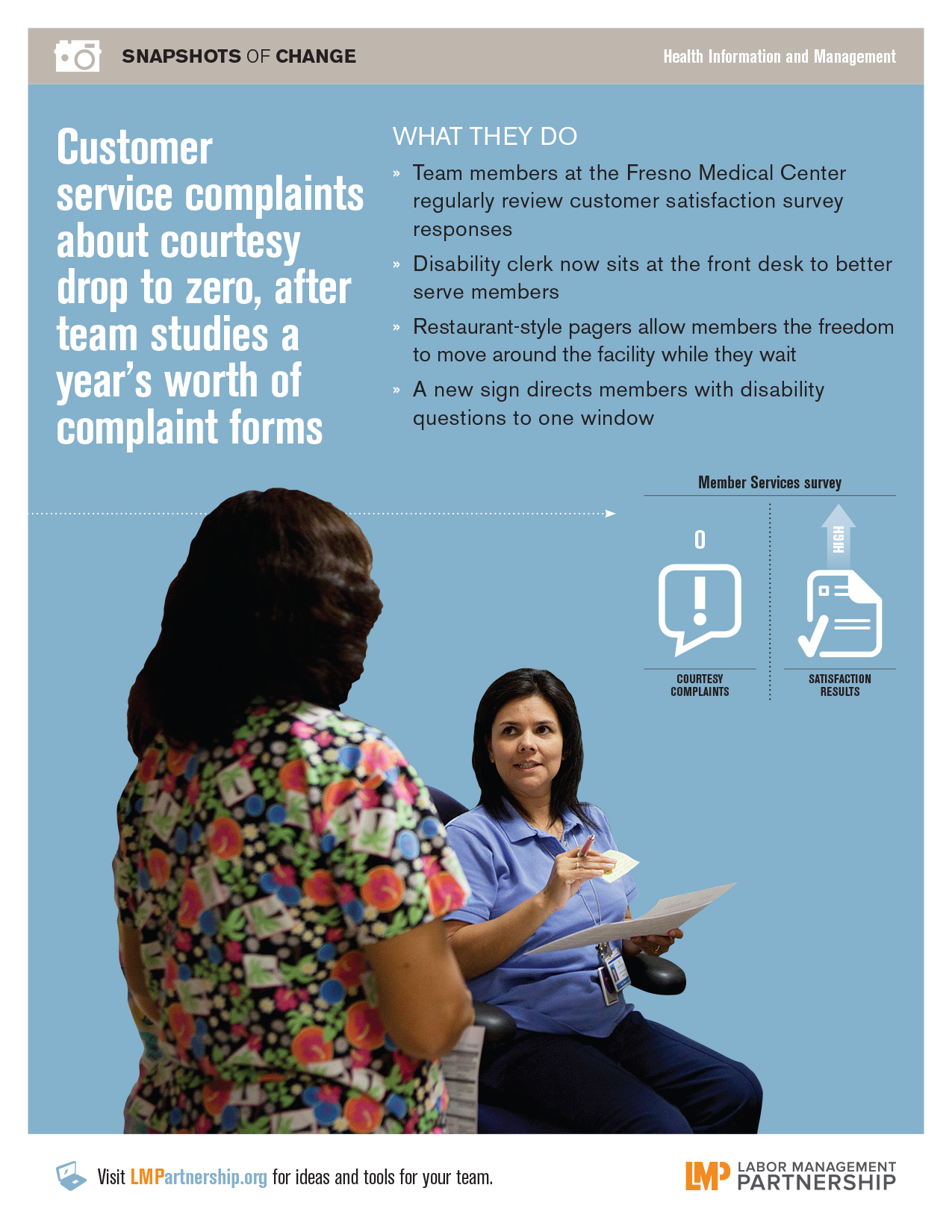
Poster: Addressing Complaints Improves Service

Format:
PDF (color and black and white)

Size:
8.5” x 11”

Intended audience:
UBT members, co-leads and consultants

Best used:
This poster describes how the Fresno Health Information Management UBT used directional signs and restaurant pagers to improve customer service. Post on bulletin boards, in break rooms and other staff areas.


Related tools:

Pages

Subscribe to RSS - Performance Improvement