P2P

Help Video

How to Find UBT Basics on the LMP Website

Learn how to use the LMP website:

LMP Website Overview

Learn how to use the LMP website:

How to Find How-To Guides

This short animated video explains how to find and use our powerful how-to guides

Learn how to use the LMP website:

How to Find and Use Team-Tested Practices

Does your team want to improve service? Or clinical quality? If you don't know where to start, check out the team-tested practices on the LMP website. This short video shows you how. 

Learn how to use the LMP website:

How to Use the Search Function on the LMP Website

Having trouble using the search function? Check out this short video to help you search like a pro!

Learn how to use the LMP website:

How to Find the Tools on the LMP Website

Need to find a checklist, template or puzzle? Don't know where to start? Check out this short video to find the tools you need on the LMP website with just a few clicks. 

Learn how to use the LMP website:

Path to Performance Toolkit

TOOLS

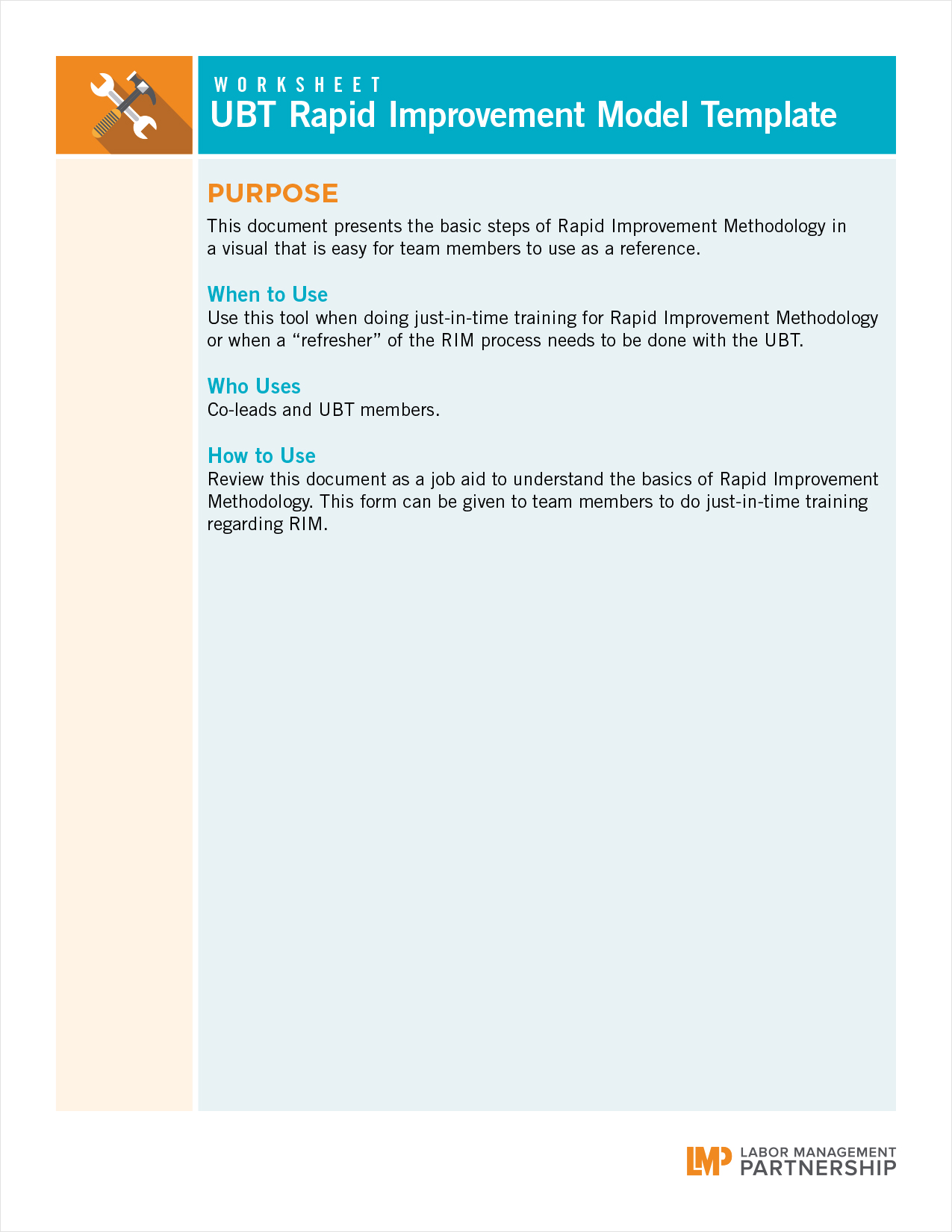
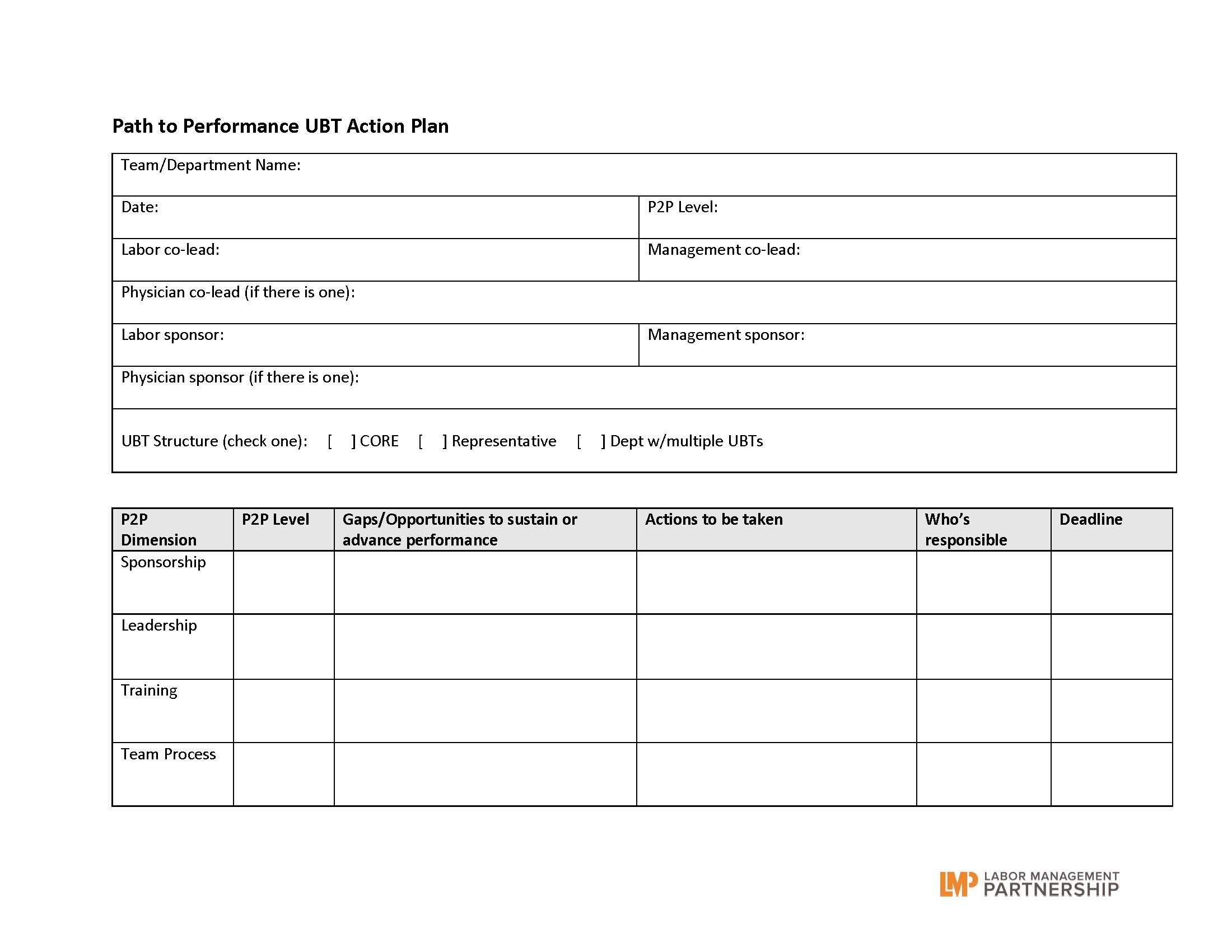
UBT Rapid Improvement Model Template

Format:
PDF (color and black and white)

Size:
Two pages, 8.5" x 11"

Intended audience:
UBT co-leads and members

Best used:
Use this tool when doing just-in-time training for the Rapid Improvement Method (RIM), when teams need a refresher of the RIM process and for team members to use as a reference.
Related tools:

TOOLS

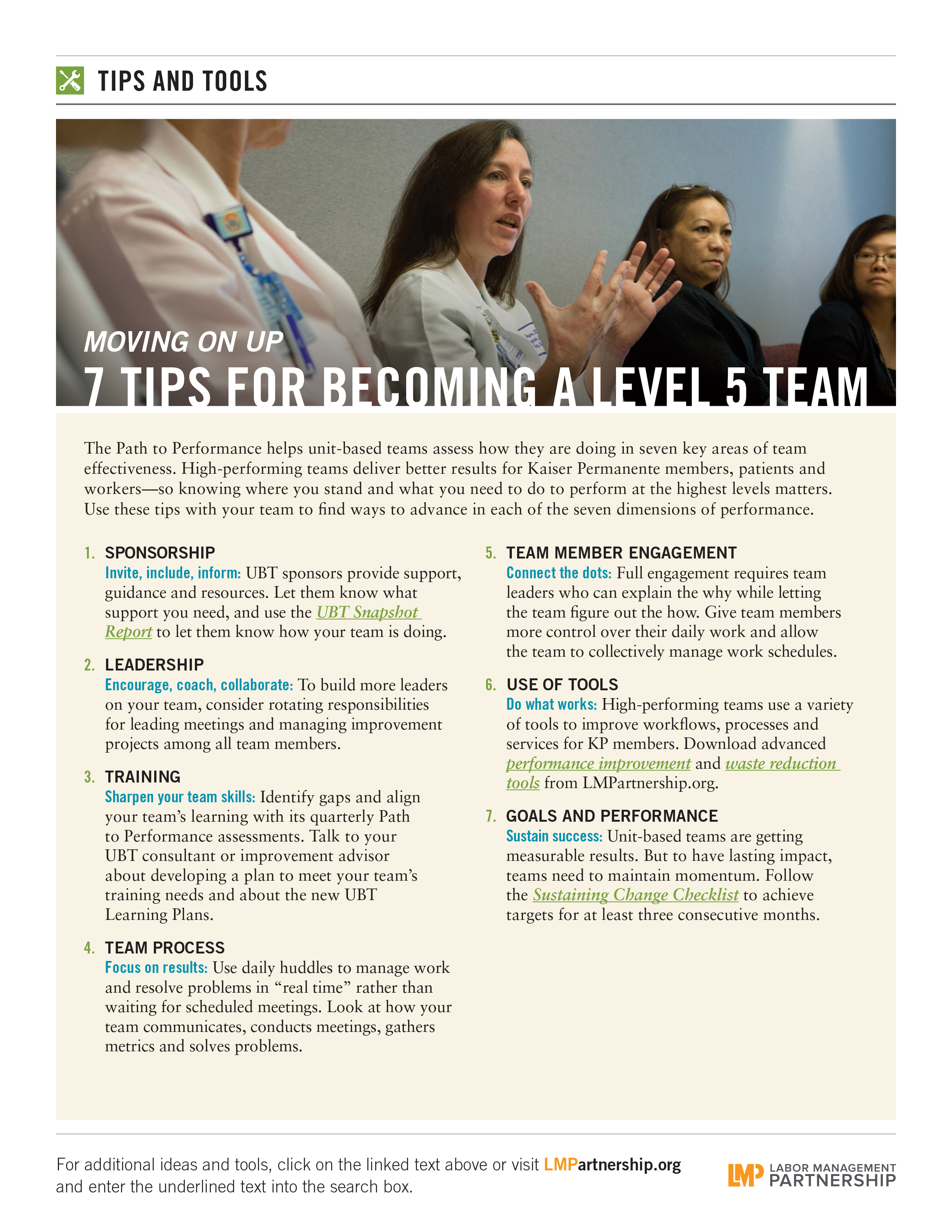
Moving on Up: 7 Tips for Becoming a Level 5 Team

Format:
PDF

Size:
8.5" x 11"

Intended audience:
Unit-based team members, co-leads, sponsors and consultants

Best used:
This tipsheet suggests ways teams can reach Level 4 or Level 5 in each dimension of the Path to Performance. Post on bulletin boards and discuss in team meetings; use these tips to engage your team in specific actions.

Related tools:

TOOLS

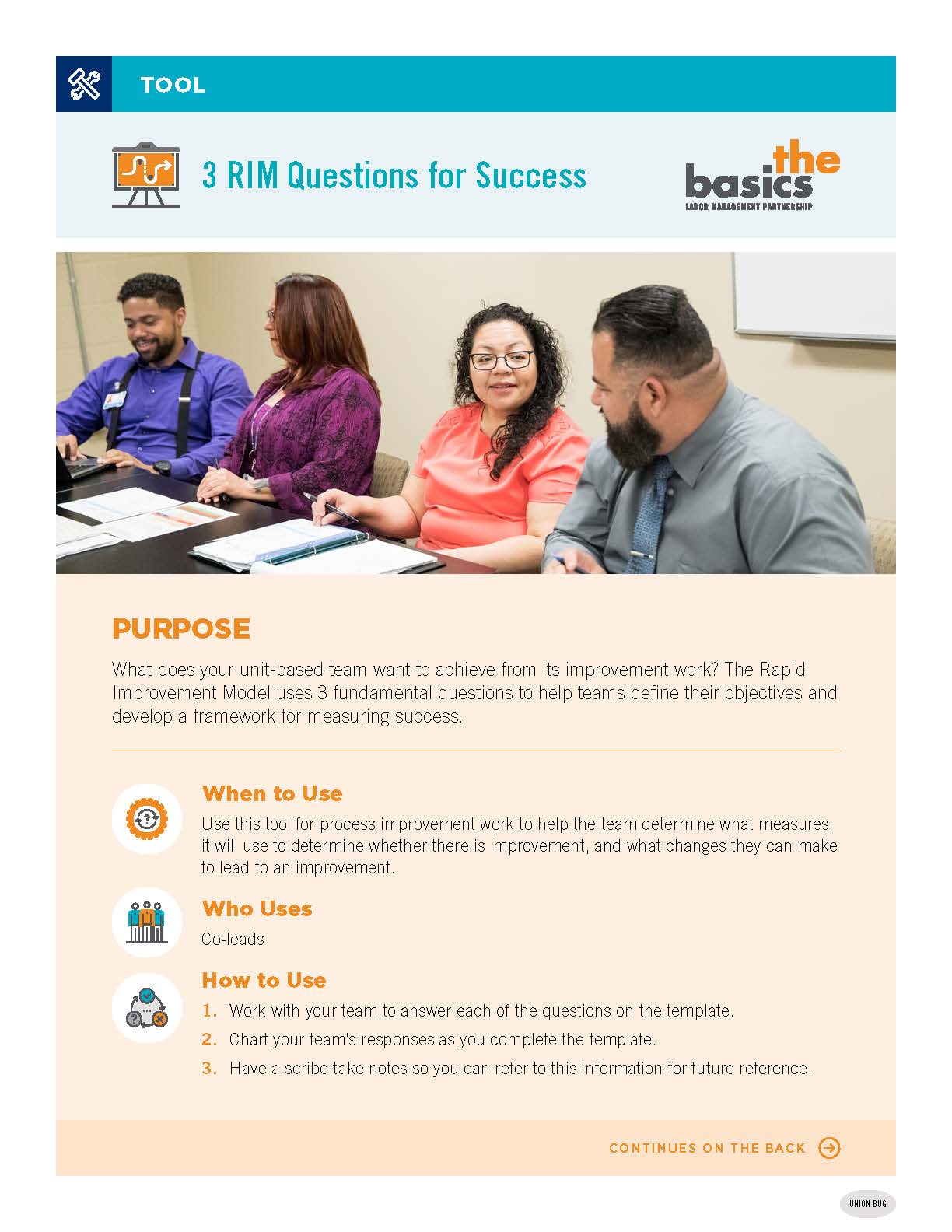
3 RIM Questions for Success

Format:
Word

Size:
Two pages, 8.5" x 11"

Intended audience:
UBT co-leads

Best used:
Use this tool for process improvement work, using the three fundamental questions of the Rapid Improvement Model. Help team members name their improvement goals, decide what measures they will use to determine whether there is improvement and identify changes they can make to lead to an improvement.

Related tools:

TOOLS

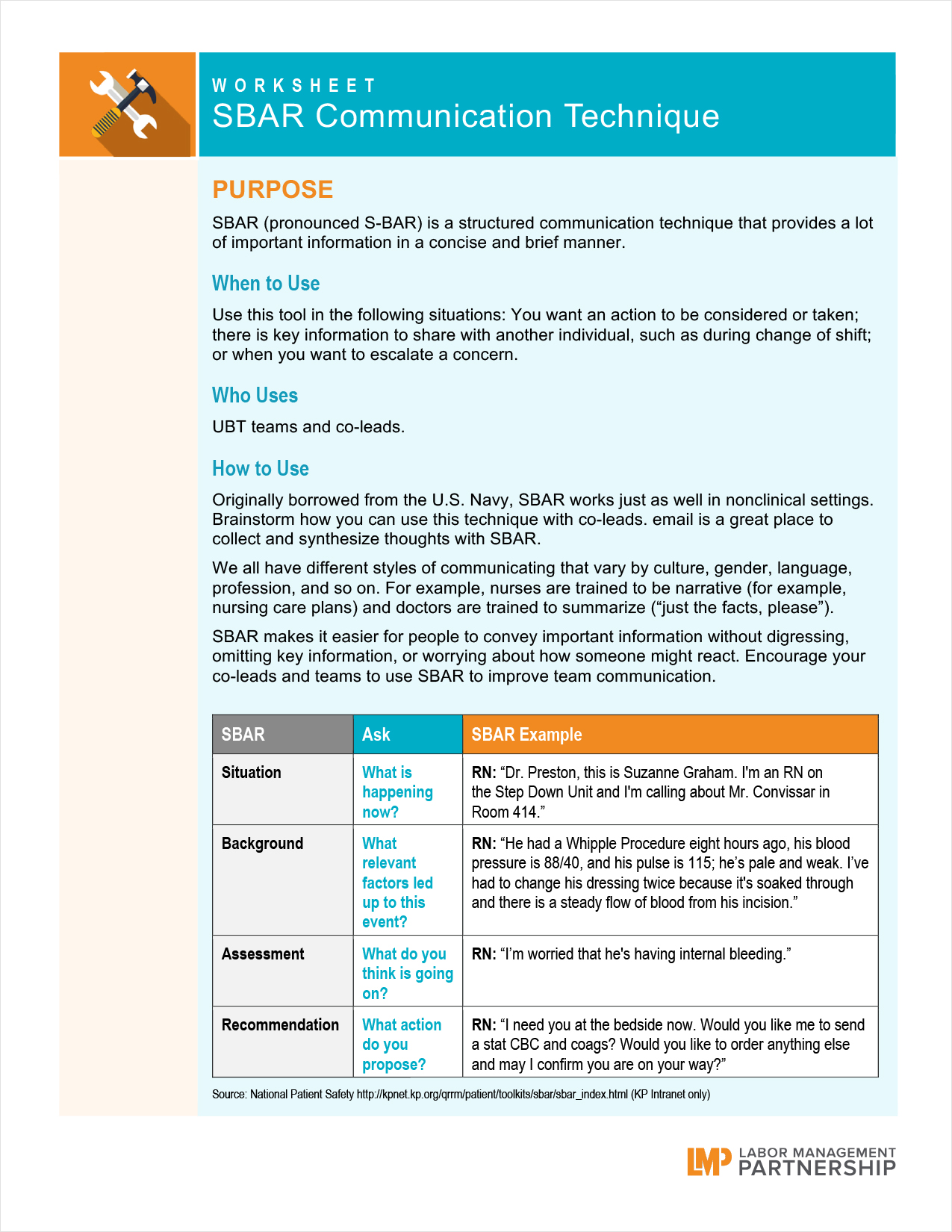
SBAR Communication Technique

Format:
Doc

Size:
8.5" x 11"

Intended audience:
UBT teams and co-leads

Best used:
SBAR (pronounced S-BAR) is a structured communication technique that provides important information concisely. Use this tool in the following situations: You want an action to be considered or taken; there is key information to share with another individual, such as during change of shift; or you want to escalate a concern.


Related tools:

Pages

Subscribe to RSS - P2P