Northern California

Help Video

How to Find UBT Basics on the LMP Website

Learn how to use the LMP website:

LMP Website Overview

Learn how to use the LMP website:

How to Find How-To Guides

This short animated video explains how to find and use our powerful how-to guides

Learn how to use the LMP website:

How to Find and Use Team-Tested Practices

Does your team want to improve service? Or clinical quality? If you don't know where to start, check out the team-tested practices on the LMP website. This short video shows you how. 

Learn how to use the LMP website:

How to Use the Search Function on the LMP Website

Having trouble using the search function? Check out this short video to help you search like a pro!

Learn how to use the LMP website:

How to Find the Tools on the LMP Website

Need to find a checklist, template or puzzle? Don't know where to start? Check out this short video to find the tools you need on the LMP website with just a few clicks. 

Learn how to use the LMP website:

TOOLS

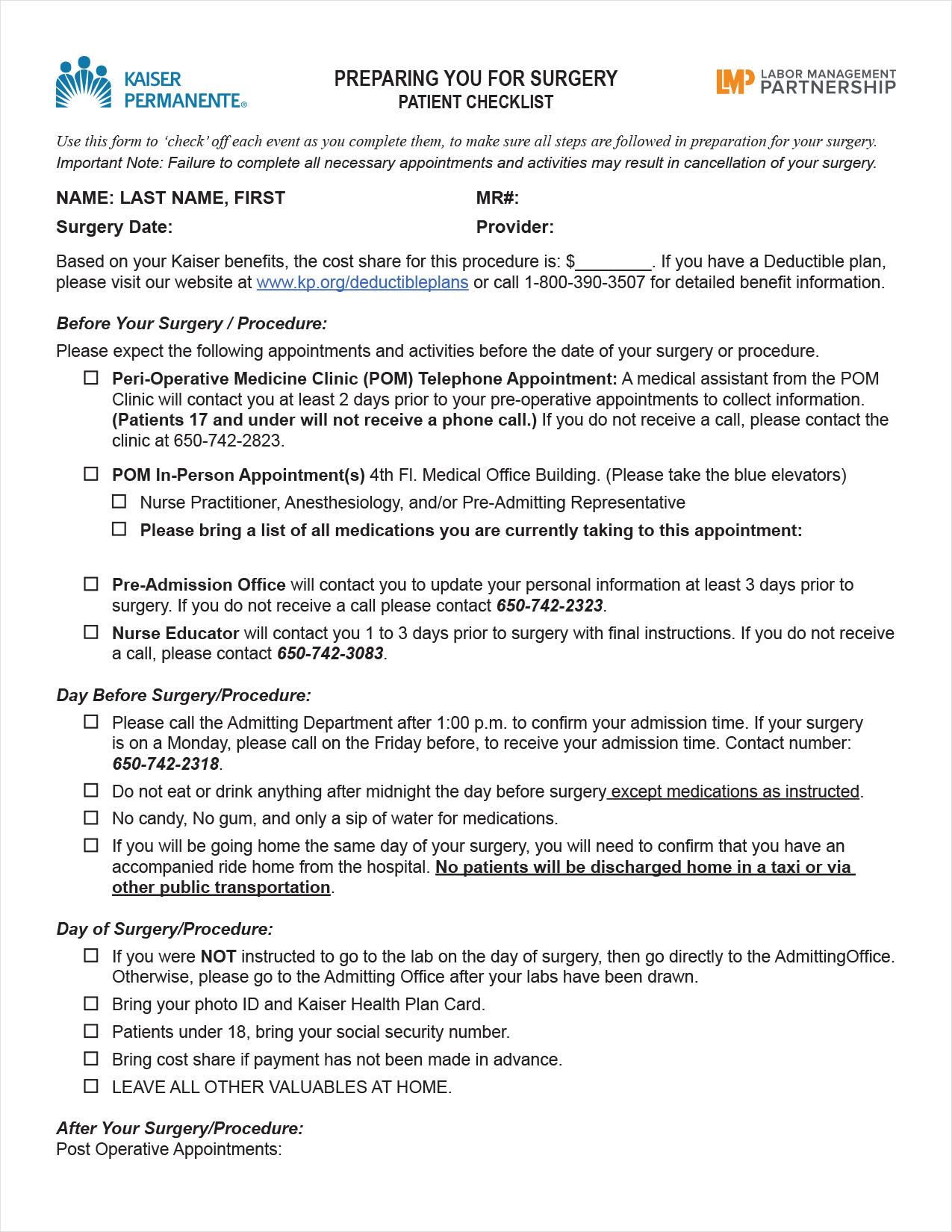
Poster: Creative Ways to Improve Colon Cancer Screening Rates

Format:
PDF

Size:
8.5” x 11”

Intended audience:
Frontline workers, managers and physicians 

Best used:
Inspire your team with this piece that highlights the importance of colon cancer screening for patients.


Related tools:

Many Small UBTs Do What One Large One Can’t

Deck: 
The Charitable Health Coverage Operations department reorganizes—and achieves a goal that had eluded it for years

Story body part 1: 

The employees in Charitable Health Coverage Operations (CHCO) felt good about their Northern California department’s mission—but not so good about how long it took sometimes to help the thousands of low-income children who benefit from KP-subsidized health care.

The department handles the eligibility paperwork for a KP program that provides health coverage to people who don’t qualify for employer-based health coverage or public programs like Medicaid. At the team’s low point in 2005, it had a six-month applications backlog.

“Our primary customers are children,” said Nancy Waring, CHCO customer care manager. “We have over 80,000 children, most of them low income. About 50 percent of our population is Spanish speaking. And the program is completely subsidized by Kaiser.”

Too large a group

In the past, one representative unit-based team encompassed the whole department.  Because employees within the same department were doing very different types of work—processing mail, entering data, processing enrollments, providing customer service, and servicing the regions outside of California—they didn’t share a single set of problems. So the UBT tended to work on departmentwide problems like attendance.

But the single UBT struggled.

 “We basically failed from 2006 to 2009 to do anything,” says Suber Corley, the department’s director, “simply because we were looking at too large a group trying to solve too large a problem.”

So they reorganized. The department now has five UBTs that correspond with employees’ functions.

Setting priorities

The smaller teams set their sites on a number of changes, but they also coordinated with each other on one common goal: to process every application by the 20th of the month.

In their UBT, the mail-room employees decided to look at priorities differently.

“We identified that what we really needed to do was to have a prioritization scheme for every week of the month,” says Victor Romero, CHCO operations manager. He explains that during the first week of January, a recertification application that’s due on April 1 would be low priority in the mail room, whereas a new application—which would need to be processed by January 20 for insurance coverage to begin on February 1—would be high priority. After the 20th, attention moves to the low-priority documents.

The data entry, scanning and enrollment UBTs came up with other solutions, too.

“We instituted several changes in how the application is handled,” says Carl Artis, an enrollment processor team lead and OPEIU Local 29 shop steward. “If we couldn’t process an application, the application was sent back to the customers very early so they could make necessary corrections. We also streamlined our process—there were some things we were doing twice, which wasn’t necessary.”

Artis emphasizes that the changes were developed jointly by frontline workers and managers.

“I have to admit they (the managers) have some really great ideas,” he says, “and they were really able to listen to some great ideas.”

It worked. In October, for the first time in the department’s history, the team was able to process all its new applications by the 20th, so coverage for those applicants could start in November.

“The end result is that poor children did not go without health coverage,” Romero says.

Addressing burnout

In addition to the project to reduce the amount of time it takes to process new applications, the smaller teams have taken on other projects, like reducing burnout among customer service agents who spend all day answering phone calls. They’ve also done charity work together, raising funds to provide school supplies for low-income students at a local high school.

Artis passes on the story of his department’s flourishing UBTs to other members of Local 29.

“I’ve heard some people say, ‘Oh, that’s too much work to take on,’ or, ‘We don’t have the resources we need to address the issue’ or ‘Management would never go for that,’ ” Artis says. “But what I’ve learned is—just try it, and don’t be afraid to fail.”

Game Changer: Putting the Patient First

Deck: 
Teams in South San Francisco and San Diego work to keep patients front and center

Story body part 1: 

What happens when teams truly walk a mile in their patients’ shoes? They often discover their own actions are making that mile a rocky one for patients—and as a result make huge breakthroughs in the way they deliver care.

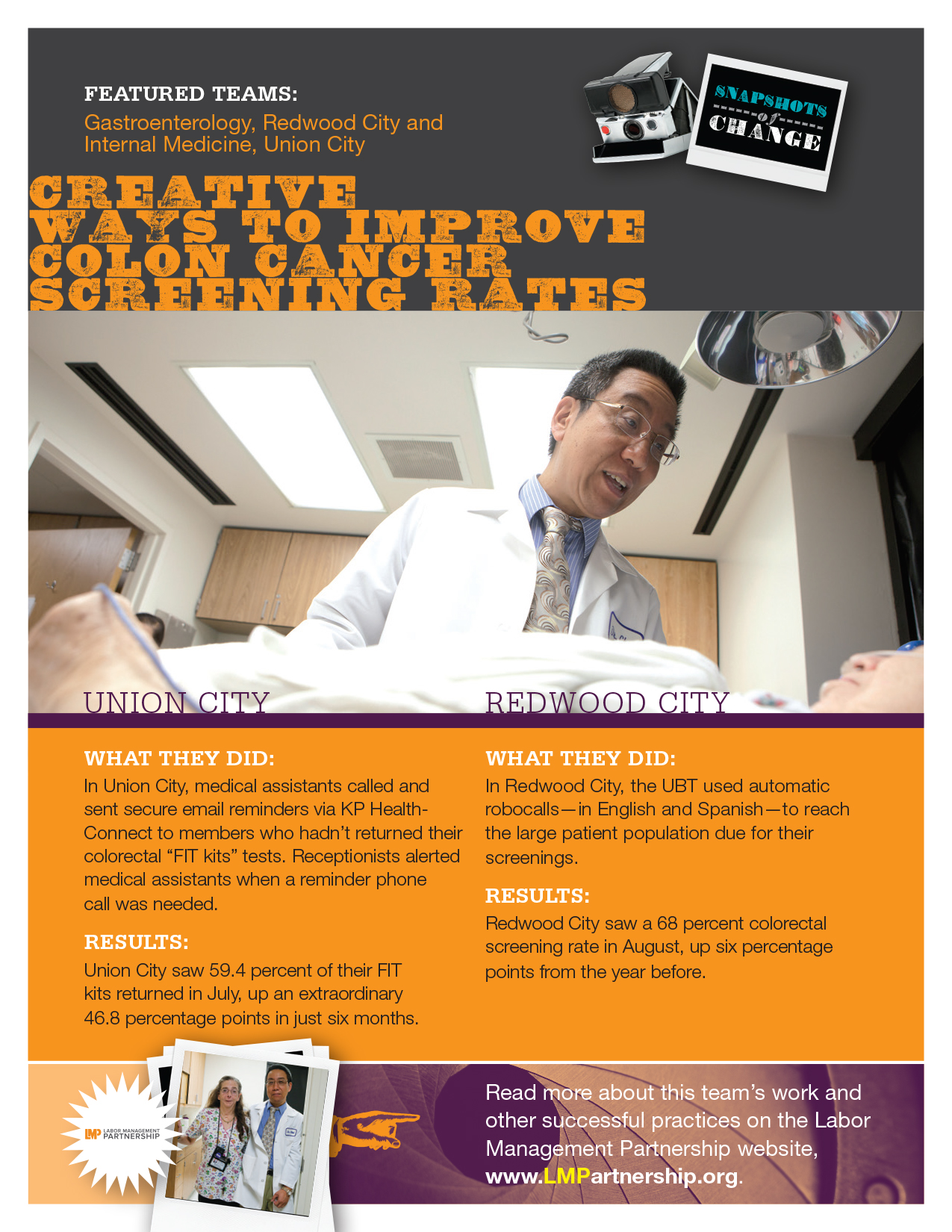
In the case of South San Francisco’s multidepartmental pre-admission team, observing their processes from the other side of the gurney spurred them to dramatically streamline the pre-surgery and admitting process for patients. With the member at the forefront of their thinking, the team members turned a two-inch-thick packet of confusing, redundant information into a streamlined, one-page checklist. And a funny thing happened—while redesigning the process to help patients, the team improved the way it works.

“Patients would often get confused and weren’t sure what the next step in the process was,” says Brian Tzeng, MD, the Peri-operative Medicine director. “We realized we didn’t have a clear path for the patient to follow.”

Other teams throughout Kaiser Permanente are making similar realizations, framing their performance improvement work by asking the question, “What’s best for the patient?” If a possible solution doesn’t work well for the member and patient, then there’s more brainstorming to be done. These teams are taking the Value Compass to heart—organizing their work not just around the four points but examining what they’re doing from the patient’s perspective.

What does that mean for frontline teams? At the San Diego Medical Center, the Emergency Department sees up to 300 patients every 24 hours. Physicians and staff members are always on the go, delivering on the ultimate bottom line—saved lives. What could be more important? Clinical quality is high; patients are seen in a timely manner and the rate of unscheduled return visits is good.

Yet the results of a recent patient satisfaction survey bothered the team. The department scored well overall, but their patients gave it only 63 percent approval on one question: While you were in the Emergency Department, were you kept informed about how long the treatment would take?

TOOLS

Preparing You for Surgery

Format:
PDF and Word DOC

Size:
1 page, 8½” x 11”

Intended Audience:
Teams working on improving the pre-surgery process for patients.

Best used:
Use this document as a model to consider how your facility might revamp the presurgery process and create your own one-page checklist for patients. 
This checklist was developed by a multidepartmental team in South San Francisco that wanted to streamline the presurgery process for patients. As a result of using it, 80 percent of patients are now being confirmed as pre-admitted 24 hours before surgery and the completeness and accuracy of admissions rate has hit 99.4 percent.

Read more about the process in the Fall 2010 Hank.


Related tools:

Pages

Subscribe to RSS - Northern California