Frontline Workers

Help Video

How to Find UBT Basics on the LMP Website

Learn how to use the LMP website:

LMP Website Overview

Learn how to use the LMP website:

How to Find How-To Guides

This short animated video explains how to find and use our powerful how-to guides

Learn how to use the LMP website:

How to Find and Use Team-Tested Practices

Does your team want to improve service? Or clinical quality? If you don't know where to start, check out the team-tested practices on the LMP website. This short video shows you how. 

Learn how to use the LMP website:

How to Use the Search Function on the LMP Website

Having trouble using the search function? Check out this short video to help you search like a pro!

Learn how to use the LMP website:

How to Find the Tools on the LMP Website

Need to find a checklist, template or puzzle? Don't know where to start? Check out this short video to find the tools you need on the LMP website with just a few clicks. 

Learn how to use the LMP website:

TOOLS

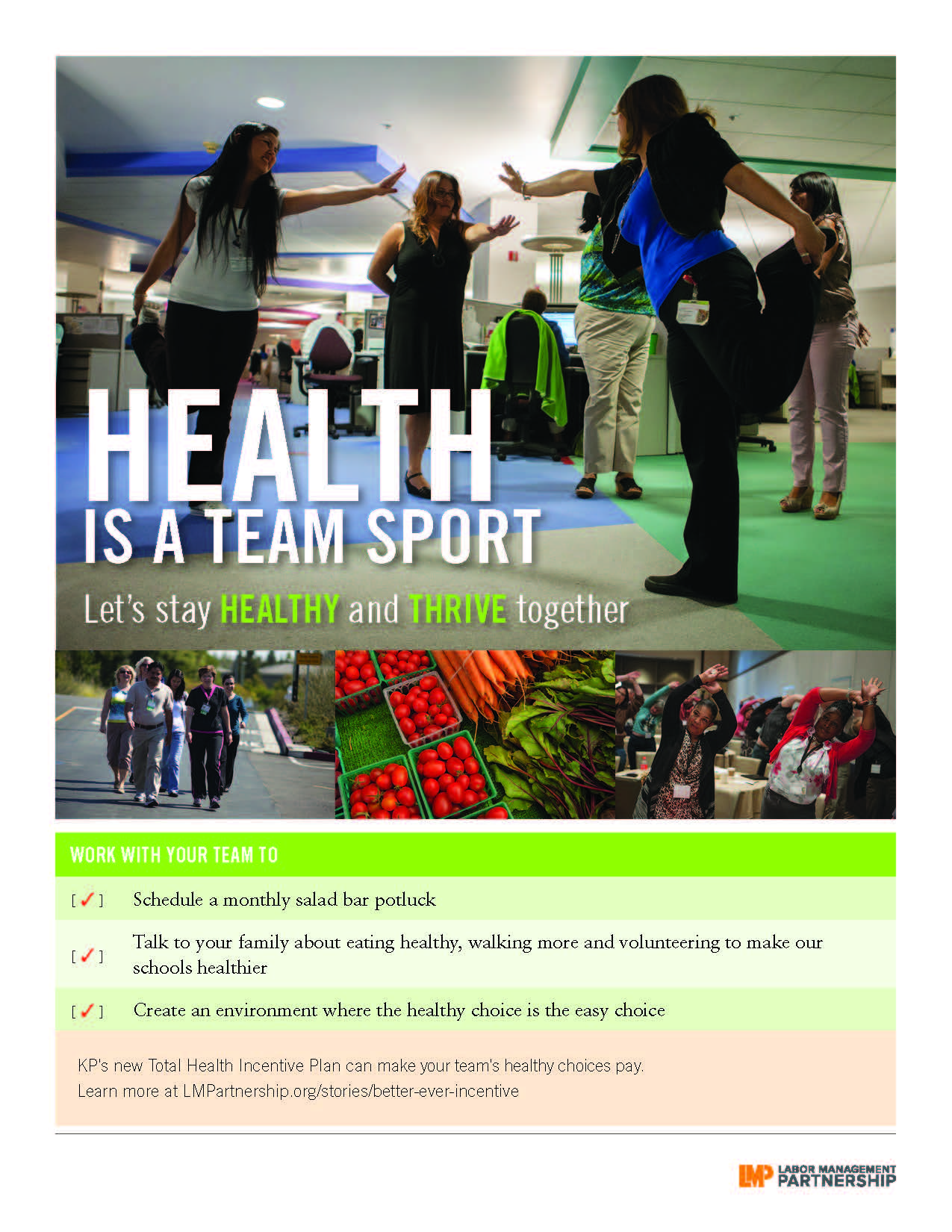
Poster: Health Is a Team Sport

Format:
PDF

Size:
8.5" x 11"

Intended audience:
Frontline employees, managers and physicians

Best used:
Spread the word throughout your staff that the healthy choice is the easy choice. Get involved in workplace wellness.

Related tools:

TOOLS

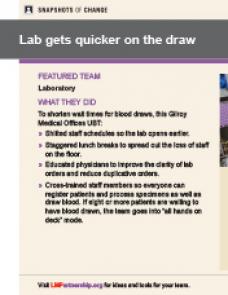
PPT: Lab Gets Quicker on the Draw

Format:
PPT

Size:
1 Slide

Intended audience:
LMP employees, UBT consultants, improvement advisers

Best used:
This PowerPoint slide features a Gilroy team that shortened wait times at the lab. In presentations to show some of the methods used and the measurable results being achieved by unit-based teams across Kaiser Permanente.

Related tools:

TOOLS

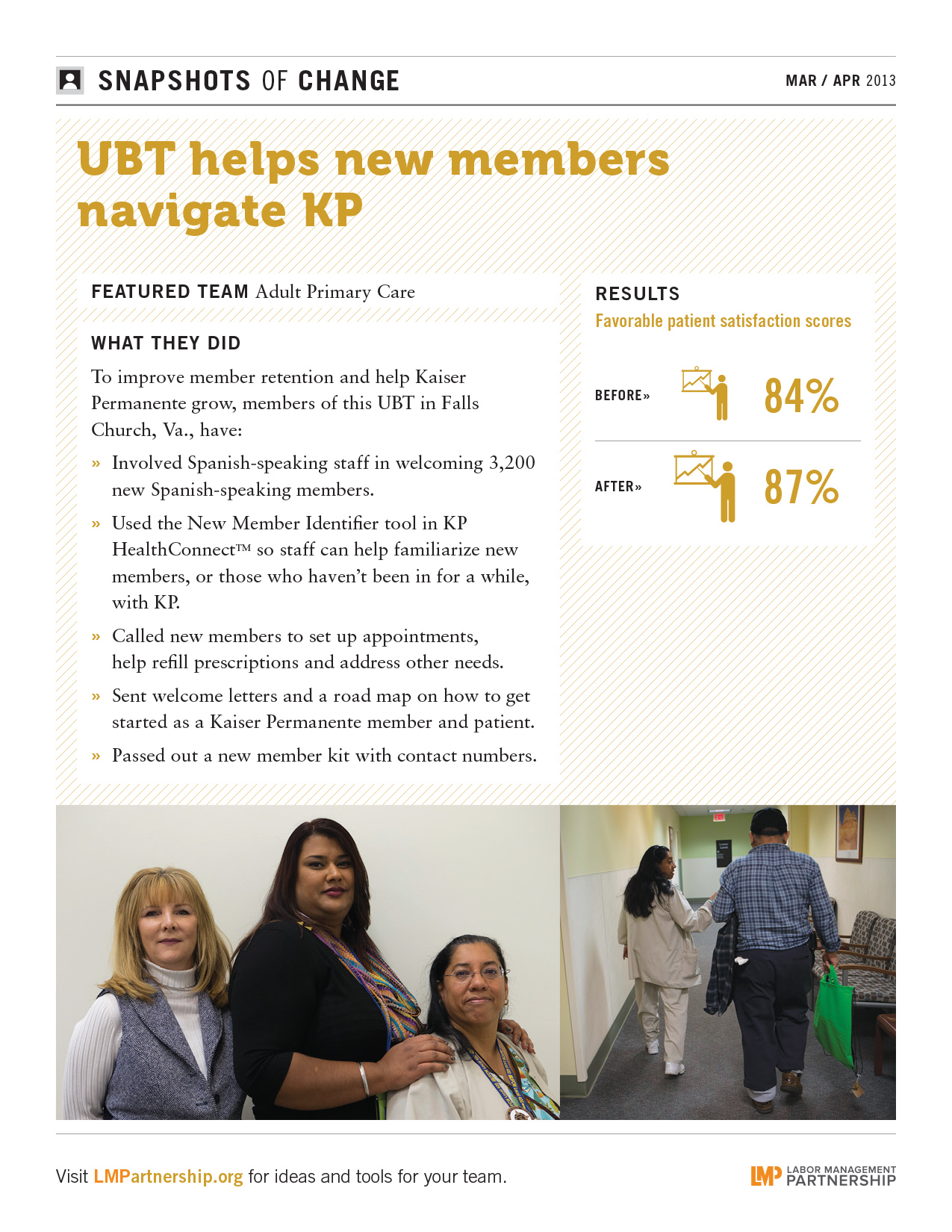
Poster: UBT Helps New Members Navigate KP

Format:
PDF

Size:
8.5" x 11"

Intended audience:
Frontline employees, managers and physicians

Best used:
This poster features a Mid-Atlantic States team that has found a way to help new members transition smoothly to KP. Post on bulletin boards in break rooms and other staff areas.

Related tools:

TOOLS

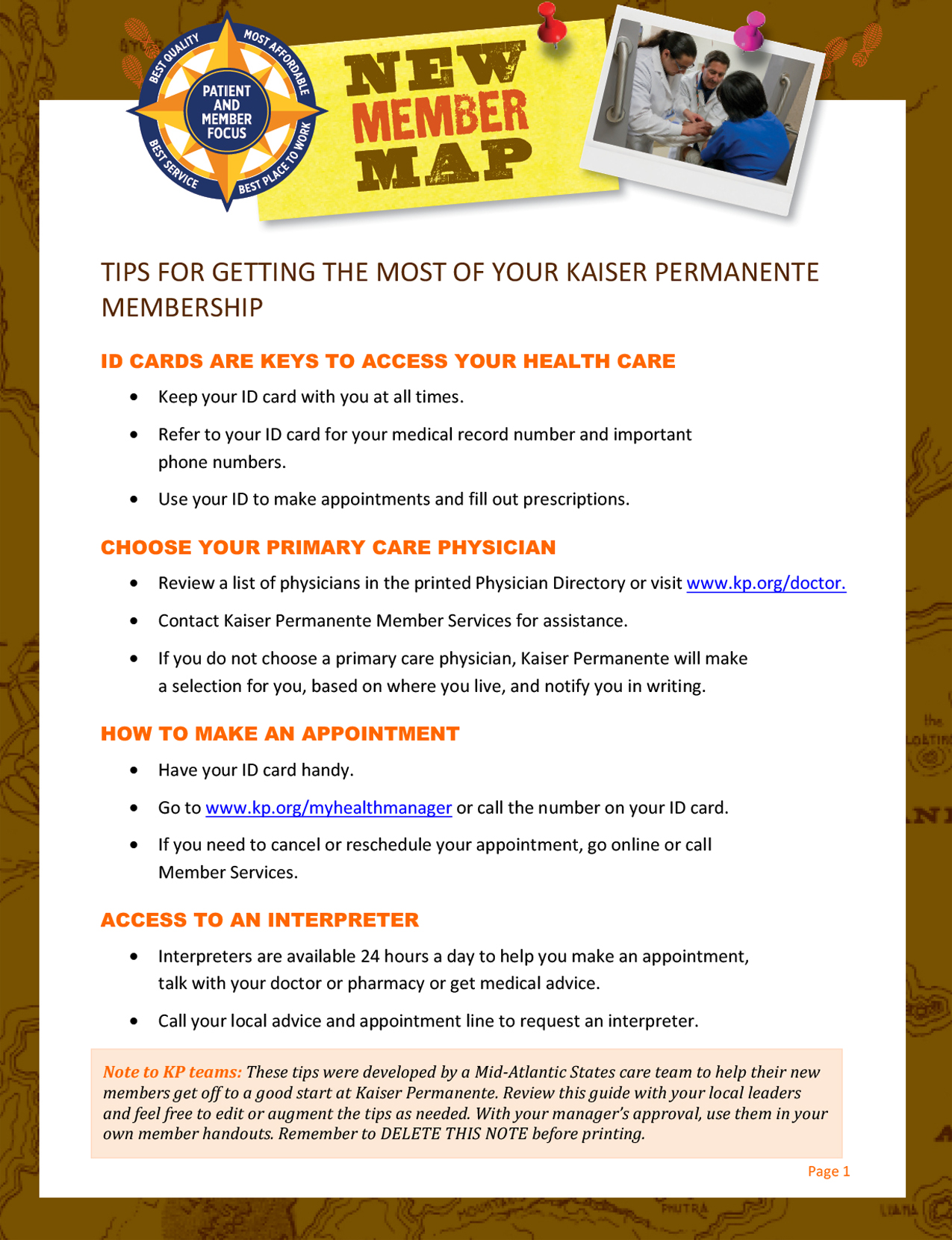
New Member Map

Format:
DOC

Size:
1 page, 2 sides, 8.5" x 11"

Intended audience:
Frontline teams seeing new members in KP clinics

Best used:
This New Member Map, based on a tool developed by a team in KP's Mid-Atlantic States Region, helps new members find their way through the KP system. It can be adapted as necessary to meet the needs of patients and members in other regions. Use as a handout or template to help new members easily access KP services.

Related tools:

TOOLS

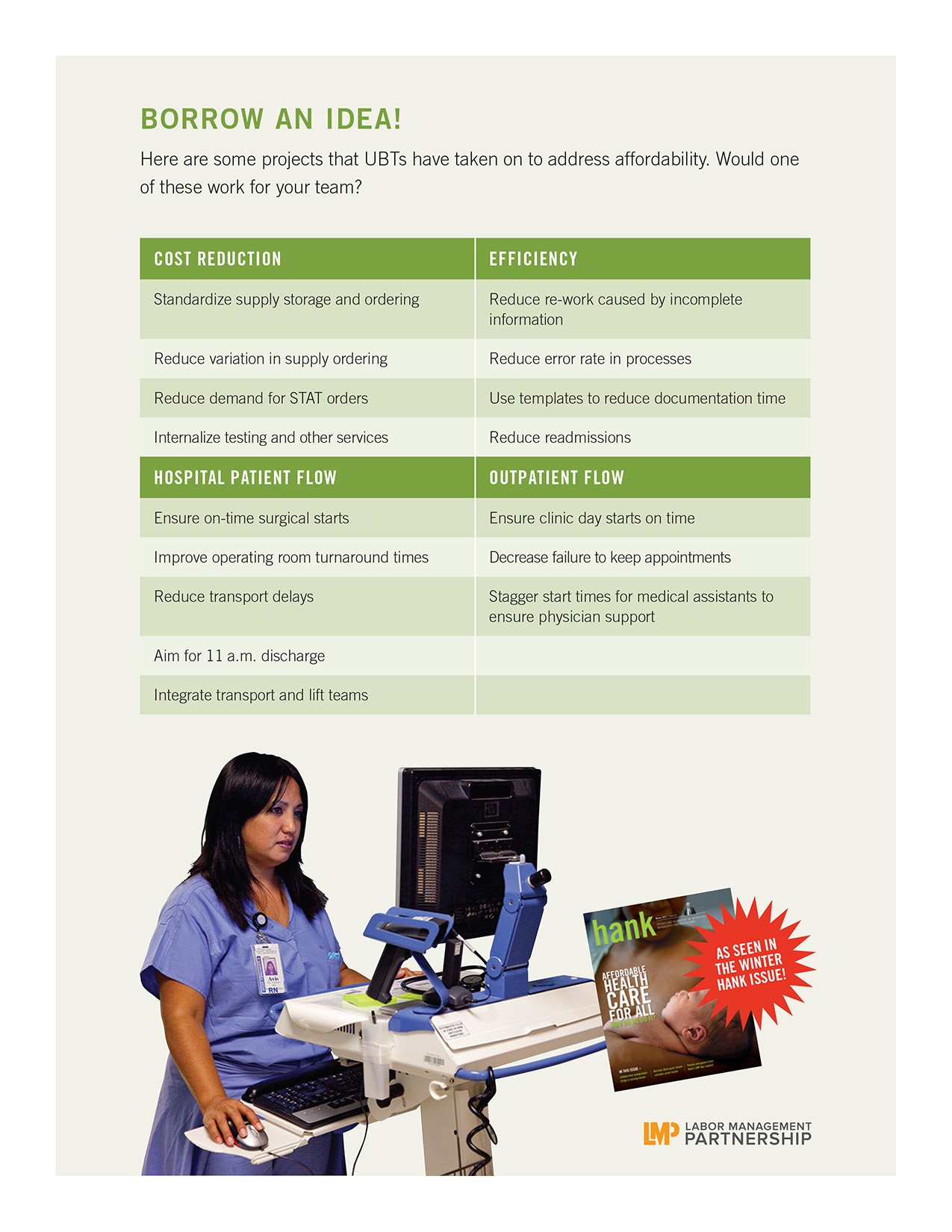
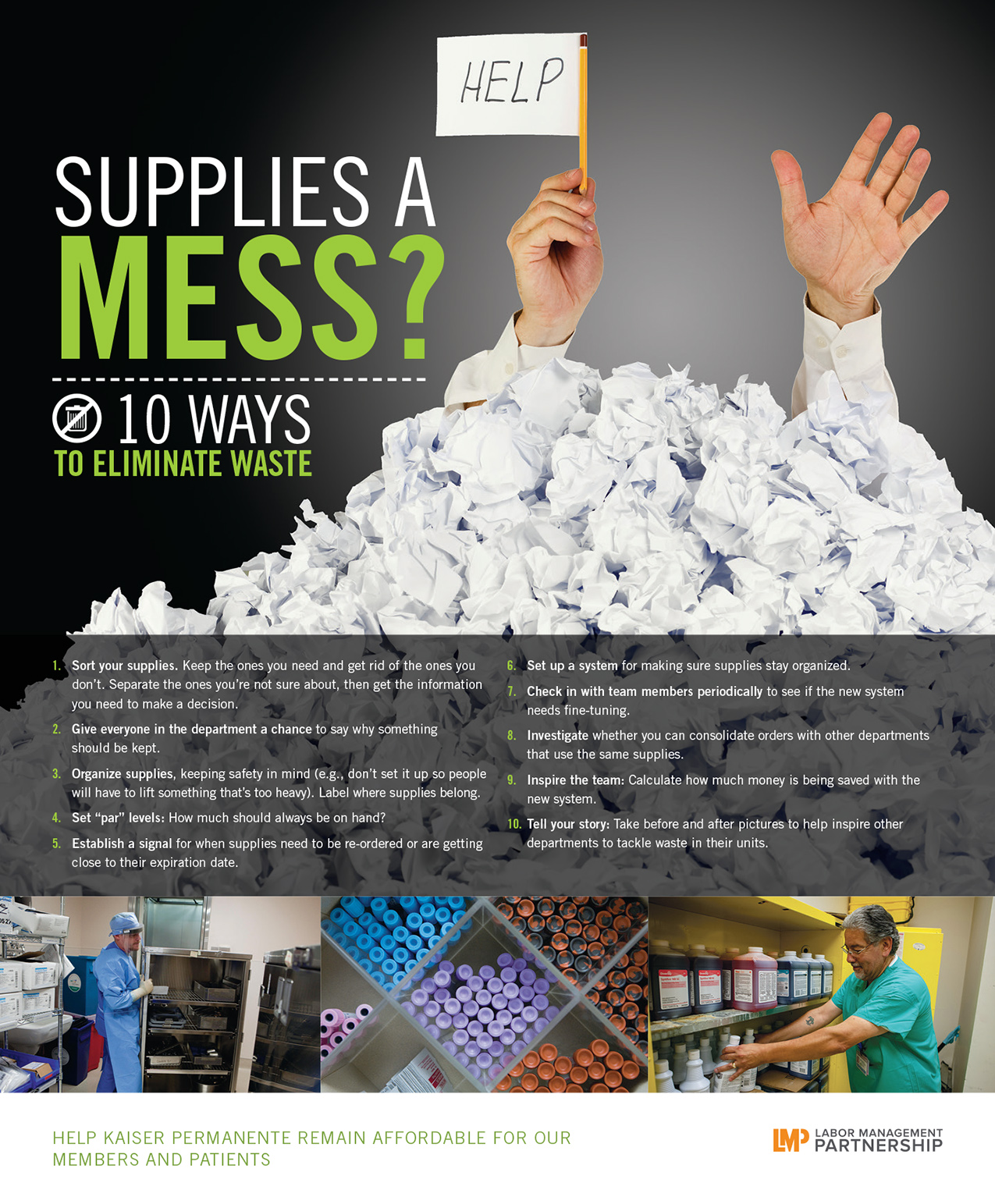
Poster: 10 Ways to Eliminate Waste

Format:
PDF (color and black and white)

Size:
8.5" x 11"

Intended audience:
Frontline managers and workers

Best used:
This poster lists 10 ways to eliminate waste. Post on bulletin boards in break rooms and other staff areas.

Related tools:

TOOLS

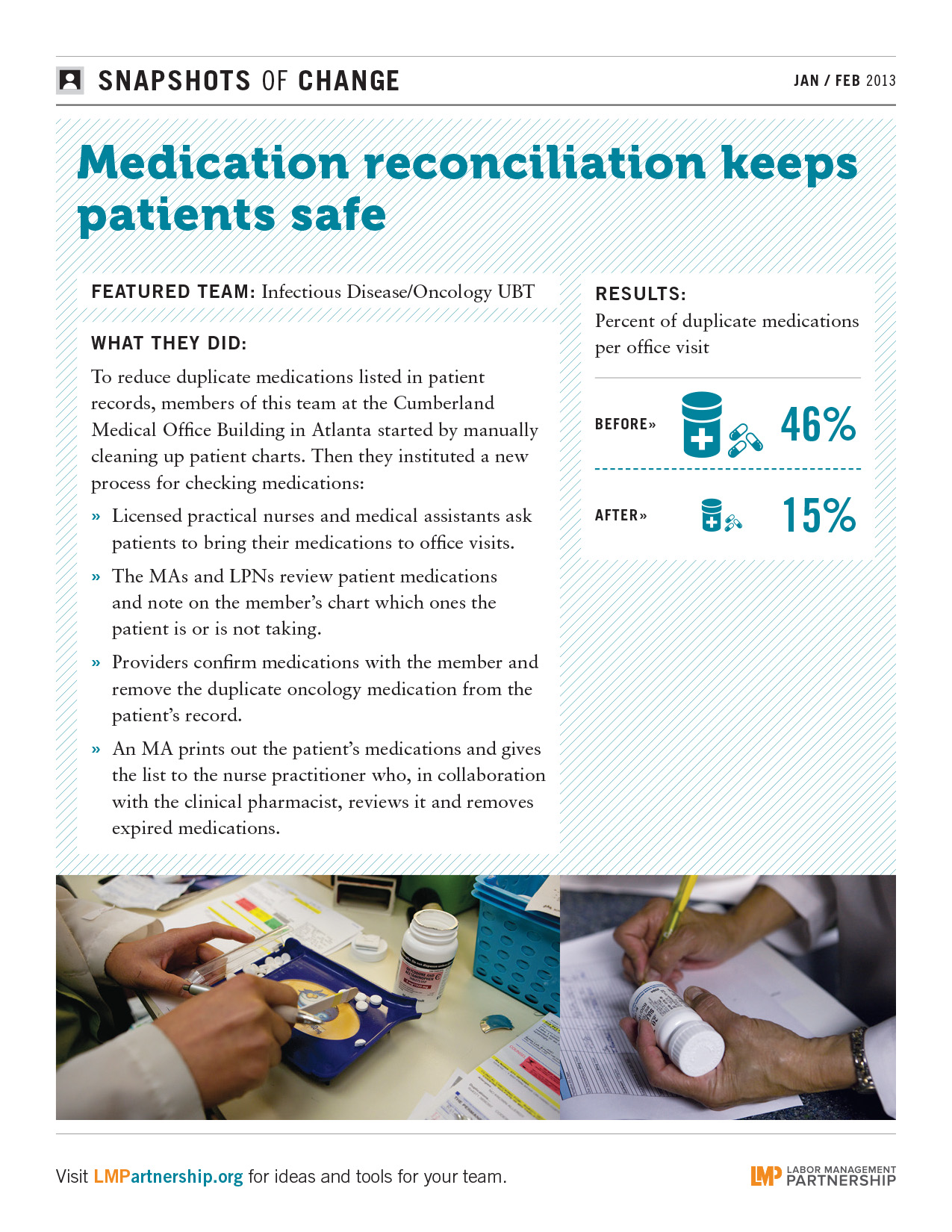
Poster: Medication Reconciliation Keeps Patients Safe

Format:
PDF

Size:
8.5” x 11”

Intended audience:
Frontline employees, managers and physicians

Best used:
This poster highlights a Georgia team that reduced duplicate medications listed in patient records. Post on bulletin boards, in break rooms and other staff areas.

Related tools:

TOOLS

PPT: Communication Improves Mammogram Rates

Format:
PPT

Size:
1 Slide

Intended audience:
LMP employees, UBT consultants, improvement advisers

Best used: 
This PowerPoint slide features a Maryland team that improved mammogram rates through better communication. Use in presentations to show some of the methods used and the measurable results being achieved by unit-based teams across Kaiser Permanente. 

Related tools:

TOOLS

PPT: Medication Reconciliation Keeps Patients Safe

Format:
PPT

Size:
1 Slide

Intended audience:
LMP employees, UBT consultants, improvement advisers

Best used:
This PowerPoint slide features a Georgia UBT that reduced duplicate medications listed in patient records. Use in presentations to show some of the methods used and the measurable results being achieved by unit-based teams across Kaiser Permanente.

Related tools:

Reducing Duplicate Meds Is Good Patient Care

Deck: 
Team looks to avoid errors and costly hospital stays

An accurate list of a patient’s prescriptions is critical to maintaining continuity of care.

It also helps to decrease medication errors, and one of the Joint Commission’s national patient safety goals requires medication reconciliation at hospitals and clinics.

So, in order to protect patient safety, it's crucial caregivers compare the medications a patient is taking (and should be taking) with newly ordered medications.

The Infectious Disease/Oncology team at Cumberland Medical Office Building in Atlanta had a high percentage of patient records in KP HealthConnect that listed duplicate medications.

To improve medication reconciliation, the team did a manual cleanup of patient charts over a period of several weeks. Then it instituted a new process for checking medication. They had the licensed practical nurses (LPNs) and medical assistants (MAs) call patients and ask them to bring their bottles of medication to their office visit.

During the initial workup, the MAs and LPNs reviewed patient medications, and checked off in the members’ charts which medications the patients were and were not taking.

The providers then confirmed medications once again with the member and removed all possible duplicate oncology meds from the patient’s record.

In collaboration with the clinical pharmacist, the MAs printed out a snapshot of the patient’s medications and gave it to the nurse practitioner for review and removal of any expired medication.

As they found success, the team included more medications in the process.

For instance, the team members reviewed patient records for infusion medications and one-time-only meds a patient might need to take before a procedure. Infectious disease pharmacists also began removing duplicate medications for their overlapping oncology patients.

Team members reviewed statistics for duplicate medications from KP’s National Reporting Portal, analyzed the data at huddles and posted it in the department.

They also monitored whether providers increased the number of times they had to reorder medications (which would indicate they were too aggressive in deleting prescriptions). As it turned out, the reorder rate was unaffected by the project.

The percentage of duplicate medications fell to 15 percent, far exceeding the team’s goal. And by avoiding hospital admissions due to inadequate medication reconciliation, the team saved $90,000 in three months.

It also created better communication with patients.

“Knowledge is power,” says Gwendolyn Brown, the team’s management co-lead. “It helped patients and their families ask more questions.”

And a full team effort helped the project succeed, as they moved from Level 2 to 4 in Path to Performance.

“It is tiring and frustrating when you are the only person doing the work,” says Brown. “Here, everyone is involved.”

For more about this team's work to share with your team and spark performance improvement ideas, download a poster or powerpoint.


Pages

Subscribe to RSS - Frontline Workers