Performance Improvement

Help Video

How to Find UBT Basics on the LMP Website

Learn how to use the LMP website:

LMP Website Overview

Learn how to use the LMP website:

How to Find How-To Guides

This short animated video explains how to find and use our powerful how-to guides

Learn how to use the LMP website:

How to Find and Use Team-Tested Practices

Does your team want to improve service? Or clinical quality? If you don't know where to start, check out the team-tested practices on the LMP website. This short video shows you how. 

Learn how to use the LMP website:

How to Use the Search Function on the LMP Website

Having trouble using the search function? Check out this short video to help you search like a pro!

Learn how to use the LMP website:

How to Find the Tools on the LMP Website

Need to find a checklist, template or puzzle? Don't know where to start? Check out this short video to find the tools you need on the LMP website with just a few clicks. 

Learn how to use the LMP website:

Tips for Spreading Effective Practices

Deck: 
Found a solution that works? Share the success with others!

Story body part 1: 

Unit-based teams are getting results — and are finding ways to share their learning with their peers face to face, online or in print. Talk with your team about how to use these and other ideas to share your learning and spread success.

  1. Track your progress. UBT Tracker is a web-based tool that helps unit-based teams and consultants collect and report information about their performance improvement work. 
  2. Tell your story. Storytelling is one of the best ways  to explain partnership and show others your results. Use our storytelling workbook to share best practices. 
  3. Step right up. UBT fairs and PSP paloozas are dynamic forums for spreading effective practices face to face. Hosting your own virtual PSP palooza lets you reach beyond the walls  of your facility.
  4. Lights…camera…take action. Kaiser Permanente’s Care Management Institute uses video ethnography— interviewing KP patients at the care site—to help teams share ideas and keep patients at the centerof performance improvement. To learn more, visit CMI’s Video Ethnography & Storytelling page [KP intranet].
  5. Write all about it. Use fliers, posters and newsletters to keep others informed and engaged in your team’s projects. Post your results in the break room. Invite another unit to your huddle for a progress report. Use these templates to create your next newsletter.

Tips for Sponsors

Deck: 
How to support, guide and inspire teams

Story body part 1: 

Sponsors are the go-to people for UBT co-leads, providing resources, guidance and oversight for teams — and effective sponsorship is one of the most important ingredients for a high-performing unit-based team. If you’re a sponsor, provide your teams with the support they need to create an environment where UBT members are always learning, always improving, always innovating.

  1. Make it a priority to be involved. Provide feedback and hold teams accountable for action plans.
  2. Coach and mentor co-leads; connect them with opportunities to develop needed skills or knowledge. Developing strong team members will ease your work in the long run.
  3. Take time for face time. Walk the floor with team members and occasionally attend UBT meetings.
  4. Share expectations up front with your co-sponsor and team co-leads. Define how you’ll make decisions and how you’ll communicate and how often.
  5. Help team members build their problem-solving skills by having them develop solutions, but if there are barriers outside the co-leads’ or team’s scope, get busy breaking them down.
  6. Educate your teams about local work plans and regional performance priorities so they can work on the right projects. Be sure, too, that things team members care most about get addressed.
  7. Celebrate and highlight successes, both large and small, by rewarding individuals and teams in a way that is meaningful to them — whether it’s an email, party, lunch or a parking spot for a month.
  8. Secure the resources your teams need to get work done, such as time for regular trainings or meetings and access to data that will help benchmark their performance.
  9. Establish a baseline Path to Performance rating. Assist teams in understanding the rating and connect them with resources or successful practices that will help them become high performing.
  10. Ensure teams are documenting their work regularly, accurately and concisely in UBT Tracker.


12 Tips for Building Your Team

Deck: 
Take one action for every month of the year

Story body part 1: 

Want to take your team to the next level? Make good things happen for yourself, your co-workers and your members and patients? Collaboration is one of the four critical skills needed to meet future challenges with ease. Use these 12 team-building tips to make every month count.

1. Par-tay

Celebrate your team’s successes and acknowledge — even celebrate — failures. Failures are great opportunities for learning if you focus on where the process (not the person) needs improvement. After each test of change, recognize and reward contributing team members at huddles and meetings. Use small wins to keep the momentum going.

2. In and out

Help employees track their sick days and time off by printing out and distributing our colorful, always popular attendance calendar.

3. Follow the money

Learn your department’s budget as a team and get everyone’s ideas on how to reduce costs. Sign up for a business literacy training. 

4. Track it in tracker

Document your team’s work regularly, accurately and concisely in UBT Tracker. It will let others see and learn from your team’s accomplishments.

5. Stop the line

Ask for help or call a stop to the work when you see an imminent danger or need help to safely complete a task. Then look for system improvements and root causes of problems — ask not just what happened, but why.

6. Grow leaders

Rotate responsibilities for leading meetings and managing improvement projects among all team members. This will build your team’s skills and strengths.

7. Two words

Huddle daily. It works. Watch the video “Huddle Power” and use the tools there to get you started huddling with your team.

8. Clean up your act

Become supply savvy. Make a full assessment of supplies — track inventory, tidy up storage areas and streamline ordering. Simple changes can save thousands of dollars. Download our 6S tool to make this work a snap. 

9. Take a (waste) walk on the wild side

Perform a waste walk. Impartially observe a work area or work process to identify waste or inefficiency. Get walking with our online Waste Walk toolkit

10. Save a tree

Go paperless. Don’t print out agendas and documents. Send them out via email or use a projector instead.

11. Get online

Help patients sign up on kp.org. Remind them they can securely view their medical records and most lab results, email their doctors, schedule appointments and refill prescriptions online. Bonus tip: Encourage tech-savvy members to download the kp.org app so they can access these features on their phones. Check out how one team got 90 percent of its patients signed up.

12. Spread and borrow

Did something work for your team? Spread the word to others. Need inspiration for your next improvement project? Look for other teams that have succeeded. Work with your UBT consultant or union partnership representative to spread your successes. Visit our Team-Tested Practices section to get ideas you can try with your team!

Introduction to RIM+ (classroom, web-based)

Story body part 1: 

Course description

During this lesson, you will learn how the Rapid Improvement Model Plus (RIM+) provides you and your team an easy, structured way to quickly identify and test ways to improve your department’s performance.

Path to Performance

Levels 1, 2

Duration

  • 4-hour full course; modularized delivery can be scheduled to adapt to teams’ availability (classroom)
  • 40 minutes (online)

Who should attend


Labor and management members of a unit-based team.

Course requirements


Videos

A Model for Today

Loading the player...

(2:36)

Our Labor Management Partnership—the largest and longest-running partnership of its kind. It is "a shining example—and the best example—of how you bring labor and management together to produce results," says Liz Shuler, secretary-treasurer of the AFL-CIO.

Here's why.

New Book Spotlights Partnership Success

Deck: 
After 20 years, Labor Management Partnership still draws followers from health care and beyond

Story body part 1: 

When the leaders of Kaiser Permanente and the Coalition of Kaiser Permanente Unions shook hands on their Labor Management Partnership 20 years ago, they weren’t sure where it would take them. Today, it is the largest, longest-running partnership of its kind. It is also the most studied by university researchers.

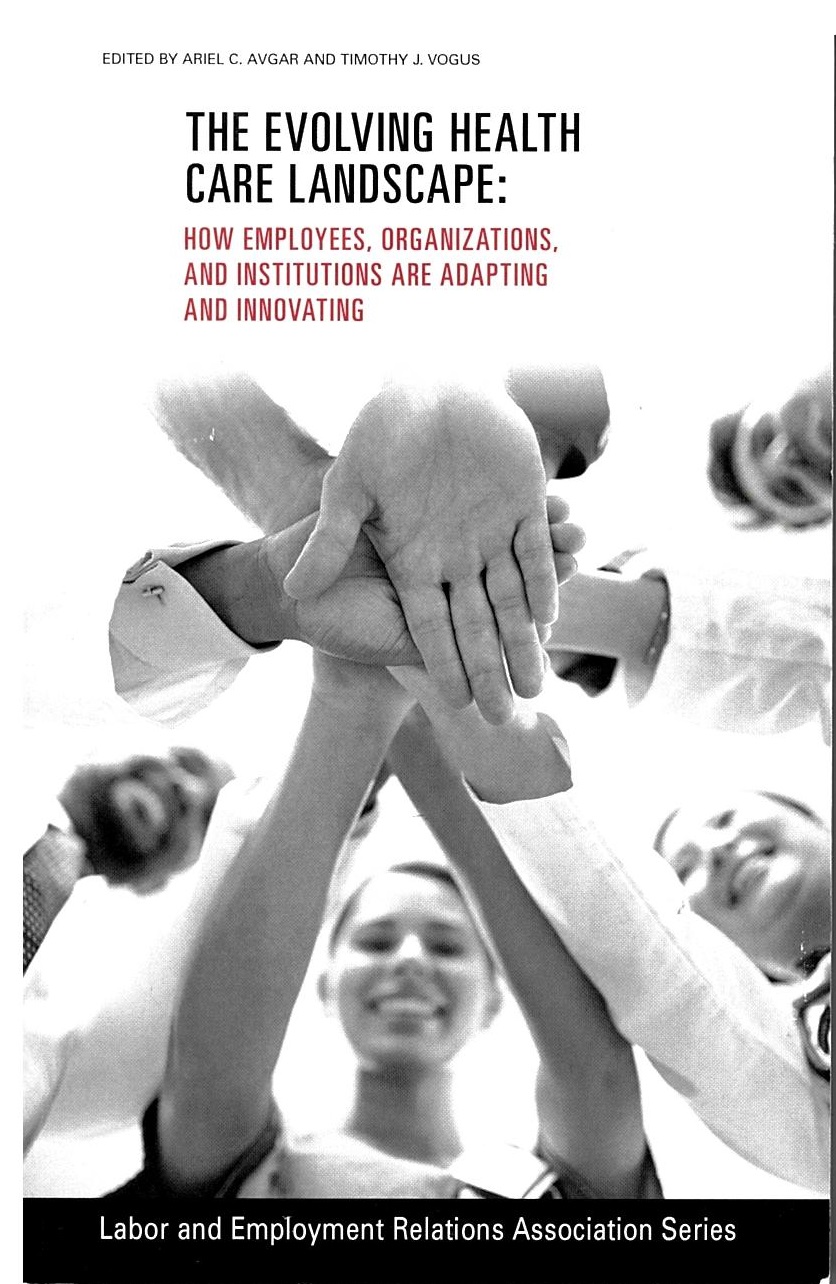
A new book published by the Labor and Employment Relations Association (LERA) and Cornell University Press shows that the partnership remains a model for workplace innovation. “The Evolving Healthcare Landscape: How Employees, Organizations, and Institutions are Adapting and Innovating” devotes three chapters to LMP’s history, accomplishments and challenges.

Lessons for others

Adrienne Eaton and Rebecca Givan, professors at Rutgers University, and Peter Lazes, a director and researcher at The City University of New York, studied six health care partnerships, including LMP. They were struck by:

“…the extent to which unions have been proactive in driving [all] these efforts....Another development in health care partnerships has been a significant deepening of the role of labor relations staff in operational matters.

“It is [also] important to note that the cases described here have influenced one another because the key stakeholders have directly learned from each other....[For example,] union and management stakeholders in Los Angeles [Department of Health Services and SEIU Local 721] as well as union leaders from the University of Vermont Medical Center have looked to Kaiser for answers.”

Another chapter, by Jody Gittell of Brandeis University and KP Northwest staff members Joan Resnick, Sarah Lax and Eliana Temkin, reports on regional efforts to promote collaboration across work teams. KP was selected for the study in part for what the authors call its “record of leadership and innovation [including] in patient care delivery, health information systems and labor-management relations.” Several strategies, including “living room huddles”—an informal, building-wide get-together—and job shadowing across departments led to higher employee engagement and patient satisfaction scores.

An inside look

The chapter “Leading Change Together” by Jim Pruitt, vice president of labor relations for the Permanente Federation, and Paul Cohen, LMP senior business consultant, explains the conditions that gave rise to the partnership, the need to implement it consistently across the organization and the way it achieves results:

“By bringing together diverse points of view and providing a framework for joint problem solving, the Labor Management Partnership has helped Kaiser Permanente tackle difficult issues....The partnership formed because conditions demanded change. It has endured because it has achieved measurable results. And it continues to flex and grow because we follow a few key principles and practices [including] self-directed work teams, interest-based problem solving and honest conversations.”

All of which explains why outside experts continue to take an interest in the joint efforts of KP and the union coalition. Pruitt and Cohen quote Thomas Kochan, a professor at MIT's Sloan School of Management, who put it this way in a 2013 study:

“Kaiser Permanente is now one of the nation’s leaders in the use of frontline teams to improve health care delivery....The Labor Management Partnership continues to serve…as a model for health care delivery and improvement.”

TOOLS

Leading Change Together

Format:
PDF

Size:
12 pages, 8.5" x 11"

Intended audience:
All workers, managers, physicians or others interested in the Labor Management Partnership

Best used:
This chapter from a Labor and Employment Relations Association (LERA) book on workforce innovation highlights the history and results of the Labor Management Partnership.

Related tools:

Pages

Subscribe to RSS - Performance Improvement