Colorado

Help Video

How to Find UBT Basics on the LMP Website

Learn how to use the LMP website:

LMP Website Overview

Learn how to use the LMP website:

How to Find How-To Guides

This short animated video explains how to find and use our powerful how-to guides

Learn how to use the LMP website:

How to Find and Use Team-Tested Practices

Does your team want to improve service? Or clinical quality? If you don't know where to start, check out the team-tested practices on the LMP website. This short video shows you how. 

Learn how to use the LMP website:

How to Use the Search Function on the LMP Website

Having trouble using the search function? Check out this short video to help you search like a pro!

Learn how to use the LMP website:

How to Find the Tools on the LMP Website

Need to find a checklist, template or puzzle? Don't know where to start? Check out this short video to find the tools you need on the LMP website with just a few clicks. 

Learn how to use the LMP website:

Patients Win After Team Ignores Traditional Hierarchy

Deck: 
Calls get answered promptly and access improves

Story body part 1: 

It’s not every day you hear of physicians offering to step in and help out staff in their assigned duties, but at the Primary Care department at Englewood Medical Office in Colorado, that’s exactly what happened.

The nursing staff, short-staffed due to medical leaves, “was overwhelmed,” says Kate Frueh, DO. Messages from patients were piling up in the electronic inbox in KP HealthConnect. Patients who might have been helped by phone or via email were coming in for appointments—making it hard for those who truly needed the in-person appointments to be seen.

“We think we’ve got some of the best nurses in the region,” says Larry Roth, MD. “We just thought, how can we help the nurses and, at the same time, help both ourselves and the patients?”

Physicians dive in

So the team brainstormed ideas, and the physicians offered to help clear the backlog.

“The nursing staff was flabbergasted,” says Linda Sawyer, RN, a member of UFCW Local 7 and the department’s labor co-lead. 

After testing a couple of time blocks and working together, the physicians began setting aside 30 minutes every morning to help triage messages and call patients back directly without getting the nurses involved—and they do it again in the afternoon.

As a result, the team consistently closes encounters within an hour more than 40 percent of the time. With more problems being resolved by phone, appointment slots have opened up and access for patients needing in-person appointments has improved. Morale in the department has improved, too—and the team recently won the Colorado region’s quarterly “Value Compass” award.

Meantime, team members have been working with Linda Focht, their UBT consultant, to boost their Path to Performance ranking—which was only at Level 2 late in 2012, despite functioning at a high level in most dimensions of the Path to Performance.

Common challenges

Focht says some of the challenges that held the team back are common across the program—a department reorganization (including a reduction in staff), new work procedures and gaps in team training. And there were new co-leads who were unfamiliar with the process for assessing team performance.

With some of those issues addressed in the first months of 2013, the team moved up to a Level 3 in the most recent ranking.

“The team members kept their focus on the goal of more streamlined work processes,” says manager Mary Watkins, RN, “and all of the staff of the Primary Care Department are helping each other to become more successful.”

 Watch a video about this team on the KP intranet.

TOOLS

Team Presentations on Patient Safety

Format:
Powerpoint

Size:
41 pages

Intended audience:
Frontline employees and managers

Best used:
These slides were presented by three teams that shared their outstanding work on patient safety in a virtual UBT Fair in March, 2013. Use to spread best practices on patient safety.

The teams featured are:

  • Cumberland (GA) infectious diseases/oncology team on medication reconciliation
  • Rock Creek (Colorado) gastroenterology team on equipment cleanliness
  • South San Francisco (NCAL) radiology team on a stop-the-line process to prevent wrong-site X-rays


Related tools:

TOOLS

PPT: New Printers Lead to Shorter Lines

Format:
PPT

Size:
1 Slide

Intended audience:
LMP employees, UBT consultants, improvement advisers

Best used:
This PowerPoint slide features a Colorado UBT that saved money and reduced customer complaints by tackling a printer problem. Use in presentations to show some of the methods used and the measurable results being achieved by unit-based teams across Kaiser Permanente.

Related tools:

TOOLS

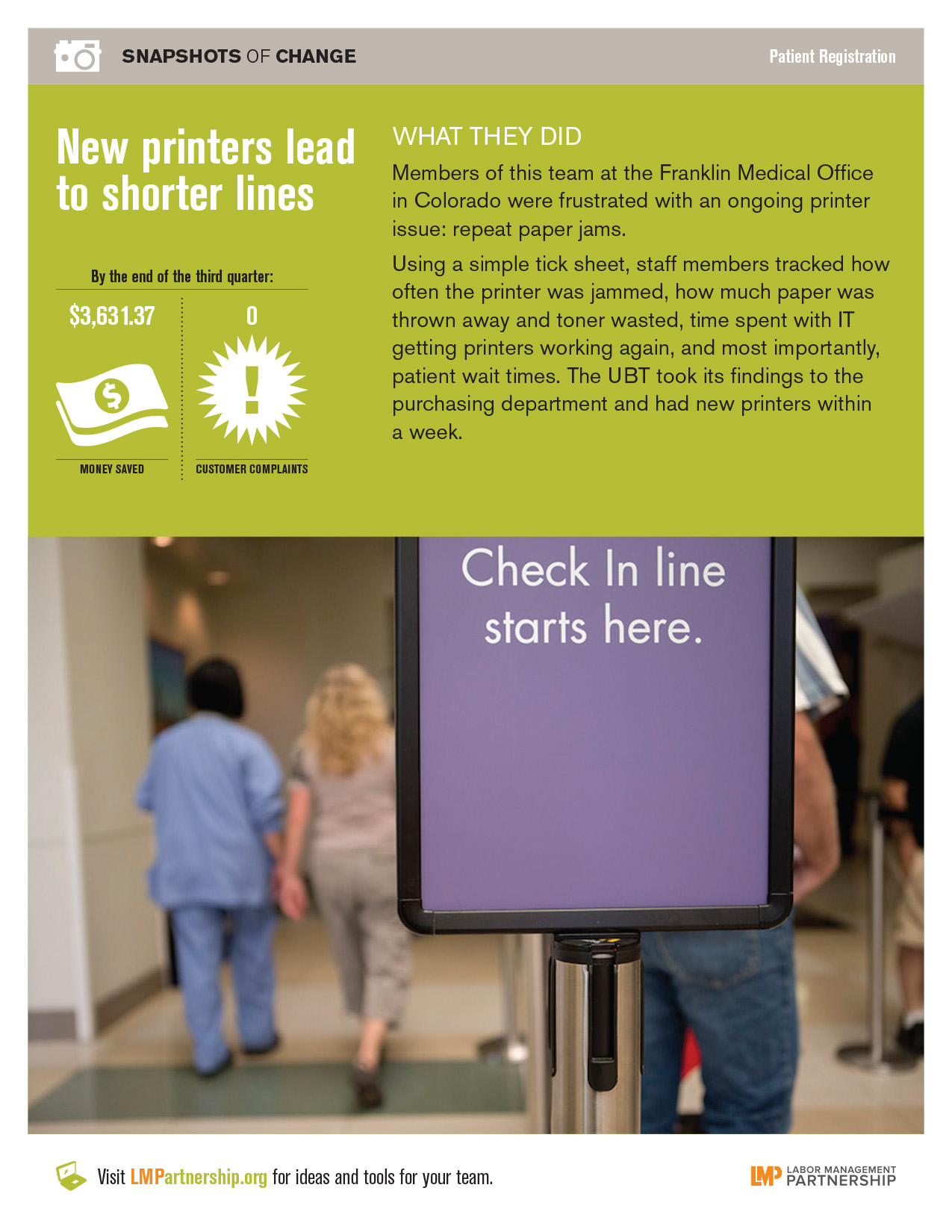
Poster: New Printers Lead to Shorter Lines

Format:
PDF

Size:
8.5" x 11"

Intended audience:
Frontline employees, managers and physicians

Best used:
This poster, for use on bulletin boards, in break rooms and other staff areas, features a Colorado team that saved money and reduced customer complaints by tackling a printer problem.

Related tools:

TOOLS

PPT: Team's Success Brings in $10 Million

Format:
PPT

Size:
1 slide

Intended audience:
LMP Staff, UBT consultants, improvement advisers

Best used:
This PowerPoint slide highlights a business services team that discovered a glitch, corrected it, and brought in $10 million in Medicare reimbursements. Use in presentations to show some of the methods used and the measurable results being achieved by unit-based teams across Kaiser Permanente.

Related tools:

TOOLS

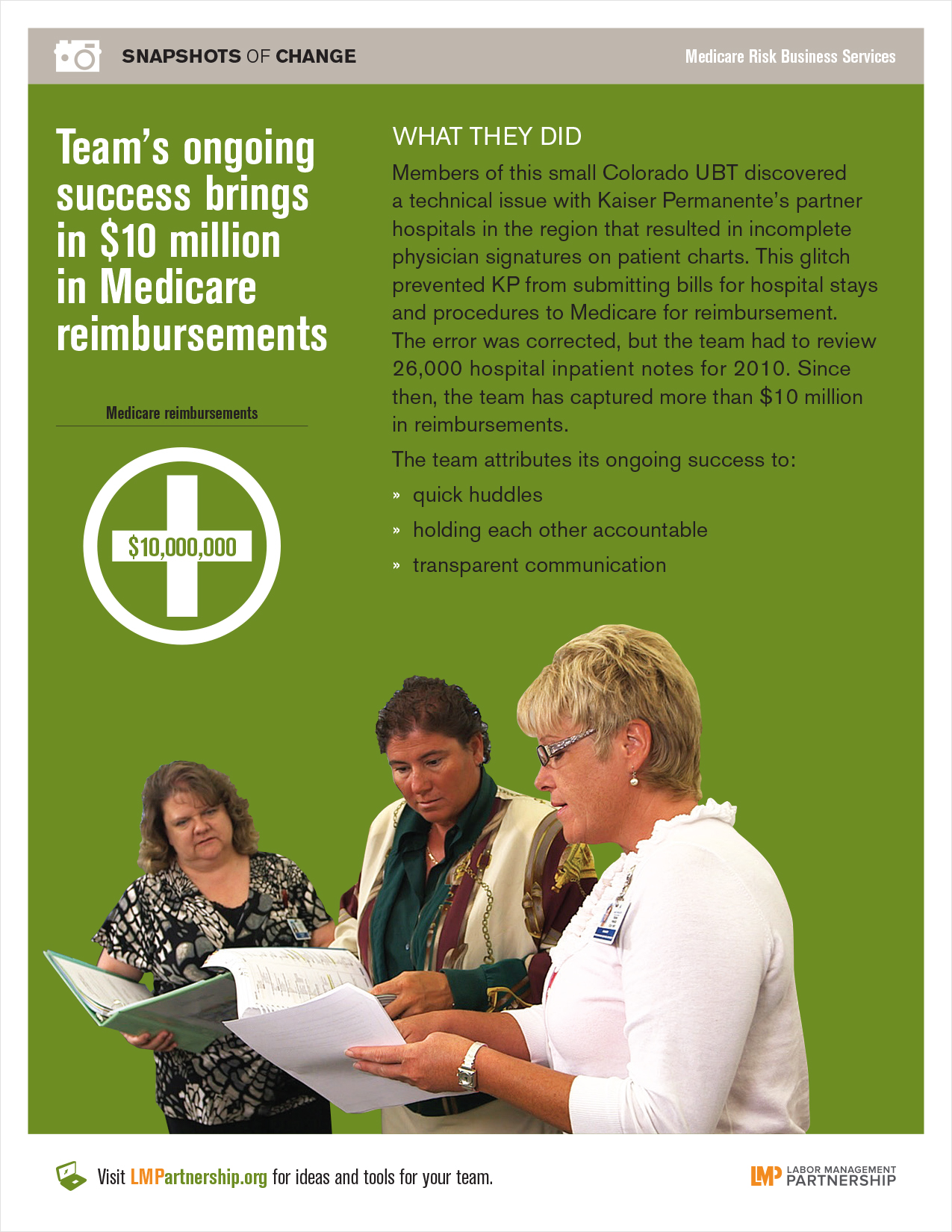
Poster: Team's Success Brings in $10 Million

Format:
PDF

Size:
8.5" x 11"

Intended audience:
Frontline employees, managers and physicians

Best used:
This poster highlights a business services team that discovered a glitch, corrected it, and brought in $10 million in Medicare reimbursements. Post on bulletin boards, in break rooms and other staff areas.

Related tools:

Team’s Ongoing Success Brings in $10 Million in Medicare Revenue

Deck: 
Fixing one error leads to continued improvement

Story body part 1: 

Colorado’s “small team with the big impact” has surpassed even its own expectations, reporting an additional $7 million in Medicare reimbursements last year. That brings the total capture to $10.3 million for Medicare Advantage visits in 2010.

The Medicare Risk Business Services unit—made up of five auditors, a data analyst and a manager—is in charge of auditing all inpatient Medicare Advantage charts to make sure the agency is billed correctly.

Two years ago, a technical issue with Kaiser Permanente’s partner hospitals in the region resulted in incomplete physician signatures on patient charts—which prevented KP from submitting the bills for hospital stays and procedures to Medicare for reimbursement. The error was corrected, but the team had to review 26,000 hospital inpatient notes for that year.

When it first began correcting the error, the unit-based team predicted collecting an additional $2 million to $3 million for 2010 and team members are pleased that their efforts netted KP an additional $7 million.

“It amazes me what the UBT is able to harness and have such great outcomes,” says management co-lead Treska Francis.

The department has worked through the backlog and is now able to submit bills to Medicare within 10 days of a patient’s discharge.

The small team attributes its ongoing success to:

  • quick huddles
  • holding each other accountable
  • transparent communication

“On a daily basis, we know what needs to be completed for the day, (we) set a goal and we go for it,” says labor co-lead Stephanie White, a Medicare risk auditor and SEIU Local 105 member.

TOOLS

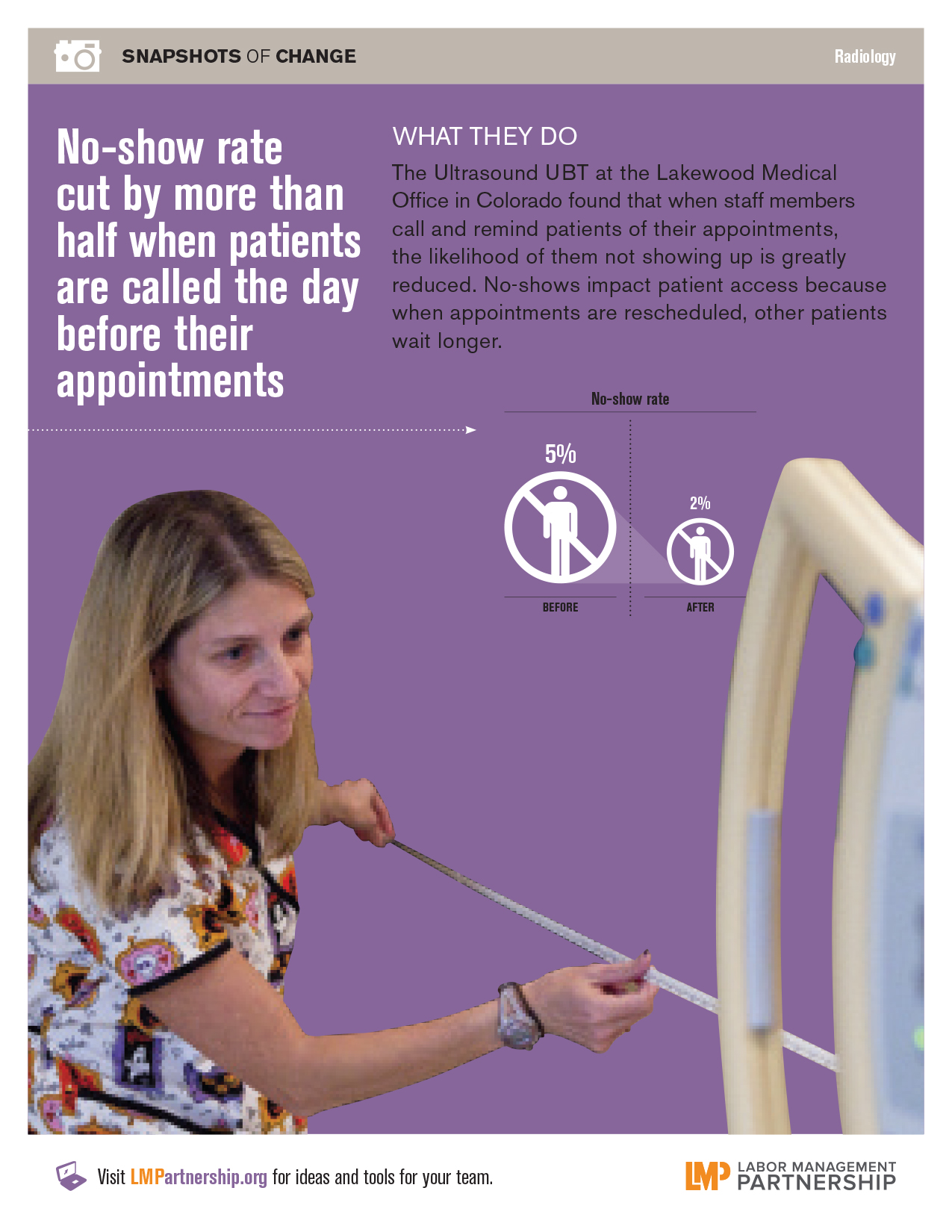
Poster: Reduce Patient No-Show Rates

Format:
PDF (color and black and white)

Size:
8.5” x 11”

Intended audience:
UBT members, co-leads and consultants

Best used:
Post on bulletin boards, in break rooms and other staff areas to demonstrate
 how reminder calls can reduce patient no-shows.


Related tools:

TOOLS

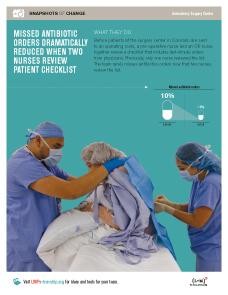
PowerPoint: Errors Drop With Pre-Op Double up

Format:
PPT

Size:
1 slide

Intended audience:
LMP staff, UBT consultants, improvement advisers

Best used:
This PowerPoint slide highlights a team that reduced missed antibiotic orders by having two nurses check antibiotic orders. Use in presentations to show some of the methods used and the measurable results being achieved by unit-based teams across Kaiser Permanente.

Related tools:

TOOLS

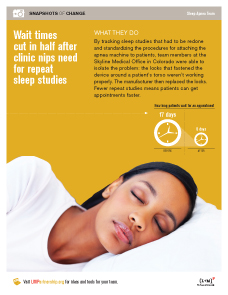
PowerPoint: Sleep Clinic Finds Cause of Repeat Studies

Format:
PPT

Size:
1 Slide

Intended audience:
LMP staff, UBT consultants, improvement advisers

Best used:
This slide spotlights a team that cut wait times in half by nipping the need for repeat studies. Use in presentations to show some of the methods used and the measurable results being achieved by unit-based teams across Kaiser Permanente.

Related tools:

Pages

Subscribe to RSS - Colorado