Southern California

Help Video

How to Find UBT Basics on the LMP Website

Learn how to use the LMP website:

LMP Website Overview

Learn how to use the LMP website:

How to Find How-To Guides

This short animated video explains how to find and use our powerful how-to guides

Learn how to use the LMP website:

How to Find and Use Team-Tested Practices

Does your team want to improve service? Or clinical quality? If you don't know where to start, check out the team-tested practices on the LMP website. This short video shows you how. 

Learn how to use the LMP website:

How to Use the Search Function on the LMP Website

Having trouble using the search function? Check out this short video to help you search like a pro!

Learn how to use the LMP website:

How to Find the Tools on the LMP Website

Need to find a checklist, template or puzzle? Don't know where to start? Check out this short video to find the tools you need on the LMP website with just a few clicks. 

Learn how to use the LMP website:

Sand Canyon Goes Green With Blue Wrap Recycling

Deck: 
Project saves money and helps the environment--and assists local disabled adults, too

Story body part 1: 

Looking for ways to make the Sand Canyon Surgicenter in Irvine more efficient, Albert Olmeda wound up learning a lot about blue wrap—like the fact that it makes up nearly 20 percent of the waste generated by hospital surgical services. 

The lead Central Services technician and SEIU UHW member also learned that this heavily used hospital product, an industrial strength plastic used to maintain the sterility of medical and surgical instruments until opened, is not biodegradable and persists in the environment. 

But recycled blue wrap can be sold as raw material for use in the production of other plastic products. Today, the surgicenter’s unit-based team has gone green with a blue wrap recycling project that is not only saving money and protecting the environment, but also aiding the community. 

“The biggest problem with the blue wrap is when we throw it in the landfill, it’s there forever,” says Olmeda. “That’s a big concern especially considering how much blue wrap we use.” 

How recycling works

About 600 pounds of blue wrap is collected every week from the center’s six operating rooms. It is picked up free of charge and sorted by Goodwill of Orange County, which sells it to a Houston recycling services company. The company reprocesses the plastic into beads that are used in various products, including railroad ties, pallets and artificial siding for decks, docks and houses. 

The surgicenter has been recycling its blue wrap and plastic bottles since September 2009, reducing the facility’s solid waste disposal fee by 10 percent annually. The savings amount to a modest $5,880—but there’s a greater payoff. Proceeds from the sale of blue wrap and other recyclable products enable Goodwill to provide education and training programs for developmentally and physically disabled adults, including a state-of-the-art fitness center. 

Peter Bares, business development manager for Goodwill of Orange County, says the relationship with Kaiser Permanente has gone beyond expectations. “It is kind of the perfect storm because of the nature of what we do and why we do it and the materials that the hospital generates,” he says. 

Getting buy-in

As the frontline staff person responsible for the surgery center’s blue wrap disposal, Olmeda—and his fellow UBT members—championed the recycling cause, educating the staff at weekly in-services and UBT huddles.  The team got the rest of the department on board by integrating the blue wrap recycling process without creating additional tasks. 

“We figured if we changed workflows, staff wouldn’t want to do it.” says UBT co-lead Nicole Etchegoyen, a surgery scheduler and SEIU UHW steward. “But if we asked them, ‘How would this work best for you?’ then everyone would get involved, and they did.” 

The team members designated a single container for blue wrap in each operating room. They also placed a larger bin for collecting multiple bags of discarded blue wrap near the soiled utility room, where the trash is taken on its way out of the surgery center. 

“It’s not a big deal,” EVS worker and SEIU UHW member George Sollars said, hoisting bags. “We just carry it over here on our way out this door. It’s one of the easiest jobs. And it’s for a really good cause.” 

No trash, just recycling 

The hardest part was making make sure that other trash didn’t make it into the blue wrap recycling containers accidentally. Labeling the containers with signs reading ‘Recycling Blue Wrap Only’ helped, as did regular reminders by UBT members. 

Now, everyone in the operating rooms—from doctors, nurses and surgical techs to nursing assistants and EVS workers—makes sure that the blue wrap containers aren’t contaminated with other trash, Etchegoyen says. 

Olmeda does periodic spot checks. “Everybody who plays a role in the operating room has to look out to make sure no trash is going inside the containers,” he says. “It’s a team-building thing.” 

“If it wasn’t for the UBT, this wouldn’t be happening,” said Ramin Zolfagar, MD, department head and UBT member. “We are helping the environment by ‘going blue,’ so to speak, and the end result is gym equipment for the disabled—which makes it all the more worthwhile.” 

After learning about the project at a recent Orange County UBT fair, other departments are thinking about emulating it. 

Visit the Goodwill of Orange County website to find out more about their work.

Secondary Blood Pressure Screenings Rise, Improve Care

Deck: 
Department explains the "why" behind the tests

The team in the Head and Neck Surgery/Audiology department at the South Bay Medical Center had been compiling monthly reports about missed second blood pressure checks.

And this can be a critical point for a patient’s care because high blood pressure is often called “the silent killer.” Those who have it often don’t exhibit symptoms until it’s extremely high, and untreated hypertension can lead to heart disease, stroke and kidney problems.

But the team reviewed the numbers without a follow-up plan.

So, they decided to have morning huddles several days a week to explain the screenings and follow with plans of action.

“We discuss why this is important and what it means to our members, that it can save lives, especially for those who haven’t been diagnosed,” says Kathy Malovich, the department administrator. 

UBT leaders provided team members with their individual performance scores on administering needed second blood pressure tests. They customized training and other follow-up plans, including coaching the team on procedures for Proactive Office Encounters (a process that takes advantage of a member’s visit to ensure the member gets any needed tests or appointments).

At huddles, they discussed the importance of controlling high blood pressure for patients. They emphasized that not only was it a strategic clinical goal but a Performance Sharing Program (PSP) goal for the medical center.  

“People think they’ve done the second test because they know they should have,” says Leroy Foster, who was the department administrator when the test of change began. “Maybe they got distracted by any number of things.” Foster said the hard data helped motivate the team. 

With a low of 35 percent for second blood tests, each team member jumped to 92 percent or better in a year. Four of the six team members hit 100 percent. In 10 months, team scores for second blood tests went up from 84.8 to 92.1 percent.

Huddling was also a key to success.

“I used to think, ‘you guys have way too many meetings,’” Jennell Jones, the union co-lead, says. “But now I see how meeting keeps people connected.”

Ophthalmology Turns Vision of Safety Into Reality

Deck: 
Identifying the problem areas was a good first step

The San Diego Ophthalmology group had earned the dubious reputation as a high-injury department.

They had a quarterly injury rate of 23.6 and problems ranged from carpel tunnel to back issues. The majority of complaints was caused by sitting at the computer for long periods, typing and doing repetitive motions like using a mouse.

Medical assistants and technicians also frequently complained about having trouble navigating the cluttered, unsafe vision lanes—the small alcoves where nurses and medical assistants evaluate patients before escorting them to exam rooms.

Being flagged a high-injury department, the team was determined to identify the causes of the injuries and how to prevent them from occurring.  

The department took Workplace Safety training and instituted a number of measures to identify and fix potential hazards at all four ophthalmology departments. Those measures included ergonomic evaluations, new chairs and foot rests, and installing stretch break software on all computers.

They conducted regular safety checks and created the “I Spy” program, which has previously injured workers conducting safety observations to identify potential problems. 

The team also revamped the department’s vision lanes.

These often were cramped and potentially unsafe environments with electrical cables stretched across the narrow floor. Computers and blood pressure carts created additional tripping hazards. 

“You had to maneuver around patients and wheelchairs, and generally feel confined, waiting to trip or bend wrong,” says Anna Garcia, a medical assistant and UBT member.

So, they mounted blood pressure machines and KP HealthConnect computers on the walls, instead of using carts. They purchased new chairs for patients, particularly for older patients who have difficulty getting into narrow spots or are in wheelchairs.

By moving power outlets closer to the mounted equipment, electrical cords were no longer in the way. And they painted the walls that ophthalmologists used during eye examinations.  

“The nice thing is if I need to maneuver now, it’s not a move I’m going to regret later on when I get home, when my back is hurting,” Garcia says. 

Ophthalmology went 335 days without an injury.

But keeping workplace safety in everyone’s awareness was a challenge.  

“The equipment makes a difference, but our behavior also makes a difference. It takes a while for that to happen. It doesn’t happen overnight,” Vickie Lance, assistant department administrator says.

Feedback from people outside the UBT also proved invaluable.

“I’ve been in this department for 15 years and I didn’t know there was a problem. Once we saw it on paper, it made a big impact,” Lance said. “And the visual picture of before and after is wonderful. It makes us feel like we’ve accomplished something.”

TOOLS

Patient Care Cards

Format:
Zipped PDF

Size:
Printout, 2-sided, 4" x 6" index card

Intended Audience:
Unit-based teams

Best used:
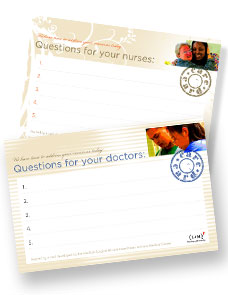
Download and print these two care cards to give to patients for their comments, allowing teams to address in-patient concerns. One care card is for patients to ask questions of their nurses and make comments on their nursing care. The other card is for patients to ask questions of their doctors and make comments on care from their doctors. This tool is inspired by a card developed by the Medical-Surgical 4B unit-based team at Irvine Medical Center.

Related tools:

Staff Directory

Full Directory
DeeDee Urdangen-Cotow

Title: 
Senior Director, Labor Management Partnership

Business Entity: 
Kaiser Permanente

Email: 
Deedee.X.Urdangen-Cotow [at] kp.org

Keep It Clean

Deck: 
How EVS departments are building a culture of safety with partnership—and cutting injury rates

Story body part 1: 

The lady who talks to you from inside your GPS has found a new home, it seems, in the robotic carts deployed in the newly rebuilt Los Angeles Medical Center.

Instead of guiding you to your destination, she’s moving linen and trash along the long hallways and underground tunnels. By herself. Her gentle yet firm computerized voice tells workers in a docking room when the cart is ready to be filled, and sensors ensure she doesn’t run anyone over. She even can detect whether there are passengers in the staff elevators and patiently waits for the next empty one.

The robotic carts reduce wear and tear on the muscles and joints of the medical center’s Environmental Services (EVS) attendants. They are just one example of how managers and union members at this Southern California hospital are taking the lead in improving workplace safety for EVS departments.

Historically, EVS is a high-injury department because the job involves a lot of bending, lifting and moving equipment—not to mention working with hazardous chemicals. But the EVS department at Los Angeles Medical Center made such remarkable progress in reducing workplace injuries in 2009, its members earned a special bonus as part of the Performance Sharing Program (PSP). So did the EVS departments in Riverside and in Panorama City, which boasts the lowest injury rate in the region.

“Everyone wants to beat Panorama City,” laughs Manuel Covarrubias, the building services manager there. “It’s a friendly competition.”

But more important than the good-humored rivalry is the confidence these teams inspire in their counterparts. “They know it can be done,” Covarrubias says.

Even Kaiser Permanente’s oft-stated goal of a workplace free of injuries isn’t as far off as might be thought: The EVS department at the Eastside Service area in the Northwest region hasn’t had a single injury for two straight years. Regionwide, the EVS departments improved their collective injury rate by a remarkable 65 percent for the reporting year ending Sept. 30, 2009.

Management and union co-leads on these successful unit-based teams credit specific safety techniques, such as pre-shift stretching, and better equipment, such as microfiber mops and motorized carts. But they also say the communication and team-building skills they use by working in partnership are crucial to building not only systems of safety, but a culture of safety.

What works

Based on the experiences of successful EVS departments in Southern California and the Northwest, here’s what’s working to improve workplace safety.

Conduct safety observations: At Riverside Medical Center in Southern California, the management and labor co-leads of the EVS unit-based team conduct safety observations together. “We walk the units and look for safety hazards,” explains Cora McCarthy, EVS manager.

Evidence from Sunnyside hospital in the Northwest shows the effect this kind of effort can have. After the injury rate jumped up in the first half of 2009, Curtis Daniels, the medical safety coordinator, challenged UBT members to see how many safety conversations they could have to raise awareness of potential hazards. More than 6,000 conversations were reported in one month alone—and during the second half of 2009, the inpatient teams had only two workplace injuries.

By the numbers: The successful teams collect, track and—most importantly—share data, information and tips about workplace safety.

In Southern California, for instance, where there has been a 33 percent reduction of accepted workers’ compensation claims since 2005, the regional Workplace Safety department has built a customized incident investigation database, harnessing data that helps teams spot trends and come up with solutions. The database is only useful because employees are willing to report the injuries they suffer.

“At first, people were afraid,” says Eva Gonzalez, an EVS attendant at Panorama City and an SEIU UHW-West steward. “We assure them there is not going to be a backlash. Incident investigations helped, because people would show us how they got hurt and we let them say what happened. We ask, ‘What do you think we should do differently?’ ”

Ofelia Leon, the day shift supervisor who has worked at Kaiser Permanente for about three years, notes the fear of reporting was not unfounded: “At other (non-KP) hospitals, if you got injured, you got a caution or discipline, so people were afraid to report them.”

Employees also get regular updates about their progress toward their workplace safety goal. “We share information and let our members know where we’re at and where we need to be,” says Edwin Pierre, a 26-year EVS worker at LAMC. A huddle at the beginning of each shift includes a safety tip shared by an employee —creating a climate where workers get accustomed to speaking up and gain confidence that their voices are being heard.

Floor it, safely: To reduce injuries from lifting bulky mop buckets, EVS departments are buying more efficient microfiber mops that don’t require as many trips to empty, are wringerless, and use less water and cleaning solution. To keep those long hallways at LAMC clean while keeping workers safe, the EVS department replaced autoscrubbers with “chariots” that workers ride. “They have improved quality and morale, as well as safety,” says Abraham Villalobos, the hospital’s director of Environmental Services.

Maximize the micro: Microfiber is not just for mops. EVS departments in the Northwest now are using microfiber dusters with extendable handles proven to reduce worker strain. The new dusters also clean 45 percent faster than traditional methods and reduce chemical and water consumption up to 90 percent.

Tamper with hampers: The lids on trash cans and hampers were falling on workers’ arms and causing injuries—so the Panorama City EVS department bought new bins with hydraulic lids. They also put signs above hampers asking staff members not to overload the bins, because too-heavy loads were causing lifting injuries.

In a similar vein, “when needlestick injuries were up, we brought it to the table,” says Rosemary Mercado, an EVS attendant at Panorama City. The unit-based team decided to coach workers to hold the bags away from their bodies when taking them out of the laundry hampers. And they borrowed an idea from colleagues at nearby Woodland Hills Medical Center: They moved the hampers away from the sharps containers.

Take your time, take time off: “Be careful and take your time,” is the advice from Rebeca MacLoughlin, a housekeeper in the Northwest for seven years. Mindful of the link between fagtigue, morale and injuries, building services manager Manuel Covarrubias in Panorama City encourages employees to take time off when they seem to be getting sluggish. “I look for ways to cover people during summer to ensure people with less seniority can get some time off when they really want it,” he says.

Starting with stretching: Without exception, every EVS department that’s been successful at reducing the injury rate starts every shift with stretching. “Sometimes we dance and make it fun,” says Ofelia Leon, the day shift supervisor at Panorama City. The dance music of choice at LAMC is Michael Jackson. “I mean, who can’t dance to Michael Jackson?” wonders Pierre, the Pierre, the LAMC EVS attendant.

The bottom line: Investigating incidents, sharing safety tips, having on-the-spot conversations about working safely: These things are possible in large part because of the communication and team-building foundation fostered by the Labor Management Partnership.

'Our opinons matter'

Before, “It was just coming to work, doing whatever, and then leaving,” says Sandra Pena, the EVS labor co-lead at Riverside and United Steelworkers Local 7600 member.

“Now, it’s like there’s feedback back and forth all the time. It’s more of a team.”

“It makes you feel good as an employee to make improvements,” says Eva Gonzalez of Panorama City. “We know our opinions matter. We know we are not talking to the wall.”

Dilcie Parker, the labor co-lead at the LAMC EVS department, recalls how things were in 1999, when partnership started taking hold at her facility. “When we first began meeting, it was, ‘You sit on that side of the table, I sit on this side.’ I once arrived at a meeting and said, ‘I don’t sit next to management.’ You could feel the hate in the room.”

Management co-lead Villalobos doesn’t disagree. “Before, we couldn’t stand each other,” he says. “There was screaming.”

The turnaround, both say, came as a result of the LMP training the whole team received—from mapping root causes to issue resolution—and persistence.

“We started seeing the benefits in better quality and better attendance,” says Abraham Villalobos. “The reduction in injuries didn’t just happen this year. It’s about understanding the things we need. If we don’t get along, we can’t come up with projects to work on.”

This doesn’t mean everyone is holding hands and singing “Kumbaya.”

“There are still issues we disagree about,” says Parker. “But before, we used to get nothing solved. Now, issues get solved and they are off the table.” Recently, Parker, Villalobos and the team were in a meeting, crammed together in a tiny conference. The woman who once refused to even sit next to a manager found herself saying, “Look, Abraham, we’re actually touching.”

For information about EVS teams in Southern California, contact Dave Greenwood, workplace safety program director, at Dave.B.Greenwood [at] kp.org; for more information about workplace safety for EVS teams in the Northwest, contact Lori Beth Bliss, regional EVS manager, at Lori.B.Bliss [at] kp.org.

 

Getting Home Health Care to the Patient On Time

Deck: 
UBT streamlines the intake process and works closely with referring departments

The Clinical Home Health Care team in San Diego needed to see discharged patients within 24 hours.

But they were hitting less than 50 percent success, and given their patients included those in hospice and palliative care, this was a problem.

At issue was a patient discharge list that might have 50 or more names. An intake nurse would dictate patient information to a department clerk, who would complete the forms. Only then would a home health visit get triggered.

This wasted time.

Modeled after a successful practice at Riverside Medical Center, the team did two things. First, they eliminated the clerk from the workflow and had the nurses process the patient information directly.

And second, they trimmed the list of names being referred to Home Health Care to only those patients who were getting discharged within the next 48 hours.

“We plan our day based on that list,” says Daniele Wilson, director of patient care services for home care. “But we cannot plan if that list is not updated. We needed to focus on the work that needed to be done more immediately.”

Home Health Care intake nurses also communicated with the discharge planners to get up-to-the-hour information on which patients will be released that day and need to be seen by a Home Health Care provider within the following 24 hours.

That group was reduced to about five daily patients, and in two months the number of referrals seen within 24 hours grew from 44 to 77 percent.

“It’s much easier to tackle when a list has a handful of names,” Wilson says. “When it was 50-some it was difficult to even know where to begin. It felt futile.”

The team included daily morning huddles to review the number of newly referred patients and their needs, as well as ongoing patient needs. They also improved communication with the referring departments, such as orthopedics and primary care.

“We reached out to different heads of departments to figure out how they operated,” Wilson says. “By understanding how they operated, it helped us know how we can interact with them.”

Lisa Tuckwell, RN, public health nurse and UNAC/UCHP member, learned to speak doc.

“We figured out the buzz words that got a doctor to act.”

Pages

Subscribe to RSS - Southern California