Frontline Workers

Help Video

How to Find UBT Basics on the LMP Website

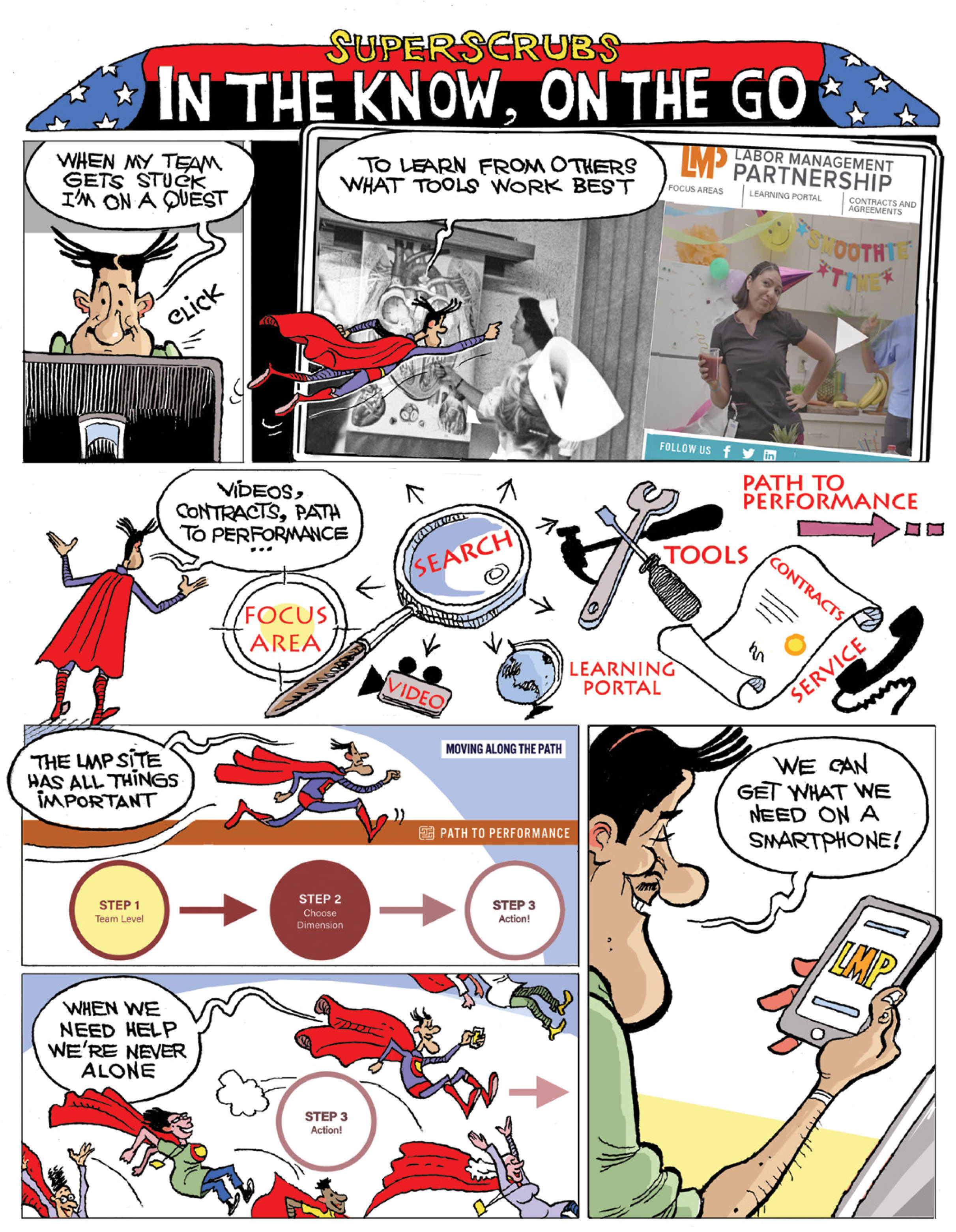
Learn how to use the LMP website:

LMP Website Overview

Learn how to use the LMP website:

How to Find How-To Guides

This short animated video explains how to find and use our powerful how-to guides

Learn how to use the LMP website:

How to Find and Use Team-Tested Practices

Does your team want to improve service? Or clinical quality? If you don't know where to start, check out the team-tested practices on the LMP website. This short video shows you how. 

Learn how to use the LMP website:

How to Use the Search Function on the LMP Website

Having trouble using the search function? Check out this short video to help you search like a pro!

Learn how to use the LMP website:

How to Find the Tools on the LMP Website

Need to find a checklist, template or puzzle? Don't know where to start? Check out this short video to find the tools you need on the LMP website with just a few clicks. 

Learn how to use the LMP website:

TOOLS

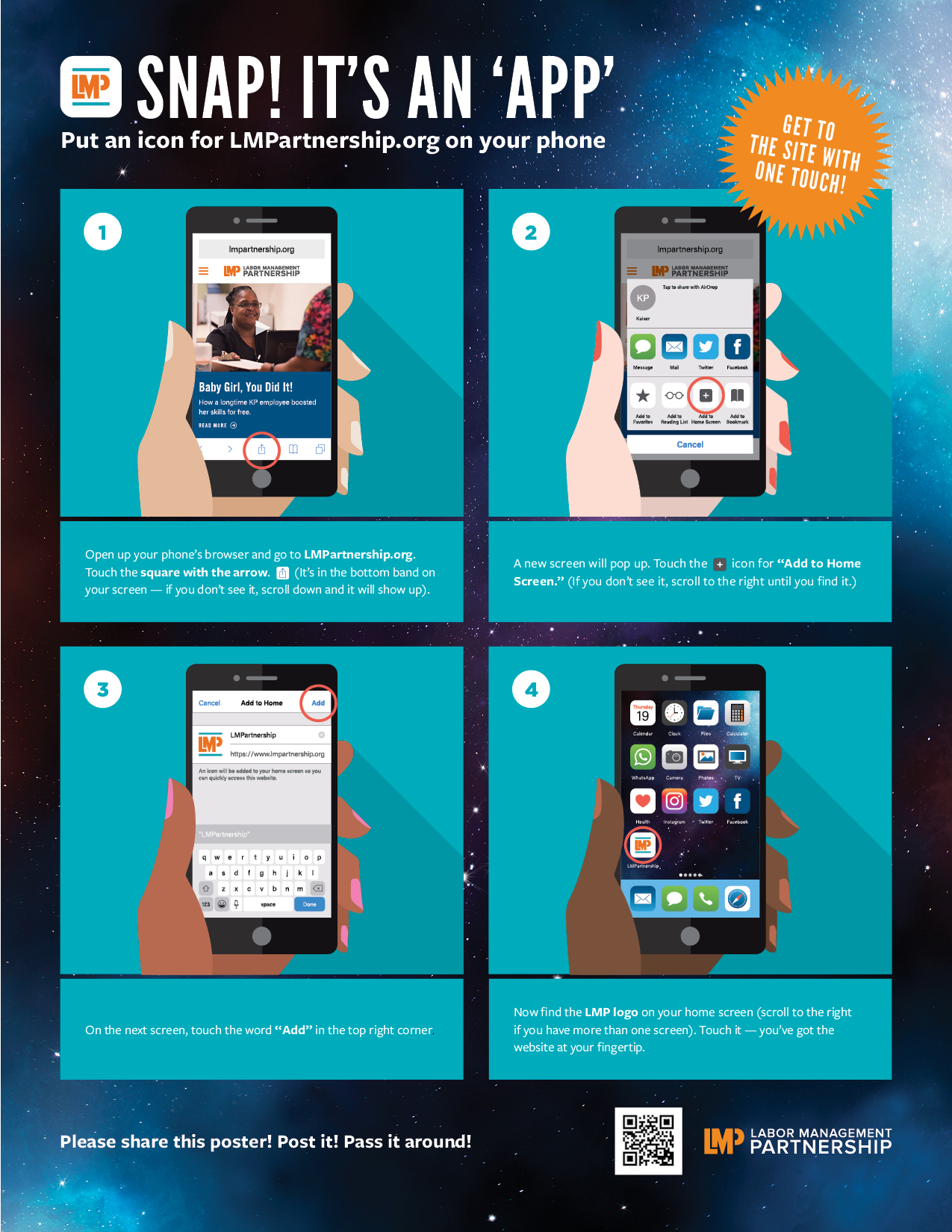
Poster: Snap! It's an 'App'

Format:
PDF (color and black and white)

Size:
8.5" x 11"

Intended audience:
Frontline employees, managers and physicians

Best used:
This poster demonstrates how to put an icon for LMPartnership.org on your smartphone. Share this with your teams and post it in breakrooms and on bulletin boards.

Related tools:

Meet Your National Agreement: Sick Leave HRA Rewards Good Attendance

Story body part 1: 

If you're covered by one of the national agreements between Kaiser Permanente and the Partnership unions, you may be eligible to convert your unused banked sick leave to a Health Reimbursement Account (HRA) when you retire from Kaiser Permanente. You can use the Sick Leave HRA to help pay for eligible out-of-pocket medical, dental, vision and hearing care expenses on a tax-free basis.    

The Sick Leave HRA gives you a strong incentive to bank your unused sick time and helps ensure that you will have sick time when you need it. This benefit is separate from and in addition to the Retiree Medical HRA established as part of the retiree medical benefits package in the 2021 Alliance National Agreement and the 2019 Coalition National Agreement.  

See the Retirement Programs section of your Summary Plan Description on MyHR for details:

  • Select your region.
  • When the Benefits by Employee Group page opens, click on View under Summary Plan Description.
  • Once the file opens, click on Retirement Programs from the menu on the left.
  • Look for details for the Sick Leave Health Reimbursement Account.

If that benefit is not included in your Summary Plan Description, you are not covered by the benefit.

Tips for Improving Outpatient Service

Deck: 
How to ensure every KP member gets top-notch service, every time

Story body part 1: 

How would you want your mother or grandmother to be treated if she came in for an outpatient appointment at Kaiser Permanente? That’s how we want to treat all of KP’s members. Thousands of unit-based teams are working to make sure every KP member receives top-notch service, from the first phone call to the visit with the care provider to the member’s departure from the facility. Providing great service will make our members’ lives better.

  1. Review patient/member satisfaction survey responses with the entire team at weekly meetings and huddles.
  2. Connect with patients by making eye contact and addressing patients by name.
  3. Keep patients informed by explaining everything you’re doing and all of the next steps.
  4. Update patients every 10 to 15 minutes on wait times if there’s a delay.
  5. Thank patients and members for choosing Kaiser Permanente for their care. Always ask, “Is there anything else I can do for you?”
  6. Provide a “wow” experience during a new member’s first visit.
  7. Address wait times by trying changes like an “all hands on deck” approach, so when wait times hit a certain threshold, all available staff members drop what they’re doing and help reduce long lines.
  8. Make sure phone calls are answered and messages are returned as quickly as possible.
  9. Encourage members to sign up for kp.org.
  10. If a patient is upset or has had a bad experience, offer a sincere apology and ask, “What can I do to make this better for you?”


Tips for Keeping Patients Safe

Deck: 
How to make KP the safest place to get and to give care

Story body part 1: 

Health care workers’ first obligation is “do no harm”— to see that the members and patients in our care suffer no injury or further illness. Unit-based teams across Kaiser Permanente launch hundreds of projects every year to improve patient safety. These tips can your guide your team in a patient safety improvement project and help ensure that KP is the safest place to get and to give care.

  1. Wash your hands often, and in accordance with local policies and procedures.
  2. Speak up if you observe a drift from safe practice. As the saying goes, “If you see something, say something!”
  3. Make sure patients (or family members) understand their diagnosis and plan of care. Have them describe, in their own words, their condition, what they need to do next and why that’s important.
  4. Label specimens accurately, completely and legibly.
  5. When administering high-alert medications have two people separately check specific steps of the process. For example, a pharmacist calculates dosage, prepares a syringe and compares the product to the order; then a nurse independently does the same and compares the results.
  6. Use tools such as SBAR (Situation, Background, Assessment, Recommendation) and clear language like “Safety Check” to identify a hazard, if someone is uncertain and does not feel it’s safe for the patient to proceed. 
  7. Keep yourself free from injury so you can keep your patients free from harm.


Tips for Reducing Wait Times

Deck: 
Show our members you value their time

Story body part 1: 

Who hasn’t experienced the frustration of a long wait to get a prescription filled or a lab test done, or to see a physician who’s running behind schedule? To help keep Kaiser Permanente patients and members happy, many unit-based teams are tackling this issue and finding ways to reduce wait times.

  1. Raise awareness of the problem by sharing data about the department’s wait times and patient satisfaction scores with unit-based team members.
  2. Help your co-workers understand it is everyone’s responsibility to be attentive to members who have been waiting for long periods of time — and recognize co-workers who do this well.
  3. Inform patients of delays by having the receptionist let them know if a physician is running late.
  4. Provide members and patients who have been waiting for extended periods of time with individual attention and updated information by “rounding” in the waiting area.
  5. Put a focus on wait times by posting patient arrival times on exam room doors or having pharmacists call out the wait time in the pharmacy.
  6. Utilize an “all hands on deck” approach, so when wait times hit a certain threshold, all available staff members drop what they’re doing and help reduce long lines.
  7. Consider shifting employees’ schedules to ensure adequate staffing during peak hours and at the start of the day, so you don't fall behind from the beginning.*
  8. Promote alternatives to in-person visits such as prescription refills by mail or email, phone or video consultations with doctors.
  9. Rethink who does what if part of the reason for long wait times is that only employees in particular job category are allowed to do a certain task.*
  10. Create a quiet zone in pharmacies to reduce distractions for the primary filling technician.

*  Consult with local unions to ensure proposed changes are in line with the contracts.


Trusts Build Job Skills and Careers

Deck: 
Kaiser Permanente employees use education trusts in record numbers

Story body part 1: 

For Jennifer Cuevo, an urgent care nurse in Pasadena, the opportunity was too good to pass up: Earn a Bachelor of Science in Nursing without paying fees.

For Joel Boyd, manager of pulmonary clinical services in South Sacramento, teaming with a trust fund created an opportunity to teach nearly 500 respiratory therapists ways to improve care and lower costs.

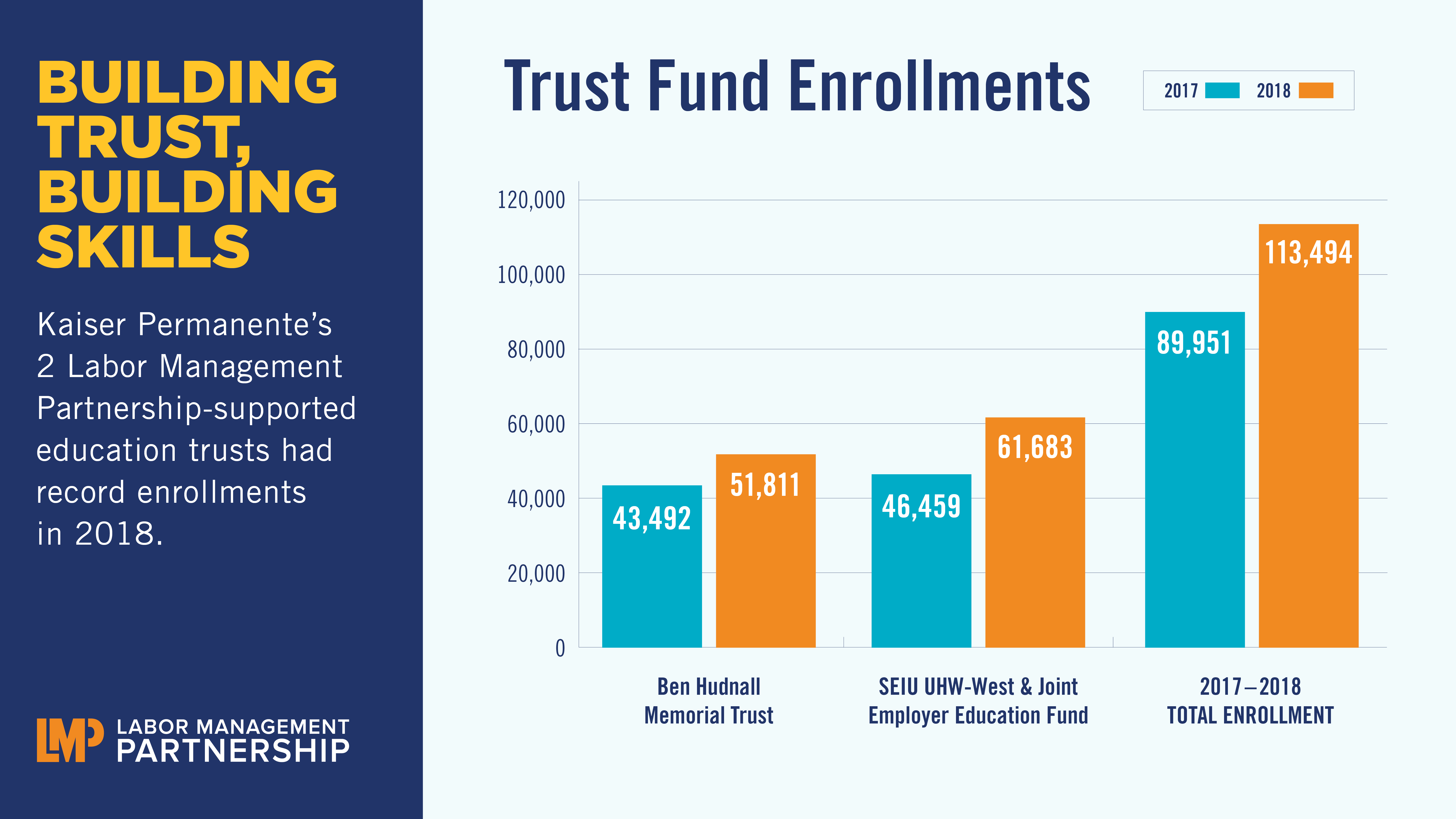
From earning degrees to learning best practices, Kaiser Permanente employees are using the 2 Labor Management Partnership-supported education trusts (Ben Hudnall Memorial Trust and SEIU UHW-West & Joint Employer Education Fund) in record numbers. Program enrollments rose 26% in 2018 to 113,494; there were nearly 59,000 enrollments in the first half of 2019, on pace for another record year.

“We can address solutions,” says Rebecca Hanson, SEIU Education Fund executive director. “There’s overwhelming demand among the workforce for training opportunities aligned with patient care delivery needs.” 

Through the trusts, employees can build skills, meet targeted needs in training programs, and work with career counselors to set career goals and create plans to achieve them.

“We’re preparing our workforce for the jobs of tomorrow,” says Jessica Butz, Ben Hudnall trust co-director.

Going for it

Cuevo, a 16-year Kaiser Permanente employee and UNAC/UHCP member, started as a licensed vocational nurse, then became a registered nurse. She always wanted a bachelor’s degree but put her dreams on hold while raising her children — until she talked with a Ben Hudnall career counselor and learned good news.

With a few additional courses, Cuevo could qualify for a bachelor’s program. The trust would pay the fees.

“I’m so thankful,” Cuevo says. “I wouldn’t have done this without the help of the trust and the partnership of Kaiser with the universities.”

Most classes were online, which Cuevo took at home. She did in-person requirements on days off — coordinating with her manager and family — completing her degree in 4 semesters. Her 17-year-old daughter is “really inspired,” Cuevo says. “She wants to go into research or be a doctor.”

Cuevo’s inspired, too. In November, she started a master’s program – paid again by Ben Hudnall. Cuevo, who wants to teach nurses, encourages colleagues to use trust services.

“Go for it,” she says. “It’s so worth it. Get your degree. Move up. You can do it. I did it. I love it.”

Benefits of partnership

When Boyd and pulmonary clinical services colleagues in Northern California reviewed their operations, they saw a need to standardize some patient care practices. Their goal: to decrease the length of stay for patients on mechanical ventilation to reduce the risk of such complications as pneumonia, improve care and lower costs.

They partnered with the SEIU Education Fund to organize 8 group trainings for respiratory therapists at Kaiser Permanente’s Garfield Innovation Center.

Working with the education fund was easy and helped get employee buy-in and participation, Boyd said. The trainings were so effective, more may be offered in Northern California and other regions.

“Nothing at this scale has ever been done for respiratory therapists,” Boyd says. “It was a true example of how we can get positive benefits from the Partnership.”

Video: Get Your Skills On

Want to move up in your career? Watch this short video to see resources that can help.

(1:33) | August 4, 2018


Learn Long and Prosper

Deck: 
Tuition reimbursement opens doors for career advancement

Story body part 1: 

Carol Fiskio takes pride in helping good employees move on.

As revenue cycle director for Kaiser Permanente’s Woodland Hills Medical Center, Fiskio has seen 3 of her department’s admitting clerks earn college degrees and advance to new positions.

Their formula: a desire to learn, flexible scheduling and a valuable employee benefit. Hers: supporting employees’ lifelong learning to make them, Kaiser Permanente and her department stronger players.

Kaiser Permanente encourages such learning, providing employees up to $3,000 each year for completing courses to continue their education, get a certificate or earn a degree. Tuition reimbursement course applications reached a record 73,224 in 2018, nearly doubling since 2015, when benefits increased for many employees after that year's Labor Management Partnership National Bargaining. 

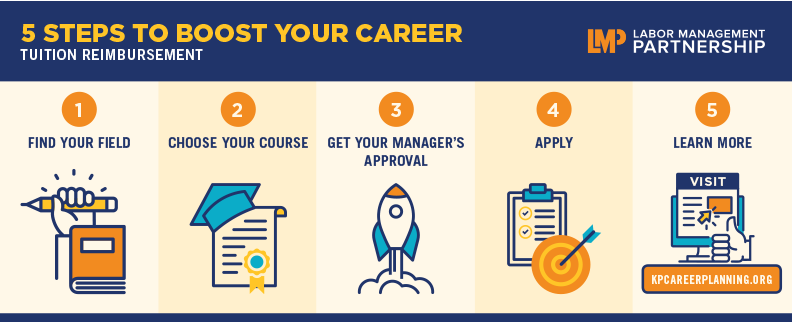
5 Steps Infographic

Click image to enlarge
 

Psyched for psychology

When Olayinka Rahman started as an admitting clerk at Woodland Hills Medical Center in 2007, she had a vision: to become a psychologist. She balanced working and going to school, using tuition reimbursement to earn bachelor’s (California State University, Northridge), master’s (Pepperdine University) and doctoral (Azusa Pacific University) degrees in psychology.

“I don’t think there would be a better place (than Kaiser Permanente) for me to get my degree and continue to work,” Rahman says. “They’re so supportive. I hear about other organizations that aren’t as flexible and don’t have tuition reimbursement.”

After a yearlong internship in Michigan, Rahman returned to Kaiser Permanente. She completed a postdoctoral psychology residency in San Francisco and now works as a psychological assistant in Antioch. She’s preparing for the licensing exams to become a staff psychologist.

Rahman encourages others to continue their education.

“It was definitely challenging but well worth it,” Rahman says. “Talk with your manager, and say, ‘How can we make this work?’ Open communication with management is key.”

Strength in education

Fiskio, who used tuition reimbursement herself to earn an MBA, praised Rahman and her other former direct reports for advancing their careers through education.

“It’s not easy to go to work and to school,” Fiskio says. “That takes real dedication. It’s a benefit to the organization.” 

Video: Build Your Career

Wish you could go back to school? Looking for resources to advance your career? See how kpcareerplanning.org can help.

(1:27) | August 1, 2018


Tips for Reducing Supply Waste

Deck: 
Got clutter? Get organized to save time and money

Story body part 1: 

Is your department’s supply room or cabinet cluttered with a mix of overstocked, understocked and out-of-date materials? Throughout Kaiser Permanente, unit-based teams are taking stock of their supplies and finding they can save time and money by designing better systems for organizing and ordering supplies. Reducing supply waste is one of many ways that teams are helping KP become more affordable for our members and patients.Sort your supplies to determine which ones to keep, which should be disposed of, and which you need more information about before deciding.

  1. Create an opportunity for everyone in the department to give input about how often different supplies get used, so you don’t eliminate something the department needs.
  2. Organize the supplies by figuring out where each item belongs and then labeling supplies and shelves. Also set “par” levels, figuring out the quantity the department should always have on hand.
  3. Remember safety when organizing the supplies. Make sure people won’t have to bend too low, reach too far or lift something that’s too heavy.
  4. Establish a signal for when supplies need to be re-ordered. For example, the signal might beflipping the bin upside down, filling out a re-order card or alerting whoever oversees ordering supplies. And have a system for alerting people when an item is getting close to its expiration date.
  5. Routinize the new system by having a plan to make sure supplies stay sorted, in order and clean. For example, create a checklist to make sure the new procedures are followed or assign someone to sign off at the end of the day that the supplies are ready for the next day’s work.
  6. Check in regularly with other team members to make sure the new system is working and to tweak it if it needs adjustments.
  7. Consider approaching departments similar to yours that may order the same supplies. You may be able to consolidate orders. For example, many departments in the same medical facility order sutures.
  8. Calculate how much money you’ve saved. Compare what you were spending before on supplies to what you’re spending now.
  9. Take before and after pictures to help you communicate the story of how your department reduced waste.

Improving the New Member Experience

Deck: 
Extra TLC and a "wow" experience are the key

Story body part 1: 

When we help Kaiser Permanente membership grow, we help make KP stronger and our jobs more secure. One of the best ways to grow KP membership is to provide great service to every member we serve — especially to new members during their first interactions with Kaiser Permanente. Here are some ways to enhance the member experience and keep new members with KP for the long haul. Engage the entire unit-based team in providing a “wow” experience during a new member’s first visit.

  1. Use tools like the New Member Identifier in Kaiser Permanente HealthConnect® to flag new members and give them a little extra TLC during their visit.
  2. Provide new members with information packets (with, for example, important phone numbers, a facility map, pharmacy hours) that will help them access all of KP’s services.
  3. Make every member’s visit special with a warm welcome. Take time to answer questions about KP, or even offer a mini-tour of the facility before or after an appointment.
  4. Follow up on first visits with a thank-you card or survey to find out how the visit went and how it could be improved.
  5. Sign members up for kp.org while they are waiting in the reception area or exam room. Take time to explain the benefits of using kp.org—for instance, the ability to refi prescriptions by mail or manage a child’s care online.
  6. Create a friendly competition in your department to see how many members a staffer can get to try mail-order refill or KP.org.
  7. Use service-improvement tools that help your team connect with members. Check with your UBT consultant or regional LMP Council for suggestions.
  8. Improve access to KP services by working with your team to reduce the time members must wait for appointments.
  9. Help new members get to know their care providers by providing a physician biography or a brief introduction about the nurse or pharmacist they will be seeing that day.


Pages

Subscribe to RSS - Frontline Workers