All Roles

Help Video

How to Find UBT Basics on the LMP Website

Learn how to use the LMP website:

LMP Website Overview

Learn how to use the LMP website:

How to Find How-To Guides

This short animated video explains how to find and use our powerful how-to guides

Learn how to use the LMP website:

How to Find and Use Team-Tested Practices

Does your team want to improve service? Or clinical quality? If you don't know where to start, check out the team-tested practices on the LMP website. This short video shows you how. 

Learn how to use the LMP website:

How to Use the Search Function on the LMP Website

Having trouble using the search function? Check out this short video to help you search like a pro!

Learn how to use the LMP website:

How to Find the Tools on the LMP Website

Need to find a checklist, template or puzzle? Don't know where to start? Check out this short video to find the tools you need on the LMP website with just a few clicks. 

Learn how to use the LMP website:

TOOLS

Poster: Take the Pledge

Format:
PDF

Size:
8.5" x 11"

Intended audience:
All KP employees

Best used:
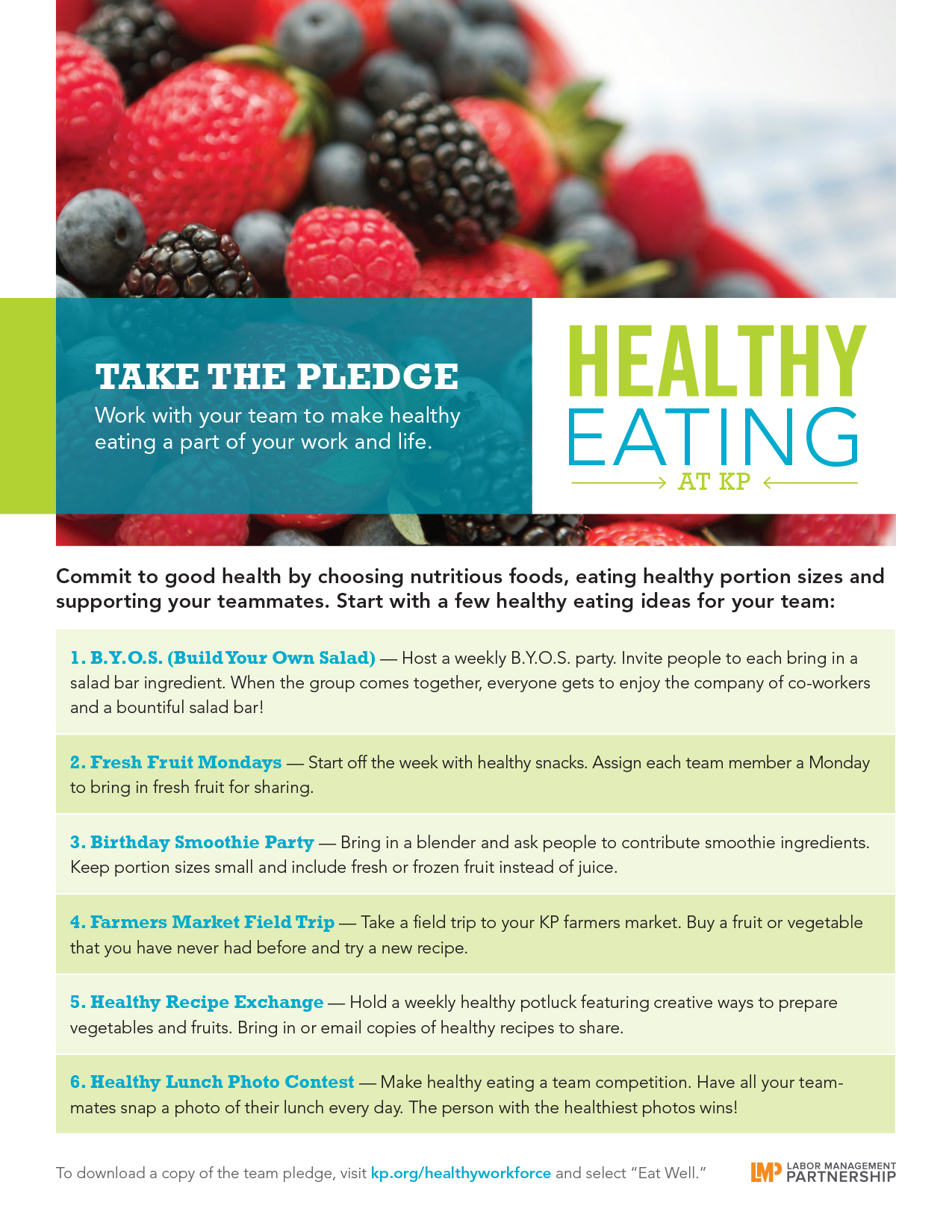
This poster, which appears in the May/June 2014 Bulletin Board Packet, offers six tips for healthy eating—and challenges each of us take a healthy eating pledge. Use to give teams ideas to promote healthy eating and team spirit.

Related tools:

TOOLS

SuperScrubs: Taming the Chaos

Format:
PDF (color or black and white)

Size:
8.5" x 11"

Intended audience:
Anyone with a sense of humor

Best used:
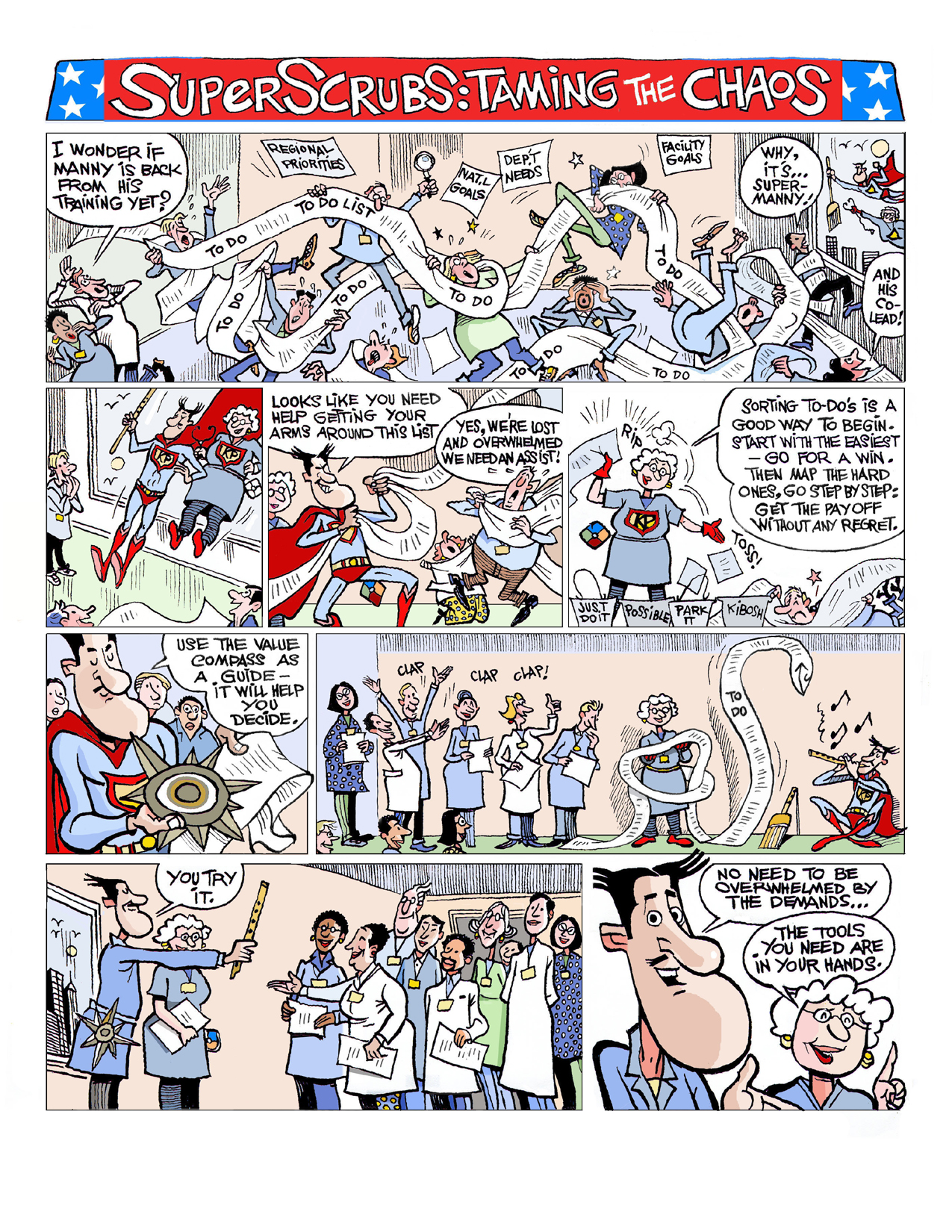
This full-page comic features a team that is overwhelmed by a long to-do list. Enjoy, and be reminded that if you are overwhelmed by a long list of tasks, it can be managed by utilizing improvement tools.

Related tools:

TOOLS

SuperScrubs: With a Little Help From Our Friends

Format:
PDF (color or black and white)

Size:
8.5" x 11" 

Intended audience:
Anyone with a sense of humor

Best used:
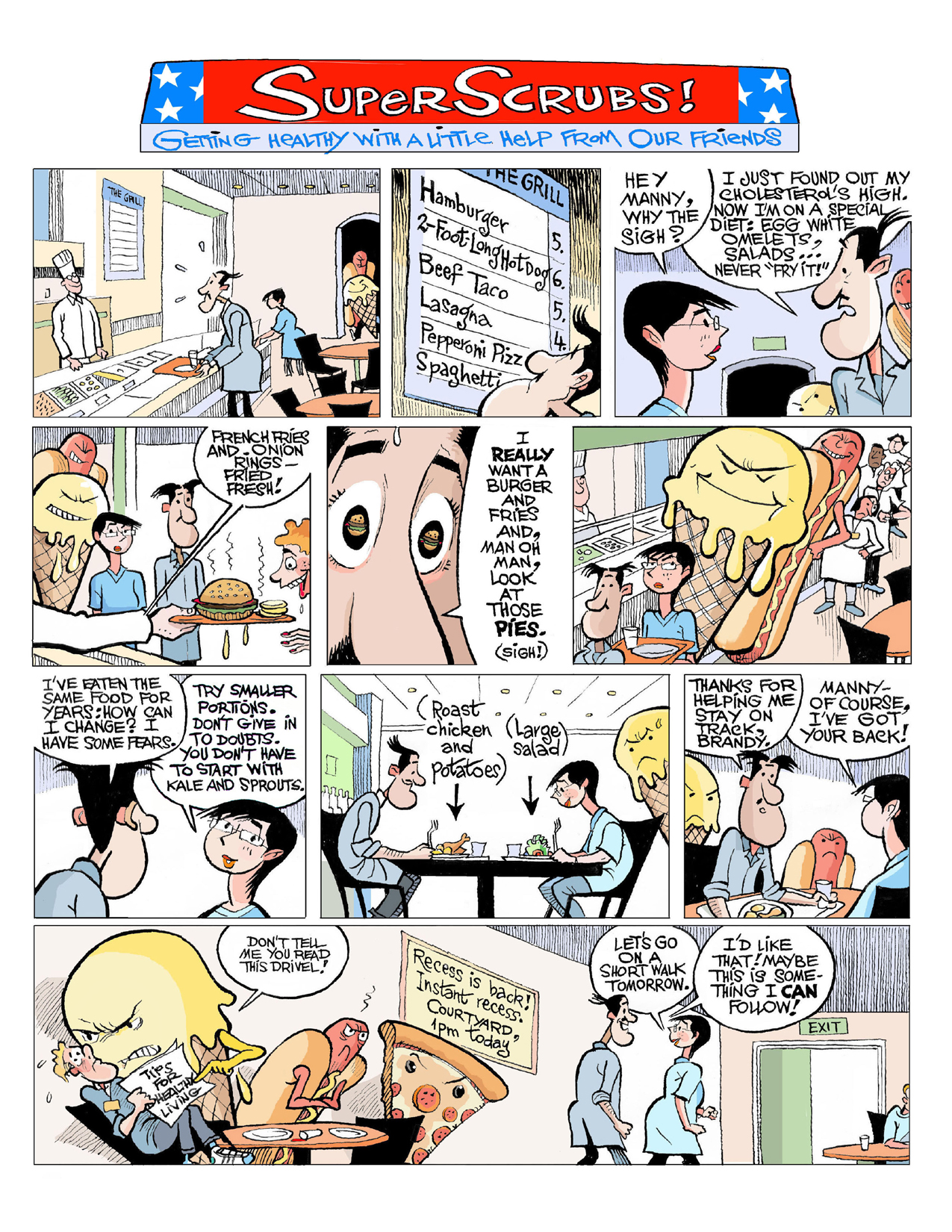
This full-page comic  features two co-workers meeting up in the cafeteria at lunchtime, with one of them being sorely tempted to indulge in some not-so-healthy food choices. Enjoy this comic and be reminded that getting help from our friends—or providing help—is a key part of building a culture in which healthy choices come easily.


Related tools:

TOOLS

PPT: Presentation Guidelines

Format:
PowerPoint

Size:
8.5" x 11"

Intended audience:
Anyone who creates PowerPoint presentations in their work to support unit-based teams and performance improvement

Best used:
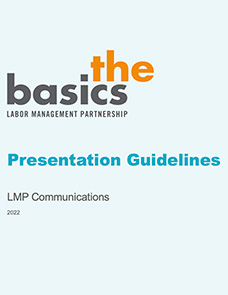
This PowerPoint deck provides LMP Communications' suggestions for presentation design, structure and approach. Find templates, tips and ideas for effective presentations.

Related tools:

Health Care Reform Glossary

Deck: 
Key terms to know as you navigate the world of health care reform

Story body part 1: 

Affordable Care Act (ACA)

The comprehensive federal health care reform law enacted in March 2010.

Coinsurance

The percentage of charges a member pays when receiving a covered service. The member’s health plan coverage pays the balance up to the health plan’s allowance. Coinsurance amounts vary depending on the member’s plan and the service provided.

Copayment

The fixed dollar amount a member pays when receiving certain covered services or prescriptions. The member’s health insurance pays the rest. Copayments vary depending on the member’s plan and the service provided.

Cost share

The portion of charges for a service or prescription that the member is responsible for paying, such as a copayment, coinsurance or deductible payment.

Deductible

The fixed amount a member must pay in a calendar or contract year for certain health care services before the member’s health insurance begins to pay.

Dependent

A family member, such as a spouse, child or partner, who is covered under a policyholder or subscriber’s plan.

Federal financial assistance (subsidy)

Financial assistance in the form of reduced premiums and reduced out-of-pocket expenses to provide help for some people to pay for health coverage or care. The government will pay part of the premium and the out-of-pocket expenses directly to the health plan issuer. Usually determined by income level and family size.

Grandfathered plan

A group health plan that was created or an individual health insurance policy that was purchased on or before March 23, 2010. Grandfathered plans are exempted from many changes required under the Affordable Care Act.

Health care reform

A general term for the major health policy changes put in place by the federal Affordable Care Act of March 2010 and any state laws passed to put it in place.

Health Insurance Marketplaces

Government-run online markets, formerly called Health Insurance Exchanges, where individuals and small businesses will be able to compare and enroll in health plans, get answers to questions, and find out if they are eligible for financial assistance or special programs.

The marketplace

A common nickname for the Health Insurance Marketplaces, also called “exchanges.”

Medicaid

A government insurance plan for the poor and disabled; in California, it’s known as Medi-Cal.

Out-of-pocket expenses

These include the copayments, coinsurance and/or deductible payments members make for the health care services they receive, as opposed to the premium they pay each month to their insurers.

Pre-existing conditions

Medical conditions that a person has before he or she applies for a new health insurance policy.

Premium

The amount a member and/or the member’s employer pays, usually each month, for health care coverage.

Making Health Care Safe

Deck: 
Why a corrosive work environment is harmful to caregivers and patients

Story body part 1: 

Bringing joy and meaning to work may sound like a lofty aspiration. But if your workplace is lacking these things, it's more than dreary—it’s also dangerous, according to the Lucian Leape Institute at the National Patient Safety Foundation.

Start with the fact that health care itself is dangerous. The institute’s March 2013 report on workplace injuries in health care, “Through the Eyes of the Workforce: Creating Joy, Meaning and Safer Health Care,” noted that:

  • Health care workforce injuries are 30 times higher than other industries
  • More work days are lost due to occupational illness and injury in health care than in such industries as mining, machinery, manufacturing and construction
  • Seventy-six percent of nurses in a national survey said unsafe working conditions interfere with the delivery of care
  • An RN or MD has a five to six times higher risk of being assaulted than a city cab driver
  • Emotional abuse, bullying, threats and learning by humiliation often are accepted as “normal” conditions of the health care workplace

These conditions are harmful to patients, caregivers and the organization, according to the report:

“Workplace safety is inextricably linked to patient safety. Unless caregivers are given the protection, respect, and support they need, they are more likely to make errors, fail to follow safe practices, and not work well in teams.”

Role of leaders

The authors conclude, “The basic precondition of a safe workplace is the protection of the physical and psychological safety of the workforce.”

Physical and psychological safety is also a precondition to “reconnecting health care workers to the meaning and joy that drew them to health care originally,” said Lucian Leape Institute President Diane Pinakiewicz, at Kaiser Permanente’s second annual Workplace Safety Summit February 12.

“These preconditions enable employers to pursue excellence and continuous learning,” she said. “The purposeful maintenance of these preconditions is the primary role of leadership and governance.”

Systemic causes of harm

While pointed in their assessments, Pinakiewicz and the report’s authors refrain from finger-pointing. Pinakiewicz outlined systemic organizational stresses that work against workforce and patient safety. These include:

  • People feeling overwhelmed (58 percent of workers surveyed by the American Society of Professionals in Patient Safety cited overwork as an issue)
  • The volume of non-value adding work
  • Workforce safety and patient safety being managed separately and non-systemically
  • Operating pressures exacerbating traditional behavioral norms

The report identifies several “exemplar organizations,” including the Mayo Clinic, Virginia Mason Medical Center, Kaiser Permanente and the Coalition of Kaiser Permanente Unions, that are working to “create cultures of safety and respect.” KP’s 2012 National Agreement provisions for workforce total health and interest-based problem solving are cited as contributors to that culture.

Seven strategies for improvement

The Lucian Leape Institute offers seven strategies for improving safety and restoring joy and meaning to the health care workplace:

  1. Develop and embody shared core values of mutual respect and civility; transparency and truth telling; safety of all workers and patients; and alignment and accountability from the boardroom through the front lines.
  2. Adopt the explicit aim to eliminate harm to the workforce and to patients.
  3. Commit to creating a high-reliability organization and demonstrate the discipline to achieve highly reliable performance.
  4. Create a learning and improvement system.
  5. Establish data capture, database and performance metrics for accountability and improvement.
  6. Recognize and celebrate the work and accomplishments of the workforce, regularly and with high visibility.
  7. Support industry-wide research to design and conduct studies that will explore issues and conditions in health care that are harming our workforce and our patients.

“Through the Eyes of the Workforce: Creating Joy, Meaning and Safer Health Care” is available online from the Lucian Leape Institute at the National Patient Safety Foundation.

TOOLS

AIDET Communication Model

Format:
PowerPoint

Size:
28 slides

Intended audience: 
Frontline workers and managers

Best used: Use the AIDET (Acknowledge, Introduce, Duration, Explanation, Thank You) evidence-based communication model to provide a framework for communication with patients, families and each other to gain better patient satisfaction, staff satisfaction and clinical outcomes.


Related tools:

TOOLS

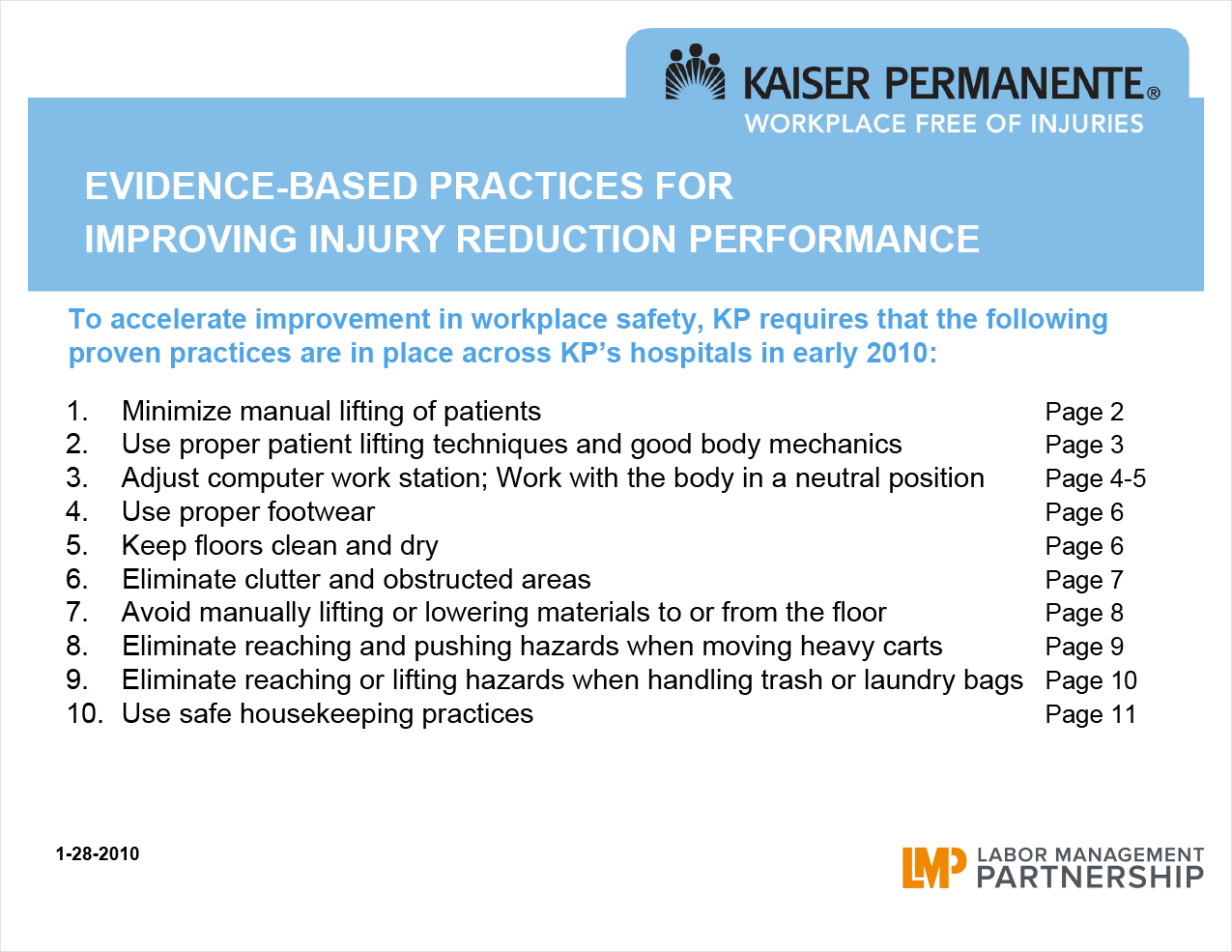
10 Proven Practices for Reducing Injuries

Format:
PDF

Size:
8.5" x 11"

Intended audience:
Managers, Workplace Safety staff and unit-based teams working on reducing the number of workplace injuries

Best used:
Share this 11-page presentation of proven safety practices at meetings, in huddles and at other gatherings to accelerate improvement in workplace safety. 


Related tools:

Pages

Subscribe to RSS - All Roles