Welcome to the New e-Hank
Story body part 1:
Check out this immersive, multimedia online version of Hank magazine, powered by Issuu.
This short animated video explains how to find and use our powerful how-to guides
Does your team want to improve service? Or clinical quality? If you don't know where to start, check out the team-tested practices on the LMP website. This short video shows you how.
Having trouble using the search function? Check out this short video to help you search like a pro!
Need to find a checklist, template or puzzle? Don't know where to start? Check out this short video to find the tools you need on the LMP website with just a few clicks.
Check out this immersive, multimedia online version of Hank magazine, powered by Issuu.
Joy in work might seem like an idea that’s superficial or unattainable — especially in a pandemic. But in times like these, it’s more important than ever.
Joy in work is about being connected with what you do and why you do it. It’s the feeling of success and fulfillment that comes from doing work that matters. It connects us with colleagues and patients through a sense of shared purpose.
Joy in work is practical and science-based, according to the Institute for Healthcare Improvement, which has taken the lead in researching the subject. Joy in work produces tangible results: Studies link it to reduced turnover, higher productivity, and improved patient experience, outcomes and safety.
It doesn’t turn every workday into a breeze. There still will be fatigue, long hours and tough days.
But cultivating joy in work creates the deep engagement that helps keep stress from turning into burnout — which was a serious issue in U.S. health care even before COVID-19 arrived on the scene.
For everyone’s benefit, let’s nurture it at Kaiser Permanente.
What brings you joy in work? Use the stories, tips and tools on these pages to explore that question — on your own and with your team. Work together to create joy in work.
What does it mean to work in partnership?
It’s a joint commitment to collaborate, enshrined in the Labor Management Partnership’s national agreements.
It’s employees, managers, physicians and dentists building on common interests to make decisions and solve problems.
It’s Kaiser Permanente and the Partnership unions finding creative, mutually beneficial solutions that result in improved care, service and affordability.
There's never been a better time than right now to shine a fresh spotlight on the basics — the team-tested tools and practices fundamental to a strong partnership, such as the Rapid Improvement Model, consensus decision making and interest-based problem solving.
Whether you’re new to partnership or well-versed in its ways, use these performance improvement tools to identify issues, test changes, solve problems, make decisions, deliver better care and service, and enhance your work life.
LMP tools are designed to help you work together when things are going well — and bridge differences when the going gets tough. This approach addresses the needs of union members and helps the organization improve performance — which ultimately benefits Kaiser Permanente’s patients, members and communities.
Welcome to e-Hank! The national Labor Management Partnership communications team is pleased to serve you in this new format, and we’re grateful to those of you who’ve reached out and said you miss the print editions of Hank. But until the crisis of the COVID-19 pandemic subsides, an electronic communication seems best.
This issue looks at how our Partnership — which now includes 2 union federations, with separate National Agreements — helped Kaiser Permanente meet the extraordinary challenges that a worldwide pandemic brought to our doors. We’ve never been tested like this before. And how we’ve responded in the last several months provides a look at how we will respond and grow and adapt to future challenges. The dialogue and collaboration that have been taking place during the pandemic are a model for the future.
In this e-edition of Hank, we’re also introducing 2 concepts we think will help strengthen the culture of partnership throughout the enterprise.
The first is a renewed focus on The Basics — tips, tools and stories that will help you understand the core philosophy of the Labor Management Partnership and what it means to work in partnership. New to the Partnership? These materials will help show why Kaiser Permanente and the Partnership unions that belong to the Alliance of Health Care Unions or the Coalition of Kaiser Permanente Unions are committed to it as an operating strategy. Been around for a while? Dive in and refresh your knowledge of the principles and processes that make our Partnership a success.
The second is a new focus on Joy in Work, a concept pioneered by the Institute of Healthcare Improvement. By Joy in Work, we don’t mean smiley faces or i’s that are dotted with hearts. We hope our Joy in Work stories and tools will help you connect with your deeper, personal motivations for working in the demanding health care field. The stats show that people who feel this sort of connection — this fundamental Joy in Work — are less likely to suffer from depression and burnout.
Lastly, don’t miss the back cover, which provides a quick refresh on a core principle that helps our Labor Management Partnership thrive: Free to Speak. It’s a reminder that your voice matters. Thank you for reading this and for all your hard work. Together, there is strength in partnership.
Format:
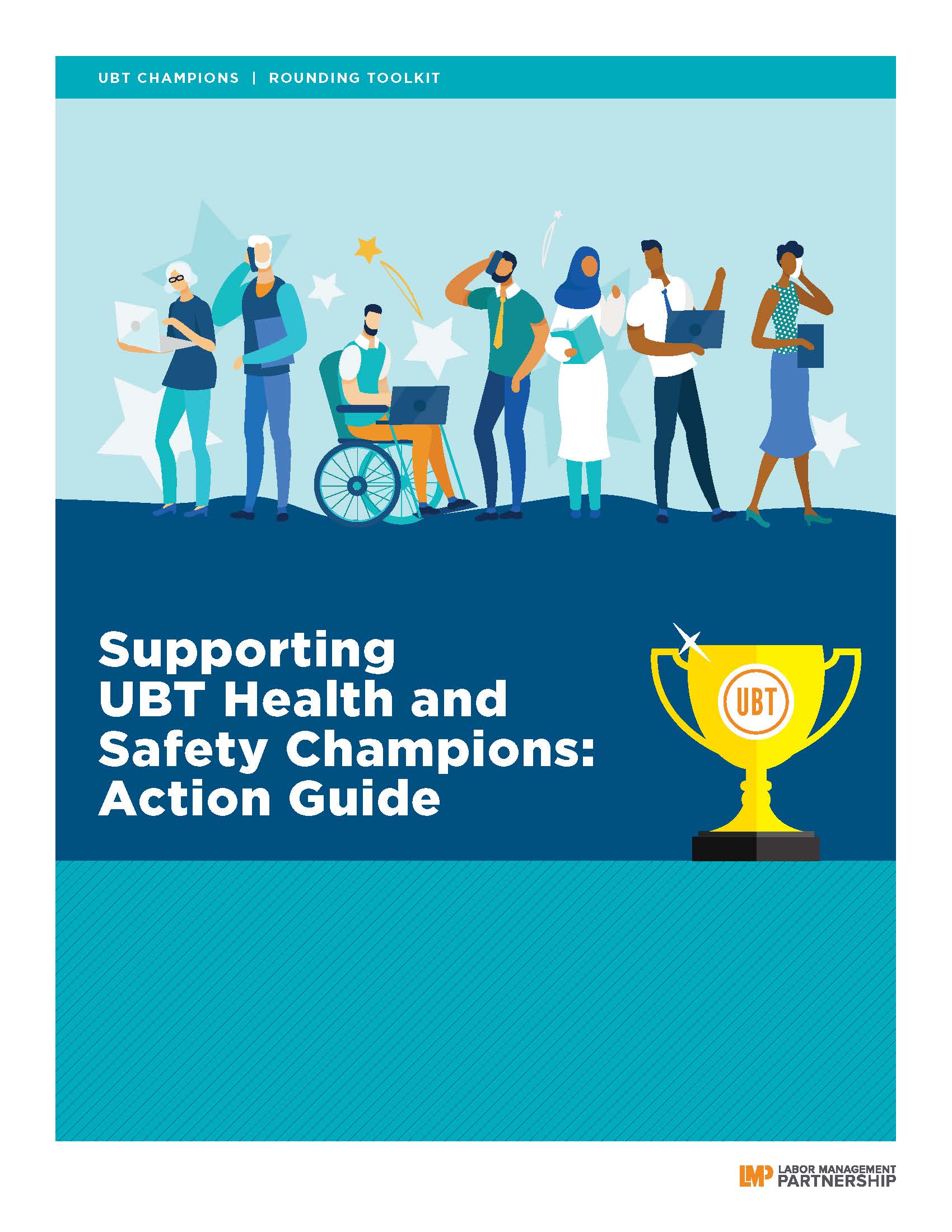
PDF, 10 pages
Size:
8.5 "x 11"
Intended audience:
Labor and management leaders who support UBT health and safety champions
Best used:
Use this 10-page guide to provide champions with support and updates, listen to their successes and challenges, and reconnect them with the purpose of their role.
Will robots replace our jobs?
As technology rapidly reshapes work, the future may be scary, but it’s also filled with opportunities, especially in health care. Kaiser Permanente workers can stay ahead by continuing to learn both technical skills and human skills such as communication and problem-solving, experts say.
“Cultivating our uniquely human skills may be the best way to prepare for an uncertain future,” says Michelle Weise, chief innovation officer at Strada Institute for the Future of Work.
“Don’t be a bad robot. Be a good human being,” says Benjamin Pring, director of Cognizant’s Center for the Future of Work. “We don’t want to see a robot doctor. We don’t want to see a robot nurse. A lot of (future) jobs are caring jobs where we want to have the human touch.”
Weise and Pring headlined events in November and December in the Future Ready Workforce of the Future Thought Leader Series. The webcast series, sponsored by the Labor Management Partnership and presented by National Workforce Planning and Development, aims to help prepare Kaiser Permanente’s workforce for tomorrow’s jobs.
“We want to ensure our employees have the skills necessary for the jobs of the future,” says Jessica Butz, co-director of the Partnership-supported Ben Hudnall Memorial Trust.
The goal is to build on record usage for Kaiser Permanente’s tuition reimbursement and 2 Partnership-supported education trusts and have employees continuously skill up to meet changing work needs.
Building skills
“It’s a skills-based world that we live in,” Weise says. “For so many learners, a degree is a bridge too far. They just need to survive and get their foot in the door in a job that pays well.”
Today, 44 million adult Americans lack a college degree, don’t earn a living wage and face being left behind by the future of work, according to a Strada report.
“We’re going to need to reimagine education as much more like a variety of highways with lots of on- and off-ramps,” Weise says. “Sometimes when we’re skilling up, it’s going to be for technical expertise or digital fluency. Sometimes it’s going to be for a broadening of human skills.”
Jobs of the future
Pring also is optimistic.
“We think in the future there will be net job increases,” Pring says. “They’ll just be different jobs.”
These new jobs, highlighted in Cognizant’s “21 Jobs of the Future“ and “21 More Jobs of the Future” reports, include fitness commitment counselor and artificial intelligence-assisted health care technician.
As work changes, technology will enhance most jobs and create new opportunities.
“The only way to deal with disruption is to be proactive,” Pring says. “Invent your own future rather than allow the future to happen to you.”
Kerene Hoilett always knew she wanted to work in health care — inspired by her grandmother, a nurse.
When she learned that nursing didn’t fit her, she forged her own path.
Hoilett joined Kaiser Permanente in 2007 as an ultrasound technologist in Georgia. Since then, she has completed a project management certificate, landed an internship and earned 2 college degrees on her way to becoming a diagnostic imaging quality consultant.
“I always have that drive to challenge myself,” Hoilett says. “How can I tap into my strengths more?”
To help employees and managers tap into their strengths, Kaiser Permanente has a new career paths tool.
The new tool at kpcareerplanning.org/paths is interactive and personalized to help you explore career options. Follow the prompts to fill out a profile and find opportunities that link your skills, interests and education to careers at Kaiser Permanente.
“Kaiser Permanente encourages career mobility,” says Monica Morris, director of National Workforce Planning and Development. “With career paths, we’re trying to show you all the different career opportunities and directions you could go in the organization.”
Partnership unions negotiated to include career paths in the 2005 National Agreement with Kaiser Permanente.
“The new career paths tool reinforces our commitment to supporting lifelong learning and career development,” says Jessica Butz, workforce development director with the Alliance of Health Care Unions. “Career paths are a fundamental piece to help give employees a road map for success.”
Pursuing opportunities
After Hoilett became lead ultrasonographer in 2013, her journey took a turn to pursue leadership opportunities.
As a United Food and Commercial Workers (UFCW) member, Hoilett talked with a Partnership union-supported career counselor from the Ben Hudnall Memorial Trust, leading her to a project management pilot program. A project management certificate and 6-month internship at the regional office followed. The trust paid her to work at the internship one day a week, while she worked her regular job 4 days a week.
Hoilett applied for open positions but was unsuccessful, so she reviewed her experience gap with her career counselor.
“She encouraged me. I knew one day I would get that opportunity, and she helped me to be confident,” Hoilett says. “I wasn’t left in the dark. The career counselor was able to light my path.”
Hoilett’s persistence paid off. In 2018, she earned her master’s degree in project management and became a diagnostic imaging quality consultant. She’s using her people, project and technical skills to improve productivity and performance for imaging techs.
She isn’t stopping there. She continues to increase her impact in her current role while exploring learning opportunities in organizational leadership. And she encourages colleagues to learn, take courses and grow their careers — just like her.
“Don’t be afraid,” Hoilett says. “If you keep going, you will be successful.”
Format:
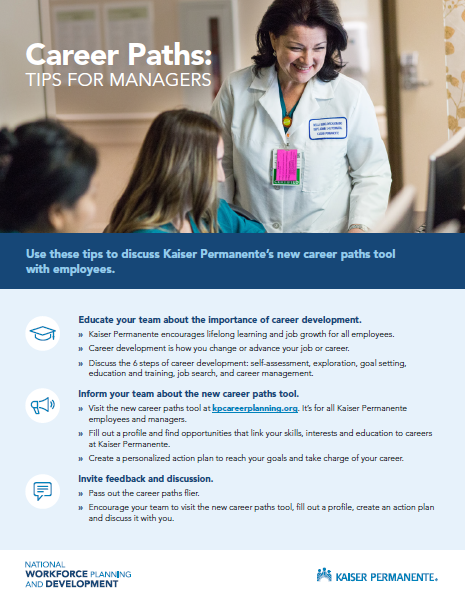
PDF
Size:
8.5” x 11”
Intended audience:
Kaiser Permanente managers
Best used:
Managers can use this at team meetings to give a presentation about career development. You also may be interested in Find Your Path, a related flier about Kaiser Permanente’s new career paths tool.
Format:
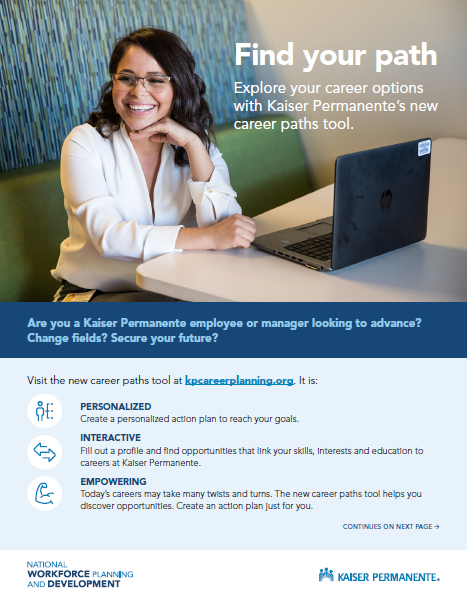
PDF
Size:
8.5” x 11”
Intended audience:
Kaiser Permanente employees and managers
Best used:
Use this flier to inform your team about Kaiser Permanente’s new career paths tool. Managers also may be interested in Career Paths: Tips for Managers, a related guide to help discuss career development.
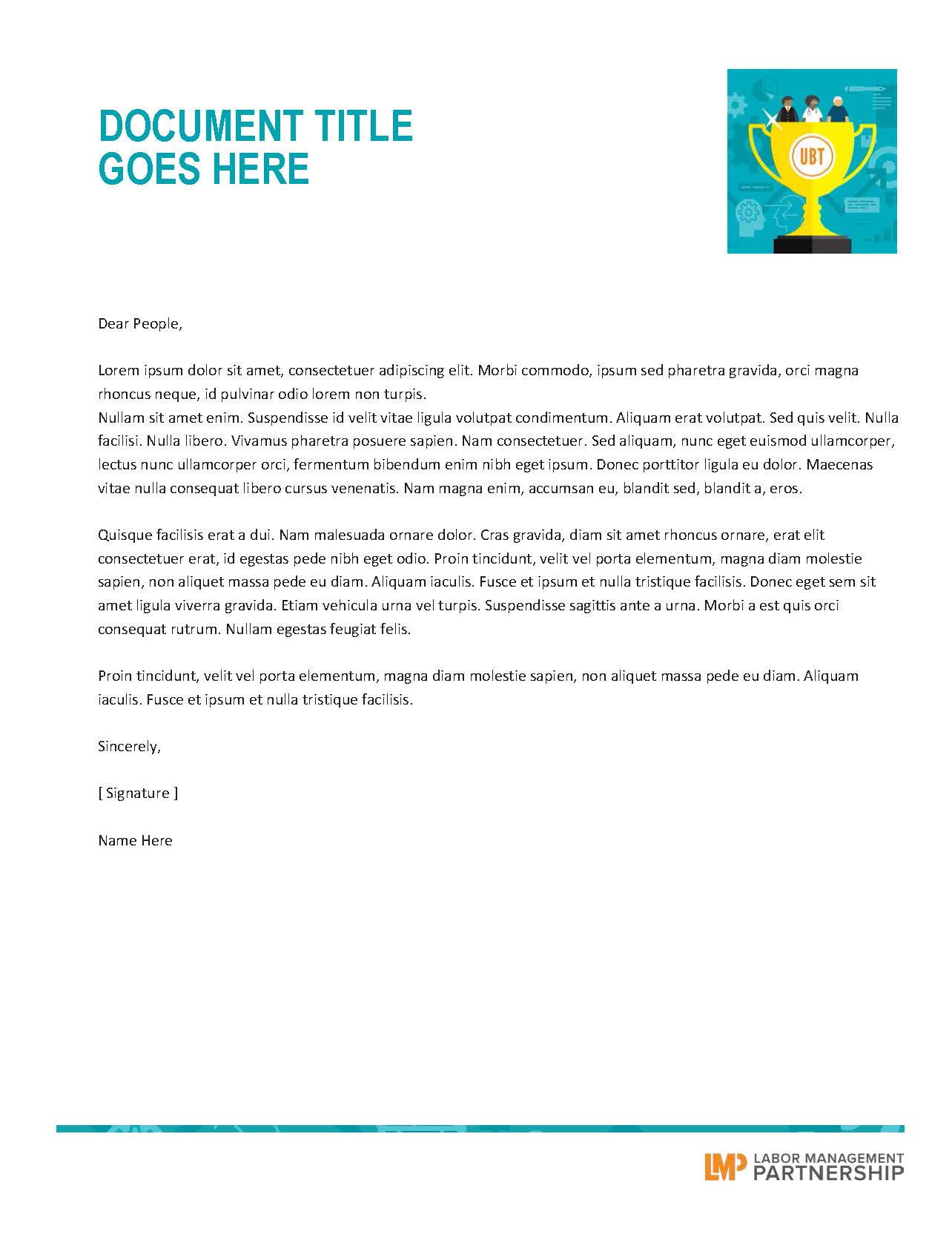
Format: DOC
Size: 8.5" x 11"
Intended audience: Supporters of the UBT Health and Safety Champions Program
Best used: Use this template to inspire a culture of health and safety. No special design skills or software needed! Just pop in your own text and headline.