TOOLS
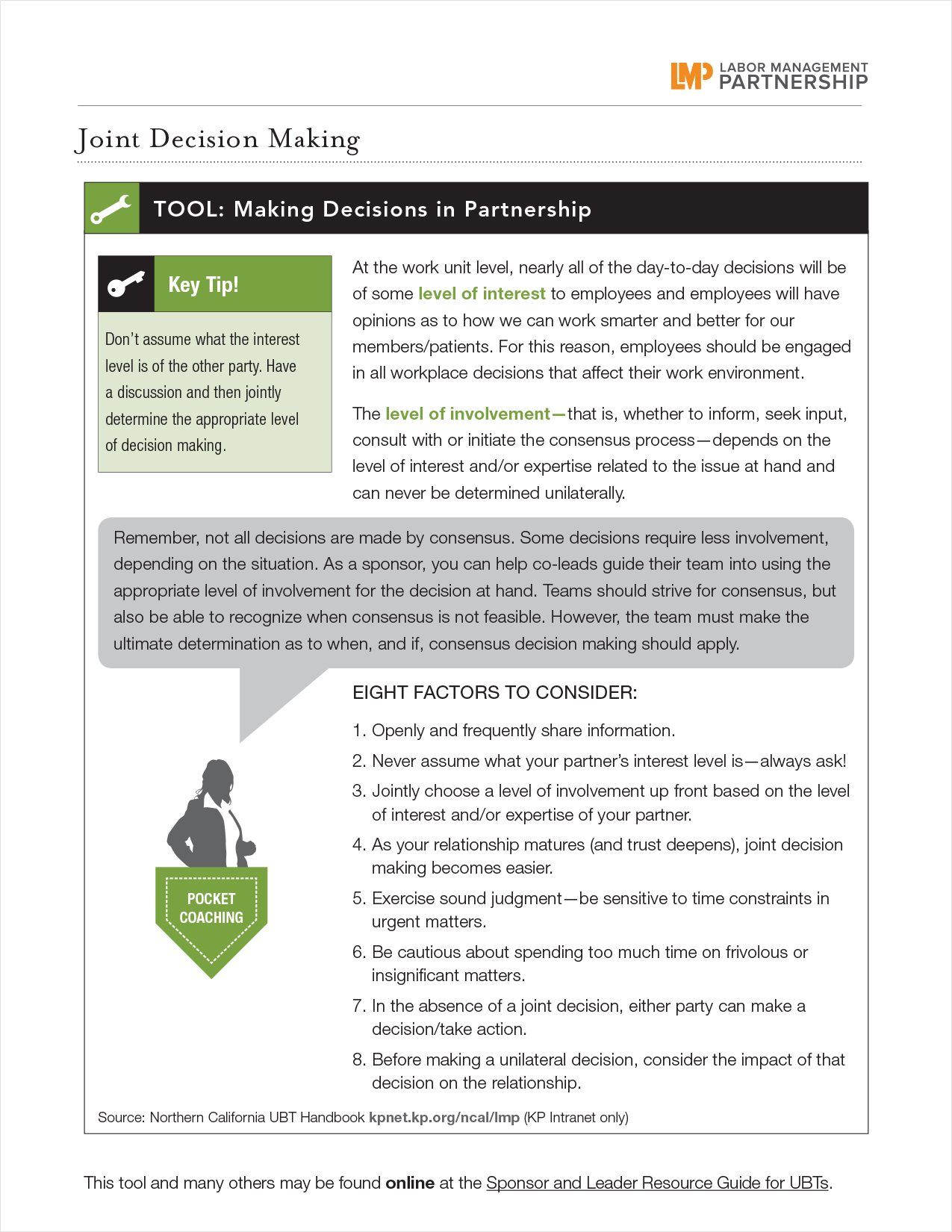
Making Decisions in Partnership
Format:
PDF
Size:
8.5" x 11"
Intended audience:
Frontline managers, workers and physicians
Best used:
Follow these tips to work together in partnership on decisions.
This short animated video explains how to find and use our powerful how-to guides
Does your team want to improve service? Or clinical quality? If you don't know where to start, check out the team-tested practices on the LMP website. This short video shows you how.
Having trouble using the search function? Check out this short video to help you search like a pro!
Need to find a checklist, template or puzzle? Don't know where to start? Check out this short video to find the tools you need on the LMP website with just a few clicks.
Format:
PDF
Size:
8.5" x 11"
Intended audience:
Frontline managers, workers and physicians
Best used:
Follow these tips to work together in partnership on decisions.
Format:
PDF
Size:
8.5" x 11"
Intended audience:
Frontline workers, managers and physicians
Best used:
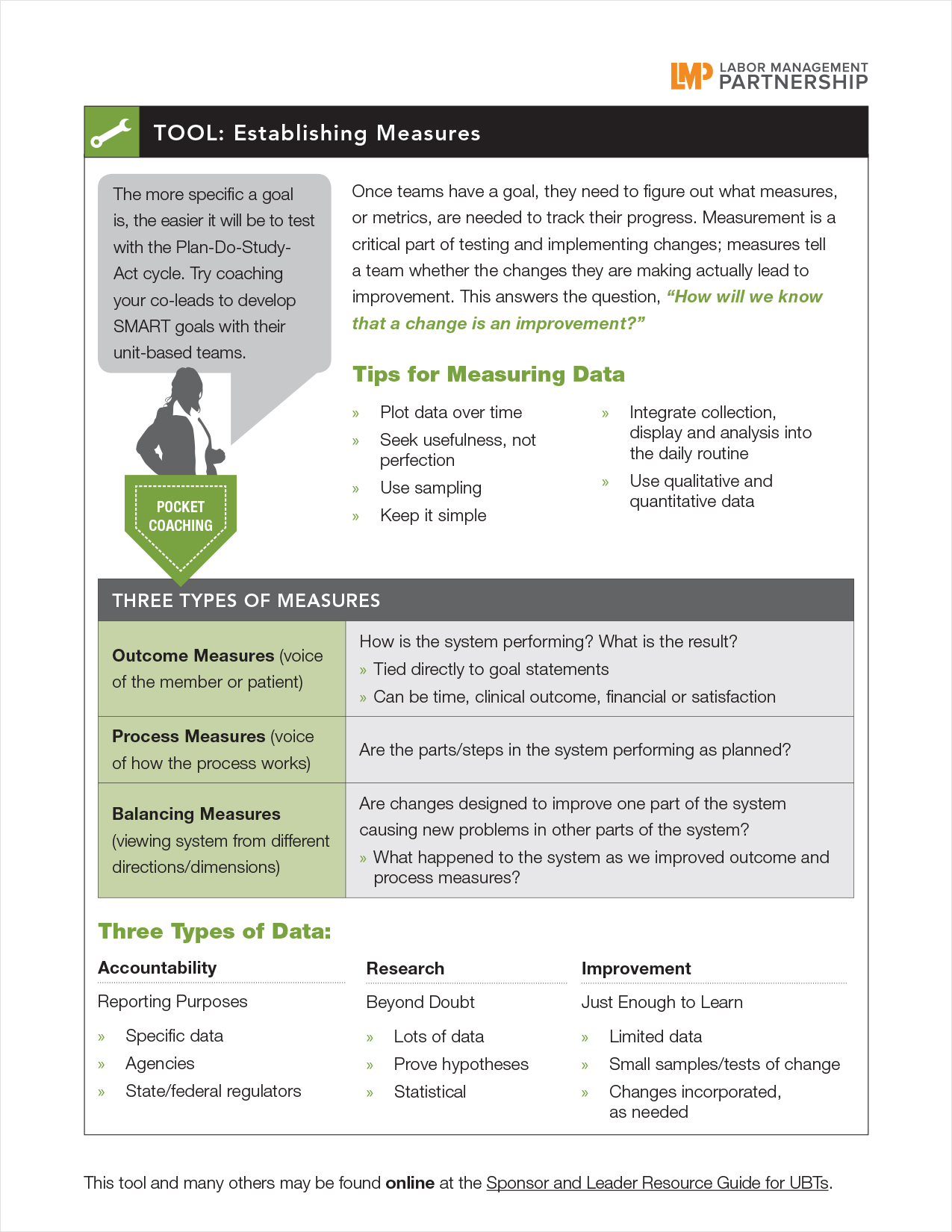
Help your team achieve performance excellence with these tips for establishing measures and measuring data.
Format:
PDF
Size:
8.5" x 11"
Intended audience:
Frontline managers and frontline workers
Best used:
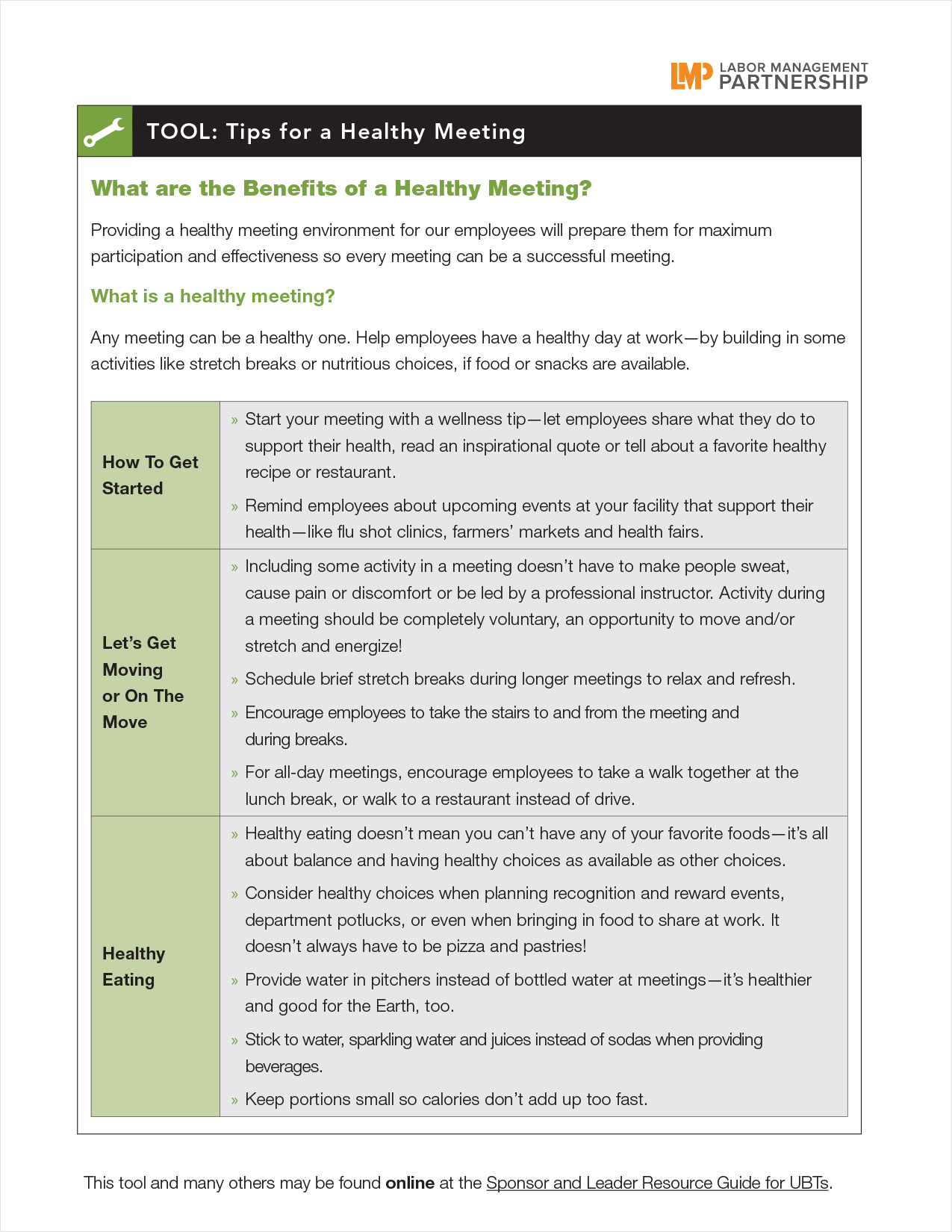
Use these tips to create a healthy meeting environment, providing the foundation for an effective meeting with maximum participation.
Format:
PDF
Size:
8.5" x 11"
Intended audience:
Co-leads
Best used:
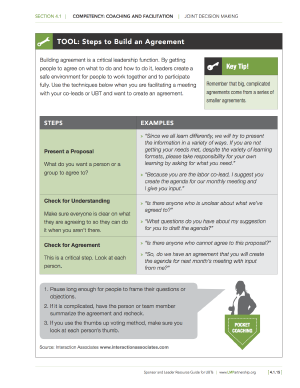
Building agreement is a critical leadership function. This table suggests techniques you can use when you are facilitating a meeting with your co-leads or UBT and want to create an agreement.
Format:
PDF
Size:
8.5" x 11"
Intended audience:
UBT co-leads
Best used:
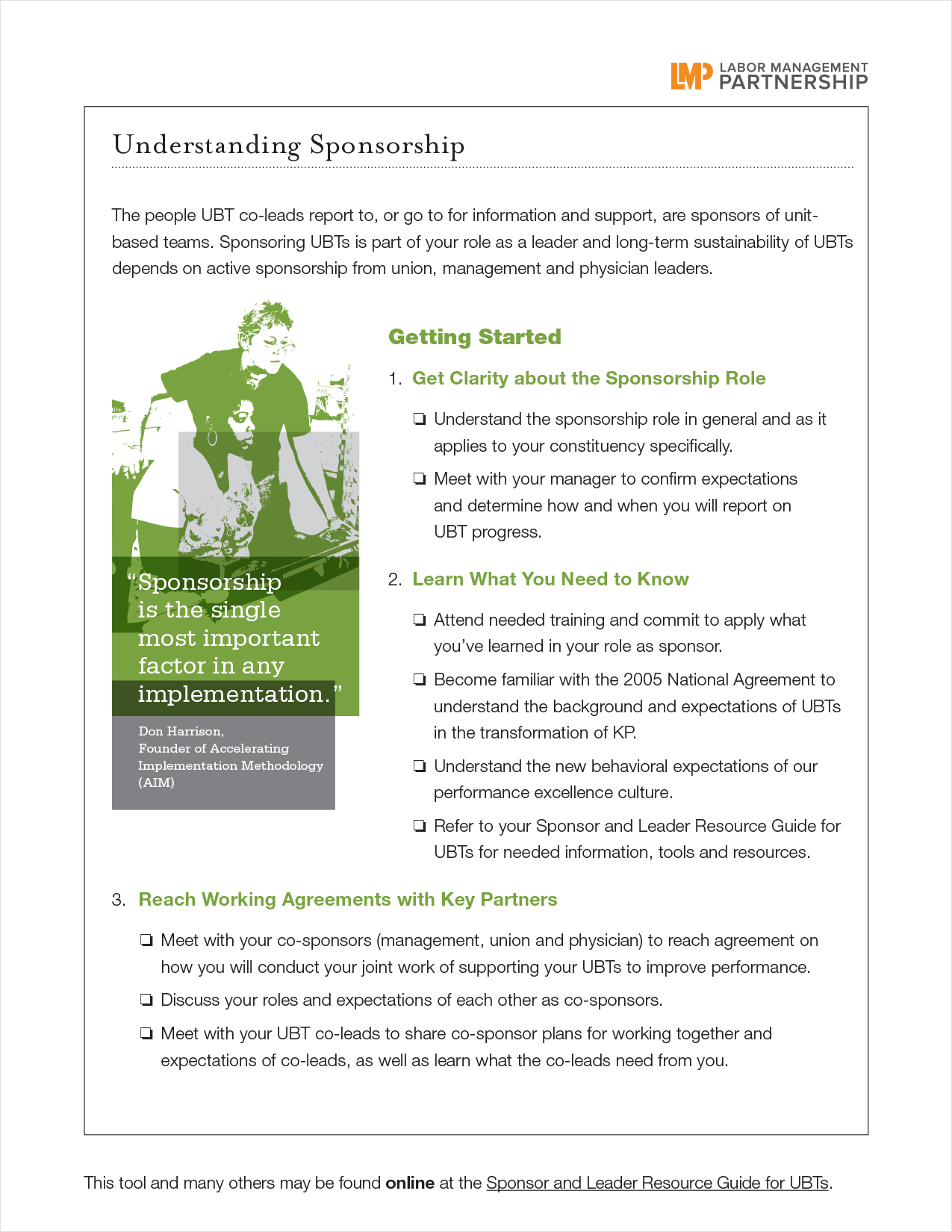
As a checklist for a sponsor in getting started and understanding the role.
Format:
PDF
Size:
8.5" x 11"
Intended audience:
Frontline managers; UBT sponsors and co-leads
Best used:
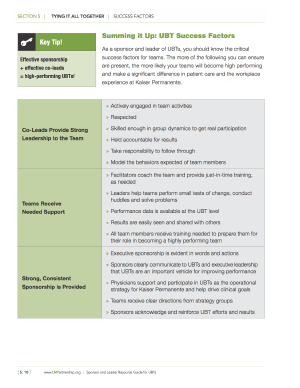
This table offers key tips and summarizes factors that are essential for successful UBTs.
Format:
PDF
Size:
8.5" x 11"
Intended audience:
Managers and leaders
Best used:
This chart defines division of labor between management and leadership, from the beginning through the outcome of projects and changes.
The folks at the Denver Regional Pharmacy found their unit-based team to be a major improvement over the steering committee it replaced.
Team members found the committee to be unwieldy, and felt it largely bred distrust and miscommunication between union and management.
So, they regrouped.
A major problem they had encountered was the time pharmacy technicians wasted researching prescriptions that weren’t properly "batched." Often missing was the required electronic stamp from a pharmacist that tracks and closes the prescription.
Technicians spent roughly 1-4 hours a day per pharmacy tracking down misbatched prescriptions. The team aimed to cut that time by 50 percent.
"The biggest thing is if you view your situation as a failure you'll never succeed," management co-lead Luanne Petricich says. "When something is not working that's where your opportunity is. Don't be afraid to change something if it's not working."
The team modified the way pharmacists attached their electronic signature. That saved technicians hours of research time and freed them to spend more time with patients. Almost immediately the team saw a drop in the number of prescriptions that needed to be researched.
In the two pharmacies where the team instituted new batching practices, they saw a 75 percent drop in the number of prescriptions requiring research. The new protocol was introduced to 20 pharmacies in the region, and 70 percent of those saw similar gains.
This collaborative effort produced positive results as their projects improved customer service and affordability. The new UBT also gained some hard-earned trust.
Since that success, the regional team has become a model and a sponsor for smaller, pharmacy-specific UBTs launched in the region.
"I like the focus on efficiencies and waste because it ends up translating to a better work environment for employees," Petricich says. "Especially with this project, we found the technicians were doing redundant work that did not provide job satisfaction. So taking that away allowed for more time with patients, which is what many would rather be doing."
A unit-based team is a group of frontline employees, managers, physicians and dentists whose work brings them together naturally and who collaborate with one another to improve member and patient care. They are accountable for the performance of their unit and determine the methods and metrics of their performance improvement projects. Those projects line up with the region’s business strategy and with one or more of the points of the Value Compass: best quality, best service, most affordable and best place to work. Team members should always keep their efforts focused on what is best for the patient and the member.
Unit-based teams exist in every department where there is at least one worker who’s represented by the Alliance of Health Care Unions or the Coalition of Kaiser Permanente Unions.
UBTs work on improvement projects related to the four points of the Value Compass: quality, service, affordability and best place to work. They are always geared to creating a topnotch experience for Kaiser Permanente members and patients. Many projects focus on affordability, workplace safety and service. Other areas that teams are working on include prevention and disease management, patient safety and healthy workforce, among others.