Membership Growth

Help Video

How to Find UBT Basics on the LMP Website

Learn how to use the LMP website:

LMP Website Overview

Learn how to use the LMP website:

How to Find How-To Guides

This short animated video explains how to find and use our powerful how-to guides

Learn how to use the LMP website:

How to Find and Use Team-Tested Practices

Does your team want to improve service? Or clinical quality? If you don't know where to start, check out the team-tested practices on the LMP website. This short video shows you how. 

Learn how to use the LMP website:

How to Use the Search Function on the LMP Website

Having trouble using the search function? Check out this short video to help you search like a pro!

Learn how to use the LMP website:

How to Find the Tools on the LMP Website

Need to find a checklist, template or puzzle? Don't know where to start? Check out this short video to find the tools you need on the LMP website with just a few clicks. 

Learn how to use the LMP website:

Teams Collaborate to Ease Growing Workload

Deck: 
Two lab teams found a way to meet increased demand

Story body part 1: 

The Molecular and Cytology Lab unit-based teams in Stapleton, Colorado, were facing a challenging trifecta. Increased membership, changes in guidelines from the Centers for Disease Control and Prevention (CDC) and slow work processes made it tough to quickly process two widely used tests.

Membership in the Colorado region has grown by more than 60,000 members since 2013 in part because of the Affordable Care Act. Total membership in the region is now at its highest ever, with more than 600,000 members. The influx of new members is a strain on the system, and teams are digging in deeply to meet those members’ needs, from the first point of contact in the medical office to the last encounter as they pick up their prescriptions on the way out.

The lab teams are feeling the pressure, too—especially since they also process samples for the Georgia region, which is expected to grow, and they still do some work for facilities in the former Ohio region, which was sold to another health plan last year.

“We knew there would be an increase in the number of tests we would be doing. We also knew that our process was very labor intensive,” says Roxanne Whitesides, the Molecular and Specialty Testing manager. “Already this year, we’ve increased our workload 10 percent because of an increase in membership.”

Preventive care approach

The screens in question are for the human papillomavirus (HPV) and the Papanicolaou (Pap) test. Both detect disease at an early stage when treatment is highly effective, and so are central to Kaiser Permanente’s preventive care approach. As of June this year, the Molecular and Cytology teams—each of which has a role in processing the screens—already had processed 23,300 Pap screens and 16,800 HPV screens.

Meanwhile, CDC guidelines on HPV were revised in recent years and now recommend that women age 30 to 64 have an HPV screening and that girls as young as 11 receive the vaccine. The agency says HPV is the most common sexually transmitted infection in the United States. Some strains can cause cancer, and the CDC says about 21,000 of the HPV-related cancers each year could be prevented by the vaccine.

Because of the changed recommendations, even before the enrollment jump, the labs were seeing an increase in the number of HPV screens they processed. In 2012, the labs processed 650 HPV screens a month. By this spring, the monthly average had more than quadrupled: the average for March, April and May 2014 was 2,800 per month. In May alone, 3,354 samples were processed.

Labor-intensive processes

The final hurdle the teams faced was that their processes were labor intensive, requiring significant hands-on time from the technician. There was frequent back and forth between the Cytology and Molecular departments, which caused delays and interruptions. The complex work processes added to the pressure of the growing workload and caused frustration and tension.

The teams began an intensive study of what other labs were doing, including researching the latest technology. They visited other sites and vendors and decided to go with a cutting-edge Roche instrument. The pathologists—who work closely with the labs—supported getting the new equipment, and the lease was fast-tracked for installation. The instrument was in place within two months.

At that point, the teams set to work to figure out how their processes would change with the new equipment.

Cross-training provides insights

“We trained each other on the new equipment and on the processes within the two departments,” said Luann Martin, a cytology technologist, UFCW Local 7 member and co-lead of the Cytology unit-based team. “I could appreciate things going on in both departments.”

The collaboration between the Molecular and Cytology departments enabled them to improve their work processes and interactions—and ensured that as one problem was fixed, another wasn’t created.

“It’s important to keep talking. People have different expectations and comfort levels,” says Beth Fisher, a medical technologist, UFCW Local 7 member and co-lead of the Molecular UBT. “Be patient with one another,” says Melissa Baca, a cytologist lab assistant, SEIU Local 105 member and union co-lead of the Cytology UBT.

Most important, Fisher says, the new equipment is enabling the teams to meet the growing demand.

“The big payoff is that we're able to process all those HPV samples in less than half the time it used to take, so we've been able to absorb the workload increase with no new staff,” she says. “And we're able to identify the HPV strains that are most linked with cervical cancer as part of the initial screening. That saves money, because we don't have to send out all the positives for additional testing.”

Joint Campaign Makes New Members Feel Welcome

Deck: 
Mid-Atlantic region and union partner to win and keep members in outreach campaign

Story body part 1: 

Close to 5,800 KP members in the Mid-Atlantic States get their Kaiser Permanente coverage through SEIU 32BJ, a regional union representing building service workers. Many of them speak English as their second language. To help this group get the most for their health care dollars, KP and 32BJ kicked off a campaign in April and May to educate and engage new 32BJ union members.

Maria Naranjo, deputy director, SEIU 32BJ Capital Area District, led the campaign with the help of Brenda Muñoz, labor liaison and analyst, KP Office of Labor Management Partnership. The field team included two 32BJ staff members and seven 32BJ members (four were bilingual). Of the seven 32BJ members, six already were KP members who could share their own experiences with KP.

“We want 32BJ members to be champions of health and KP in their workplace—and to do this, they need to understand their plan coverage and how KP works,” says Muñoz.

Team hits the field

The team visited close to 300 worksites and collected more than 1,100 names and phone numbers of members they spoke with. In addition, 32BJ sent 5,000 text messages and KP’s Regional Access Services staff placed more than 2,600 outreach calls to help members choose a physician, make appointments, identify health needs and learn about an upcoming heath fair. The goal was to provide as many touch points as possible by contacting members via mail, phone and in-person visits.

At the end of the campaign, Kaiser Permanente and 32BJ hosted a health fair at the D.C. Convention Center. It was the first time 32BJ partnered with a health plan to host a health fair. More than 100 32BJ members and family members attended and were offered free health screenings for blood pressure, BMI, glucose and total cholesterol.

Attendees also had a chance to meet with a KP physician, enroll in My Health Manager, select a primary care physician, make future appointments, ask questions and learn more about the KP system. Additional resources at the fair included workplace safety tips, healthy lunch tips and answers on health plan benefit questions. SEIU 32BJ was impressed with the health fair, which got positive feedback from attendees.

Creating value for members

Throughout the campaign, the team learned a lot about KP’s SEIU 32BJ members and their needs. The team identified several areas for improvement, and it is determining how to continue to engage these members through workshops, further education, health fairs and promotion of preventive health.

“SEIU 32BJ is a potential growth area,” Muñoz says. “In order to retain these members and encourage growth, we must provide the resources they need to show them that KP is not only committed to providing them with high-quality health care, but that we can provide culturally competent care.”

An earlier version of this story appeared in Inside KP Mid-Atlantic States, July 2, 2014.

TOOLS

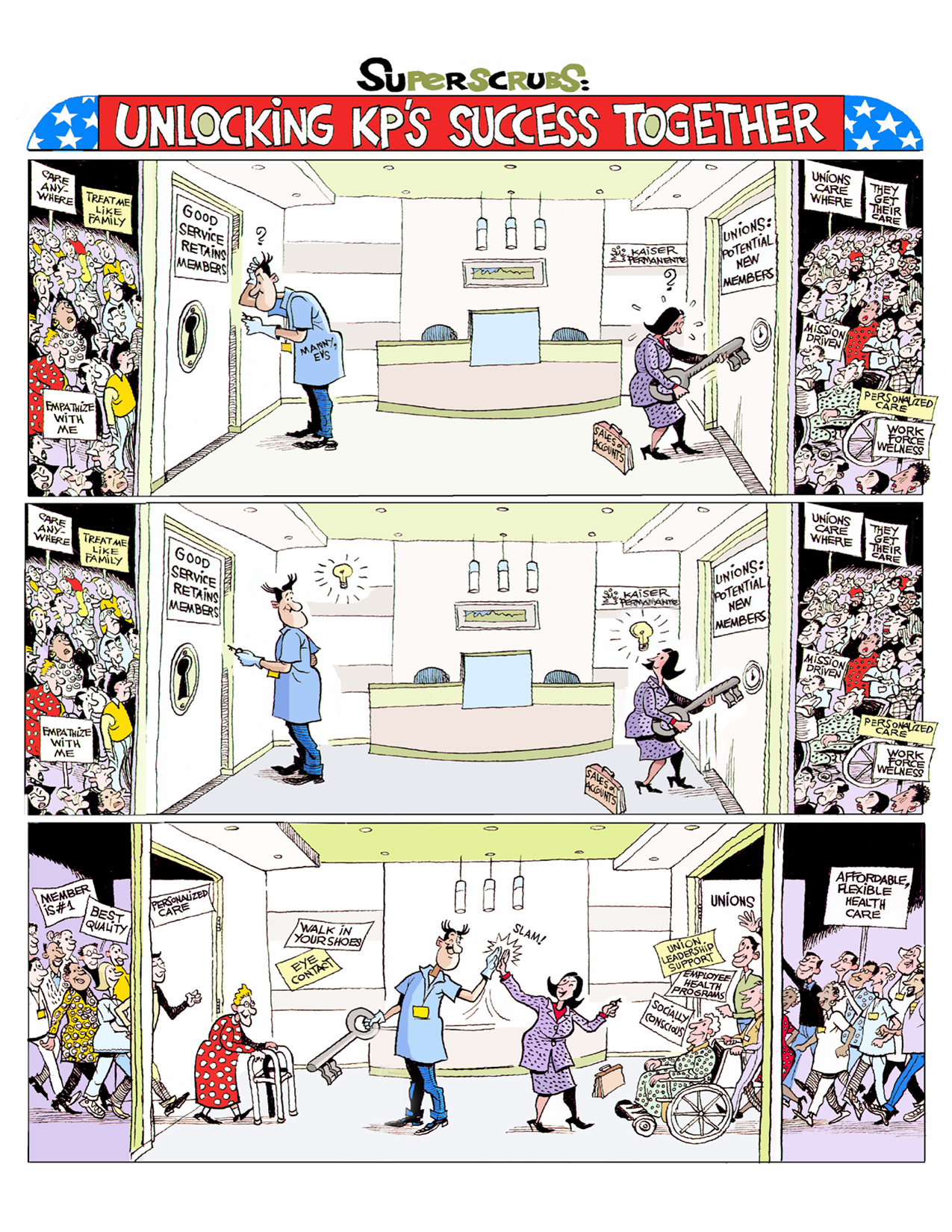
SuperScrubs: Unlocking KP's Success Together

Format:
PDF (color or black and white)

Size:
8.5" x 11"

Intended audience:
Anyone with a sense of humor

Best used:
This full-page comic features two people working together to unlock the doors to KP's success. Enjoy, and be reminded that when we work together, we all contribute to KP's success.

Related tools:

TOOLS

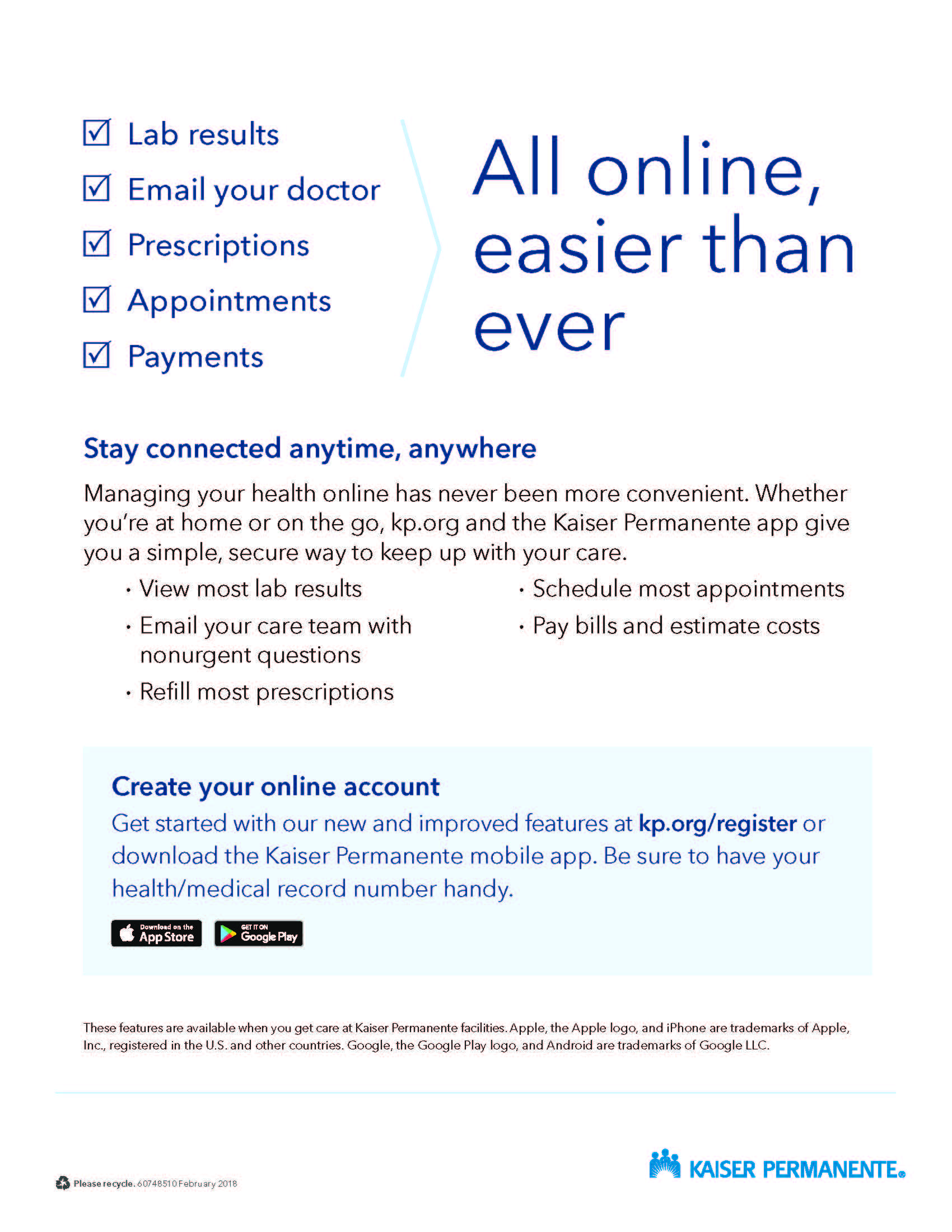
How to Sign Up for KP.org

Format:
PDF

Size:
8.5" x 11"

Intended audience:
Frontline teams working to increase their members' and patients' use of kp.org

Best used:
This tipsheet gives simple steps to help members and patients sign up for and get the benefits of using kp.org.


Related tools:

TOOLS

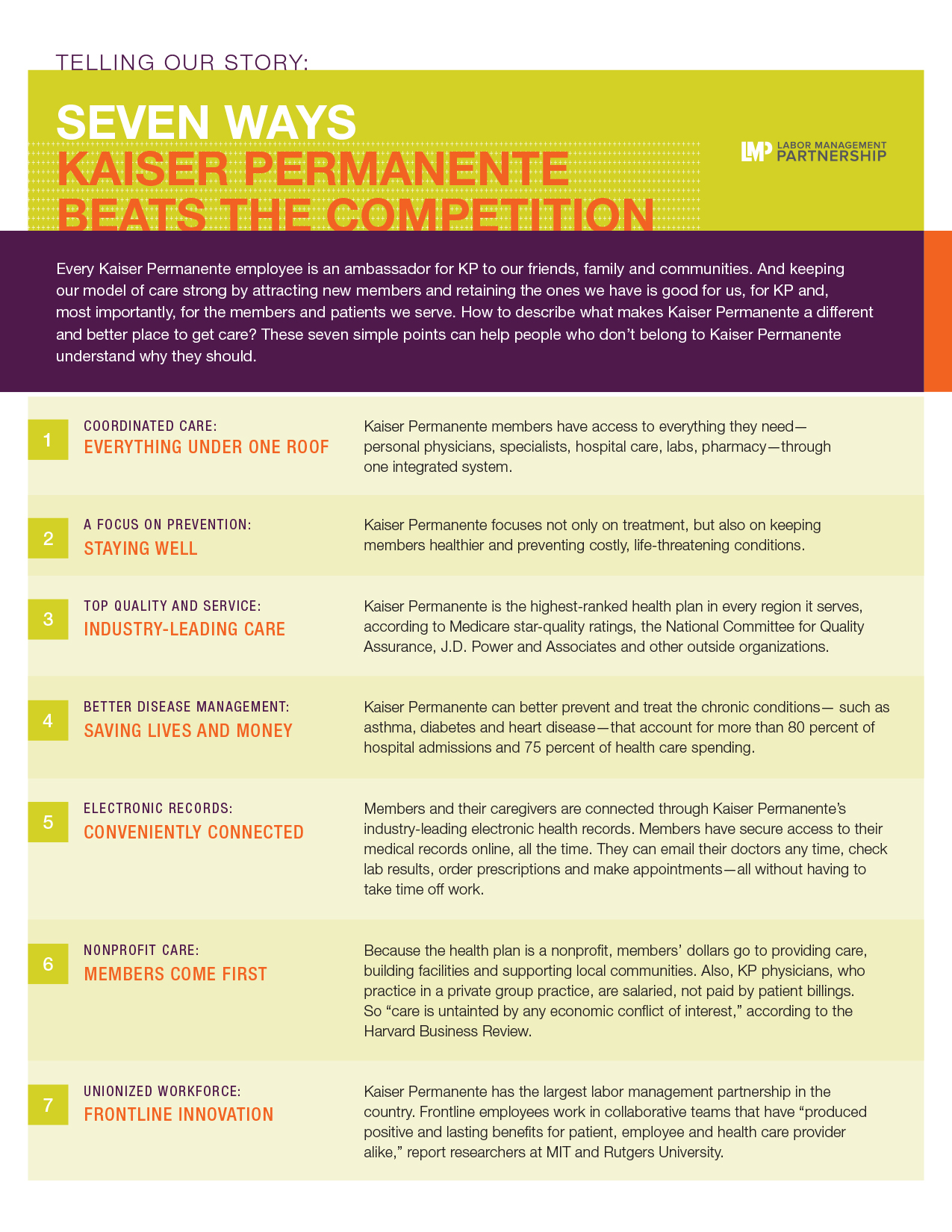
Telling Our Story

Format:
PDF

Size:
8.5" x 11"

Intended audience:
Frontline employees and teams

Best used:
This one-page tipsheet with seven short talking points describes KP's advantages as a health plan. Use to understand how Kaiser Permanente is different and better than other health plans, and to encourge non-members to consider joining KP.

Related tools:

TOOLS

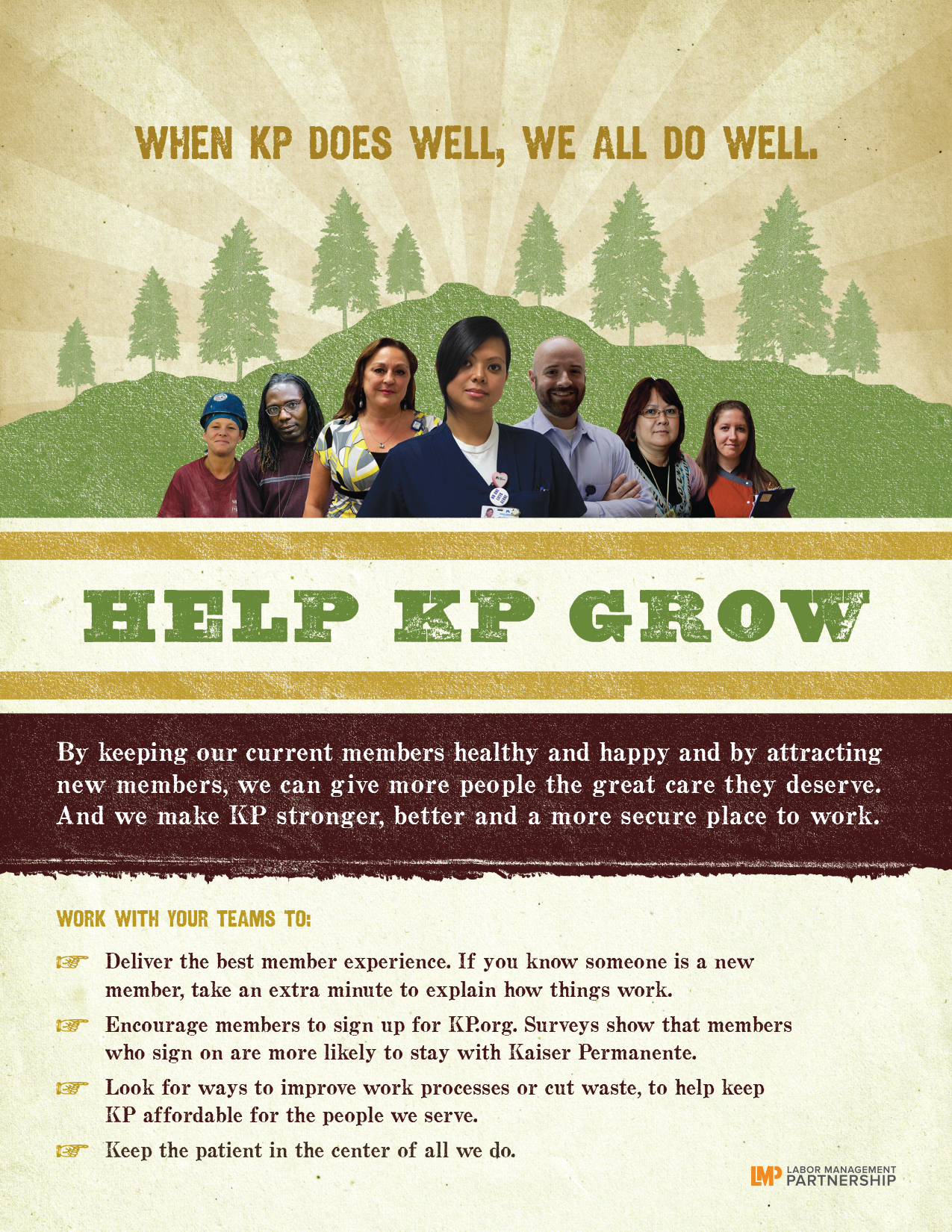
Poster: When KP Does Well, We All Do Well

Format:
PDF (color and black and white)

Size:
8.5" x 11"

Intended audience:
F
rontline employees, managers, and physicians

Best used:
This poster reminds us that October is Open Enrollment time, and offers ways in which teams can help KP retain members and grow. Place on bulletin boards in break rooms and other staff area.

Related tools:

TOOLS

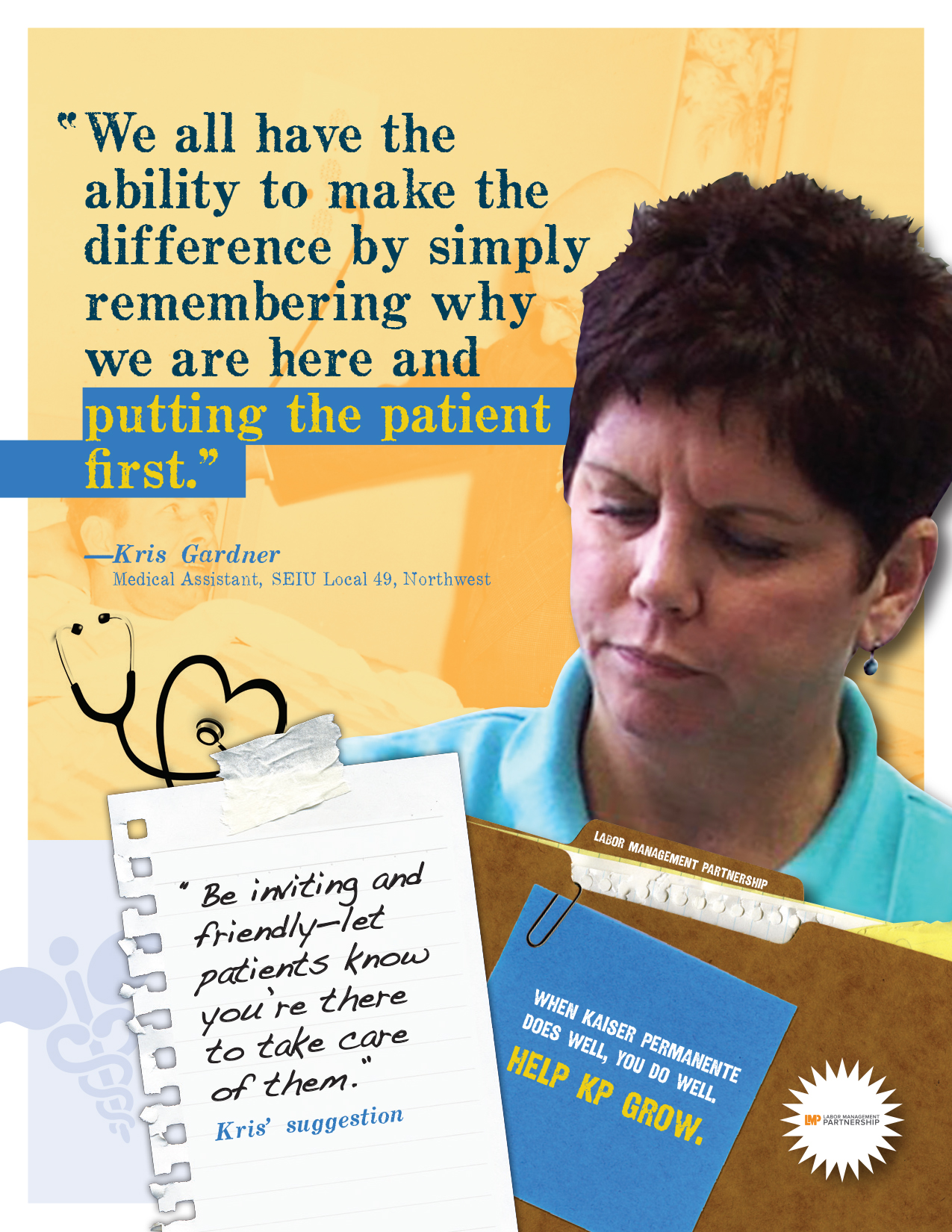
Poster: Put Patients First, Help KP Grow

Format:
PDF (color and black and white)

Size:
8.5” x 11”

Intended audience:
Union coalition-represented employees and frontline managers

Best used:
Use this poster, featuring medical assistant Kris Gardner sharing some patient interaction tips, on bulletin boards, in break rooms and other staff areas.

Related tools:

Pages

Subscribe to RSS - Membership Growth