Affordability

Help Video

How to Find UBT Basics on the LMP Website

Learn how to use the LMP website:

LMP Website Overview

Learn how to use the LMP website:

How to Find How-To Guides

This short animated video explains how to find and use our powerful how-to guides

Learn how to use the LMP website:

How to Find and Use Team-Tested Practices

Does your team want to improve service? Or clinical quality? If you don't know where to start, check out the team-tested practices on the LMP website. This short video shows you how. 

Learn how to use the LMP website:

How to Use the Search Function on the LMP Website

Having trouble using the search function? Check out this short video to help you search like a pro!

Learn how to use the LMP website:

How to Find the Tools on the LMP Website

Need to find a checklist, template or puzzle? Don't know where to start? Check out this short video to find the tools you need on the LMP website with just a few clicks. 

Learn how to use the LMP website:

Wasted Linens Are an Unnecessary Expense

Deck: 
Team cuts annual costs by almost 7 percent

For a nurse on a hospital ward, it might seem quick and easy to grab the nearest sheet to mop up a spill or grab a huge stack of blankets to put in a patient’s room.

But for the Materials Management department at Panorama City Medical Center, that can be really wasteful.

And they should know. They’re the team responsible for purchasing and cleaning linens, and keeping patients comfortable.

With savings in mind, the materials UBT looked to educate other hospital staff about the true costs of buying and washing linens.

Managers and union members worked together to create a storyboard featuring photos of bed sheets used as a tablecloth at a barbeque, and price lists of supplies and laundering charges. And because the team piloted its effort in Maternal Child Health departments, it also included pictures of babies.

As the materials staff worked with the other teams, the storyboard was a big confidence booster to those who were not public speakers.

“At first I was really nervous,” says Sandra Hernandez, the team’s labor co-lead. “But then I saw people I knew in the room and that put me at ease.”

The team also reviewed linen usage and stocking levels with departments.

And their efforts paid off as they reduced the overall annual cost of linen in the Maternal Child Health department by 6.8 percent, more than three times the original goal.

They also were able to increase customer satisfaction scores in a year from 48 to 65 percent from internal clients such as inpatient units at the hospital,.

“It is important to be prepared with the data,” says management co-lead Steve Spickler. “But, you need to tell a story in addition to the charts. That’s how the UBTs make the connection between their contribution and the financial success of the organization.”
For more about this team's work to share with your team and spark performance improvement ideas, download a poster or powerpoint.

TOOLS

Powerpoint: X Marks the Spot

Format:
PPT

Size:
1 Slide

Intended audience:
LMP staff, UBT consultants, improvement advisers

Best used:
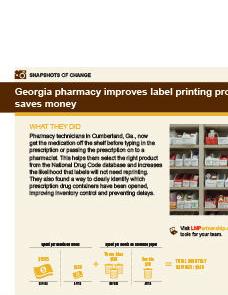
This PowerPoint slide highlights a pharmacy that reduced waste and improved service. Use in presentations to show some of the methods used and the measurable results being achieved by unit-based teams across Kaiser Permanente.

Related tools:

Behind-the-Scenes Service

Story body part 1: 

In 2011, the Medical Records unit-based team in the Northwest received 1,222,361 pages of outside records that required indexing into patients’ electronic medical records—a staggering 725,000 more pages than it received in 2010.

Yet team members met and mastered the challenges facing them, whittling down an enormous backlog and reducing the turnaround time for processing from 62 days in December 2010 to three days by December 2011—benefiting both their internal customers and KP’s members and patients. And they’re sustaining that success.

The steady increase had been debilitating. Overtime hours went through the roof, with more than 2,450 hours logged in 2010. The 37 team members work 24 hours a day, seven days a week and have seven different work classifications. Staff members were worn out. Piles of paperwork were stacked high, waiting for processing. Morale was at an all-time low.

The case illustrates vividly that service is not just a bedside issue at Kaiser Permanente. For a variety of reasons, many KP members see outside providers—and when those providers submit paper or electronic records with the patient’s medical information to Kaiser Permanente, the records have to get indexed into KP HealthConnect. If there’s a delay, the patient’s regular physician may be missing important information the next time the member is seen at KP.

“When the clinician needs medical information on their patients in order to treat their current medical condition, we’re able to provide updated and accurate records,” says the team’s union co-lead, Kathleen Boland, a data quality clerk and SEIU Local 49 member. And, she notes, members aren’t having to repeat critical tests and procedures, saving them time and money.

Things started to change when, through unit-based team training, team members learned such skills as process mapping and how to understand data. They created SMART goals (specific, measurable, attainable, realistic/relevant, time-bound), started huddling and developed a greater understanding of roles and responsibilities.

The team receives more than 700 different types of documents, so variation was rampant. Team members developed cheat sheets to standardize how documents should be prepped for indexing and to get everyone to use the same process for each task. They also cross-trained and helped each other out when someone was on vacation or ill.

“In the beginning,” says Bruce Corkum, RN, a UBT resource team specialist, “they didn’t share the work. Then they started understanding how they could help each other work toward the same goal.”

Not only did the backlog disappear, but the need for overtime is nonexistent now, they’ve improved attendance and “morale has improved,” says Burgandy Muzzy, a health records clerk and member of SEIU Local 49. People are happy to be at work.

“People are talking about us in a positive way now,” says manager Debbie Lang, “instead of as ‘those people who lose everything.’ ”

TOOLS

10 Essential Tips for Copay Collection

Format:
PDF

Size:
8.5" x 11"

Intended audience:
Unit-based team co-leads and members

Best used:
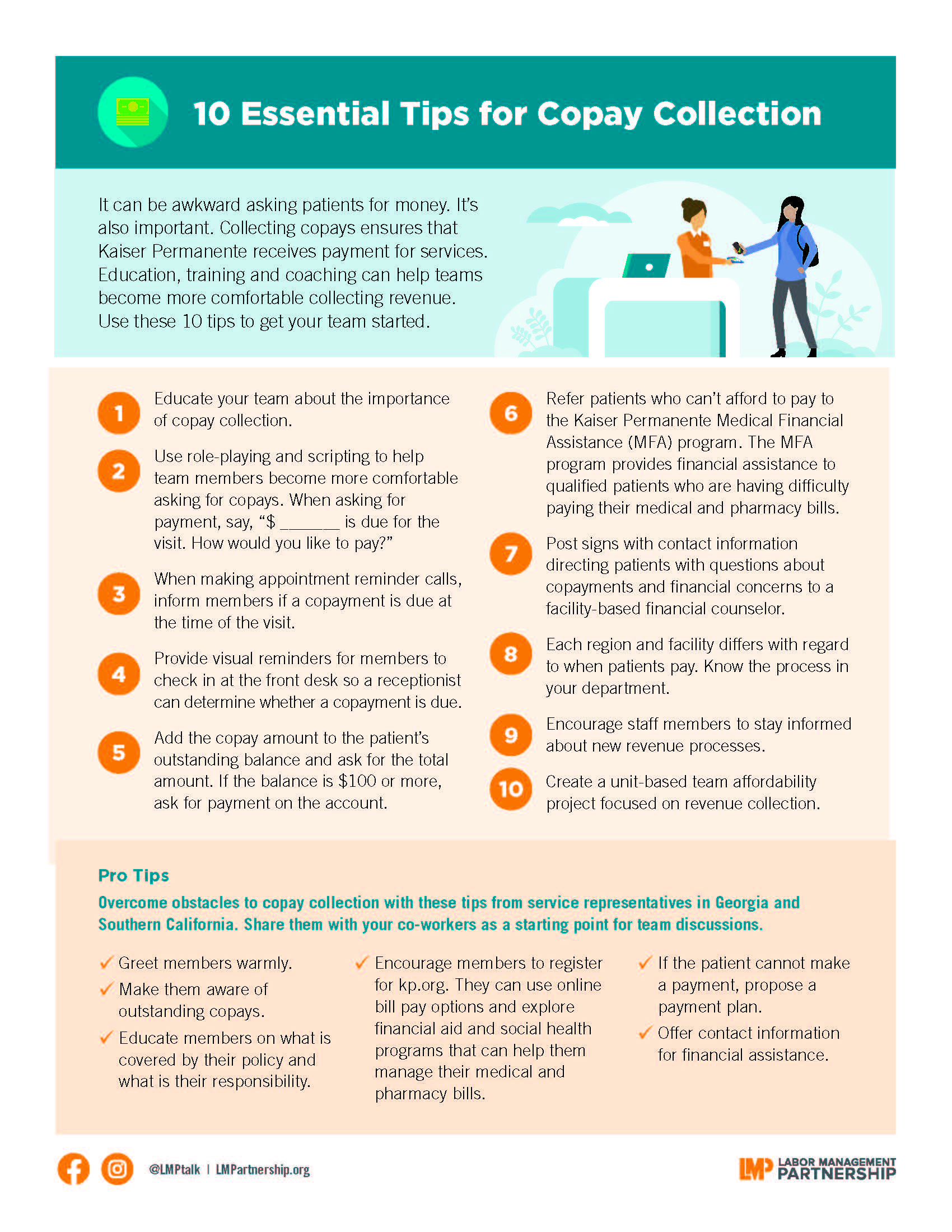
Share tips to increase copayment collection, generate revenue and increase affordability.

Related story: How Anaheim Admitting Team Increased Copay Collection


Related tools:

TOOLS

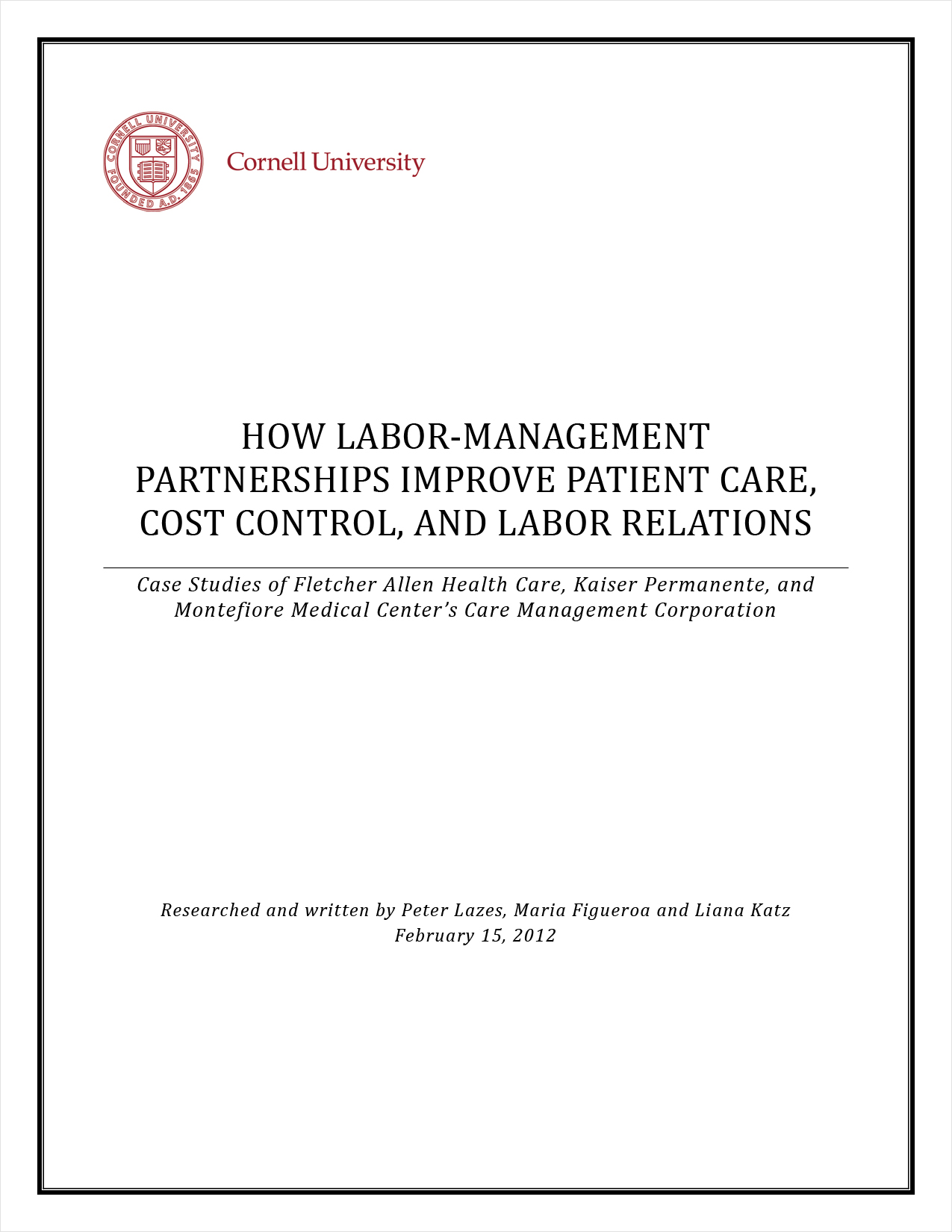
Case Study of Partnership Success

Format:
PDF

Size:
Five pages, 8.5" x 11" 

Intended audience:
Frontline teams, managers, senior leaders and physicians, and health care leaders and policy makers

Best used:
Share this Cornell study with teams, colleagues and all parties interested in new approaches to health care delivery and workplace effectiveness—and in learning about the benefits of labor-management partnerships.


Related tools:

TOOLS

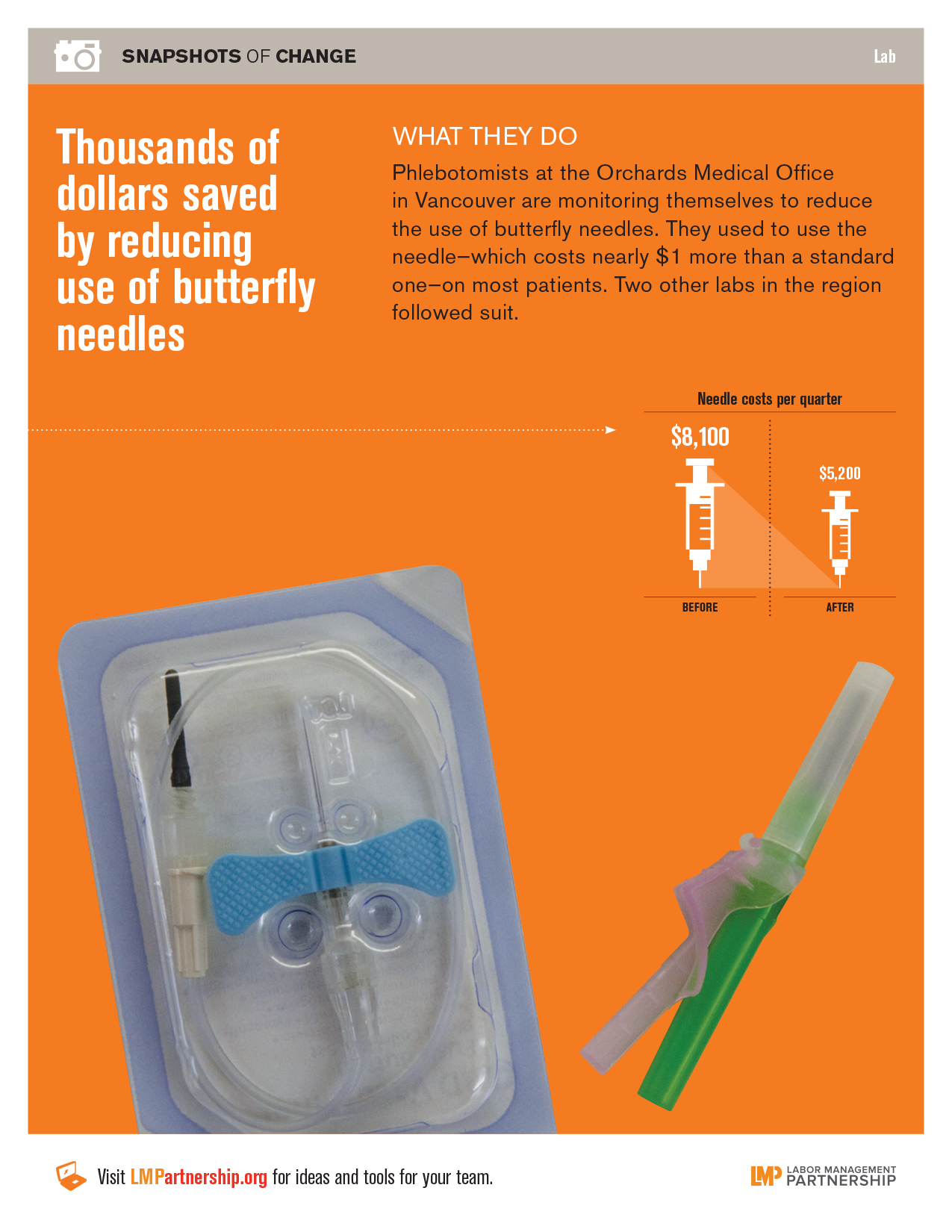
Poster: Saving Money One Needle at a Time

Format:
PDF

Size:
8.5" x 11"

Intended audience:
Frontline employees, managers and physicians

Best used:
Share the story of this lab team that saved thousands by reducing the use of the butterfly needle on bulletin boards, in break rooms and in other staff areas.


Related tools:

Better Monitoring Fast-Tracks Medi-Cal Payments

Deck: 
Attention to detail improves the billing process

The Business Office at the Redwood City Medical Center in Northern California was letting some of their bills slip by.

Specifically those billed to Medi-Cal and the Northern California region asked facility business offices to improve the turnaround time for filing those treatment authorization requests.

They wanted to improve the reimbursement rate for care provided to Medi-Cal patients because that initiated payment to Kaiser Permanente. So, the region asked facilities to file the authorizations within five days from the day a Medi-Cal patient was discharged.

But apart from the one-year time limit on billing, a lot of business departments didn’t monitor the number of days it took to file those requests. Sometimes it might take 30 days, other times perhaps just two days. They needed a consistent turnaround time. 

“A dollar devalues the longer it’s out there,” says Pattie Murphy-Kracht, director of the admitting and business office. “So an outstanding bill loses its value the longer it’s unpaid.”

The Redwood City team decided to monitor the electronic work queue that tracks patient billing to look for Medi-Cal patients. They also monitored the electronic list of Medi-Cal hospital patients, so the team could anticipate their discharge.

In two months, the number of days to file a treatment authorization request dropped from 21 to two days. 

The team said being open to change was a big reason for their success.

“We’re good at trying different ways of doing things,” union co-lead Jessica Garcia says. “Change isn’t always easy, but we’re not stuck on one way.” 

Hawaii: Trash Talk Turns a Center Green

Story body part 1: 

The Moanalua Medical Center in Honolulu is saving the planet, one unit-based team at a time.

The Ambulatory Surgery Recovery UBT started collecting small bags of recyclables on its own in March. But team members resorted to some “trash talking,” and now the entire medical center collects about 30 pounds of recyclables each week.

“The original goal was to help our aina (land) thrive,” says Avis Yasumura, RN, the team’s union co-lead and member of the Hawaii Nurses Association, OPEIU Local 50. “Being on an island, there are limited space and resources.”

Methods of spread: A facility UBT fair, a UBT newsletter, PowerPoint presentations and bulletin board posters inspire others and deliver ideas for getting started.

Effective practice: Medical supplies that used to be trash are now recycled, helping to save the planet while saving Kaiser Permanente money.

The region estimates that since October 2010, the recycling has diverted 7.1 tons from the landfill and saved several hundred dollars in recycling fees.

The ASR team started by identifying items on its unit that a local vendor was willing to collect and recycle: irrigation bags, wrappers for intravenous tubing and operating room “peel packs” (sterile wraps for drapes, instruments, gowns and gloves). The team used tests of change to successfully gather and segregate the items.

ASR shared its effective practices in several ways, including:

  • a PowerPoint presentation on products that can be recycled
  • “Going Green” editions of its UBT newsletter and fliers with pictures of recyclables
  • helping other units order blue recycle containers and arranging for pick up with the EVS department

The team also promoted the project at Hawaii’s first UBT fair, with a colorful storyboard display, complete with examples of recyclable products.

“It was the talk of the UBT fair,” says ASR co-lead Janet Lundberg, nurse manager of procedural sedation. “This recognition inspires all UBTs to take risks.”

More than 10 teams at the 300-bed center are recycling now.

Where did the ASR unit get the recycling bug in the first place? Carolyn Sandison, an HNA nurse, was inspired by an LMP bulletin board poster in her break room about the blue-wrap recycling project at Sand Canyon Surgicenter in Southern California.

TOOLS

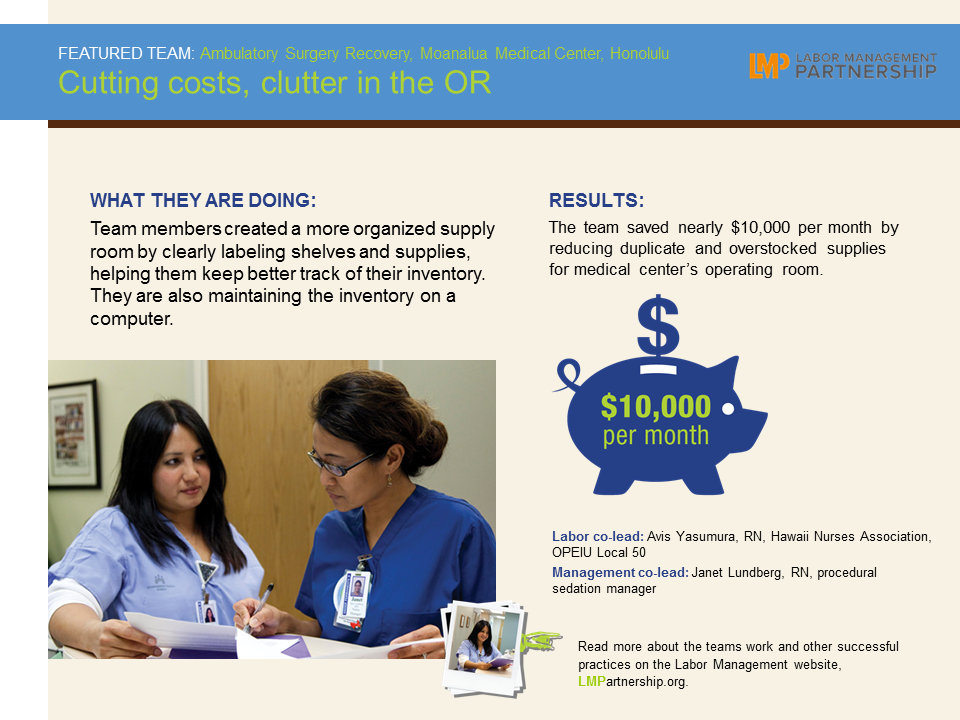
Hawaii UBT Cuts Costs, Clutter

Format:
PowerPoint slide

Size:
8.5" x 11"

Intended audience:
Frontline teams, managers, sponsors, physicians

Best used:
This one-page slide shows how an Ambulatory surgery recovery team in Hawaii saved nearly $10,000 per month by reducing duplicate and overstocked supplies in the Moanalua Medical Center operating room. Include in meetings or presentations as an example of UBT performance improvement.

Related tools:

TOOLS

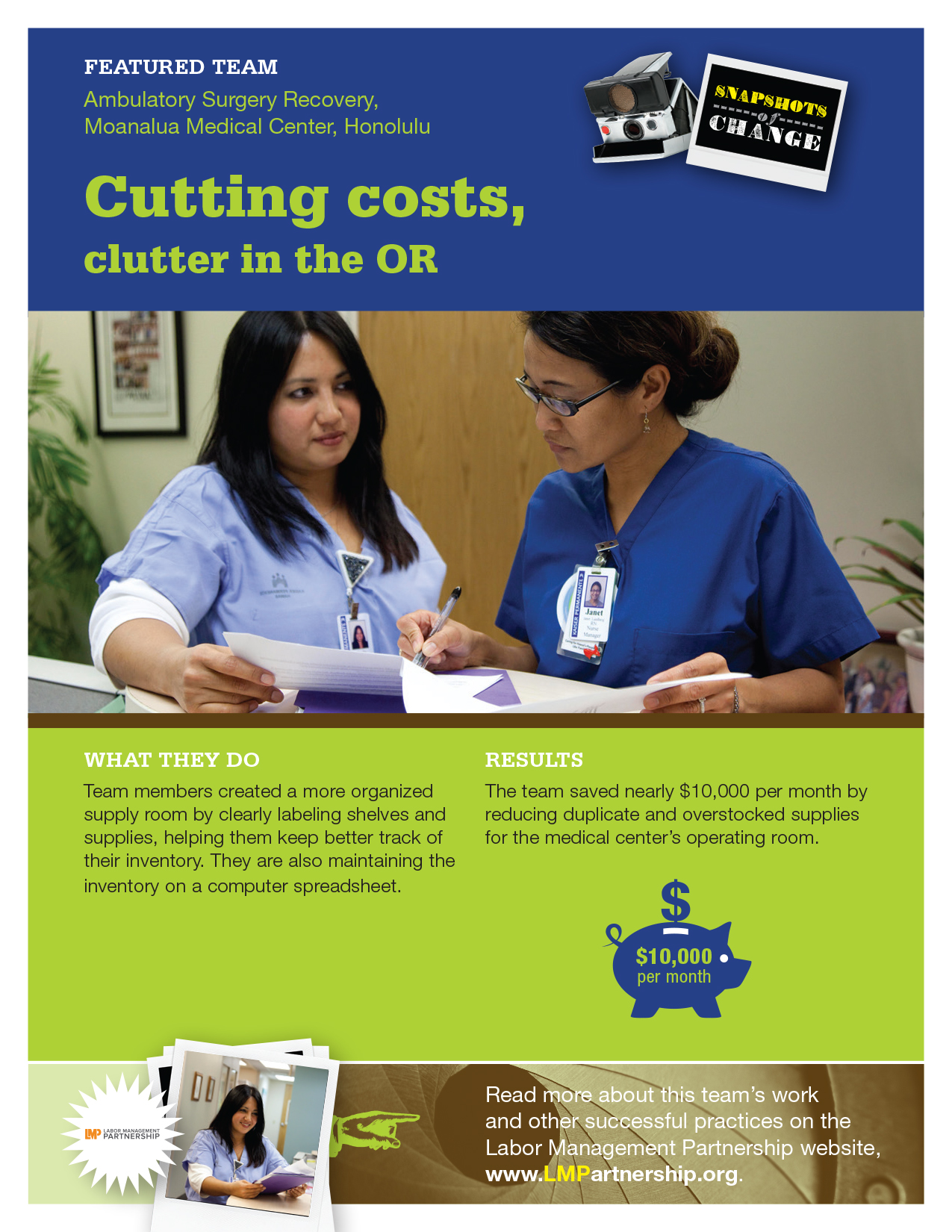
Poster: Cutting Costs, Clutter in the OR

Format:
PDF

Size:
8.5" x 11"

Intended audience:
Frontline employees, managers and physicians

Best used:
Post on bulletin boards, in break rooms and other staff areasto highlight the work of a unit-based team that saved nearly $10,000 a month by reorganizing its supply room.

Related tools:

Pages

Subscribe to RSS - Affordability