Affordability

Help Video

How to Find UBT Basics on the LMP Website

Learn how to use the LMP website:

LMP Website Overview

Learn how to use the LMP website:

How to Find How-To Guides

This short animated video explains how to find and use our powerful how-to guides

Learn how to use the LMP website:

How to Find and Use Team-Tested Practices

Does your team want to improve service? Or clinical quality? If you don't know where to start, check out the team-tested practices on the LMP website. This short video shows you how. 

Learn how to use the LMP website:

How to Use the Search Function on the LMP Website

Having trouble using the search function? Check out this short video to help you search like a pro!

Learn how to use the LMP website:

How to Find the Tools on the LMP Website

Need to find a checklist, template or puzzle? Don't know where to start? Check out this short video to find the tools you need on the LMP website with just a few clicks. 

Learn how to use the LMP website:

TOOLS

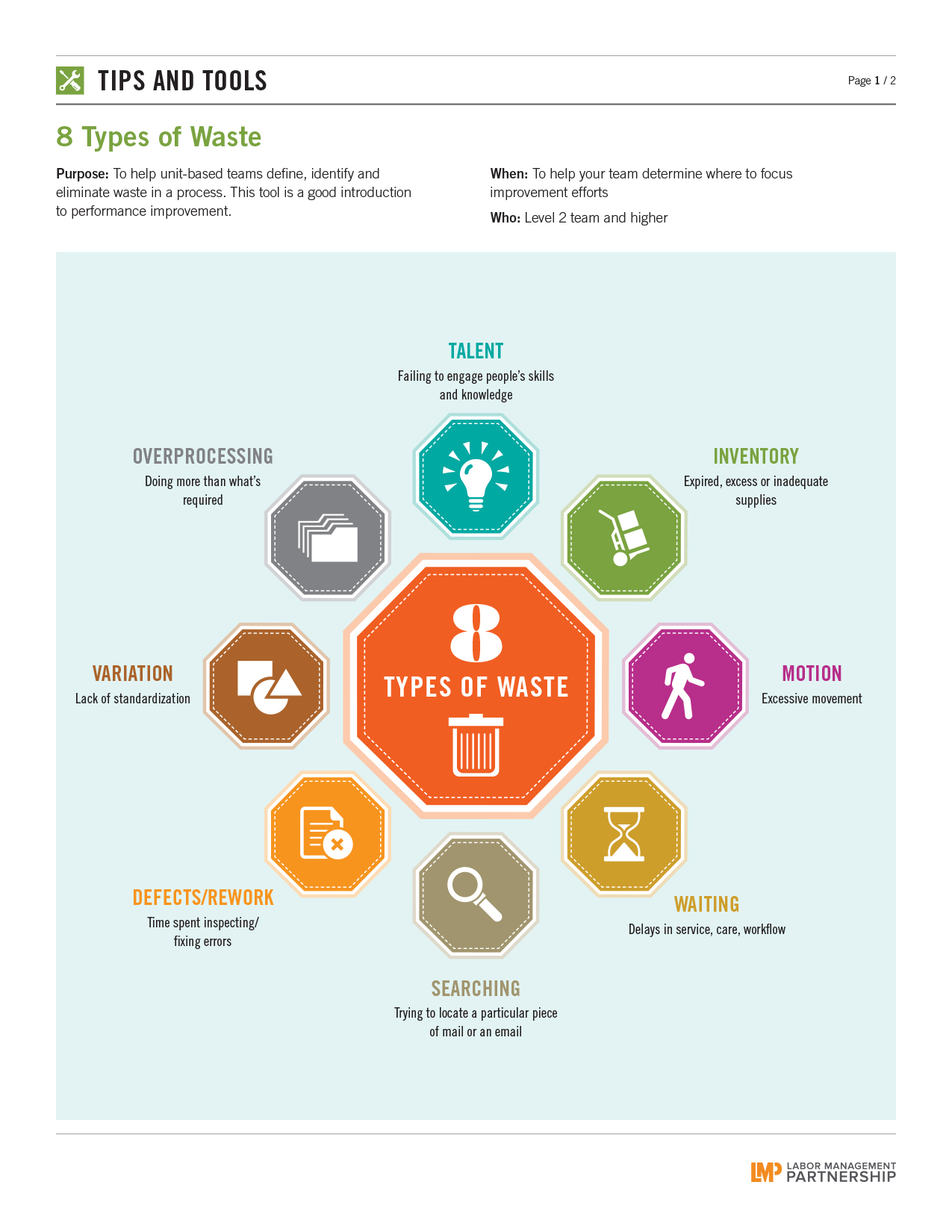
Waste Walk: 8 Types of Waste

Format:
PDF (color and black and white)

Size:
8.5” x 11” (two-sided)

Intended audience:
Level 2 and higher unit-based teams

Best used: Download and share this introduction to performance improvement with team members as a guide to the common types of wasted resources that diminish care and service. 

Use with:

Related tools:

Reduce Outsourcing and Bring Courier Jobs in House

Deck: 
UBT saves big after objecting to outside contractors

Story body part 1: 

The Colorado Couriers team is busy with 41 Kaiser Permanente facilities, more than 400 non-KP locations, and about 180,000 pickups and deliveries a year.

When it comes to outside contractors, the SEIU Local 105 contract requires that Human Resources provide the union with specific information about outsourcing, including who is doing the work, the affected job classification, the number of hours involved and what facilities were impacted.

That information wasn’t being provided, so Dominic Jones, a courier driver and Local 105 steward, objected.

“I saw that we were contracting out regular courier service, and it didn’t make any sense,” Jones says. “I knew that it was costing the company more money.”

As a result, the unit-based team took a close look at the department’s processes.

Team members collaborated with couriers in Northern California, who had done similar work, and discovered they could hire another employee, improve routes, reduce use of outside contractors—and still save money.

First steps were to work with internal customers to assess their needs, then reconfigure and bring routes in-house that had been contracted out.

They hired an additional employee to reduce overtime and outside courier costs on the weekends, and purchased new technology for central dispatching that enabled better tracking of pickups and deliveries.

Drivers got smartphones to receive information in real time, which made it possible to monitor drivers’ locations using GPS and find the closest driver for an unscheduled pickup.

In addition to new technology, the team worked with the region’s labs to ensure pickup times met the lab workflow.

“I am very supportive of the work our unit-based team has accomplished,” says Jones, who feels his concerns were addressed by the changes. “We are still outsourcing stat work that we can’t get to, but we are in the process of hiring on-call drivers, which will ease that burden.”

The team exceeded its stretch goal and saved an average of $25,577 a month, a cost reduction of 48.2 percent. By the end of 2013, the team’s effort had resulted in a cost savings of $145,165, and projected a savings of more than $375,000 for the following year.

“We had many painful conversations about how to make this work,” says manager Terry Wagner. “But the team’s input was invaluable. Each individual has been a contributor at some point.”

For more about this team's work to share with your team and spark performance improvement ideas, download a poster.


TOOLS

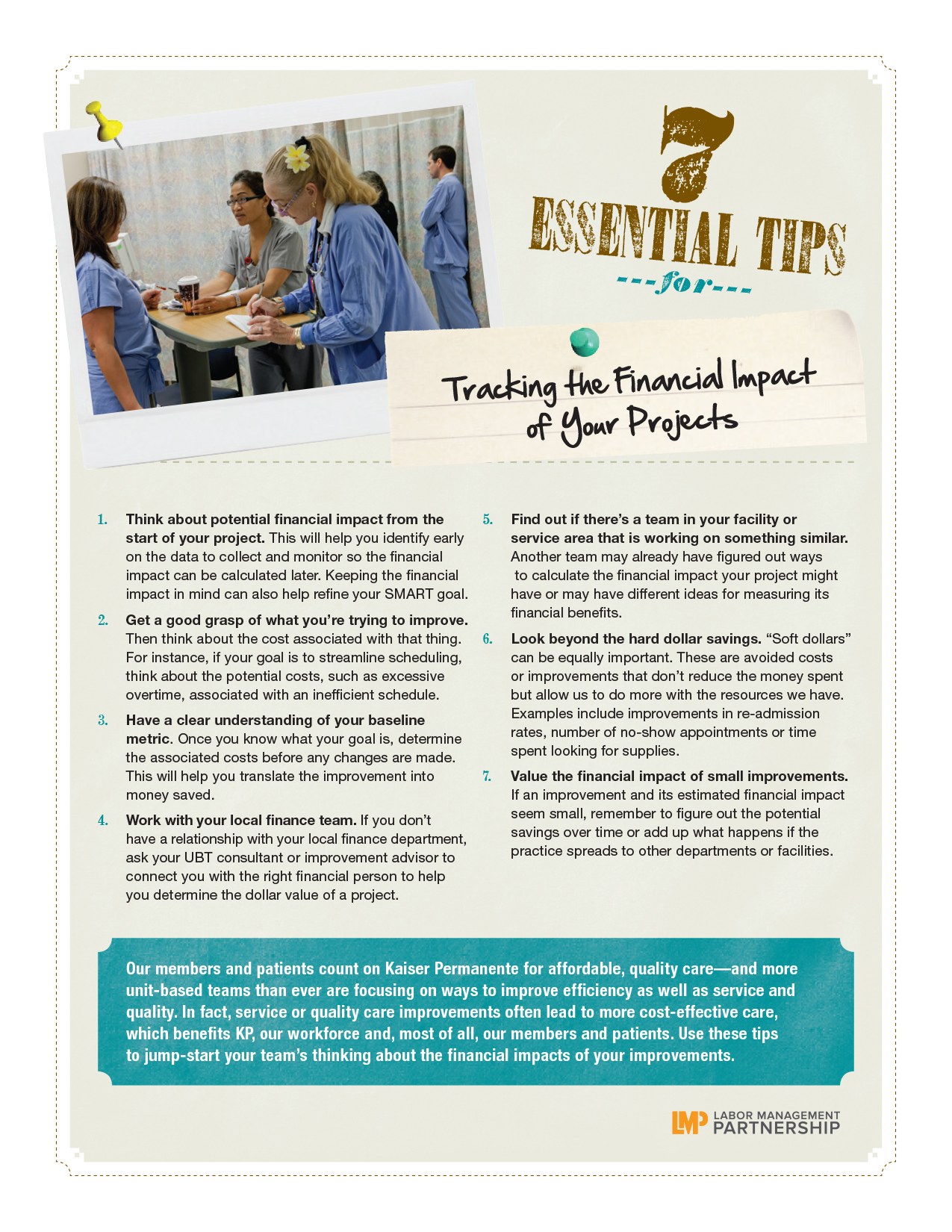
7 Tips for Tracking Savings From Team Projects

Format:
PDF

Size:
8.5" x 11"

Intended audience:
Unit-based team co-leads and members

Best used:
Post this tip sheet on a team bulletin board, or use it as a starting point to figure out how to determine the savings and/or cost-avoidance of performance improvement efforts.

Related tools:

Change in Tubing Saves $25,000

Deck: 
Oncology UBT cuts costs with different IV set-up

Story body part 1: 

It started with a question from Oncology RN Tom Fought, a member of the Oregon Federation of Nurses and Health Professionals (OFNHP), at the Interstate Medical Office in the Northwest.

Why, he wondered, was primary tubing used for low-reaction drugs instead of the less-expensive short or secondary tubing?

That prompted the department’s unit-based team to start an improvement project that wound up saving $25,000 a year.

When patients come in for chemotherapy or other infusion medications, the drugs are administered via an IV: The bag holding the medication is hung on a pole, with a line that goes into the patient’s vein. When primary tubing is used, the valve to stop the flow of medication is very close to the patient’s body.

If the drugs being used have a high potential for an adverse reaction, it’s essential to use primary tubing, so that if there is an emergency and the line has to be shut, only a very little additional medication reaches the patient.

Appropriate times for less expensive options

When the short tubing or secondary tubing is used, the valve to stop the flow of medication is farther from the patient. In this situation, if the valve is closed, more medication is in the line and will flow into the patient until the tube is empty. These types of tubing are appropriate when the medication has a low potential for a negative reaction.

Primary tubing is $4.10 per unit, short tubing is $3.65 and secondary tubing is 65 cents. The costs add up if primary tubing is used when it’s not necessary.

“I had no idea that we would be saving the unit that much money by conforming the tubing,” Fought says.

This team alone was able to save $25,000 a year. If every Kaiser Permanente oncology infusion department adopted this practice, the savings would be dramatic.

“This was such an easy tweak—we just needed to think outside of the box,” says Lacey Anderson, RN, the Infusion Team Lead and a member of OFNHP, who was involved in the project. “The team realized this was such a great idea and wondered, ‘Why haven’t we been doing this all along?’”

Greater camaraderie

Heidi Rolf, the department manager and the UBT’s management co-lead, is proud of the work the team has accomplished. She attributes the success to the leadership of the team and notes that since the team has advanced to a Level 4 on the Path to Performance, team members have more camaraderie and are more engaged.

“At first it was a little difficult to change the habits of the nursing staff,” Fought says. “Within a few weeks, we had everyone on board and our tubing project took off.”

Videos

Simple, Surprising Savings

Loading the player...

(3:05)

Unit-based teams across Kaiser Permanente are looking for innovative ways to improve their work and save money, too. Staff members at the Primary Care department at the Bonita Medical Office in San Diego, Calif., found that when they streamlined supply orders, they saved far more than they had expected. And while there were some minor hiccups, it wasn’t as hard as they expected, either. Watch their story and become inspired.


Videos

Better, Affordable Care

Loading the player...

(2:59)

Sometimes better care is also the most cost-effective care. That’s what the Patient Mobility team at the Richmond Medical Center in Northern California found out. When team members consistently got patients out of bed and walking, not only did patients heal faster, their average length of stay dropped by a full day. That avoided huge costs for the small community hospital. Watch this story about the team.


Health Care Reform Glossary

Deck: 
Key terms to know as you navigate the world of health care reform

Story body part 1: 

Affordable Care Act (ACA)

The comprehensive federal health care reform law enacted in March 2010.

Coinsurance

The percentage of charges a member pays when receiving a covered service. The member’s health plan coverage pays the balance up to the health plan’s allowance. Coinsurance amounts vary depending on the member’s plan and the service provided.

Copayment

The fixed dollar amount a member pays when receiving certain covered services or prescriptions. The member’s health insurance pays the rest. Copayments vary depending on the member’s plan and the service provided.

Cost share

The portion of charges for a service or prescription that the member is responsible for paying, such as a copayment, coinsurance or deductible payment.

Deductible

The fixed amount a member must pay in a calendar or contract year for certain health care services before the member’s health insurance begins to pay.

Dependent

A family member, such as a spouse, child or partner, who is covered under a policyholder or subscriber’s plan.

Federal financial assistance (subsidy)

Financial assistance in the form of reduced premiums and reduced out-of-pocket expenses to provide help for some people to pay for health coverage or care. The government will pay part of the premium and the out-of-pocket expenses directly to the health plan issuer. Usually determined by income level and family size.

Grandfathered plan

A group health plan that was created or an individual health insurance policy that was purchased on or before March 23, 2010. Grandfathered plans are exempted from many changes required under the Affordable Care Act.

Health care reform

A general term for the major health policy changes put in place by the federal Affordable Care Act of March 2010 and any state laws passed to put it in place.

Health Insurance Marketplaces

Government-run online markets, formerly called Health Insurance Exchanges, where individuals and small businesses will be able to compare and enroll in health plans, get answers to questions, and find out if they are eligible for financial assistance or special programs.

The marketplace

A common nickname for the Health Insurance Marketplaces, also called “exchanges.”

Medicaid

A government insurance plan for the poor and disabled; in California, it’s known as Medi-Cal.

Out-of-pocket expenses

These include the copayments, coinsurance and/or deductible payments members make for the health care services they receive, as opposed to the premium they pay each month to their insurers.

Pre-existing conditions

Medical conditions that a person has before he or she applies for a new health insurance policy.

Premium

The amount a member and/or the member’s employer pays, usually each month, for health care coverage.

TOOLS

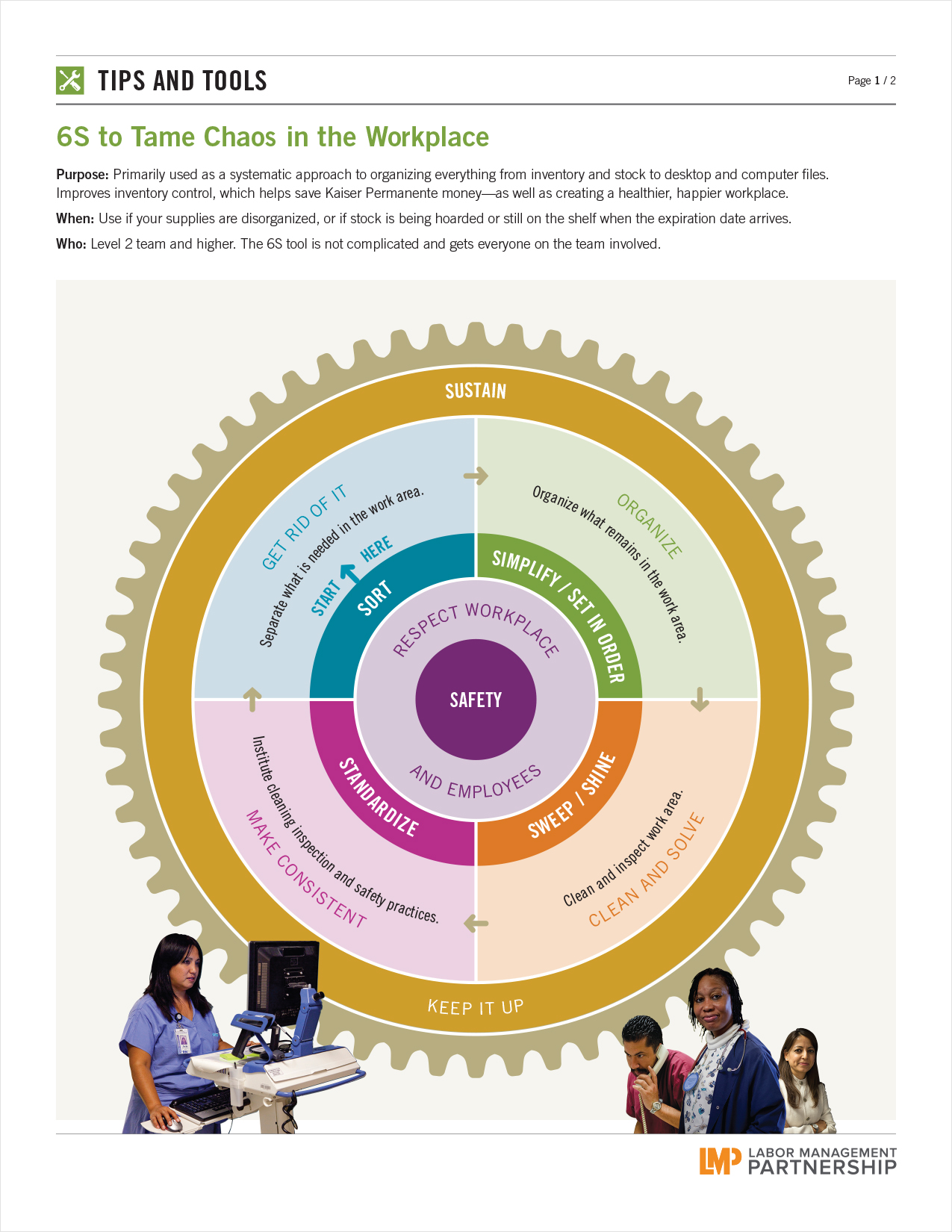
6S to Tame Chaos in the Workplace

Format:
PDF (color and black and white) and DOC

Size:
Two pages, 8.5" x 11"

Intended audience:
Level 2 unit-based teams and higher

Best used:
Use these waste- and clutter-reducing tips to spark discussion in team meetings.  

Note:
Download the PDF version to print out and use in meetings. Use the Word template if you'd like to fill the tool out on the computer.

Related tools:

TOOLS

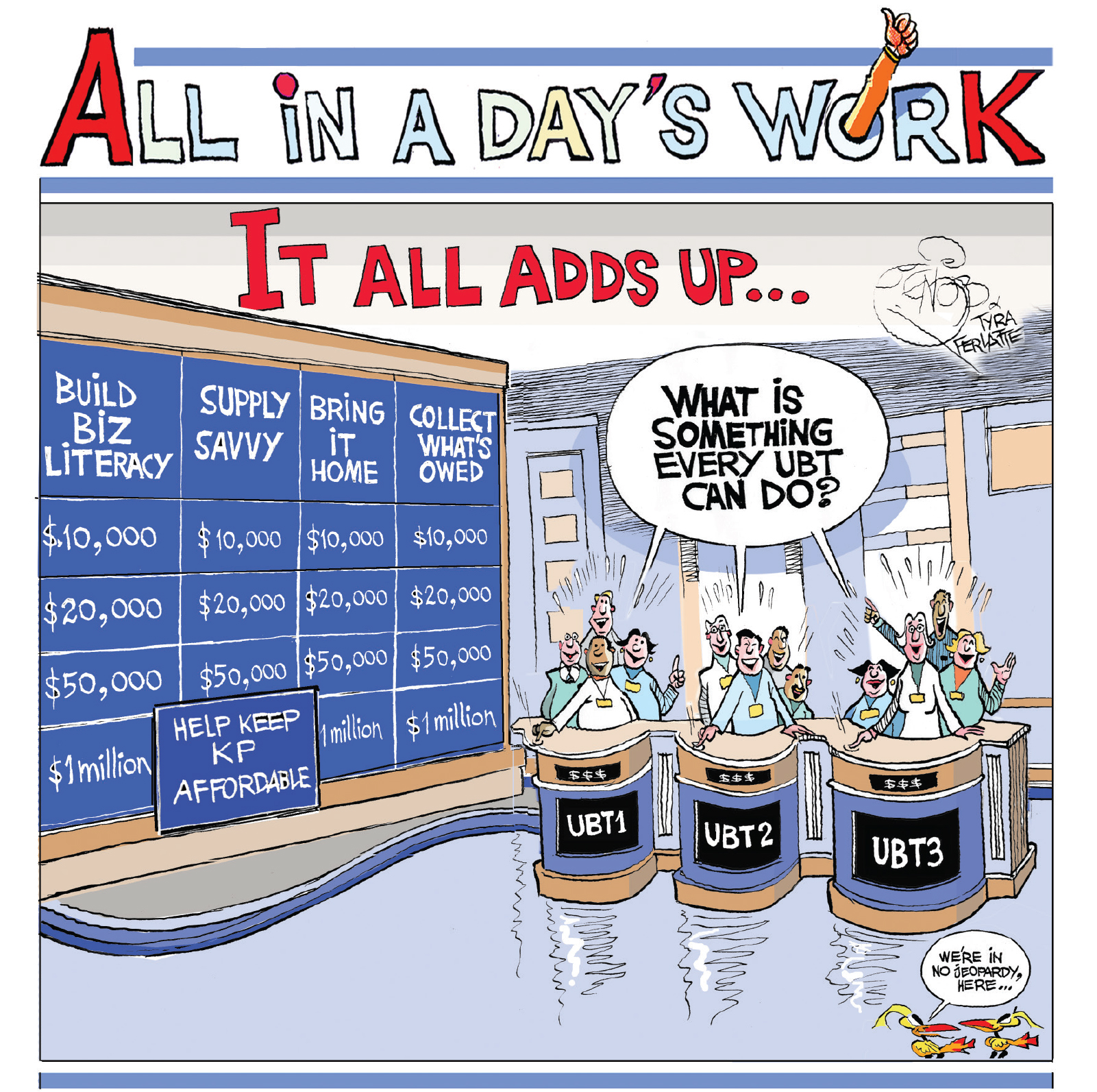
All in a Day's Work: It All Adds Up

Format:
PDF (color or black and white)

Size:
7.25" x 7.25" (prints out on 8.5" x 11") 

Intended audience:
Anyone with a sense of humor

Best used:
Download and post the cartoon on bulletin boards, in your cubicle, attach it to emails. Have fun while spreading the word that unit-based teams help keep medical costs affordable.


Related tools:

Pages

Subscribe to RSS - Affordability