
Culture
Help Video
How to Find UBT Basics on the LMP Website
LMP Website Overview
How to Find How-To Guides
This short animated video explains how to find and use our powerful how-to guides
How to Find and Use Team-Tested Practices
Does your team want to improve service? Or clinical quality? If you don't know where to start, check out the team-tested practices on the LMP website. This short video shows you how.
How to Use the Search Function on the LMP Website
Having trouble using the search function? Check out this short video to help you search like a pro!
How to Find the Tools on the LMP Website
Need to find a checklist, template or puzzle? Don't know where to start? Check out this short video to find the tools you need on the LMP website with just a few clicks.
Deck: Found a solution that works? Share the success with others!
Deck:
Found a solution that works? Share the success with others!
Story body part 1:
Unit-based teams are getting results — and are finding ways to share their learning with their peers face to face, online or in print. Talk with your team about how to use these and other ideas to share your learning and spread success.
- Track your progress. UBT Tracker is a web-based tool that helps unit-based teams and consultants collect and report information about their performance improvement work.
- Tell your story. Storytelling is one of the best ways to explain partnership and show others your results. Use our storytelling workbook to share best practices.
- Step right up. UBT fairs and PSP paloozas are dynamic forums for spreading effective practices face to face. Hosting your own virtual PSP palooza lets you reach beyond the walls of your facility.
- Lights…camera…take action. Kaiser Permanente’s Care Management Institute uses video ethnography— interviewing KP patients at the care site—to help teams share ideas and keep patients at the centerof performance improvement. To learn more, visit CMI’s Video Ethnography & Storytelling page [KP intranet].
- Write all about it. Use fliers, posters and newsletters to keep others informed and engaged in your team’s projects. Post your results in the break room. Invite another unit to your huddle for a progress report. Use these templates to create your next newsletter.
Tips for Sponsors
Deck: How to support, guide and inspire teams
Deck:
How to support, guide and inspire teams
Story body part 1:
Sponsors are the go-to people for UBT co-leads, providing resources, guidance and oversight for teams — and effective sponsorship is one of the most important ingredients for a high-performing unit-based team. If you’re a sponsor, provide your teams with the support they need to create an environment where UBT members are always learning, always improving, always innovating.
- Make it a priority to be involved. Provide feedback and hold teams accountable for action plans.
- Coach and mentor co-leads; connect them with opportunities to develop needed skills or knowledge. Developing strong team members will ease your work in the long run.
- Take time for face time. Walk the floor with team members and occasionally attend UBT meetings.
- Share expectations up front with your co-sponsor and team co-leads. Define how you’ll make decisions and how you’ll communicate and how often.
- Help team members build their problem-solving skills by having them develop solutions, but if there are barriers outside the co-leads’ or team’s scope, get busy breaking them down.
- Educate your teams about local work plans and regional performance priorities so they can work on the right projects. Be sure, too, that things team members care most about get addressed.
- Celebrate and highlight successes, both large and small, by rewarding individuals and teams in a way that is meaningful to them — whether it’s an email, party, lunch or a parking spot for a month.
- Secure the resources your teams need to get work done, such as time for regular trainings or meetings and access to data that will help benchmark their performance.
- Establish a baseline Path to Performance rating. Assist teams in understanding the rating and connect them with resources or successful practices that will help them become high performing.
- Ensure teams are documenting their work regularly, accurately and concisely in UBT Tracker.
Tips for Managing in Partnership
Deck: Managers who engage their teams get better results
Deck:
Managers who engage their teams get better results
Story body part 1:
Managing in partnership is different from traditional management. You still have responsibility for managing employees’ performance, but when it comes to your department’s performance, the whole team plays a role in making the department a great place to work and to receive care. Frontline employees know where the problems are and have great ideas for solutions. Research shows that managers who engage their teams get better results, and team members are more enthusiastic about implementing the solution because they helped come up with it.
- Be knowledgeable about the National Agreement. Download the National Agreement or get from your local human resources representative.
- Get trained on the Labor Management Partnership. See your local learning and development website or our list of regional training contacts.
- Proactively develop relationships with your union partners. Get to know your shop steward, union representative and other local labor leaders. Check in with them on a regular basis to share information and get their ideas.
- Model partnership with your union partner. Treat each other with mutual respect. Attend LMP trainings together. Jointly develop meeting agendas and share meeting facilitation responsibilities. Share information, identify problems and develop possible solutions in collaboration.
- Be accessible to staff. Spend time visiting with people on the front lines. Roam the department on a regular basis. Eat in the lunch room. Implement an “open door” policy for staff members who come by and want to talk.
- Be open to the ideas of all employees. Encourage people to share ideas and have input on procedures or work flow. Create an environment in which people feel comfortable speaking up. And be open to trying new ways of doing things.
- Create a structure for dialogue and engagement. Make sure time is set aside for partnership meetings, huddles and training.
- Tell it like it is. Be open and honest in your communication and transparent with information. Share your department’s budget with team members to get their ideas on reducing costs.
- Recognize and value employees’ contributions. Go out of your way to acknowledge someone who comes up with or implements an idea that has made the department a better place to work and provide care.
- Develop employees to become department leaders. If union partners or other team members want to help the department succeed by polishing their problem-solving, meeting management or other skills, encourage and support them in their efforts.
TOOLS
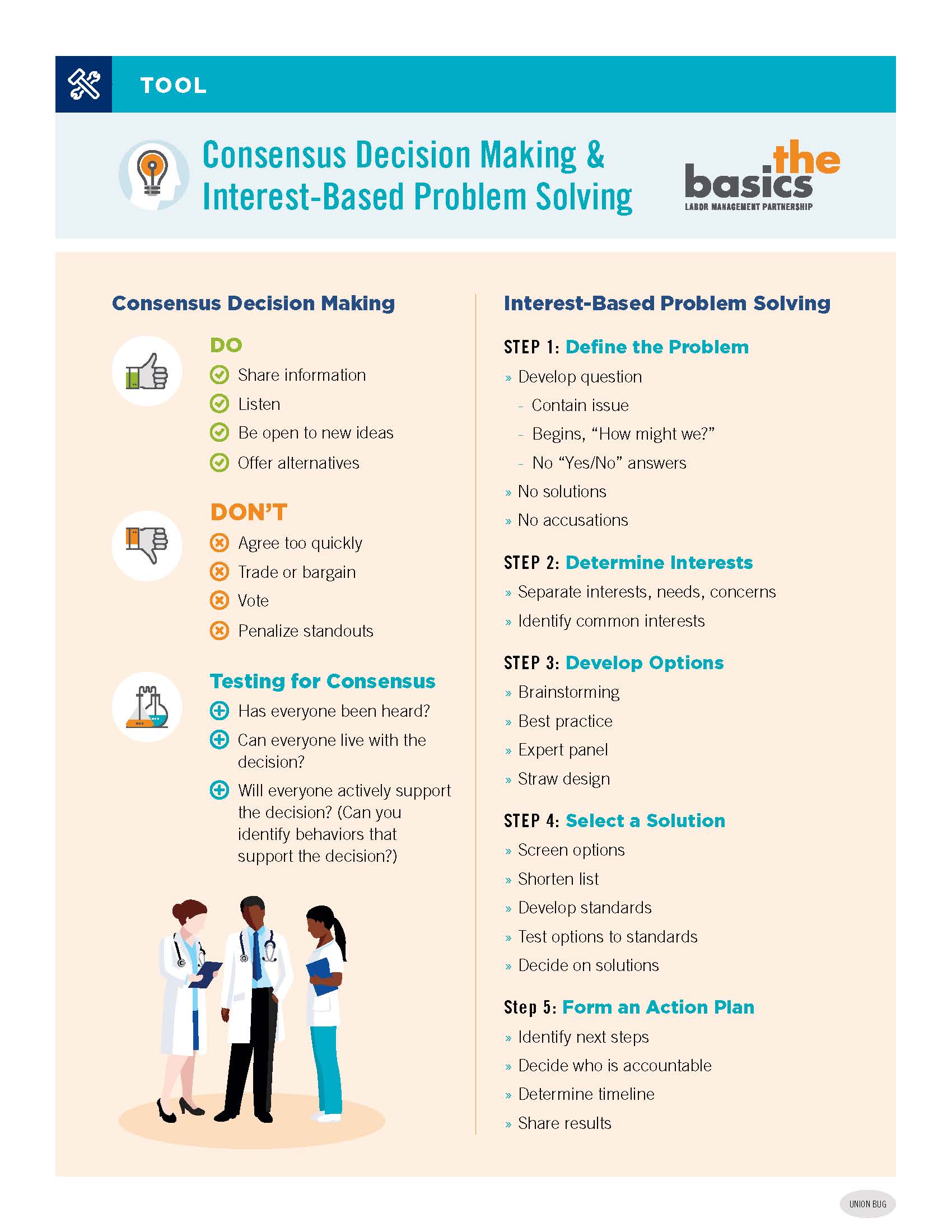
Interest-Based Problem Solving and Consensus Decision Making
Format:
PDF
Size:
8.5" x 11" and 4" x 6"
Intended audience:
Anyone leading or coaching teams with difficult issues that need to be resolved.
Best used:
Download and print out so team members can follow the processes of interest-based problem solving and consensus decision making step by step. Use the smaller 4" x 6" version as a two-sided postcard.
Kitchen Workers Find Ingredients to Speak Up
- Participating in team building activities to build trust and engagement
- Rewarding and recognizing employees for ideas and actions that contribute to the team’s work
- Implementing quick, visible suggestions to improve the work environment
What can your team do to help employees feel safe speaking up?
TOOLS
Crossword: What Skills Do You Need?
Format:
PDF
Size:
8.5" x 11"
Intended audience:
Frontline workers, managers and physicans
Best used:
This crossword demonstrates what skills are needed to navigate the future; use it to provide some variety and fun at a team meeting.
Videos
Giving Team Members a Voice
Loading the player...
(2:54)
A Food and Nutrition team creates an environment where employees feel free to voice their opinions and ideas—and can expect action to be taken on their input.
Produced by Sherry Crosby
Videography by Paul Erskine
Edited by Sherry Crosby and Kellie Applen
Story body part 1:
Rally your co-workers and have fun at the same time. This training offers ideas on making meetings interesting and productive.
Training description
Finding ways to involve everyone on a unit-based team can be tough, especially in large departments. This interactive workshop gives participants tips and tricks to engage co-workers in partnership work. Develop your leadership skills and have fun, too!
Path to Performance
Levels 1—5
Duration
Usually 90 minutes, but this training can be customized to suit your team's needs.
Who should attend
This in-person training is for unit-based teams, LMP councils, units/departments, and other groups.
Story body part 1:
Course description
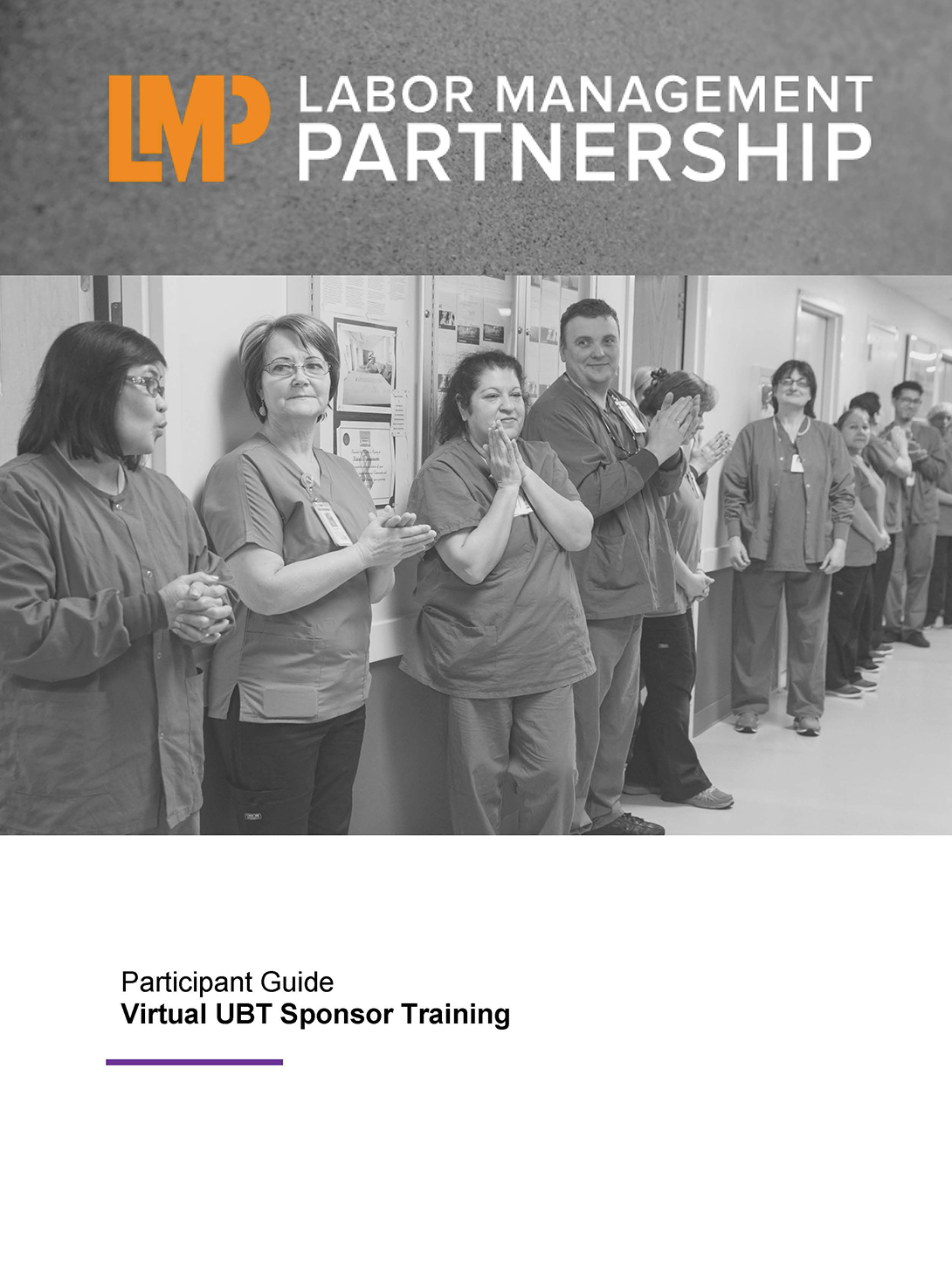
It is critical for steward sponsors and management sponsors to invest in the development of the unit-based team, which will have a long-term impact on the organization, and to learn about tools and resources available to them in their sponsor role. This course is designed to help union, physician and management sponsors discover the benefits of effective sponsorship and how it can help them develop successful, sustainable unit-based teams.
Union and management sponsors will gain an awareness of how their role is critical to the transformation of how the work at Kaiser Permanente is done.
Path to Performance
Level 2
Duration
4 hours
Who should attend
This course is intended for participants who are unit-based team labor, management or physician sponsors
Course requirements
Labor Management Partnership Orientation (LMPO)
Pages
