TOOLS
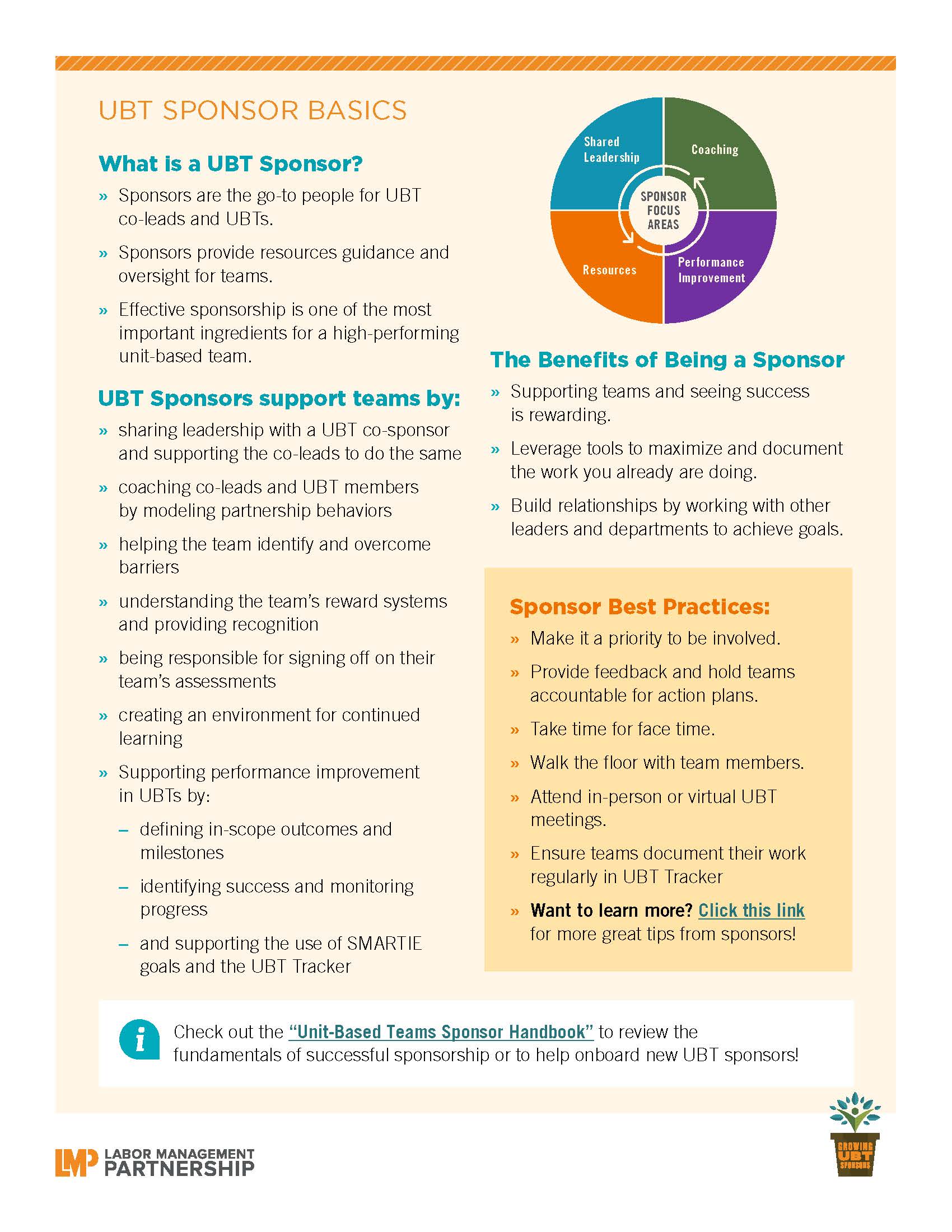
UBT Sponsor Basics
Format:
PDF
Size:
8.5" x 11"
Intended audience:
Labor, management and physician sponsors who support unit-based teams
Best used:
Use this poster to understand the basics and benefits of sponsorship.
This short animated video explains how to find and use our powerful how-to guides
Does your team want to improve service? Or clinical quality? If you don't know where to start, check out the team-tested practices on the LMP website. This short video shows you how.
Having trouble using the search function? Check out this short video to help you search like a pro!
Need to find a checklist, template or puzzle? Don't know where to start? Check out this short video to find the tools you need on the LMP website with just a few clicks.
Format:
PDF
Size:
8.5" x 11"
Intended audience:
Labor, management and physician sponsors who support unit-based teams
Best used:
Use this poster to understand the basics and benefits of sponsorship.
Format:
PDF
Size:
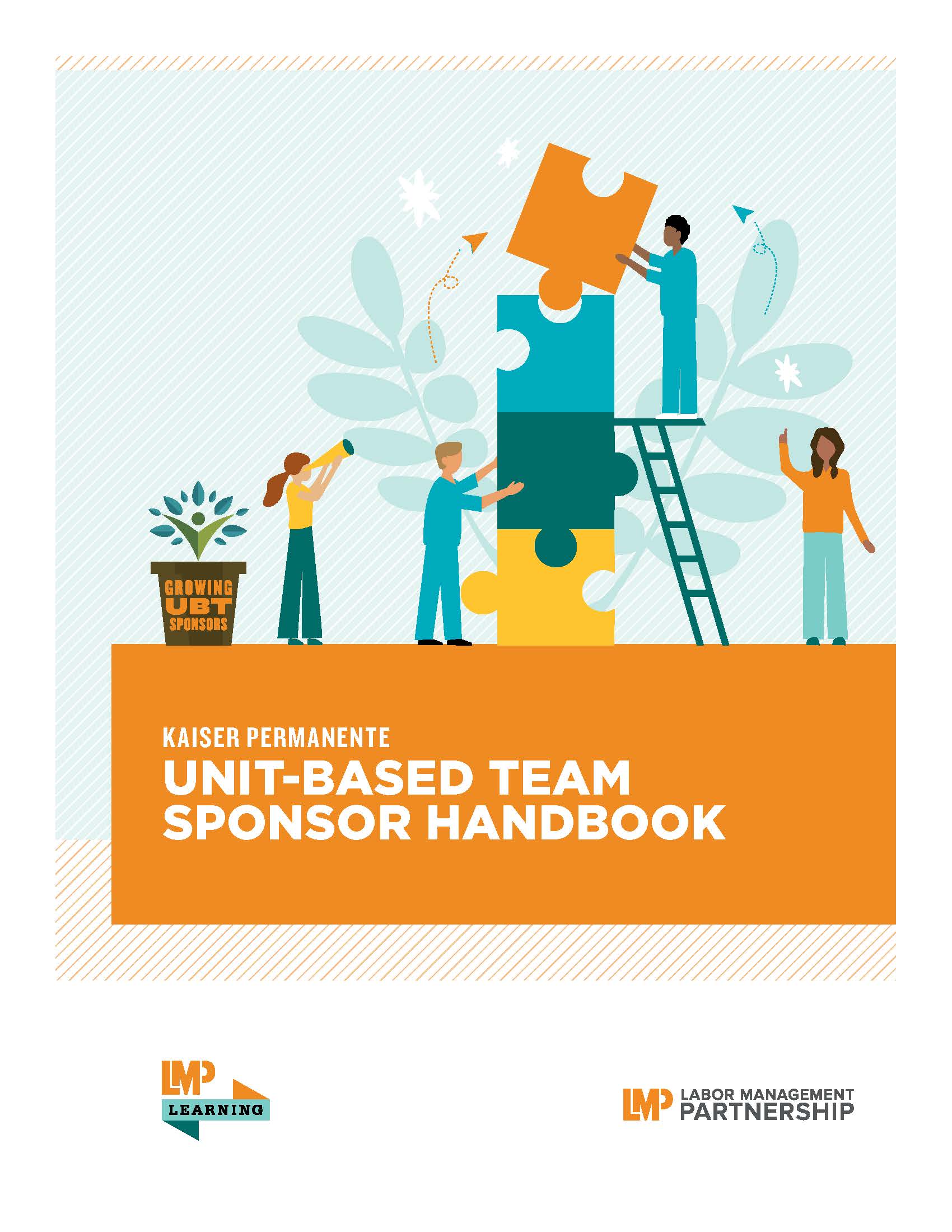
18 pages; 8.5" x 11"
Intended audience:
Labor, management and physician sponsors who support unit-based teams
Best used:
This interactive handbook provides the fundamentals for sponsors to successfully work in partnership.
Format:
PPT
Size:
11 slides (collection 1)
11 slides (collection 2)
Intended audience:
Unit-based team members
Best used:
Use these colorful slides, packed with quotes from activists and leaders from throughout history, to add a dash of inspiration to PowerPoint presentations. Click the buttons at right to download two different collections.
Our people power our Partnership. We love to shine a spotlight on the union members, managers and physicians who are on the frontlines every day. And now, we've profiled 100 people as Humans of Partnership!
This training is designed to teach participants effective day-to-day decision-making and problem-solving skills using interest-based language and behaviors to understand another person’s point of view and come to a resolution together.
Levels 1, 2
4 hours (classroom, virtual)
Anyone seeking foundational knowledge of effective communication through Interest-based Problem Solving and Consensus Decision Making. These methods are foundational for working in a Labor Partnership Management environment.
Labor Management Partnership Orientation (LMPO)
(2:32)
Union members, managers and physicians share their thoughts on how the Partnership could be better in its next 25 years.
Format:
PDF
Size:
18 pages
Intended audience:
Anyone who wants to advance fairness at work and when providing care
Best used:
Use the tools in this kit to create a more equitable workplace and deliver inclusive and supportive care for everyone.
LMP Insider is our monthly email newsletter, sharing the latest tips, tools and stories that help you make the Partnership come to life.
This print edition is specially crafted for employees and managers who don't spend a lot of time at computers and might miss out on this important information.
What can your team do to standardize collection of demographic information and make it part of the workflow?
At the Labor Management Partnership, when issues or conflicts arise, seek to resolve them quickly and efficiently and at the lowest level possible.
Refresh your understanding of the issue resolution process by viewing this short video and using the related tools to boost your knowledge and skills.
Check out all the Learning Boosters.