Culture

Help Video

How to Find UBT Basics on the LMP Website

Learn how to use the LMP website:

LMP Website Overview

Learn how to use the LMP website:

How to Find How-To Guides

This short animated video explains how to find and use our powerful how-to guides

Learn how to use the LMP website:

How to Find and Use Team-Tested Practices

Does your team want to improve service? Or clinical quality? If you don't know where to start, check out the team-tested practices on the LMP website. This short video shows you how. 

Learn how to use the LMP website:

How to Use the Search Function on the LMP Website

Having trouble using the search function? Check out this short video to help you search like a pro!

Learn how to use the LMP website:

How to Find the Tools on the LMP Website

Need to find a checklist, template or puzzle? Don't know where to start? Check out this short video to find the tools you need on the LMP website with just a few clicks. 

Learn how to use the LMP website:

From the Desk of Henrietta: Put Me In, Coach

Deck: 
Helping teams stay in the game

Story body part 1: 

You say your unit-based team has reached Level 5 on the Path to Performance? Great, everyone take the rest of the week off!

Your UBT is stuck at Level 1 and has been for years? Just hide in a dark corner and hope no one notices.

Not so fast.

Teams soar. Teams stumble. And we need them all to stay in the game.

Unit-based teams are Kaiser Permanente’s platform for improving performance. They’re also the union coalition’s instrument for amplifying workers’ voices in the workplace. All of which has paid off for KP members and patients, through UBTs’ efforts to improve quality, service and affordability. None of which is easy for teams to pull off.

Enter union partnership representatives and UBT consultants. They are recruited from frontline positions in union and management, so they know firsthand what it takes to deliver high-quality health care. They also receive special training that enables them to coach and mentor unit-based teams.

Our leaders knew teams would need such support. But it’s a balancing act. The tightrope for these folks is to gradually build the skills and confidence among team members, then step back at the right time so teams can fly on their own.

Few of us can truly go it alone. We all benefit from coaching—someone to hold up a mirror and offer frank advice (diplomatically delivered!) on how to improve in our jobs. A consultant’s most important skills are listening and observing. Those are skills we’d all do well to improve.

Partnership Attitude Brings State-of-Art Test to Members

Deck: 
Neurology department in the Northwest improves ability to diagnose epilepsy

Story body part 1: 

“This whole project was a mere idea written on a piece of paper only a few months ago,” says Juan Piantino, MD, “and now it’s a reality.”

Shortly after Dr. Piantino, a neurologist, came to Kaiser Permanente in July 2014, he was approached by another member of the department—Debbie Newcomb, an electro-neurodiagnostic technologist and UFCW Local 555 member. Newcomb’s work includes performing electroencephalograms (EEGs), a test that monitors a patient’s brain waves and helps diagnose patients with epilepsy.

She was interested in implementing ambulatory EEGs (AEEGs), an advanced technology that is relatively new. Because the test is conducted over a longer time period than a routine EEG, it is more likely to capture events that provide the medical team with information needed for a good diagnosis. AEEGs also are less expensive than an inpatient telemetry EEG. But Newcomb needed a physician partner to move forward.

“I wasn’t intimidated about approaching him,” says Newcomb, who’s the labor co-lead of the neurology UBT. “The partnership has given me the confidence to speak up—and in fact, I consider it part of my role as a union steward.”

Swift implementation

Dr. Piantino had experience with the test with other health care systems—as did Newcomb—and was enthusiastic. The pair began figuring out how the test could be implemented in the Northwest region. Newcomb collaborated with the staff at the Stanford Comprehensive Epilepsy Center to understand the specific details of its program. She worked with KP Purchasing to identify the type and cost of the machines that would be needed.

Armed with information, Dr. Piantino met with leadership of the Northwest Permanente Medical Group—and within a few short months, in December 2014, the region was equipped to do continuous ambulatory EEGs.

So far this year, 16 patients have had their treatment guided by the ambulatory EEG as outpatients. Because the test is administered with a camera, the physician reading the results can see the patient in real time and correlate the brain activity to the physical movements of the patient. In addition, being able to conduct the test in the patient’s own environment avoids a potentially stressful and expensive hospital stay.

One adult patient had been in and out of the Emergency department five times in two weeks. Newcomb performed the ambulatory EEG on him; he had five events, all pseudo-seizures. “He is now seeing the proper doctor for his problems—no more trips to the ED,” Newcomb says.

By the end of July, the program already had paid for the cost of equipment. The benefits of an accurate diagnosis for the patient are immeasurable.

“It was the positive attitude and the willingness to improve patient care that made this happen in record time,” says Dr. Piantino.

Pediatric patients helped

Not all epilepsy is easily identifiable. One young, active child who was recently diagnosed was brought into the Neurology clinic because he was not meeting developmental milestones, and his parents and physician were concerned. The team turned to the ambulatory EEG.

“We got a really good study,” says Dr. Piantino. “This will guide his therapy.”

In another instance, neonatologists at Sunnyside Medical Center were able to control a newborn baby’s seizures within 48 hours when they turned to the ambulatory/continuous monitoring EEG test—after the routine EEG didn’t reveal any unusual brain activity.

“I have been a pediatric neuro-intensivist at two big centers, in Seattle and Chicago,” Dr. Piantino says, “and I can say with confidence that this child received state-of-the-art treatment.”


Videos

Portraits in Partnership: A manager's point of view

Loading the player...

(2:15)

Environmental Services Manager Leonard Hayes has built a workplace where each of his 150 employees has a voice. Watch this short video to hear his perspective on how the Labor Management Partnership at Kaiser Permanente helps him solve problems and improve safety with his team.


Videos

Portraits in Partnership: A physician's point of view

Loading the player...

(2:22)

With the advent of the Labor Management Partnership, the physician “is not in charge," but rather just “another perspective at the table,” says Brent Arnold, MD. Watch this short video to see one physician's perspective of the LMP.


Videos

Portraits in Partnership: A union worker's point of view

Loading the player...

(2:30)

When Lab Assistant Cher Gonzalez talks, her manager and facility leaders listen. That's just one of the many benefits, she says, of working in the Labor Management Partnership at Kaiser Permanente. Watch this short piece to see a union worker's perspective of the LMP.


This Plan Was Made for You and Me

Deck: 
A whirlwind tour of KP and union history

Story body part 1: 

1933-1945: ‘There is no such thing as labor relations’

The health care program now known as Kaiser Permanente began in the Mojave Desert when Dr. Sidney Garfield, fresh out of medical school, opened a clinic for 5,000 Colorado River Aqueduct workers in 1933. Dr. Garfield soon found his practice foundering because insurance companies were sending the most serious—and most profitable—cases to Los Angeles hospitals. He developed a prepaid plan with a focus on safety and illness prevention, and it worked. The hallmarks of what would become the Kaiser Permanente Health Plan—prepayment, prevention and group practice—were forged here, but it would be 12 years before members of the public could join.

In 1938, Henry J. Kaiser and his son Edgar persuaded Dr. Garfield to create a similar medical program for workers building the Grand Coulee Dam in Washington.

The resulting industrial health plan was so popular, the unions insisted dam workers’ families be included. That feature carried over when Dr. Garfield built the largest civilian medical care program on the World War II home front, covering almost 200,000 Kaiser workers in California, Oregon and Washington.

With the traditional labor pool—young, healthy white males—serving in the military, thousands of African Americans and other people of color migrated to the shipyards, securing good union jobs after the long hurt of the Great Depression. Women came out in force, too. The Permanente Foundation Health Plan, both the on-the-job care and the broad coverage of the 50-cent-a-week supplemental plan, was extremely successful.

For the first time in their lives, ordinary people could count on affordable medical care.
 

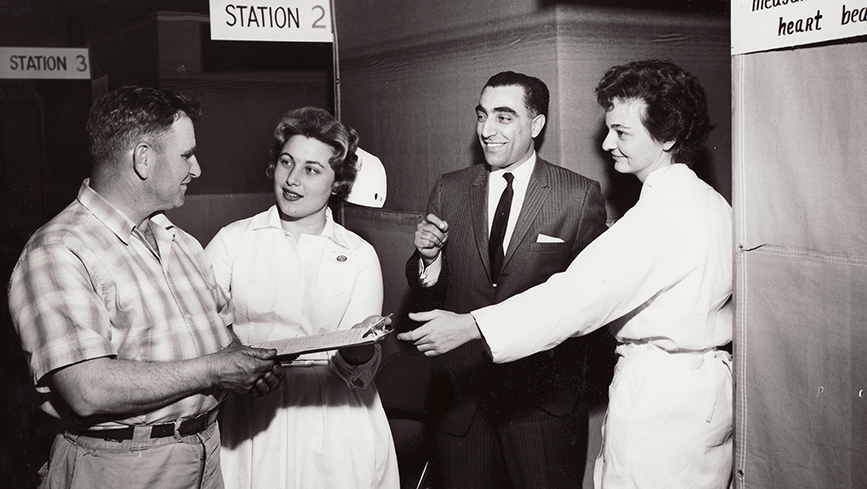
A longshore worker signing up for a "multiphasic" exam, which provided a comprehensive health assessment, in 1963.

1946-1989: ‘If not for organized labor’

On July 21, 1945, with the war in Europe over and the shipyards beginning to close, the Permanente Foundation Health Plan opened to the general public. A year later, on Aug. 1, 1946, Dr. Garfield signed the Permanente Foundation’s first union contract, with the CIO-affiliated Nurses’ Guild. The contract, in a first for Alameda County hospitals, established a 40-hour workweek, down from 48 hours.

Key support for the Permanente health plan came from unions. Harry Bridges, president of the International Longshoremen and Warehousemen’s Union, was an early advocate. He defended the plan against attacks by professional medical associations, whose members called prepaid group practice unethical, and brought all 6,000 ILWU members on the West Coast into the plan. Almost 15,000 members of the Retail Clerks Union in Los Angeles, a large and prominent union led by Joe DeSilva, joined in 1951.

But by the mid-1960s, financial pressures began creating divisions. In 1966, registered nurses in Northern California, represented by the California Nurses Association, became the first nurses in the state to conduct a work action. Major strikes erupted in 1968 in both Northern and Southern California. The strife simmered, and in 1986, a seven-week strike by SEIU Local 250 had some 9,000 clerks, certified nursing assistants and technicians walking the picket line at 14 Kaiser Permanente facilities in California. The action didn’t prevent a two-tier wage restructuring plan, but there was one positive outcome: The first Joint Conference on Service Issues, a precursor to the Labor Management Partnership agreement.
 

TOOLS

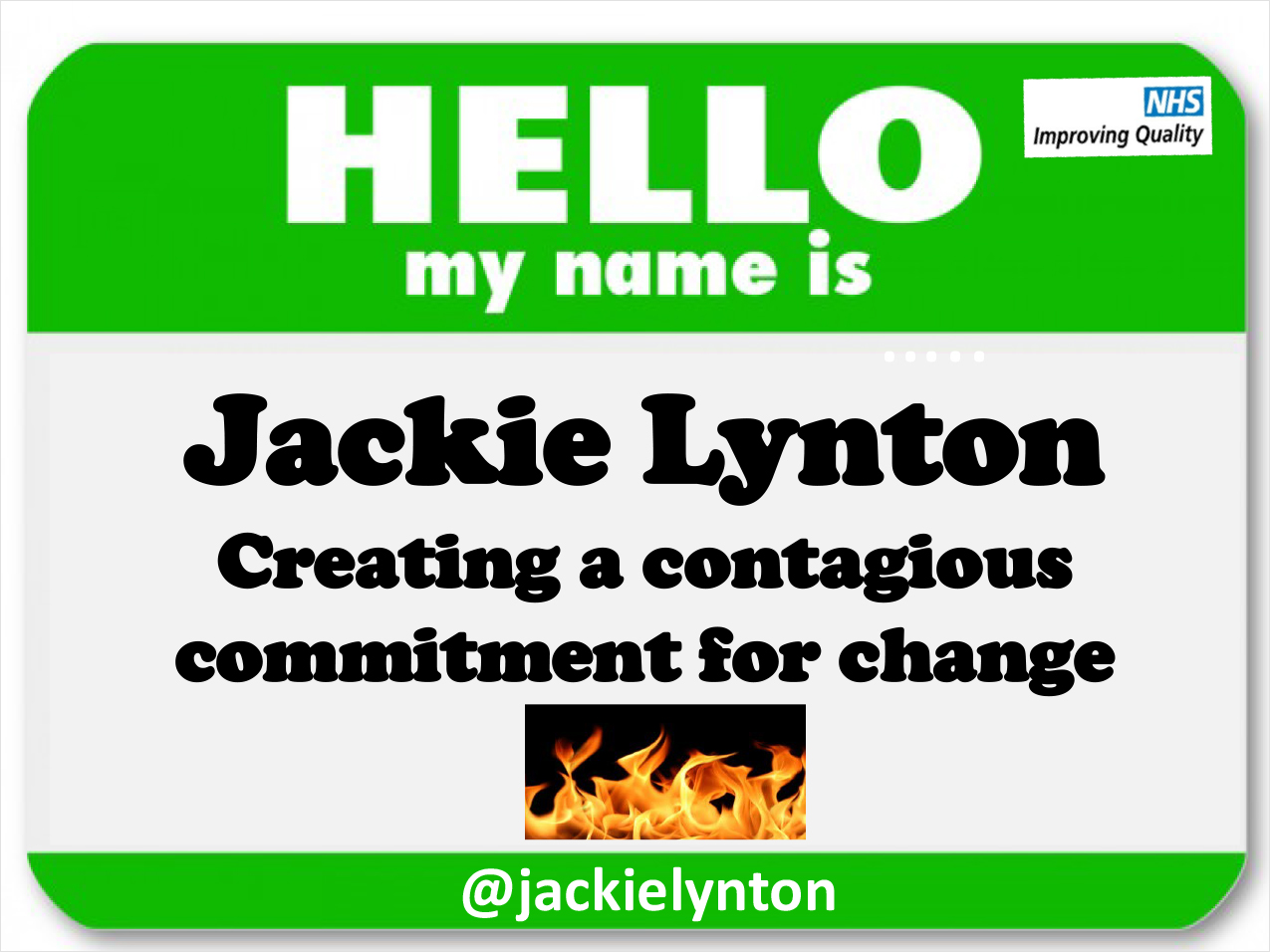
Creating A Contagious Commitment for Change

Formats:
PowerPoint and PDF

Size:
20 slides 

Intended audience:
UBT co-leads, sponsors, improvement advisors and innovation champions

Best used:
Integrate these curated slides into presentations aimed at making change in the workplace. Print out and post on bulletin boards.


Related tools:

The Three Cs to Success

Deck: 
Consistency, collaboration and communication pay off for Woodland Hills ICU team

Story body part 1: 

Elizabeth Rollice, RN, always knew that the Intensive Care Unit at the Woodland Hills Medical Center in Southern California was a great place to work.

As a staff nurse there, she and her co-workers enjoy good teamwork and excellent communication, and they deliver high-quality care to the sickest patients.

Now they have proof of their success.

This spring, the unit received the Gold Beacon Award for Excellence from the American Association of Critical-Care Nurses, the world’s largest specialty nursing organization. The award recognizes hospital units that demonstrate exceptional care through improved outcomes and greater overall patient satisfaction.

The team will be honored at the National Teaching Institute & Critical Care Exposition in San Diego, May 18-21.

“I knew that we did a good job and that everyone worked well together,” says Rollice, a member of UNAC/UHCP and a representative on the department’s unit-based team. “This award validates the quality of our work and tells us, ‘Yes, we are doing a pretty good job.’ ”

What’s best for the patient

Superb communication and a culture of collaboration among all members of the care team are key to the team’s success, enabling the consistent practice of evidenced-based medicine that has improved the quality of care.

Daily multidisciplinary rounds, for example, involve everyone on the care team who touches the patient.

“It’s about working in partnership with physicians, nurses and other staff to deliver high-quality care based on the newest evidence,” said Lynne Scott, RN, a clinical nurse specialist for the Critical Care and the Definitive Observation Unit. “We’re constantly moving forward.”

Nurses say team rounding gives them an opportunity to speak up and influence care decisions that affect their patients.

“We’re able to talk together about what’s best for the patient,” said Erica Bruce, RN, a UNAC/UHCP member who is the team's union co-lead. “If I feel that something is inappropriate, then I get a chance to ask the doctor. Family members get to ask questions about their concerns, too.”

Multidisciplinary rounding has produced an unintended benefit—higher member satisfaction. “I started in the ICU in 2002. We didn’t have a big rounding team at the time. Families sometimes felt unsupported,” recalls Paramjeet Dhanoa, RN, a staff nurse and UNAC/UHCP member. “Now that we have a big team, our families are more satisfied, because they feel they are not alone in making decisions. They are more comfortable.”

Open communication

Communication is vital in a department where staff members work around the clock in rotating shifts. To ensure information is consistently shared from shift to shift, the team:

  • practices Nurse Knowledge Exchange Plus (NKE Plus)
  • holds monthly UBT meetings, with members of the representative team responsible for sharing information with individual staff members
  • holds quarterly staff meetings; those who miss the meeting must review the staff meeting binder and sign a form indicating they’ve read it
  • uses a bulletin board to post important news and activities

The bulletin board, sandwiched between the nurses’ station and the staff restroom, attracts passersby with colorful fliers and posters.

“Your eyes are drawn to that communication board,” Rollice says. “You pass by a wall full of fliers, notes and postings, you can’t help but stop and look. It’s in a prime location.”

Conducted at the patient’s bedside, NKE Plus provides nurses with a template for patient safety and communication.

“It helps promote open communication and it helps us understand what’s going on with the patient,” says Judy Stone, RN, a staff nurse and UNAC/UHCP member, of the structured, in-depth, face-to-face handoff between the outgoing and the incoming nurse.

Stone says an additional itemized checklist “forces us, as nurses, to have all the pieces of the puzzle ready in the morning for multidisciplinary rounding. It really focuses us on everything that is going on with the patient so that we can deliver the best care that we possibly can.”

Clinical successes

Building the culture of collaboration and openness has had a big payoff:

  • No ICU patient has contracted VAP since the first quarter of 2011.
  • There have been no central line-associated bloodstream infections since the fourth quarter of 2011.
  • The unit achieved the 86th percentile on the HCAHPS (Hospital Consumer Assessment of Healthcare Providers and Systems) patient satisfaction survey from January 2013 through August 2014.

“To consistently deliver the best patient outcomes, you must have the processes and structures in place,” says Kareem Younes, RN, nursing project coordinator for Woodland Hills. “It’s about doing the right thing at the right time, every time.”

Going for the gold

While earning the Beacon Award was hard work, completing the 50-page application was perhaps even tougher for the Woodland Hills ICU team.

Few on the six-member representative UBT had writing experience, and they were at a loss when it came to telling their story in a way that would satisfy the award committee.

That’s when the team turned to in-house consultants Scott and Younes. Even with their expert help, the team faced data collection challenges and grappled with complex questions about the quality of their clinical practice.

At times they failed to meet, making it difficult to complete the application. And at one point, members were forced to make a “course correction” and rewrite the application when the guidelines changed unexpectedly.

“The rewrites were really painful,” recalls Sharon Kent, RN, the department’s administrator and UBT management co-lead. “It was like writing a thesis.”

Despite the challenges, team members said the process was rewarding because it enabled them to see their work in a different light.

“It made us take a closer look at the work we do,” says Rollice. “It motivated us to do better. It made us want to achieve the gold-level standard of care.”

 

Pages

Subscribe to RSS - Culture