Frontline Managers

Help Video

How to Find UBT Basics on the LMP Website

Learn how to use the LMP website:

LMP Website Overview

Learn how to use the LMP website:

How to Find How-To Guides

This short animated video explains how to find and use our powerful how-to guides

Learn how to use the LMP website:

How to Find and Use Team-Tested Practices

Does your team want to improve service? Or clinical quality? If you don't know where to start, check out the team-tested practices on the LMP website. This short video shows you how. 

Learn how to use the LMP website:

How to Use the Search Function on the LMP Website

Having trouble using the search function? Check out this short video to help you search like a pro!

Learn how to use the LMP website:

How to Find the Tools on the LMP Website

Need to find a checklist, template or puzzle? Don't know where to start? Check out this short video to find the tools you need on the LMP website with just a few clicks. 

Learn how to use the LMP website:

How to Help KP Grow

Deck: 
Everyone wins when health plan membership increases

Story body part 1: 

Good things happen when more members join Kaiser Permanente.

Kaiser Permanente and our unions gain strength and stability. Good jobs become more available and secure. More people in our communities benefit from KP’s affordable, quality care.

And all KP employees can help make those things happen.

For example, the Labor Management Partnership and KP’s sales and marketing organization work together in unique ways to build KP health plan membership. Thanks to their efforts, in 2014:

  • 125,000 KP members joined or stayed with the health plan. 
  • 100,000 KP members or potential members got letters from their local unions encouraging them to select KP during open enrollment.
  • KP union ambassadors reached 20,000 potential KP members at worksite, community and union events in five regions.

Workers tell their story

In addition, thousands of KP workers, managers and physicians in unit-based teams win and keep KP members by delivering great care and service every day.

Louise Casa, a nurse practitioner, UFCW Local 400 member and union ambassador in the Mid-Atlantic States, says all workers have stories to tell about what makes KP a better place to give and get care.

“I share the story of being part of a partnership that values union workers and their ideas,” she says. “I talk about our unit-based team work on goals for care improvement, problem solving and workflow improvement in our departments. People in the community been very interested in the UBT process.”

What you can do

Everyone has a role to play in helping Kaiser Permanente grow and retain its membership. It starts with the work we do every day to serve members and patients:

  • Deliver the best member experience. If you know someone is a new member, take an extra minute to explain how things work.
  • Encourage members to sign up for kp.org. Surveys show that members who sign on are more likely to stay with Kaiser Permanente.
  • Look for ways to improve work processes or cut waste, to help keep KP affordable for the people we serve.

Quick links to additional resources

  • Get additional tips to help promote KP at: Be KP [KP intranet].
  • Answer questions people may have about KP: Become a KP Member [KP intranet].
  • And get insights and updates on KP’s business success: Marketplace Focus [KP intranet].

What's the Deal With Bargaining?

Deck: 
Interest-based bargaining is radically different from the traditional

Story body part 1: 

Fists pounding on tables, demands, showdowns, strikes. So went traditional collective bargaining: Each side fighting for a bigger slice of the same pie. Each side gunning for a narrowly drawn agreement on pay and working conditions, leaving mutual concerns about patient care, quality and affordability unaddressed.

But Kaiser Permanente and the Coalition of Kaiser Permanente Unions abandoned the traditional approach in 1997, when they founded the Labor Management Partnership.

Our negotiations feature committees, observers and flip charts of options. Since 2000, KP workers, managers and physicians have worked together to craft four National Agreements and one reopener amid relative labor peace. On March 30, some 150 representatives will begin to negotiate a fifth agreement. Assuming all goes according to schedule, the new contract for the 100,000 workers represented by 28 locals in the coalition will be ready to go into effect when the 2012 National Agreement expires Sept. 30.

In an age of growing health care costs and increased competition, the joint goal is to provide our health plan members and patients with better, faster, less expensive and more personal care and to maintain and improve the best health care jobs in the United States.

Why Go to All the Trouble?

Deck: 
The interest-based approach isn’t easy—but it has helped us address issues we all care about

Story body part 1: 

“Interest-based bargaining is not a utopia and not always a win-win. It’s taken Kaiser and the unions a lot of hard work to get where they are,” says Linda Gonzales, director of mediation services for the Federal Mediation and Conciliation Service, Southwest Region. “[But] to resolve difficult issues in partnership is a strength.”

Because of interest-based bargaining, Kaiser Permanente and the Coalition of KP Unions have been able to go well beyond wages and benefits—the subjects of traditional bargaining—in  negotiating four program-wide contracts. These National Agreements have developed industry-leading approaches to worker sick leave, safety and training and workforce development. They have created unit-based teams to improve patient care and service, set standards to hold teams and their sponsors accountable, and pioneered programs for the mutual growth of KP and the unions.  

Interest-based bargaining pays off in other ways as well.

“To understand one another’s interests, you have to engage in inquiry and listening, and you have to resist jumping to conclusions about the other party’s intentions,” says Harvard Business School Professor Amy Edmondson. “Doing this develops leaders who better understand how the organization works.”

“People in health care look to Kaiser Permanente as the showcase for working together,” says Gonzales, who helped facilitate bargaining for the first National Agreement in 2000.

The mediation service last year recognized a handful of cases of successful interest-based bargaining. Our Labor Management Partnership was one of them.

Good Partnering Methods Aren’t Just for the Bargaining Table

Deck: 
How the interest-based process keeps potential problems from becoming real problems

Story body part 1: 

A former KP administrator, Michael Belmont now works for Restructuring Associates Inc., the consulting firm that helped during the creation and initial implementation of the Labor Management Partnership and that now helps facilitate national bargaining. He sees interest-based bargaining as a way to solve the problems of the future, before they arise, instead of getting stuck dealing with the baggage of past grievances.

My time at Kaiser Permanente dates back to the late 1980s. I was assistant hospital administrator in Panorama City, dealing with several unions. We were facing so much discord. It was all-encompassing, and it took the focus off improvement issues. The move toward interest-based bargaining and [the] Labor Management Partnership allowed us to put the focus on improving the member experience instead of continually trying to resolve labor problems.

Partnership, especially interest-based bargaining, gives employees and their unions a chance to have an impact on things they might not otherwise. They have a say beyond wages, hours and working conditions. In 2012, there was a bargaining subgroup on growth, focusing both on growing Kaiser Permanente and the unions. In a traditional setting, that doesn’t happen. For employees and their unions, the other side of the interest-based process is responsibility and accountability to take on and help solve the problems of the organization.

When we do trainings on interest-based problem solving, people will say, “This is how I deal with relationships.” If you are going to be a good partner—and have a successful relationship with a partner, kids, friends—you have to have your partner’s interests in mind as well as your own. Making this connection helps people connect the strategy to their work lives.

After 2000 bargaining, the Southern California region was looking for a change in labor relations, away from traditional, toward partnership. We were trying to move labor relations away from being a wall between the unions and management and toward facilitating a productive relationship between unions and management. I saw a gradual transition toward more of a partnering role. I left KP in 2006. I could come back [with Restructuring Associates] as a neutral [party] in 2010 and 2012 because of the [nature of the previous] relationships with union and management officials.

Interest-based bargaining is focused on solving problems up front rather than on grievances. People have to unlearn a lot of habits and build a lot of trust. There was 50 years of baggage [when the partnership started]. A traditional approach leaves lots of scars. Traditional is the comfort zone for most organizations. Traditional approaches are backwards looking: They are about solving problems from the past that pile up and wait for bargaining. Interest-based bargaining is about solving problems and issues that may come up in the future. Using the interest-based approach in bargaining and in day-to-day work is a much more forward-looking way to solve problems—and so much more effective.

TOOLS

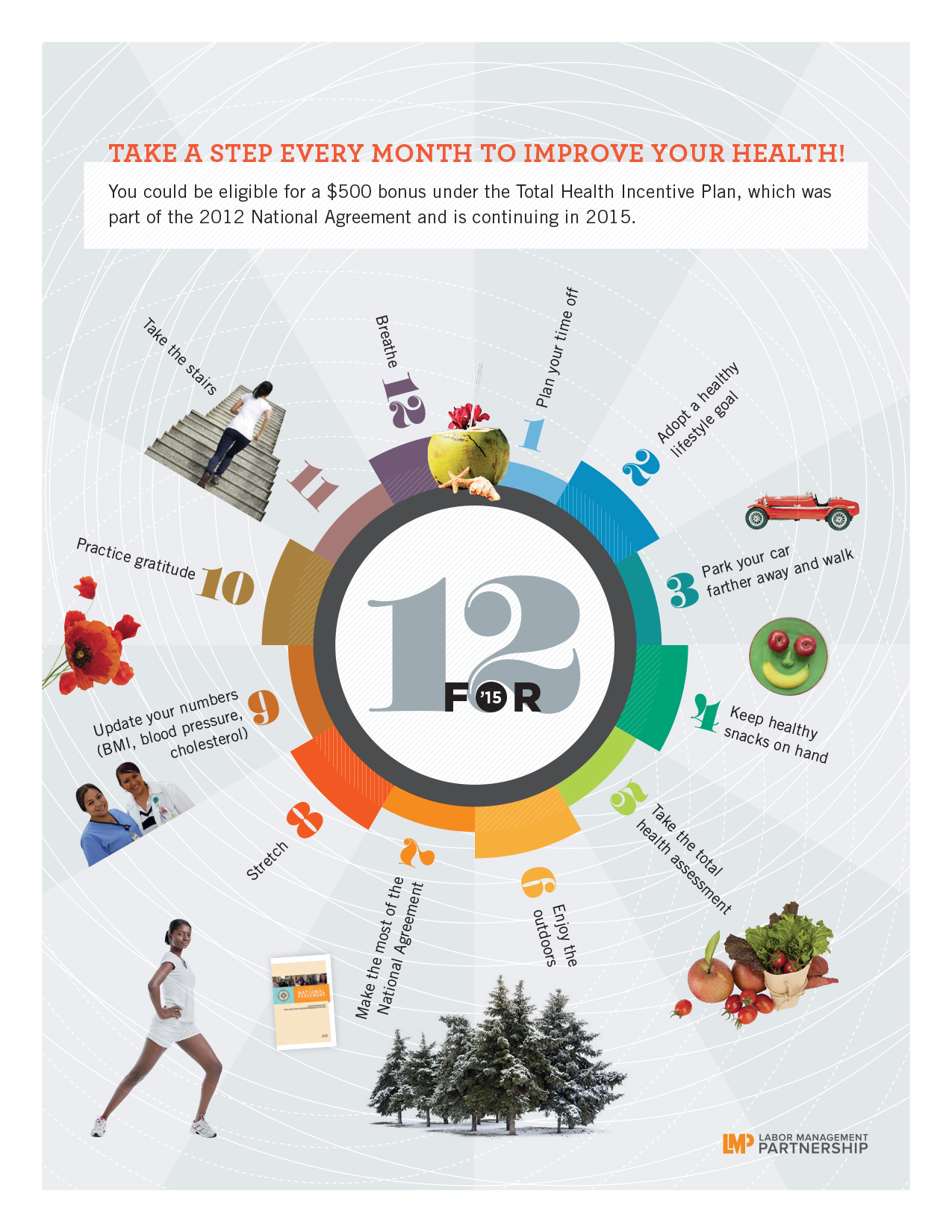
Poster: Take a Step to Improve Your Health

Format:
PDF (color and black and white)

Size:
8.5” x 11”

Intended audience:
Frontline employees, managers and physicians

Best used:
This poster has an idea for every month on how you can improve your health. Post on bulletin boards, in break rooms and other staff areas.


Related tools:

TOOLS

Poster: Proud to Be Kaiser Permanente

Format:
PDF (color and black and white)

Size:
8.5” x 11”

Intended audience:
Frontline employees, managers and physicians

Best used:
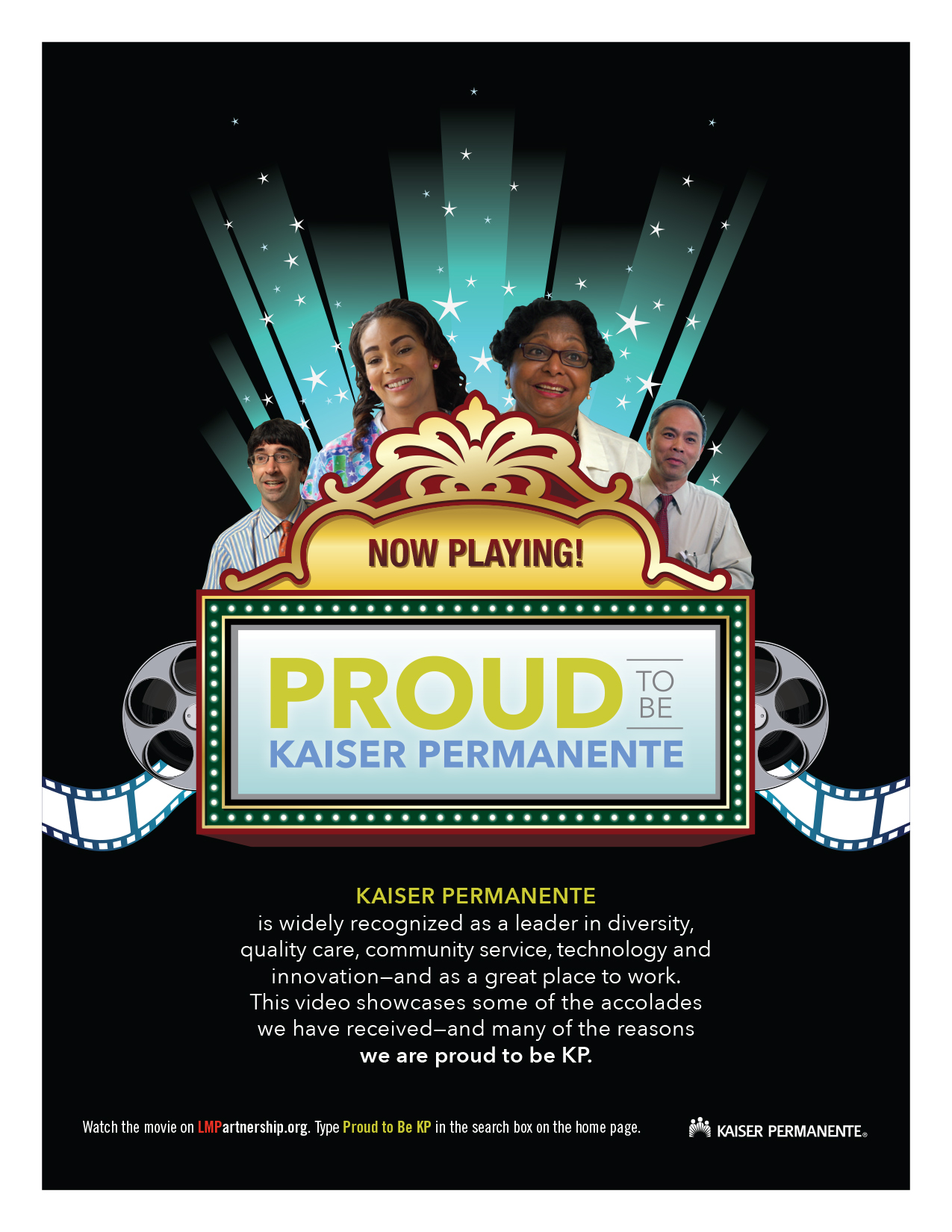
Post on bulletin boards, in break rooms and other staff areas to share with colleagues this short description of a video that showcases some of the accolades KP has received, and many of the reasons we are proud to be KP.

Watch the video.

Related tools:

TOOLS

Poster: How Interest-Based Bargaining Works

Format:
PDF (color and black and white)

Size:
8.5” x 11”

Intended audience:
Frontline employees, managers and physicians

Best used:
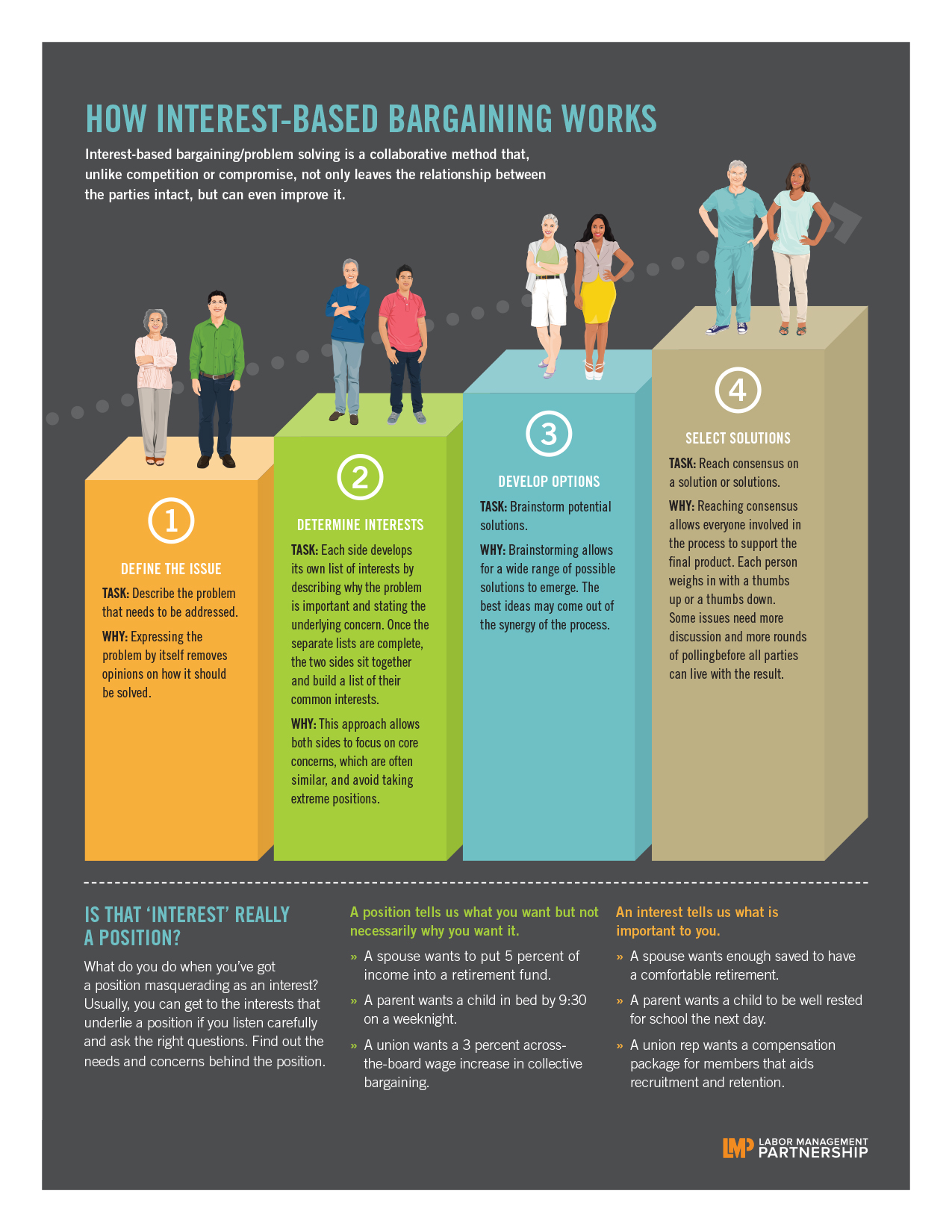
Help your team learn to effectively solve problems using the four steps of interest-based problem solving. 

Related tools:

Seamless Teamwork Gives Central Valley Babies a Healthy Start

Deck: 
Partnership between facilities helps ensure moms get consistent support in breastfeeding their newborns

Story body part 1: 

Inspired by the goals of the worldwide “Baby-Friendly Hospital” initiative, the Health Education UBT at the Manteca Medical Center in Northern California set out in early 2012 to increase the percentage of new mothers who exclusively breastfeed. At the time, the number stood at 70 percent.

Steps emphasized by the initiative, sponsored by UNICEF and the World Health Organization (WHO), include training health care staff to inform every pregnant woman of the benefits of breastfeeding and to help mothers begin breastfeeding within one hour of giving birth.

Closing care gaps

The challenge was that while Manteca health educators provided prenatal services to expectant mothers, the moms went to Modesto to deliver their babies. The Manteca employees didn’t always learn whether their patients ended up breastfeeding. In order to make sure their patients were getting full support for breastfeeding as they made the transition from prenatal care to labor and delivery and beyond, the members of the Manteca UBT reached out to their hospital colleagues.

“As a Health Education department, we provide breastfeeding education during their prenatal care, but we were not reaching 100 percent of…moms after they switched to hospital services,” says Maria Prieto de Milian, a health educator, lactation consultant and active SEIU-UHW representative on the Manteca UBT. “There was not a consistent breastfeeding message.

“Our moms were in need of a continuum of care for breastfeeding.”

Researching best practices

The Manteca team, which meets monthly, is linked to a larger Health Education UBT at Modesto. The larger team meets quarterly and includes Modesto employees as well as the employees from the smaller teams at Manteca, Tracy and Stockton.

After researching best practices in breastfeeding support and exploring what other Kaiser Permanente locations were doing, the Manteca team introduced two small tests of change:

  • Working with the larger Modesto UBT and with full support from the Women’s Health department, the Manteca team set in motion a collaborative approach to breastfeeding support involving health educators, lactation consultants, physicians, pediatricians, medical assistants and nurses. This includes hospital employees encouraging observance of the “golden hour” immediately after birth, when a newborn is placed skin to skin on the mother’s chest to promote bonding and breastfeeding.
  • The team worked with other employees to make sure mothers-to-be were asked about breastfeeding at the regular 28-week prenatal visit, and that their questions or concerns were directed to lactation educators for follow-up.

The results were dramatic. By the end of 2012, 92 percent of Manteca prenatal care patients who delivered at the Modesto hospital were exclusively breastfeeding.

The umbrella UBT decided to spread Manteca’s idea.

“We turned it into a service-area initiative. It started as a pilot just for Manteca, and then the group decided it was so beneficial we’d roll it out to the whole Central Valley,” says Jose Salcedo, the management co-lead for the larger UBT. “The results were really conducive to parents and moms having a great experience. It’s a whole pathway from the early stages of pregnancy to the delivery and then to the pediatricians.”

“The breastfeeding initiative is now regular workflow throughout the Central Valley,” Salcedo said.

Good results sustained

At the time the Manteca UBT started its effort to improve breastfeeding rates, the Modesto hospital was working to achieve the Baby Friendly designation from the UNICEF-WHO program. After making significant progress toward that goal, it switched its focus to implementing the Northern California region’s Breastfeeding Toolkit, a new program that encompasses the same goals.

It's now been almost two years since the small tests of change, and Prieto de Milian says the Manteca UBT no longer is tracking the rate for its moms, viewing the project as a continued success.

New ideas are continually being added to strengthen the process. These include the advice call center providing 24/7 breastfeeding support while also scheduling follow-ups to the calls with lactation educators. In addition, lactation consultants are available to assist pediatricians by phone or by email on KP HealthConnect® during patient appointments.

With everyone’s minds and hearts on one goal, Salcedo and Prieto de Milian say, teamwork was seamless.

“What I like about the UBT is it’s a joint effort,” Salcedo says. “We have really good lactation educators who think outside the box, search for best practices and apply them. They went ahead and ran with it and made the recommendations. Management supported them all the way.”

TOOLS

"Proud to Be Kaiser Permanente" Poster

Format:
PDF

Size:
8.5" x 11" (two-sided)

Intended audience:
Frontline employees, managers and physicians

Best used:
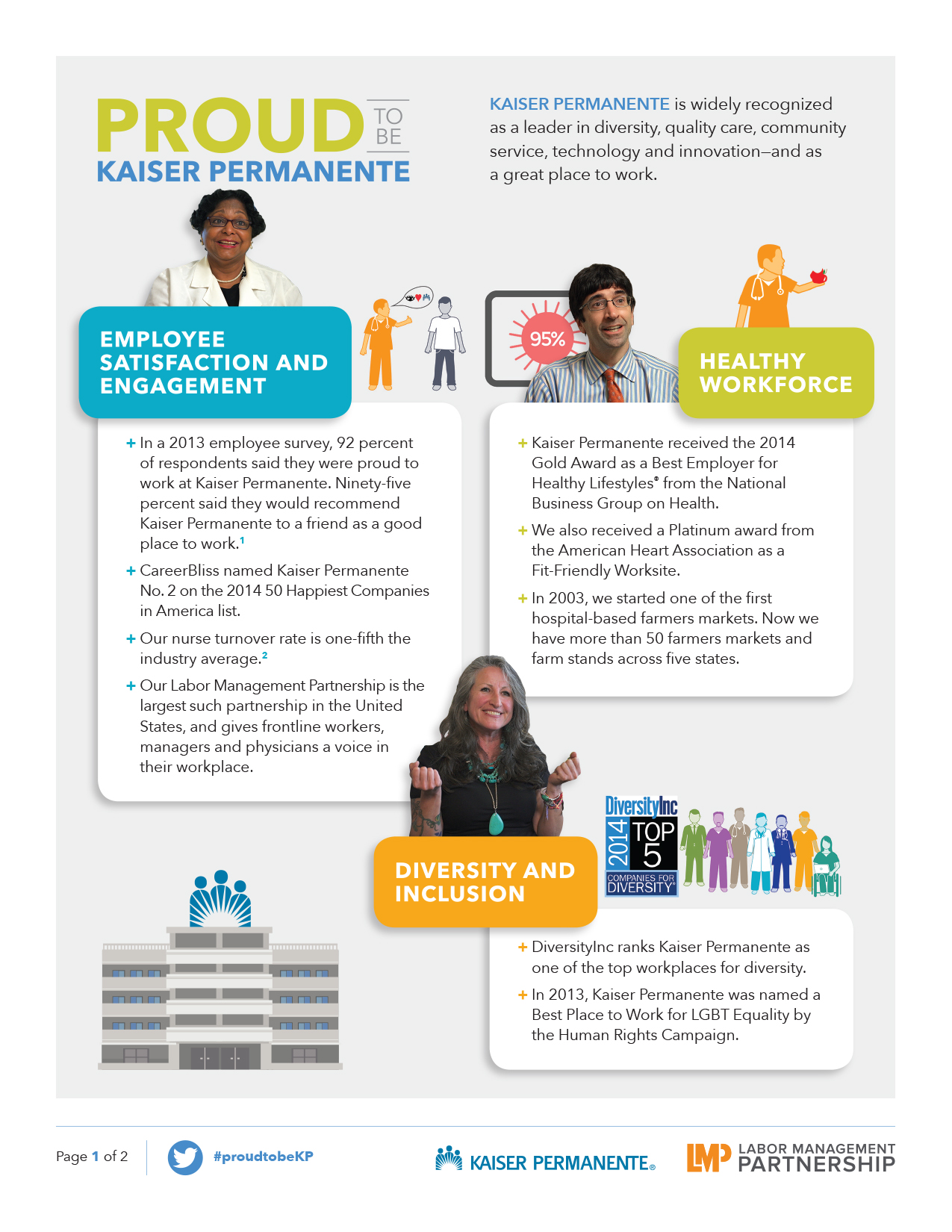
This poster showcases some of the accolades Kaiser Permanente has received as a leader in diversity, quality care, community service, technology and innovation—and for being a great place to work. Use at LMP and UBT trainings, UBT meetings, union conferences, and new employee trainings

Watch the video: "Proud to Be Kaiser Permanente"


Related tools:

Pages

Subscribe to RSS - Frontline Managers