UBT Co-Leads

Help Video

How to Find UBT Basics on the LMP Website

Learn how to use the LMP website:

LMP Website Overview

Learn how to use the LMP website:

How to Find How-To Guides

This short animated video explains how to find and use our powerful how-to guides

Learn how to use the LMP website:

How to Find and Use Team-Tested Practices

Does your team want to improve service? Or clinical quality? If you don't know where to start, check out the team-tested practices on the LMP website. This short video shows you how. 

Learn how to use the LMP website:

How to Use the Search Function on the LMP Website

Having trouble using the search function? Check out this short video to help you search like a pro!

Learn how to use the LMP website:

How to Find the Tools on the LMP Website

Need to find a checklist, template or puzzle? Don't know where to start? Check out this short video to find the tools you need on the LMP website with just a few clicks. 

Learn how to use the LMP website:

Early Detection: Encourage Patients to Get Screened

Deck: 
Team improves rate of needed cancer tests

The staff at the Radiation Oncology department at the Los Angeles Medical Center knew well the importance of identifying cancer early.

It was part of their clinical routine, and when necessary, they knew patients could begin treatment and slow the spread of the disease.

“We see what happens when you don’t screen regularly,” says Sandra Miller, the department administrator and the UBT’s management co-lead.

So, the UBT was determined to deliver on Kaiser Permanente’s promise of preventive care and leverage the Proactive Office Encounter to increase the percentage of regularly scheduled mammograms, colorectal and Pap screenings by December 2013. 

“With Proactive Office Encounter, we are treating the whole member,” says Maria Caceres, an assistant department administrator who was involved with the improvement project.

But the team also had to overcome resistance from patients.

“I think most of our patients that come to us do not want to deal with [one more test],” says union co-lead and medical assistant Monica Villanueva, SEIU UHW. “However, the more we reinforce the importance of having it done, they are more willing.”

Electronic reminders on KP HealthConnect helped ensure patients were getting their screenings, but the team also used a process map to examine its own workflow.

They put color-coded sheets on providers’ keyboards in exam rooms as visual alerts to indicate a patient is due for a screening (pink for mammogram, orange for colorectal test, green for Pap test) and created a pending order in KP HealthConnect.

Medical assistants checked the Proactive Office Encounter before each appointment to alert physicians when screenings were needed, and to check results and make reminder calls to patients.

They gave staff access to the radiology department’s appointment system so appointments could be made for patients while they were in the office, and provided training by laboratory colleagues on how to instruct patients on using the Fecal Immunochemical Test (FIT) kits.

“We had to sit down and break down every step,” Miller says. “We would ask, ‘Where were we not taking advantage of an opportunity to communicate with the doctor or the patient?’ Our process really changed after that.”

As a result colorectal screenings improved by 25 percentage points, Pap smears got a 12-point bump and mammograms increased by 46 points.

And when results for two patients showed they had additional health issues, the physicians, employees and managers were convinced.

“They could see the value and the impact of their hard work,” Caceres says.

For more ideas to share with your team and spark performance improvement ideas, download a poster, a tip sheet or read what an allergy unit did.


Allergy Team Helps Screen for Cancer

Deck: 
South San Francisco department takes extra steps to ensure patients are as healthy as can be

Story body part 1: 

South San Francisco allergy team’s specialty may be allergens and hay fever, but that didn’t prevent it from helping to improve patients’ screening rates for cancer, too.

It didn’t happen all at once—some staff members were skeptical at first. Scheduling a screening appointment for a wheezing patient didn’t seem right.

“At first people would say things like, ‘You know, I really don’t feel comfortable saying to a patient, “Oh, you’re due for mammography” when they’re sneezing and congested and here for allergies,’” says Alva Marie Aguilera, the department’s supervisor and management co-lead for the unit-based team.

Screenings as strategy

But part of delivering on Kaiser Permanente’s Total Health promise is to identify health risks and signs of disease as early as possible. Regular screenings for such diseases as high blood pressure, diabetes, and colorectal, cervical and breast cancers are an important part of our strategy.

That means caregivers and employees in seemingly unrelated departments—not just those in, say, internal medicine—have a role to play, and KP HealthConnect® provides them with a powerful tool.

Any time a patient is seen, a “proactive office encounter” message pops up in the member’s electronic record if he or she is due for a health screening or if important health data needs to be updated. It doesn’t matter what the reason is for the current visit or which department the patient is being seen in. 

The members of South San Francisco allergy department took the important work of taking the next step to heart: Following up on the prompt and offering to schedule the patient for the screening or asking the necessary questions to fill in missing information.

Scripts and reminders

To help make sure those things happened consistently, the team tried some small tests of change:

  • It created a general script to help broach the questions with patients and posted laminated cards on computers to serve as reminders.
  • Aguilera reports the weekly screening numbers so staff members know how they are doing and where they missed opportunities to follow through on the HealthConnect® prompts.

The small changes had a big impact. Before the team started the project in February 2012, it followed through on the prompts 80 percent of the time. In the first two months of the project, that jumped to 90 percent. By early 2013, the prompts were being followed up on 95 percent of the time and held steady at that rate for the rest of the year.

It wasn’t just staff members who were uncertain of the practice in the early days.

“At first it was kind of surprising to patients,” says medical assistant Lidia Vanegas-Casino, a member of SEIU UHW and the UBT’s union co-lead. “So we had to explain to them: ‘It’s a way to help you, and to keep up with the things you need done. It’s a proactive approach to keeping you healthy.’”

Positive example

It was one of KP’s own commercials that convinced team members of their important role in keeping patients healthy. Aguilera showed the ad that features KP member Mary Gonzalez, who had gone in—fittingly—for an allergy appointment when the receptionist noticed she was due for a mammogram and booked an appointment for her. The screening picked up a mass, and Gonzalez subsequently learned she had breast cancer. The early detection helped ensure a positive result.

It wasn’t a primary care or OB-GYN department that got her that screening. It was allergy.

“It really hit home for people,” Aguilera says. “If it wasn’t for the allergy receptionist who took that time, we don’t know what would have happened. That was a big encouragement.”

TOOLS

Sustaining Change Checklist

Format:
PDF

Size:
8.5" x 11" 

Intended audience:
Unit-based team co-leads and sponsors, UBT consultants

Best used:
Use this list of questions to generate discussion in your team before starting a test of change; these thought-provoking questions are from the British National Health Service’s Institute for Innovation and Improvement. 

Related tools:

A Vaccinating Challenge

Deck: 
Goals and teamwork help a pediatrics team get adolescent girls in for a series of HPV shots

Story body part 1: 

On one level, the pediatric clinic at Georgia’s Panola Medical Center Offices is like any other pediatric clinic. Babies squawking and squealing are part of the soundtrack—and under that, there’s the murmur of parents and nurses cooing to get the little ones to stop crying.

But the Panola clinic’s unit-based team stands out. Its members work at one of the several pediatric clinics in KP’s Georgia region that have significantly improved preventive care and screenings for their young patients, who range in age from newborn up through their teens.

The pediatric teams have achieved these goals in the midst of competing demands by staying laser-focused on a handful of quality measures in the Healthcare Effectiveness Data and Information Set, or HEDIS.

“Our projects are usually HEDIS-related,” says Panola’s labor co-lead, Sheryl Boyd, a licensed practical nurse and member of UFCW Local 1996. “HEDIS is so measurable.”

The work is a good example of how, instead of driving an agenda from the top down, achieving a goal can be inspired by engaging frontline teams in understanding how they contribute to KP’s brand promise of total health.

“The teams are not ‘being told what to do,’ but rather they see the big picture and see what they can do to affect it,” says David Jones, MD, Georgia’s physician co-lead for UBTs. Dr. Jones says he and his labor and management LMP counterparts stay abreast of Georgia’s regional goals and priorities, then work with UBT consultants to communicate those to frontline teams.

“We incorporate UBTs as a lever to execute our clinical goals,” says Dr. Jones, creating a vital loop of communication and support.

Collaboration pays off

One of the Panola UBT’s successes has been to increase the number of girls getting the human papillomavirus vaccine (HPV) by their 13th birthday. The vaccine can help prevent a virus that increases the risk of cervical cancer.

The project kicked off in October 2011. At the time, the team wasn’t tracking how many of the girls in the target population had received the vaccination, which is delivered in a series of three shots over six months. The team’s initial goal was to get 5 percent of the girls eligible for the shot vaccinated. In the first six months, the team succeeded in getting 10 percent of the target population started on the series—and by October 2013, nearly 20 percent had gotten the complete series, a significant achievement. While it has yet to reach the national HEDIS average for the vaccination, the team is steadily closing the gap.

Team members achieved these results by working with the clinic’s information technology staff to get a list of patients—11- and 12-year old girls—who needed the vaccine. They contacted parents and made appointments. In the exam room, nurses discussed HPV and the importance of the vaccine with patients and their parents.

And they worked with their IT colleagues again, modifying the computer system so they could book appointments six months in advance. That allowed them to act on a crucial step—scheduling visits for the two follow-up booster shots right then and there.

The parent education was extremely important, says Erica Reynolds, the charge nurse and management co-lead.

“Some parents think we want people to come back in for appointments because we want the co-payments,” she says—but in fact, if the shots aren’t completed in the proper time period and the immunization series needs to be started all over, it requires even more visits. To avoid that, she says, “Scheduling a nurse visit for the second and third vaccines has become a part of our workflow.”

Hard-wiring success

That kind of hard-wiring of successful practices is the holy grail of performance improvement.

As labor co-lead Boyd puts it, “Our projects are not ‘projects.’ They are ongoing.”

In addition, Dr. Jones says, the integration of partnership and performance is taking place at all levels in the region.

For example, he says, physician leaders “integrate the Labor Management Partnership and performance improvement into existing meetings so it is not viewed as outside those discussions.”

As a result, when Georgia earned a five-star Medicare rating in fall 2013 for the first time—bringing all of KP’s regions into that rarified club of health care excellence—Rob Schreiner, MD, the region’s executive medical director, specifically credited UBTs and the culture of continuous improvement for the achievement.

Driven by those two engines, says Schreiner, “We’ll improve quality, service and affordability at a tempo that exceeds that of our competitors.”

TOOLS

PICK Your Priorities

Format:
PDF

Size:
8.5" x 11" 

Intended audience:
UBT sponsors, consultants and co-leads

Best used:
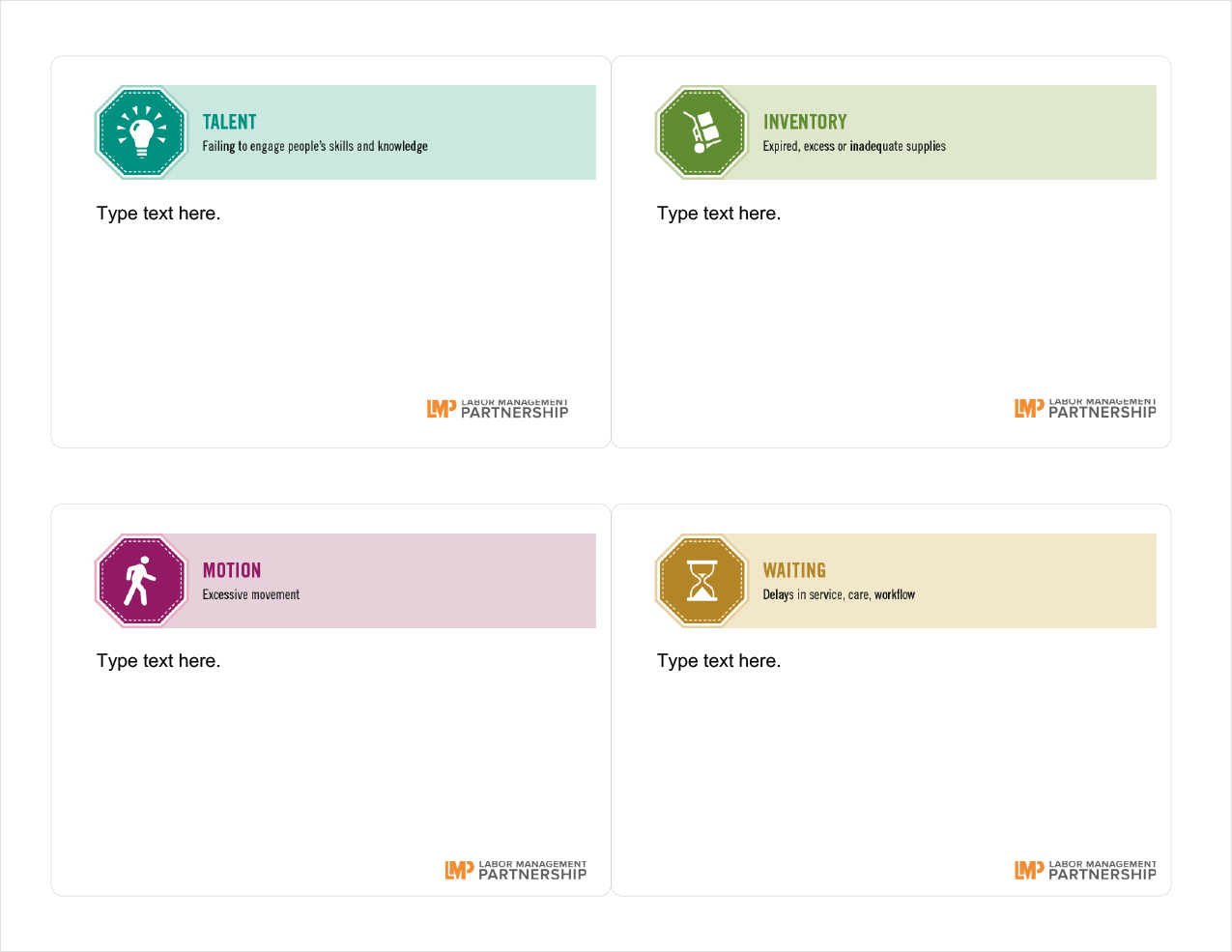
The tool helps determine which projects to focus energy on first—starting with work that has high impact and is relatively easy to do. Use the four categories to help a team set priorities.


Related tools:

TOOLS

UBTs Improving the New Member Experience

Format:
PPT

Size:
50 pages

Intended audience:
UBT co-leads, sponsors, UBT consultants, improvement advisors

Best used: 
To show how teams are improving the new member experience and gain some insight. 

Related tools:

TOOLS

How to Sign Up for KP.org

Format:
PDF

Size:
8.5" x 11"

Intended audience:
Frontline teams working to increase their members' and patients' use of kp.org

Best used:
This tipsheet gives simple steps to help members and patients sign up for and get the benefits of using kp.org.


Related tools:

TOOLS

Fish Out Your Root Cause

Format:
PDF and Word document

Size:
8.5" x 11"

Intended audience:
Level 2 and higher unit-based teams

Best used:
These step-by-step instructions and template will help your team use a fishbone diagram to tease out the root causes for problems in a system.

Note: Download the PDF version to print out and use in meetings. Use the Word template if you'd like to fill the tool out on the computer.

You may also be interested in:


Related tools:

TOOLS

Poster: Charting Our Progress

Format:
PDF (color and black and white)

Size:
8.5” x 11”

Intended audience:
UBT members, co-leads and consultants

Best used:
Chart your team's work in progress, and prominently display its success with this interactive poster. Post on bulletin boards, in break rooms and other staff areas.


Related tools:

Admissions: Let Patients Know Your Role

Deck: 
Being helpful is a start, and a gift doesn't hurt

During the normal stress of being admitted to the hospital, it's not always clear to patients and their families who does what.

And if a nurse or clerk can’t answer a question on admissions, the patient can get frustrated.

So it was in the admitting department at Fremont Medical Center in Northern California, where patients gave low satisfaction scores regarding the process.

“Many different staff use the word ‘admitting,’ so we needed to make sure we stood out, and that patients knew when their admission officially began and ended,” says labor co-lead and admitting representative Joanna Nelson.

Team members thought one of their biggest challenges was making sure patients knew when they were dealing with admitting staff versus other employees.

They first tried using scripted language, the “Right Words at Right Time” (RWRT) approach to let patients know when the actual admission process had started and the representative’s role.

When that failed, the UBT added another level of patient service and rounding, which included a small gift and card.

The gifts were mostly Kaiser Permanente brand items including cups, tablets, aprons, vases or plants. Admitting representatives also gave personal cards to each patient.

“We came up with an extra-special plan for our new admissions. Once the patient was admitted, the Admitting rep went back up to the room—either later that same day or the next day—and gave our patients a welcome gift,” shop steward and OPEIU Local 29 member Nelson says, describing the gesture as a “thank you for choosing our hospital.”

And it worked.

In four quarters, polite and professional customer service scores improved 21 points, and efficient and easy customer service scores picked up three points.

The team also helped by letting patients know how all the pieces fit together.

“Personalize your admitting process,” says Fonda Faye Carlisle, manager, Admitting and Patient Financial Services. “Since the admitting department is not the only voice that says, ‘I will be admitting you,’ admitting needs to personalize so the patient can differentiate between them and others, such as nursing.”

There were team benefits, as well, beyond the scores. Department morale and attendance also increased.

“Our satisfaction is seeing our patients happy and watching our scores improve,” Nelson says.

Pages

Subscribe to RSS - UBT Co-Leads