UBT Co-Leads

Help Video

How to Find UBT Basics on the LMP Website

Learn how to use the LMP website:

LMP Website Overview

Learn how to use the LMP website:

How to Find How-To Guides

This short animated video explains how to find and use our powerful how-to guides

Learn how to use the LMP website:

How to Find and Use Team-Tested Practices

Does your team want to improve service? Or clinical quality? If you don't know where to start, check out the team-tested practices on the LMP website. This short video shows you how. 

Learn how to use the LMP website:

How to Use the Search Function on the LMP Website

Having trouble using the search function? Check out this short video to help you search like a pro!

Learn how to use the LMP website:

How to Find the Tools on the LMP Website

Need to find a checklist, template or puzzle? Don't know where to start? Check out this short video to find the tools you need on the LMP website with just a few clicks. 

Learn how to use the LMP website:

Outside Eye Helps Team Do an About-Face

Deck: 
Improving team culture and paving the way for high performance can require expert assistance

Story body part 1: 

For years, success eluded the Baldwin Park Critical Care team. Mired in distrust, staff members didn’t participate in unit-based team meetings. As recently as 2011, few in the 49-member department knew the team existed.

“I didn’t even know what UBT stood for,” says Sheryl Magpali, RN, a member of UNAC/UHCP and now the team’s union co-lead. “No one claimed to be part of it. It was pretty much nonexistent until 2013.”

With a new manager on board, interest in the UBT grew. Staff members from the Critical Care Unit and its sister department, the Step-Down Unit, elected 12 representatives, who in turn chose Magpali as the labor co-lead. Celso Silla, RN, the new department administrator, became the management co-lead.

Old issues die hard

It was rough going at first.

Attendance was spotty. When the team did meet, members focused on long-simmering grievances about labor and personnel issues. The team reached out to Charisse Lewis, Baldwin Park’s UBT consultant. While consultants often focus on helping teams with using the Rapid Improvement Model and designing tests of change, they also help teams learn to work as teams—clearing up issues that are distracting them from the work at hand.

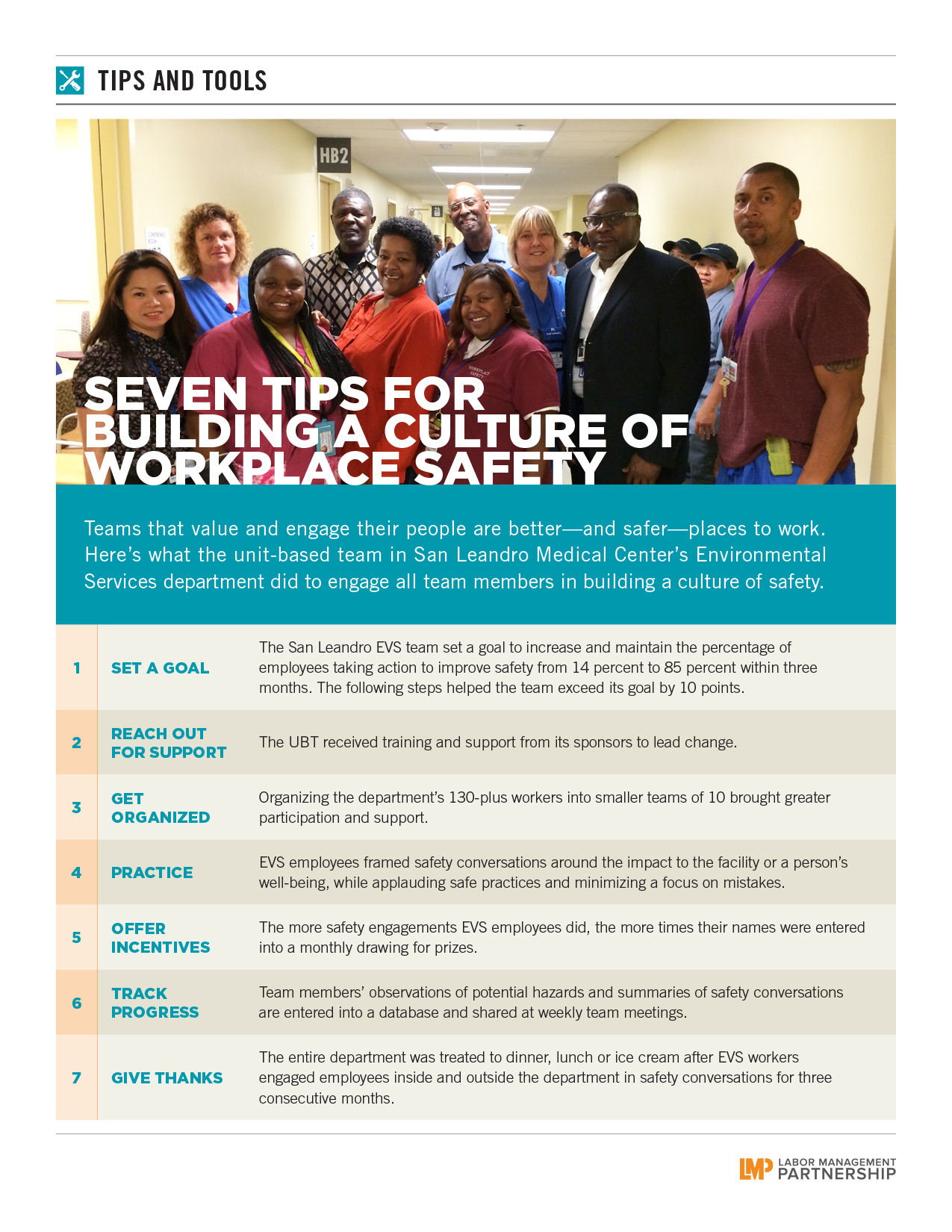
Lewis’s first steps were to encourage the team’s union members to meet separately with a labor representative.

“That helped relieve the stressors of the union issues,” Magpali says.  Now, she says, “team meetings focus on changes that affect the unit, rather than things we have no control over.”

The department—nearly all nurses, but also including ward clerks, who are SEIU-UHW members and one of whom is a team representative—began building trust in other ways, too. At Lewis’s suggestion, staff members organized a bowling night and had dinner together. This summer, they held a backpack drive.

Moving the team forward

“Charisse has been good at guiding us—attending our meetings, observing and listening and seeing how we can do better,” says Silla.

Lewis didn’t stop with team-building activities. She coached Magpali, a soft-spoken nurse, to speak up during meetings and make her voice heard, and she helped Silla overcome his reluctance to leave his union co-lead in charge of meetings.

Once trust was established, the team could turn its attention to improving patient care, with remarkable results. UBT members have reduced central line-associated bloodstream infections from five in 2014 to none as of August of this year. Buoyed by that success, they are working to reduce catheter-associated infections.

Silla attributes the improvements to the culture of partnership and putting frontline employees in charge of decisions that affect their work.

“We would have been in limbo” without Lewis’s guidance, Silla says. “Now we’re on the same page. We can be a Level 5 in the future.”

How Partnership Helped KP Reach the 10 Million Member Milestone

Deck: 
Union leaders, unit-based teams and frontline workers help attract and retain KP members

Story body part 1: 

“I was almost devastated,” says Karen Cardosa, a grocery clerk in Albany, Oregon, “when UFCW told us they were no longer offering Kaiser Permanente as an insurance option.”

Cardosa and her family had been KP members for years through the union’s Local 555 Employers Health Trust. That changed when a variety of issues resulted in KP losing the account, which covered many Local 555 members. The union continued to represent nearly 2,000 Kaiser Permanente pharmacy and radiology employees, who—as KP staff members—continued to have KP health care.

But today, Kaiser Permanente is again an option for up to 15,000 UFCW members and dependents in the Northwest region who are covered by the health trust.

New way to compete

An affordable price, high quality, a new hospital, expanded clinics and a new billing system helped win back this account. But something else was also at play.

Thanks to the Labor Management Partnership, the Coalition of Kaiser Permanente Unions and Kaiser Permanente take a joint approach to winning and keeping health plan members that is almost unheard of elsewhere in this country.

Bringing together union members and KP sales and marketing teams, the campaign helped win, expand, win back or retain 33 accounts covering 125,000 KP members in 2014, with a focus on public-sector accounts.

A broad reach

The effort spans almost every level of the organization and the unions.

Leaders of the local and international unions that belong to the union coalition play an active role in advocating for KP as the preferred health care provider when negotiating contracts or benefit programs with employers.

In addition, some 45 frontline union ambassadors spoke to 25,000 KP members and potential members at outside union and community events in 2014. “I have enjoyed working side by side with the sales and marketing representatives to promote Kaiser Permanente,” says Sera Jordan, a medical assistant, union ambassador and SEIU Local 49 member in the Northwest. “It has enabled me to share my firsthand knowledge of Kaiser Permanente and the care we provide.”

UBTs are a selling point

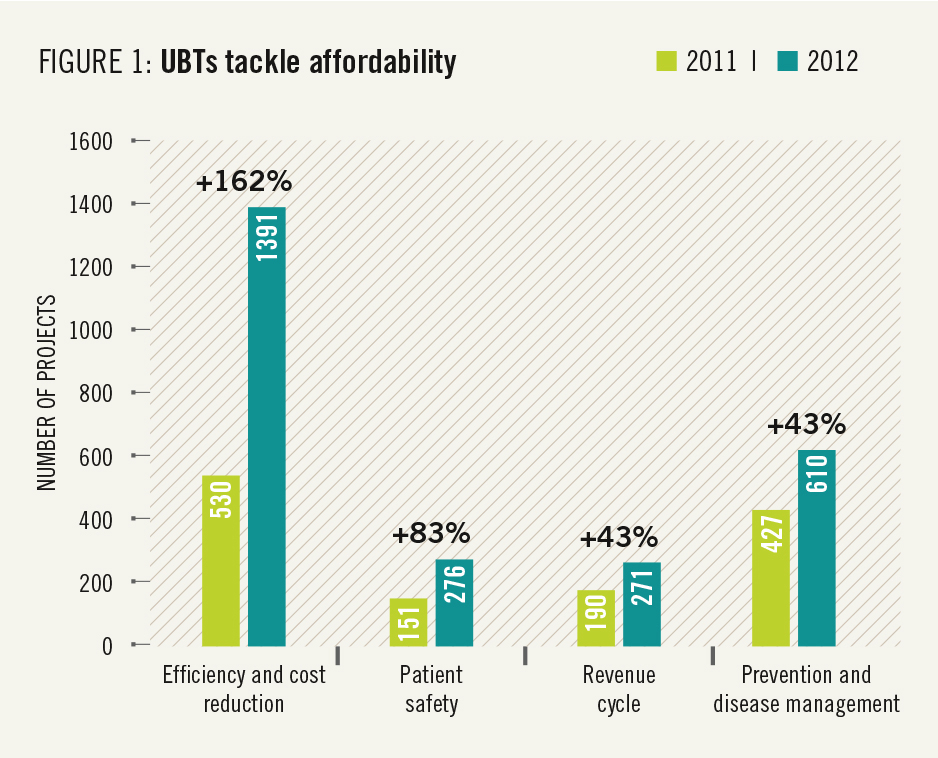
And unit-based teams, by giving frontline workers a voice in improving quality, service and affordability, are a big selling point for union purchasers of care. UBTs launched more than 8,000 performance improvement projects last year at every point on the KP Value Compass, including thousands of affordability projects that saved, on average, more than $40,000 per project.

“Working with our union partners, we’ve been able to come to the table with customer solutions that meet everybody’s needs—including the unions that aren’t part of KP, who have tremendous influence in purchase decisions,” says Kate Kessler, a Member Sales and Service Administration director. “We are unique in having a strong labor partnership in our own business, and we can speak that language.”

Find out why record membership matters to our current and future members on InsideKP.

TOOLS

Creating A Contagious Commitment for Change

Formats:
PowerPoint and PDF

Size:
20 slides 

Intended audience:
UBT co-leads, sponsors, improvement advisors and innovation champions

Best used:
Integrate these curated slides into presentations aimed at making change in the workplace. Print out and post on bulletin boards.


Related tools:

Process Curbs VAP and Central Line Infections

Deck: 
Teamwork helps fight potentially harmful conditions

Like ICUs around the country, the Woodland Hills team struggled to protect patients from contracting ventilator-associated pneumonia (VAP) and central line-associated bloodstream infections.

Both conditions, among the most common hospital-acquired infections, can lengthen hospital stays, complicate recovery and even cause death.

But care improved dramatically after the team took steps that focused on patient safety and quality, and they credited a culture of collaboration as the key component to their success.

“It’s about working in partnership with physicians, nurses and other staff to deliver high-quality care based on the newest evidence,” says Lynne Scott, RN, a clinical nurse specialist for the Critical Care and the Definitive Observation Unit. “We’re constantly moving forward.”

They had their nurses place patients at the optimal angle of 30 degrees to ensure that fluids didn’t collect in their lungs, and also made sure that patients received routine oral care.

For greater oversight, two nurses changed the dressing 24 hours after the line was placed and were responsible for changing it weekly. The charge nurses were also involved, checking the dressing, IV tubing and injection ports twice a day.

And in further support, ICU employees held daily multidisciplinary rounds. This involved everyone on the care team who touched the patient, including physicians, nurses, dietitians, pharmacists, medical social workers and family members.

As of this writing, the results were nearly immediate with no patients contracting VAP or central line-associated bloodstream infections since late 2011.

Their efforts netted the team the 2015 Gold Beacon Award for Excellence from the American Association of Critical-Care Nurses, the world’s largest specialty nursing organization. The award recognizes hospital units that demonstrate exceptional care through improved outcomes and greater overall patient satisfaction.

Read more about what the team did to improve communication and collaboration.

Seamless Teamwork Gives Central Valley Babies a Healthy Start

Deck: 
Partnership between facilities helps ensure moms get consistent support in breastfeeding their newborns

Story body part 1: 

Inspired by the goals of the worldwide “Baby-Friendly Hospital” initiative, the Health Education UBT at the Manteca Medical Center in Northern California set out in early 2012 to increase the percentage of new mothers who exclusively breastfeed. At the time, the number stood at 70 percent.

Steps emphasized by the initiative, sponsored by UNICEF and the World Health Organization (WHO), include training health care staff to inform every pregnant woman of the benefits of breastfeeding and to help mothers begin breastfeeding within one hour of giving birth.

Closing care gaps

The challenge was that while Manteca health educators provided prenatal services to expectant mothers, the moms went to Modesto to deliver their babies. The Manteca employees didn’t always learn whether their patients ended up breastfeeding. In order to make sure their patients were getting full support for breastfeeding as they made the transition from prenatal care to labor and delivery and beyond, the members of the Manteca UBT reached out to their hospital colleagues.

“As a Health Education department, we provide breastfeeding education during their prenatal care, but we were not reaching 100 percent of…moms after they switched to hospital services,” says Maria Prieto de Milian, a health educator, lactation consultant and active SEIU-UHW representative on the Manteca UBT. “There was not a consistent breastfeeding message.

“Our moms were in need of a continuum of care for breastfeeding.”

Researching best practices

The Manteca team, which meets monthly, is linked to a larger Health Education UBT at Modesto. The larger team meets quarterly and includes Modesto employees as well as the employees from the smaller teams at Manteca, Tracy and Stockton.

After researching best practices in breastfeeding support and exploring what other Kaiser Permanente locations were doing, the Manteca team introduced two small tests of change:

  • Working with the larger Modesto UBT and with full support from the Women’s Health department, the Manteca team set in motion a collaborative approach to breastfeeding support involving health educators, lactation consultants, physicians, pediatricians, medical assistants and nurses. This includes hospital employees encouraging observance of the “golden hour” immediately after birth, when a newborn is placed skin to skin on the mother’s chest to promote bonding and breastfeeding.
  • The team worked with other employees to make sure mothers-to-be were asked about breastfeeding at the regular 28-week prenatal visit, and that their questions or concerns were directed to lactation educators for follow-up.

The results were dramatic. By the end of 2012, 92 percent of Manteca prenatal care patients who delivered at the Modesto hospital were exclusively breastfeeding.

The umbrella UBT decided to spread Manteca’s idea.

“We turned it into a service-area initiative. It started as a pilot just for Manteca, and then the group decided it was so beneficial we’d roll it out to the whole Central Valley,” says Jose Salcedo, the management co-lead for the larger UBT. “The results were really conducive to parents and moms having a great experience. It’s a whole pathway from the early stages of pregnancy to the delivery and then to the pediatricians.”

“The breastfeeding initiative is now regular workflow throughout the Central Valley,” Salcedo said.

Good results sustained

At the time the Manteca UBT started its effort to improve breastfeeding rates, the Modesto hospital was working to achieve the Baby Friendly designation from the UNICEF-WHO program. After making significant progress toward that goal, it switched its focus to implementing the Northern California region’s Breastfeeding Toolkit, a new program that encompasses the same goals.

It's now been almost two years since the small tests of change, and Prieto de Milian says the Manteca UBT no longer is tracking the rate for its moms, viewing the project as a continued success.

New ideas are continually being added to strengthen the process. These include the advice call center providing 24/7 breastfeeding support while also scheduling follow-ups to the calls with lactation educators. In addition, lactation consultants are available to assist pediatricians by phone or by email on KP HealthConnect® during patient appointments.

With everyone’s minds and hearts on one goal, Salcedo and Prieto de Milian say, teamwork was seamless.

“What I like about the UBT is it’s a joint effort,” Salcedo says. “We have really good lactation educators who think outside the box, search for best practices and apply them. They went ahead and ran with it and made the recommendations. Management supported them all the way.”

Frontline Employees Get Intensive Ebola Preparation

Deck: 
KP, union coalition collaborate on training event

Story body part 1: 

Standing on a stage in front of hundreds of his fellow health care workers at the largest Ebola educational session on the West Coast to date, registered nurse Peter Sidhu demonstrated how to use personal protective gear in the way that keeps both patients and workers safe.

Sidhu inspected his equipment first—two pairs of gloves, a gown, mask and face shield. Then Arjun Srinivasan, MD, the associate director for health care-associated infection prevention programs at the federal Centers for Disease Control and Prevention, gave him detailed, step-by-step instructions in putting them on.  

Resources

The Nov. 7 educational session in Los Angeles was hosted by Kaiser Permanente, the Coalition of Kaiser Permanente Unions and other organizations that are coming together to help frontline caregivers learn about the newest CDC protocols and guidelines for handling Ebola patients. Hundreds attended in person, while thousands more nationwide watched a live telecast of the event.

Why Partnership Is Good for Managers

Deck: 
Working together produces a wealth of problem-solving wisdom, but is not optional

Story body part 1: 

Bernie Nadel is director of customer service and call center operations at Patient Financial Services in Southern California. He co-chairs the Regional Operations LMP Council, bringing together 27 business units, including the regional laboratory, central refill pharmacy and optical services.   

None of us was born into a unit-based team. Partnership is learned. Teams and their leaders need guidance and a playbook.

I tell other managers partnership makes my job easier. I have 10 other people helping to come up with solutions. I know some managers are uncomfortable with that approach. They act as though they can opt out of the Labor Management Partnership. It’s as if they said, “I know we have KP HealthConnect™, but I want to use this other computer program.” I say, if you don’t want the LMP, don’t work at Kaiser Permanente. You don’t get to opt out of the company’s policy.

Owning the work

Recently, our UBT went through a list of issues to work on. Call volume is up 30 percent, and we’re figuring out how to deal with that. We are going to do several tests of change. UBT members are gung ho about it. If I were to try to make those changes myself, I’d miss things. I would not get the insights of the people who interact with our members every day. And the people doing the work wouldn’t have the ownership and energy that comes with having a voice. Employees know I believe in partnership—and I give them the time to do it. That is a challenge. But you can’t solve the problems if you don’t invest.  

Not that long ago this call center was a toxic environment. There was low trust and low morale. All that has switched 180 degrees. A big step was my predecessor attending a sponsorship training class, which led her to involving UBTs more in day-to-day operations. I wanted to build on that.  

Taking the first step

LMP is a dance between labor and management, and management has to take the first step. When labor sees that management is serious, that’s when it changes. We’ve shown that you can change the culture.

Recently, we had a meeting with top executives about improving the consumer financial experience. Our UBT representative group prepared a report, and it gave our executives insights they couldn’t get any other way. It was not slick, it was real. I’m grateful to the group for the experience, commitment and knowledge they bring to this work every day.

Giving Patients a Voice

Deck: 
How UBTs are listening to members

Story body part 1: 

On her last day at work before going on maternity leave, something started going wrong with Juanita Ichinose’s pregnancy—and she found herself in an ambulance, on her way to the Downey Medical Center. Her husband, Trav, followed in his car. The images from an ultrasound foretold a grim story: Juanita was expecting twins, but one of the boys was not moving. “Code Pink” began blaring from the overhead speakers as she was wheeled to the operating room. What caregivers and the family feared came to pass. One twin survived, but the other did not.

“We had some moments with our other son,” says Trav Ichinose. “Then I went to see Teo. He weighed a pound and a half. The doctor told me, ‘He is very small.’”

Thus began Teo Ichinose’s four-month stay in the neonatal intensive care unit, a journey that led his father to become an active member of the department’s parent advisory council. Today, Teo is a happy 4-year-old, obsessed with his toy airplane from the latest Disney movie. And his father continues to bring the voice of the patient to Downey’s NICU unit-based team, where his input has helped shape numerous improvements.

UBTs exist to include all voices—employees, managers and physicians—in efforts to improve performance. And some UBTs are bringing in one more crucial voice: the patient’s.

To be sure, there are UBT members who resist. Objections range from “we don’t have time” to “patients can’t possibly know how our department runs.” But for others, it is a step that literally brings the patient-and-member focus of the Value Compass to life.

“UBTs have a lot of expertise. They know what is and isn’t working,” says Hannah King, director for service quality for unit-based teams. “What is missing is the perspective of the user, someone who might be afraid or in pain. We don’t know what they go through before and after they come to us. So we need to ask.”

Read on to see how UBTs have included patients and members in their work and improved performance.

Whose handoff is this, anyhow?
Downey NICU finds a way to keep parents involved during shift changes

During his son’s four-month stay in the NICU, Trav Ichinose became concerned that parents were prevented from visiting during shift changes, when the Nurse Knowledge Exchange Plus occurs.

“Parents want to maximize their time with their babies, and the policy was undermining that,” he says.

Nurses wanted to integrate parents into the process but also needed to prevent interruptions. “During the report, the parents tended to interject,” says Marnie Morales, RN, the team’s union co-lead and a UNAC/UHCP member. “That was a safety issue,” because it is important nurses not get sidetracked.

So, together with Ichinose and the parent advisory council, UBT members devised a system that met the needs of caregivers and parents. There would be “quiet time,” when parents listen and jot down notes while the outgoing nurse updates the incoming nurse. Once they’re done, it’s the parents’ turn to discuss their baby’s care with the nurses.

In testing the process, the nurses realized they needed to be able to discuss sensitive information out of the parents’ earshot—if, for example, there was a domestic violence situation or mental health problems in the family. So they came up with a discreet cue that signals the need to step away.

“The patient is getting better care because there is better communication. Information that wasn’t getting shared before is now,” Morales says. “As nurses, we get so involved with charting that we forget the patient is sitting there. Now, we are explaining as we are doing it because the parent is there watching.”

The change gave the team a boost in its satisfaction scores, which rose from 74 percent in the third quarter of 2012 to 88 percent one year later. It works to maintain the scores by holding refresher trainings with staff.

“With long stays like ours, your emotional resilience is tested to the max,” Ichinose says. “There are things that happen in the NICU setting that can undermine that resilience—or bolster it. Bolstering our ability to take in information, to be physically and emotionally present for the care of our child, affects our satisfaction with the care.”

Preserving pride, preventing falls:
A comment provides a San Diego team with fresh insight

Why do patients fall when they are in the hospital? Is it because they are elderly? Or under the influence of medications that affect their balance? The leaders, physicians and nurses at the San Diego Medical Center considered a range of possibilities and tried everything in the usual playbook, posting pictures of falling leaves on patient doors and using color-coded armbands to indicate fall risk. But nothing was working.

Then the UBT on the 5 West medical-surgical unit cared for a patient who was a member of the facility’s patient advisory council—and they asked his wife for her opinion. She said her husband—normally a self-sufficient, strong man—was too embarrassed to call a nurse to help him to the bathroom, especially given that he was wearing a flimsy, possibly revealing hospital gown.

That “aha” moment led the UBT to take a new approach: No one walks alone. Instead of trying to figure out who is at risk for falling, caregivers would treat everyone as a fall risk and provide assistance. The pilot program was so successful that it is being spread to the entire hospital. Before the campaign began in November 2012, the hospital had been averaging 16 falls a month. In June 2014, that figure was 3.4 a month.

Seeing the experience through the patient’s eyes was the key to the solution.

“I felt as if I was part of the team, and my input was just as valuable as any other member’s,” says Pat, the patient’s wife (last name withheld at her request). “If you go to patients with the attitude that they will be helping you do your job better, you will get an honest evaluation of what can be done to help, and they can make your job easier and more rewarding.”

Reluctant to change?
Some ideas for including patients as part of a UBT

Sheryl Almendrez, the management co-lead of the Definitive Observation Unit (also called a step-down unit) at the San Diego Medical Center, acknowledges that caregivers on her team were hesitant to have a patient join its improvement work: “They were interested, but were they ready to hear ‘the real truth’?” And what if a chronic complainer ate up valuable time?

As it turns out, there was little to fear. Patients’ requests were reasonable. For example, they want nurses to give them a heads-up when using an ear thermometer. “We’re used to it,” says Almendrez, but they may not know what it is. “They may think it’s an injection coming at them.”

For the Urgent Care unit in Largo, Md., listening to patients’ feedback about long wait times when coming in with a sore throat led that UBT to work with colleagues in the lab to fast-track tests for strep throat.

“Our team was very hesitant about bringing a member in because there could be more complaints than real feedback,” says Donna Fraser, RN, the team’s union co-lead and a member of UFCW Local 400. Making it clear why it was including patients helped: “We told the patient that we want to know what we are doing wrong, because how else will we improve?”

Morales of the Downey NICU says she no longer flinches from criticism, whether or not it’s phrased “constructively.”

 “Some of the people we have on our advisory council are the ones who complained the most,” she says. “You know what? They became the advocates for all the other babies. They helped us change a lot of things on our unit for the better.”

TOOLS

Getting to High Performance Presentation

Format:
PDF

Size:
38 slides

Intended audience:
UBT co-leads, sponsors, UBT consultants and improvement advisors, especially those working with Level 3 teams

Best used:
Gain tips and tools from three high-performing teams to help your UBT navigate that Path to Performance.


Related tools:

Pages

Subscribe to RSS - UBT Co-Leads