UBT Consultants & UPRs

Help Video

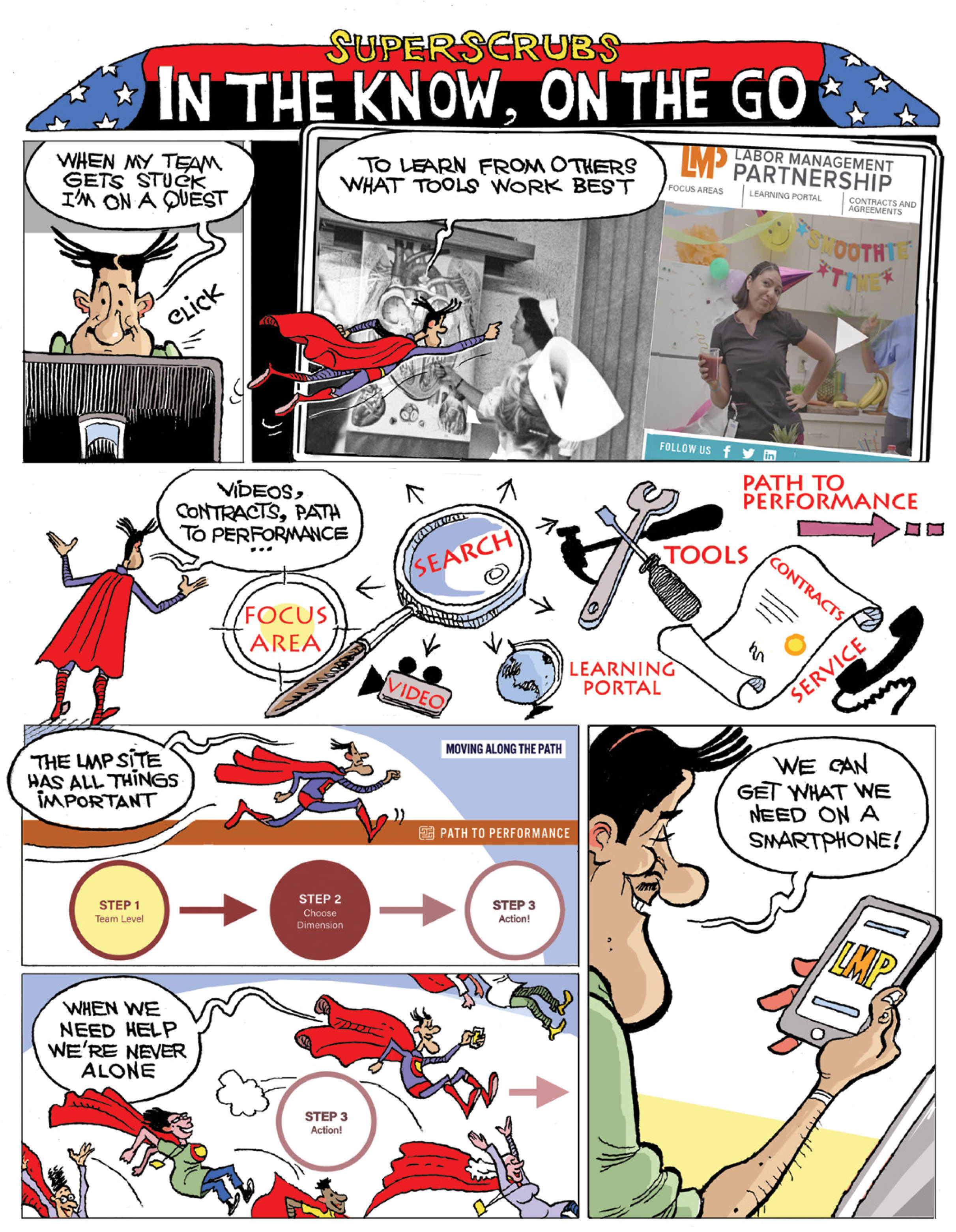
How to Find UBT Basics on the LMP Website

Learn how to use the LMP website:

LMP Website Overview

Learn how to use the LMP website:

How to Find How-To Guides

This short animated video explains how to find and use our powerful how-to guides

Learn how to use the LMP website:

How to Find and Use Team-Tested Practices

Does your team want to improve service? Or clinical quality? If you don't know where to start, check out the team-tested practices on the LMP website. This short video shows you how. 

Learn how to use the LMP website:

How to Use the Search Function on the LMP Website

Having trouble using the search function? Check out this short video to help you search like a pro!

Learn how to use the LMP website:

How to Find the Tools on the LMP Website

Need to find a checklist, template or puzzle? Don't know where to start? Check out this short video to find the tools you need on the LMP website with just a few clicks. 

Learn how to use the LMP website:

Tips for Improving Outpatient Service

Deck: 
How to ensure every KP member gets top-notch service, every time

Story body part 1: 

How would you want your mother or grandmother to be treated if she came in for an outpatient appointment at Kaiser Permanente? That’s how we want to treat all of KP’s members. Thousands of unit-based teams are working to make sure every KP member receives top-notch service, from the first phone call to the visit with the care provider to the member’s departure from the facility. Providing great service will make our members’ lives better.

  1. Review patient/member satisfaction survey responses with the entire team at weekly meetings and huddles.
  2. Connect with patients by making eye contact and addressing patients by name.
  3. Keep patients informed by explaining everything you’re doing and all of the next steps.
  4. Update patients every 10 to 15 minutes on wait times if there’s a delay.
  5. Thank patients and members for choosing Kaiser Permanente for their care. Always ask, “Is there anything else I can do for you?”
  6. Provide a “wow” experience during a new member’s first visit.
  7. Address wait times by trying changes like an “all hands on deck” approach, so when wait times hit a certain threshold, all available staff members drop what they’re doing and help reduce long lines.
  8. Make sure phone calls are answered and messages are returned as quickly as possible.
  9. Encourage members to sign up for kp.org.
  10. If a patient is upset or has had a bad experience, offer a sincere apology and ask, “What can I do to make this better for you?”


Tips for Keeping Patients Safe

Deck: 
How to make KP the safest place to get and to give care

Story body part 1: 

Health care workers’ first obligation is “do no harm”— to see that the members and patients in our care suffer no injury or further illness. Unit-based teams across Kaiser Permanente launch hundreds of projects every year to improve patient safety. These tips can your guide your team in a patient safety improvement project and help ensure that KP is the safest place to get and to give care.

  1. Wash your hands often, and in accordance with local policies and procedures.
  2. Speak up if you observe a drift from safe practice. As the saying goes, “If you see something, say something!”
  3. Make sure patients (or family members) understand their diagnosis and plan of care. Have them describe, in their own words, their condition, what they need to do next and why that’s important.
  4. Label specimens accurately, completely and legibly.
  5. When administering high-alert medications have two people separately check specific steps of the process. For example, a pharmacist calculates dosage, prepares a syringe and compares the product to the order; then a nurse independently does the same and compares the results.
  6. Use tools such as SBAR (Situation, Background, Assessment, Recommendation) and clear language like “Safety Check” to identify a hazard, if someone is uncertain and does not feel it’s safe for the patient to proceed. 
  7. Keep yourself free from injury so you can keep your patients free from harm.


Tips for Reducing Wait Times

Deck: 
Show our members you value their time

Story body part 1: 

Who hasn’t experienced the frustration of a long wait to get a prescription filled or a lab test done, or to see a physician who’s running behind schedule? To help keep Kaiser Permanente patients and members happy, many unit-based teams are tackling this issue and finding ways to reduce wait times.

  1. Raise awareness of the problem by sharing data about the department’s wait times and patient satisfaction scores with unit-based team members.
  2. Help your co-workers understand it is everyone’s responsibility to be attentive to members who have been waiting for long periods of time — and recognize co-workers who do this well.
  3. Inform patients of delays by having the receptionist let them know if a physician is running late.
  4. Provide members and patients who have been waiting for extended periods of time with individual attention and updated information by “rounding” in the waiting area.
  5. Put a focus on wait times by posting patient arrival times on exam room doors or having pharmacists call out the wait time in the pharmacy.
  6. Utilize an “all hands on deck” approach, so when wait times hit a certain threshold, all available staff members drop what they’re doing and help reduce long lines.
  7. Consider shifting employees’ schedules to ensure adequate staffing during peak hours and at the start of the day, so you don't fall behind from the beginning.*
  8. Promote alternatives to in-person visits such as prescription refills by mail or email, phone or video consultations with doctors.
  9. Rethink who does what if part of the reason for long wait times is that only employees in particular job category are allowed to do a certain task.*
  10. Create a quiet zone in pharmacies to reduce distractions for the primary filling technician.

*  Consult with local unions to ensure proposed changes are in line with the contracts.


Tips for Managing Change

Deck: 
Improving means changing, and that's not always easy

Story body part 1: 

All improvement requires making change — and change can be difficult. These practices are culled from Kaiser Permanente’s Organizational Effectiveness consultants and from unit-based teams that have moved through change successfully, developing new processes, transitioning to new leadership, etc. These tips are meant to support UBT co-leads and team members as they manage change — and the resistance that often comes with it.

For unit-based team co-leads and sponsors: Identify and manage resistance

  • Clearly communicate reasons for the change.
  • Make it safe to voice concerns throughout the change process.
  • Identify team members mostly likely to resist the change and give them key roles.
  • Involve naysayers as early and as often as possible to minimize grumbling.

For all UBT members: Assess the effects of the change and enlist support

  • Develop a common understanding of the change, getting everyone’s point of view:  Ask, "What’s being done now and what will be done differently?"
  • Engage everyone affected, including physicians, members of other departments and your team sponsor.
  • Identify specific enablers and barriers to implementation — areas that will require greater attention.
  • Allow team members to identify solutions and make decisions that affect them most.

Celebrate short-term successes — and acknowledge failures

  • After each test of change, recognize and reward contributing team members at huddles and meetings. Use these small wins to increase credibility and keep the momentum going.
  • Accept failures — and talk about what can be learned from them.


Tips for Tracking Financial Impact

Deck: 
Teams that save money keep KP affordable for members and patients

Story body part 1: 

Our members and patients count on Kaiser Permanente for affordable, quality care — and more unit-based teams than ever are focusing on ways to improve efficiency as well as service and quality. In fact, service or quality care improvements often lead to more cost-effective care, which benefits KP, our workforce and, most of all, our members and patients. Use these tips to jump-start your team’s thinking about the financial impacts of your improvements.

  1. Think about potential financial impact from the start of your project. This will help you identify early on the data to collect and monitor so the financial impact can be calculated later. Keeping the financial impact in mind can also help refine your SMART goal.
  2. Get a good grasp of what you’re trying to improve. Then think about the cost associated with that thing. For instance, if your goal is to streamline scheduling, think about the potential costs, such as excessive overtime, associated with an inefficient schedule.
  3. Have a clear understanding of your baseline metric. Once you know what your goal is, determine the associated costs before any changes are made. This will help you translate the improvement into money saved.
  4. Work with your local finance team. If you don’t have a relationship with your local finance department, ask your UBT consultant or improvement advisor to connect you with the right person to help you determine the dollar value of a project.
  5. Find out if there’s a team in your facility or service area that is working on something similar.
  6. Another team may already have figured out ways to calculate the financial impact your project might have or may have different ideas for measuring its financial benefit.
  7. Look beyond the hard dollar savings. “Soft dollars” can be equally important. These are avoided costs or improvements that don’t reduce the money spent but allow us to do more with the resources we have. Examples include improvements in re-admission rates, number of no-show appointments or time spent looking for supplies.
  8. Value the financial impact of small improvements. If an improvement and its estimated financial impact seem small, remember to figure out the potential savings over time or add up what happens if the practice spreads to other departments or facilities.


Tips for Spreading Effective Practices

Deck: 
Found a solution that works? Share the success with others!

Story body part 1: 

Unit-based teams are getting results — and are finding ways to share their learning with their peers face to face, online or in print. Talk with your team about how to use these and other ideas to share your learning and spread success.

  1. Track your progress. UBT Tracker is a web-based tool that helps unit-based teams and consultants collect and report information about their performance improvement work. 
  2. Tell your story. Storytelling is one of the best ways  to explain partnership and show others your results. Use our storytelling workbook to share best practices. 
  3. Step right up. UBT fairs and PSP paloozas are dynamic forums for spreading effective practices face to face. Hosting your own virtual PSP palooza lets you reach beyond the walls  of your facility.
  4. Lights…camera…take action. Kaiser Permanente’s Care Management Institute uses video ethnography— interviewing KP patients at the care site—to help teams share ideas and keep patients at the centerof performance improvement. To learn more, visit CMI’s Video Ethnography & Storytelling page [KP intranet].
  5. Write all about it. Use fliers, posters and newsletters to keep others informed and engaged in your team’s projects. Post your results in the break room. Invite another unit to your huddle for a progress report. Use these templates to create your next newsletter.

Tips for Reducing Supply Waste

Deck: 
Got clutter? Get organized to save time and money

Story body part 1: 

Is your department’s supply room or cabinet cluttered with a mix of overstocked, understocked and out-of-date materials? Throughout Kaiser Permanente, unit-based teams are taking stock of their supplies and finding they can save time and money by designing better systems for organizing and ordering supplies. Reducing supply waste is one of many ways that teams are helping KP become more affordable for our members and patients.Sort your supplies to determine which ones to keep, which should be disposed of, and which you need more information about before deciding.

  1. Create an opportunity for everyone in the department to give input about how often different supplies get used, so you don’t eliminate something the department needs.
  2. Organize the supplies by figuring out where each item belongs and then labeling supplies and shelves. Also set “par” levels, figuring out the quantity the department should always have on hand.
  3. Remember safety when organizing the supplies. Make sure people won’t have to bend too low, reach too far or lift something that’s too heavy.
  4. Establish a signal for when supplies need to be re-ordered. For example, the signal might beflipping the bin upside down, filling out a re-order card or alerting whoever oversees ordering supplies. And have a system for alerting people when an item is getting close to its expiration date.
  5. Routinize the new system by having a plan to make sure supplies stay sorted, in order and clean. For example, create a checklist to make sure the new procedures are followed or assign someone to sign off at the end of the day that the supplies are ready for the next day’s work.
  6. Check in regularly with other team members to make sure the new system is working and to tweak it if it needs adjustments.
  7. Consider approaching departments similar to yours that may order the same supplies. You may be able to consolidate orders. For example, many departments in the same medical facility order sutures.
  8. Calculate how much money you’ve saved. Compare what you were spending before on supplies to what you’re spending now.
  9. Take before and after pictures to help you communicate the story of how your department reduced waste.

TOOLS

Workplace Safety Primer Facilitator's Guide

Format:
PowerPoint

Size:
24 pages, 8.5" x 11"

Intended audience:
Workplace safety co-leads, safety committee members, safety champions, and frontline workers and supervisors.

Best used:
This companion to the Workplace Safety Primer helps frontline leaders teach others key principles of workplace safety and accident prevention.

Related material:
Workplace Safety Primer


Related tools:

Tips for Improving Copay Collection

Deck: 
Putting employees, patients at ease while keeping affordability in mind

Story body part 1: 

Keeping the affordability point on the Value Compass in mind, unit-based teams are taking a hard look at the obstacles to collecting copayments and conducting small tests of change around proposed improvements. New practices like these are generating hundreds of thousands of dollars in new revenue.

  1. Educate employees about the importance of copay collection.
  2. Train employees in how to ask for payment. Use role playing to help them become more comfortable with asking for payments, and create and distribute talking points or scripts.
  3. Provide visual reminders for members to check in at the front desk, so a receptionist can determine if a copayment is due.
  4. Post a sign with a telephone number directing patients with questions about co-payments and financial concerns to a financial counselor.
  5. Call patients a week in advance of a scheduled procedure to advise them a copay will be due and, if possible, to collect it before they are admitted.
  6. Add the copayment amount to patient’s outstanding balance and ask for the total amount. If balance is $100 or more, ask for payment on the account.
  7. Refer patients who can’t afford to pay to facility-based financial counselors.
  8. Station a full-time financial counselor in the Emergency Department.
  9. Make sure financial aid applications are processed promptly by having co-workers share the load. Report workload status at weekly huddles.
  10. Create a uniform note-taking system for financial forms and assign a counselor to every patient referred to financial services.


Tips for Improving Attendance

Deck: 
Being here for our patients and members

Story body part 1: 

Unit-based teams encourage employees to make wise use of the National Agreement's sick-leave provisions, which help ensure that individuals have income in the event of a long-term illness or disability. Absences can also create hardship on other employees and affect member service and care. Here are some tips for improving attendance in your department: 

  1. Survey your unit or department to determine if there’s confusion about the use of sick time. If needed, find ways to educate staff on sick leave, tardiness and clocking in and out.
  2. Create an “attendance star” board to recognize staff members with great attendance.
  3. Encourage colleagues to schedule routine appointments during off-hours or in conjunction with lunch or breaks when possible.
  4. Track call-outs and use anonymous surveys to test for reasons why they are occurring.
  5. Use cause-and-effect tools such as fishbone diagrams to address unforeseen circumstances, morale, physical environment, workload or personal reasons.
  6. Engage staff with frequent conversations and be alert for — and respond to — indications of unhappiness or tension.
  7. Recruit an attendance champion to be on the lookout for opportunities to coach others on the importance of banking sick leave.
  8. Help employees track sick-leave usage by printing out and distributing the attendance calendar.
  9. Use the attendance scorecard to learn about the six essentials of good attendance and to see how your team rates. Then  develop small tests of change to address the weak spots identified by the scorecard.

Pages

Subscribe to RSS - UBT Consultants & UPRs