lmpartnership.org

Help Video

How to Find UBT Basics on the LMP Website

Learn how to use the LMP website:

LMP Website Overview

Learn how to use the LMP website:

How to Find How-To Guides

This short animated video explains how to find and use our powerful how-to guides

Learn how to use the LMP website:

How to Find and Use Team-Tested Practices

Does your team want to improve service? Or clinical quality? If you don't know where to start, check out the team-tested practices on the LMP website. This short video shows you how. 

Learn how to use the LMP website:

How to Use the Search Function on the LMP Website

Having trouble using the search function? Check out this short video to help you search like a pro!

Learn how to use the LMP website:

How to Find the Tools on the LMP Website

Need to find a checklist, template or puzzle? Don't know where to start? Check out this short video to find the tools you need on the LMP website with just a few clicks. 

Learn how to use the LMP website:

How to Prioritize Team Goals

Deck: 
Tool helps teams rank projects for most impact

Story body part 1: 

Successful unit-based teams take on multiple goals on the Value Compass, get results and move on. But focusing on the right goals—and not getting lost in the process—can be a challenge. Fresno Medical Center, which reports the highest percentage of high-performing UBTs in all of Kaiser Permanente, has developed tools to help teams set priorities. The prioritization matrix, a tool used in performance improvement, is part of a four-step process.

•   Step 1: Identify improvement opportunities with the team. Develop ideas with the help of the team sponsors or UBT consultants, and pay special attention to your Performance Sharing Program (PSP) goals.

•   Step 2: Use the Project Prioritization Matrix to determine project priority.

•   Step 3: Enter project data into UBT Tracker.

•   Step 4: Share project information with the UBT consultant or union partnership representative, who can connect the team with other resources, including “affinity groups” working on similar goals.

“It’s a very simple process that helps teams focus and know why they’re doing what they’re doing,” says Fresno’s Navneet Maan, a UBT consultant.  

“Teams can work through this process during their regular meetings,” she adds. “The project selection becomes a more transparent process, and the tool helps align their work with regional goals that will make a difference to members and patients.”
TOOLS

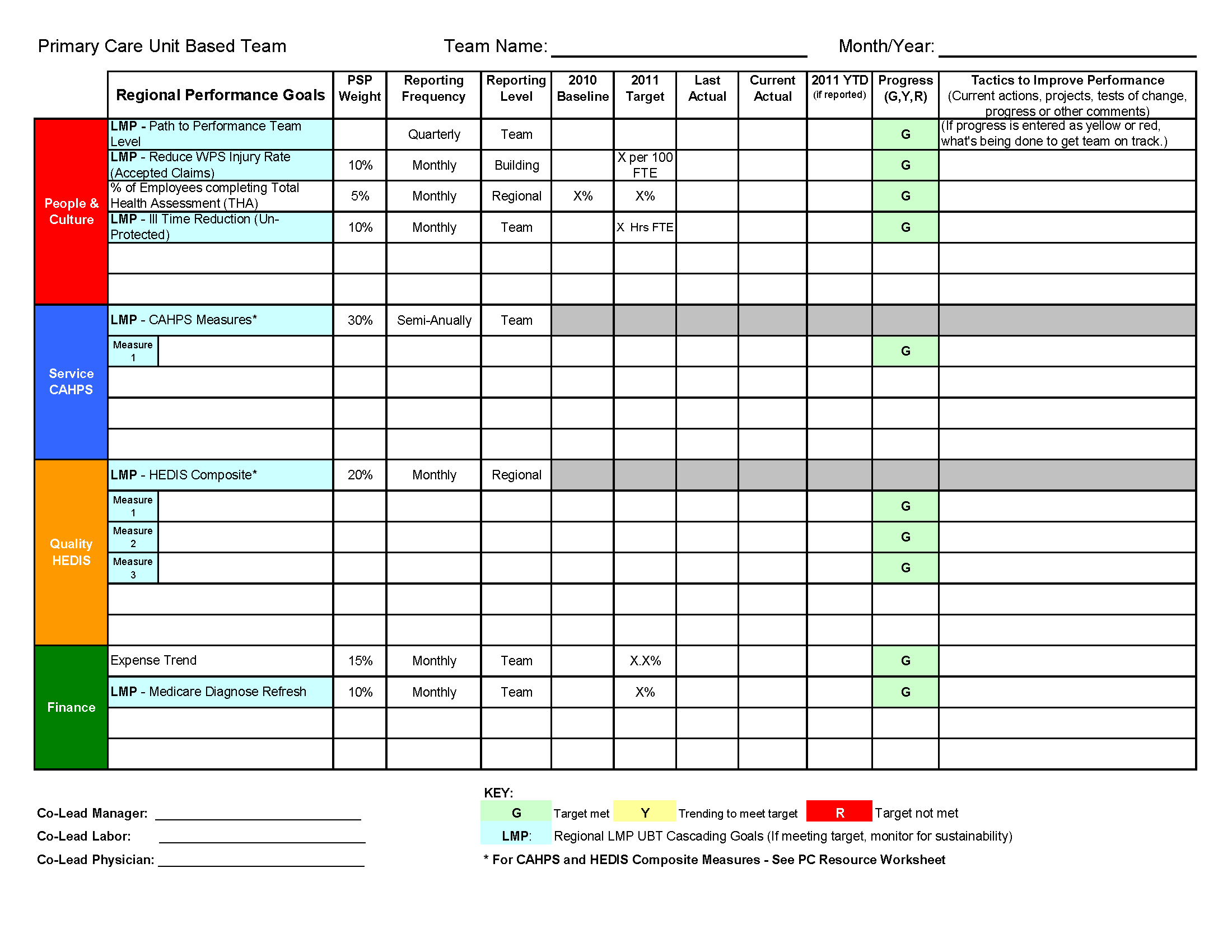
UBT Goals Worksheet

Format:
Excel spreadsheet

Size:
8.5" x 11" 

Intended audience:
UBT co-leads and sponsors

Best used:
This tool, developed by the Northwest region, can be adapted by other Kaiser Permanente regions to help team leaders and sponsors track team progress and tactics. Use it to report regular updates on team progress toward regional business goals.


Related tools:

TOOLS

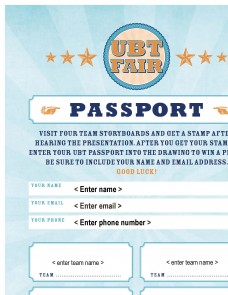
UBT Fair Passports

Format:
Word documents, 1 page each

Size:
8.5" x 11"  

Intended audience:
Frontline teams, managers, sponsors, physicians and guests to use at UBT fairs to ensure they learn about the successful practices of several teams

Best used:
Download and hand out these passports at your UBT fair to ensure participants visit several teams (passports come in a six-team and a four-team version). Teams presenting at the fair can mark off participants’ passports with a pen or colorful sticker. Participants can redeem the passports for snacks or giveaways. Also use the passports as tickets for raffle drawings at your event.

For more tools, please visit the How-To Guide: UBT Fair in a Box.

Related tools:

Competition Can Create a Safer Workplace

Deck: 
Contest helps members alert their colleagues about unsafe practices

An industrial kitchen can be a dangerous place, with its sharp knives, wet floors, plentiful grease and hot temperatures.

Vanessa Bethea, a lead hospitality associate and member of SEIU UHW, still remembers when she witnessed a colleague being injured by a huge meat slicer.

The kitchen at the Panorama City Medical Center, where Bethea works, is a 54-member department, covering two shifts with staggered start times. It was also among the most injury-prone groups at the medical center, so hospital leadership asked the department to come up with a plan to improve its safety record.

The nine-member representative group for the UBT came up with the idea of dividing the department into two teams (simply named Team A and Team B) and sponsoring a friendly competition between them for a pair of movie tickets.

This motivated—and liberated—the staff to approach their colleagues who might be performing a task unsafely and suggest an alternative approach.

“We were ‘big brothering’ each other, which helped us catch things that could have led to an accident,” Bethea says. “It kept a friendly flow throughout the day and created more awareness of safety hazards.”

The team went nearly a year without any accepted claims for workplace injuries, down from about one injury a month.

Bethea says naysayers wanted to infect others in the department with negative attitudes, but the team overcame the hurdle by emphasizing how improving safety will help the whole department.

They also encouraged those naysayers to join the UBT’s representative group.

For more about this team's work to share with your team and spark performance improvement ideas, download a powerpoint.

Helping NICU Parents Understand About Pain

Deck: 
Team helps explain what is going on with their infant

The NICU at Panorama Medical Center wasn’t happy with their pain management rating.

But they also knew that managing pain for babies was completely unlike managing pain for adults.

So they felt it was incumbent upon them to explain to concerned parents how they were treating their infant.

“Our patients can’t tell us what they feel,” says Casey Koenig, one of the unit’s RNs. “And we know there are times we might cause pain.”

Those painful procedures might include when a nurse pricks a baby’s heel to draw blood or needs to starts an IV.

The caregivers’ challenge was not only to manage the baby’s pain but also to alleviate parents’ anxieties and manage their expectations. Less-than-stellar scores further motivated team members.

To improve their communication, they created a script to help explain what was going on. This included the type and severity of pain their newborns might experience. and what steps providers would take to manage it.

After the changes, scores jumped to 100 percent.

The scripts also helped nurses to deliver better service as they realized they needed to start coaching parents as soon as babies are admitted to the NICU.

After all, moms have just given birth and concerned parents may be distracted.

“It may not sink in the first time,” Koenig says.

For more about this team's work to share with your team and spark performance improvement ideas, download a powerpoint.

The Best Approach Is a Team Approach

Deck: 
What UBTs offer docs

Story body part 1: 

I am a big proponent of the team approach to medicine. That’s why I am an active participant of my department’s unit-based team.

As the physician co-lead for the Pediatrics unit-based team, I participate in the UBT meetings both to give and to receive ideas. Ideally, a physician brings to a UBT the vision on how to work together to provide the best possible patient care, support for the management co-lead, and the willingness and openness to listen to what other people have to say. 

According to Dr. Atul Gawande, noted author and surgeon, it used to be that doctors were trained to be cowboys. They worked alone and saved the day. In today’s world, what people really need are pit crews, teams of people where everyone’s function is vital to the overall success of the enterprise. Medicine is no longer an individual endeavor—it has grown so complex and multifaceted that no physician can know everything. So we need to foster the team approach to give our patients the best possible care. 

When I first came to Kaiser nearly 10 years ago, the thing I heard that really stuck with me was the KP Service Quality credo: “Our cause is health. Our passion is service. We’re here to make lives better.” I immediately connected with it and have used it to filter everything I do. 

In other words, I always ask myself: Does what we are doing support our cause, passion and goal? If it does, then it’s usually worth doing. 

Advice to other physicians  

  • Say "thank you" and say "please." Really go out of your way to appreciate someone who comes up with an idea that has made your life easier. And do it publicly.
  • Make time for daily huddles with your staff.
  • Create an environment in which people feel free to share their ideas. One of the worst forms of waste is unused creativity.
  • Give people the benefit of the doubt; pause and reflect when you feel yourself getting upset.
  • Think outside the box. Go to staff members who aren’t at the nursing station to help out when needed. This gives the whole team a sense of ownership over patient care. 

Bottom line? Being a leader isn’t just about being in charge. Just because you’re a physician doesn’t mean you have to spearhead all of the work. If you really want to make a difference or a change, you have to include the entire staff. The work will get done better, faster and easier if we work together. And if you believe in the work that you are doing, then teamwork is a natural expression of patient care.

Tips on huddles

Huddles are a key part of my day. At the start of each day I review the day’s schedule with the medical assistant. I look for patient names that are familiar so that we are prepared for the day’s visits. For example, if I know that a patient has concerns that are likely to take up more than the usual 15-minute office visit, I will tell that to the medical assistants so they are prepared, and together, we give our patients the best care possible. 

These huddles are very informal, but they go a long way toward being prepared and letting the patients know they are well cared for.

TOOLS

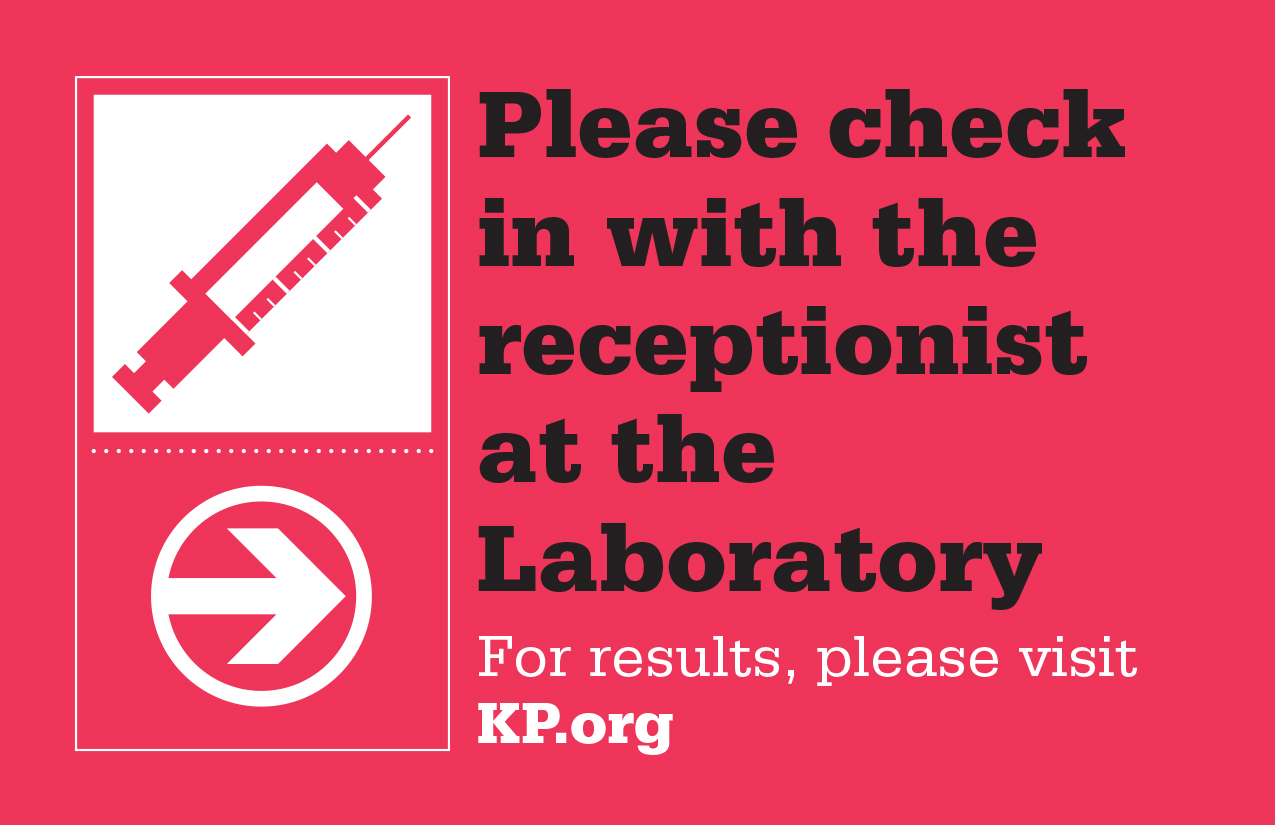
Check-in Card: Laboratory

Format:
PDF

Size:
4.25" x 5.5" (two copies print out on each 8.5" x 11" sheet)

Intended audience: 
Frontline staff and management

Best used: 
For members to remind laboratory patients to check in with the receptionist. Can be printed in black-and-white or color, and laminated. Available in English and Spanish.

Links to more check-in cards

Related tools:

TOOLS

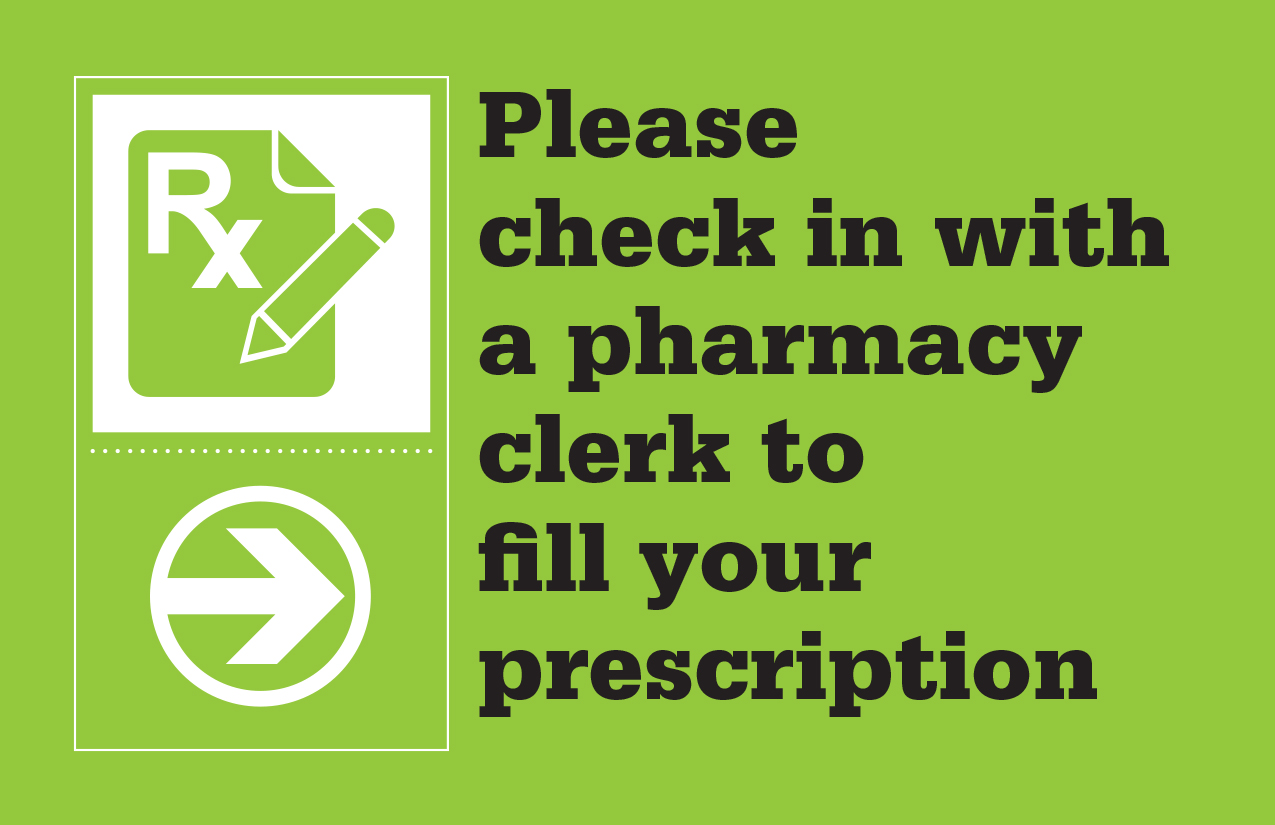
Check-in Card: Pharmacy

Format:
PDF

Size:
4.25" x 5.5" (two copies print out on each 8.5" x 11" sheet)

Intended audience: 
Frontline employees and managers

Best used: Print in black-and-white or color, then laminate and distribute to members as needed to remind them to check in with the clerk at the pharmacy. Available in English and Spanish.

Check out our additional reminder cards

Related tools:

TOOLS

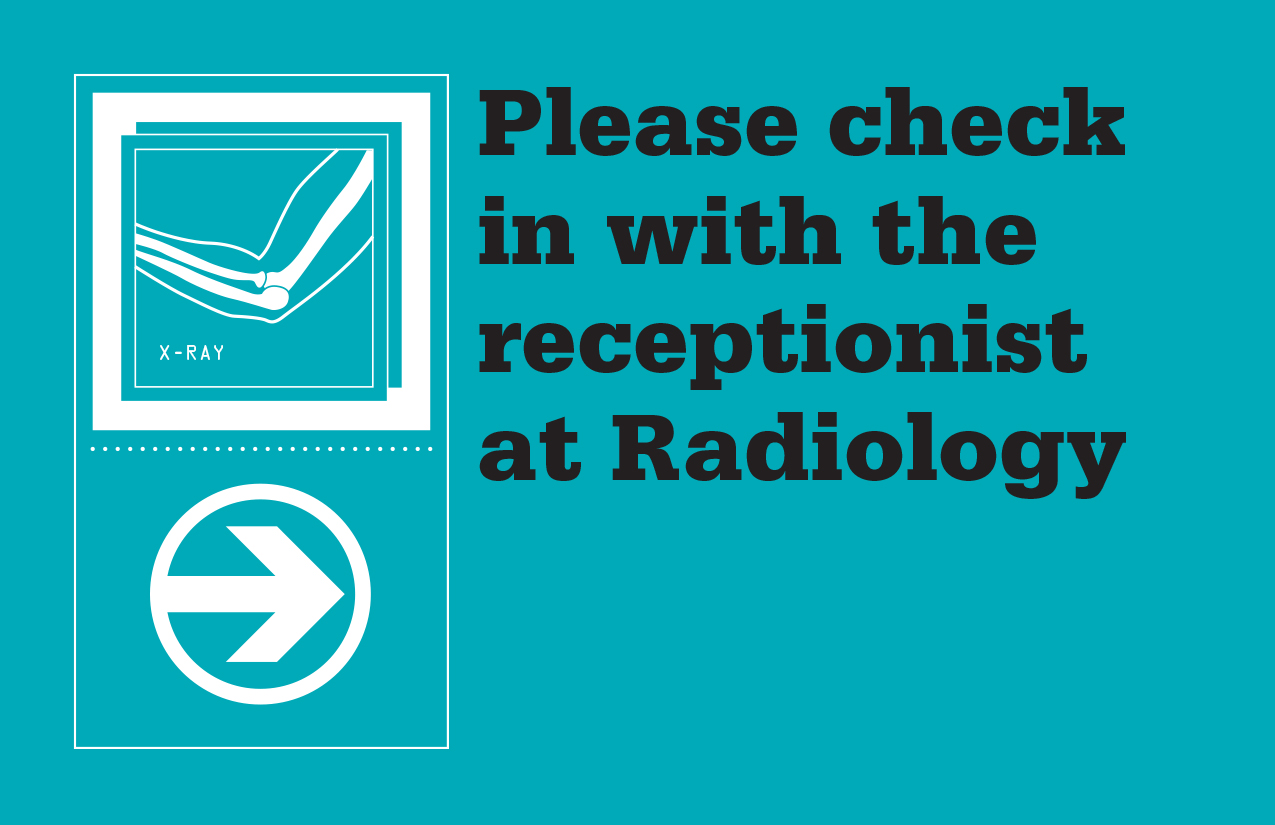
Check-in Card: Radiology

Format:
PDF

Size:
4.25" x 5.5" (two copies print out on each 8.5" x 11" sheet)

Intended audience: 
Frontline staff and management

Best used: 
Print in black-and-white or color, then laminate and distribute to members heading for the Radiology department to remind them to check in with the receptionist. Available in English and Spanish.

Go to page with other cards for other departments

Related tools:

TOOLS

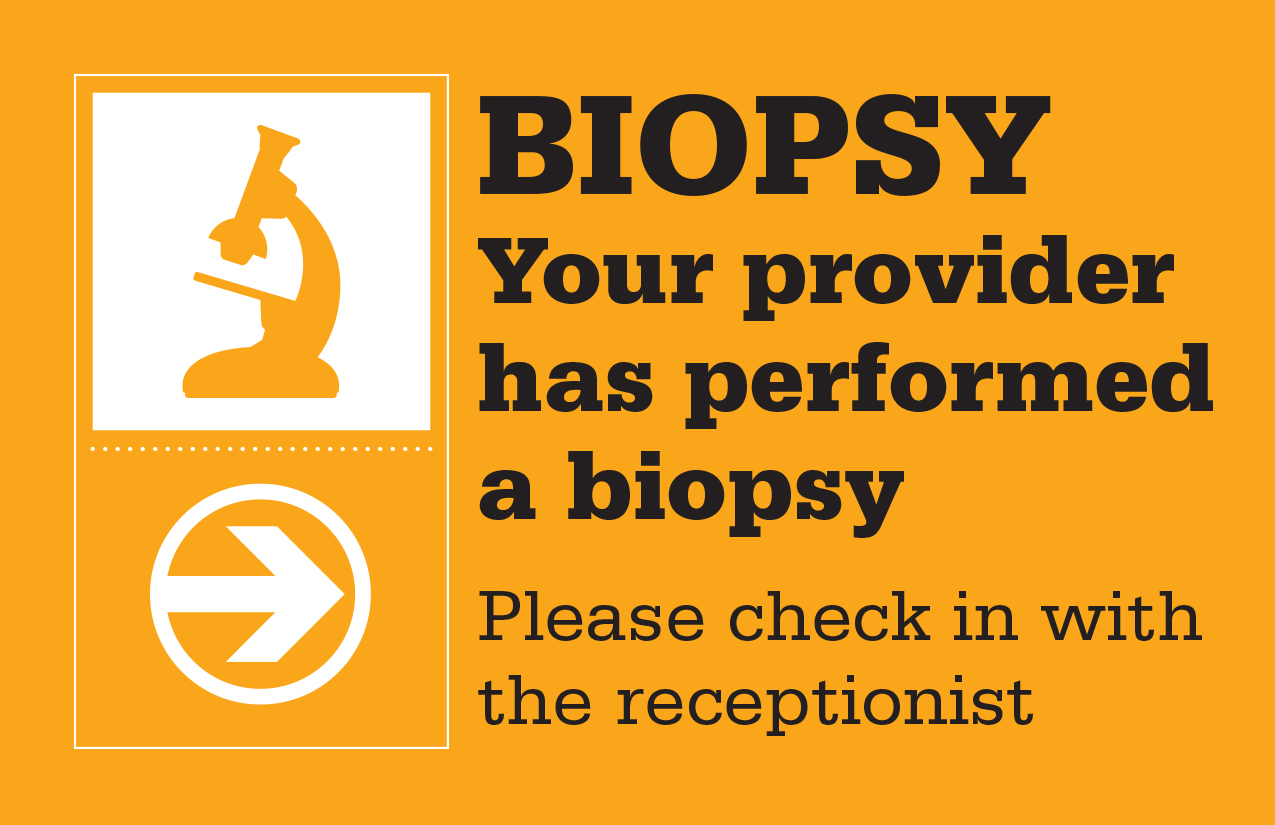
Check-in Card: Biopsy

Format:
PDF

Size:
4.25" x 5.5" (two copies print out on each 8.5" x 11" sheet)

Intended audience: 
Frontline staff and management

Best used: 
Print in black-and-white or color, then laminate and distribute this visual reminder to members who have had an in-office biopsy as needed. Available in English and Spanish.

To page with other cards

Related tools:

Pages

Subscribe to RSS - lmpartnership.org